Basic addition practice Worksheets for Ages 4-5
12 filtered results
-
From - To
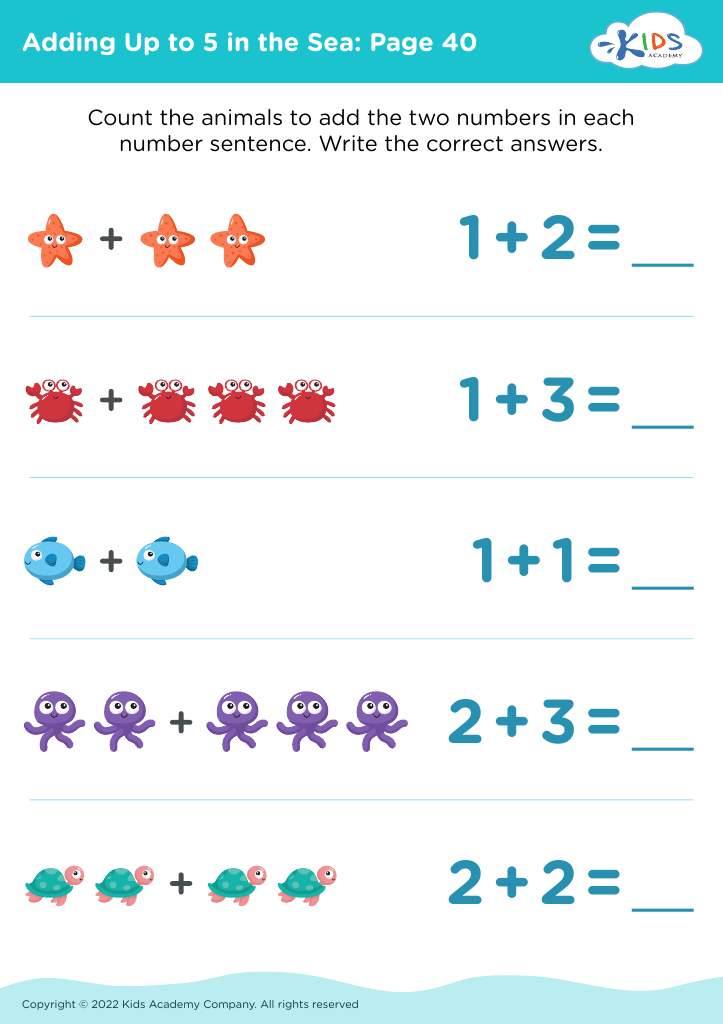
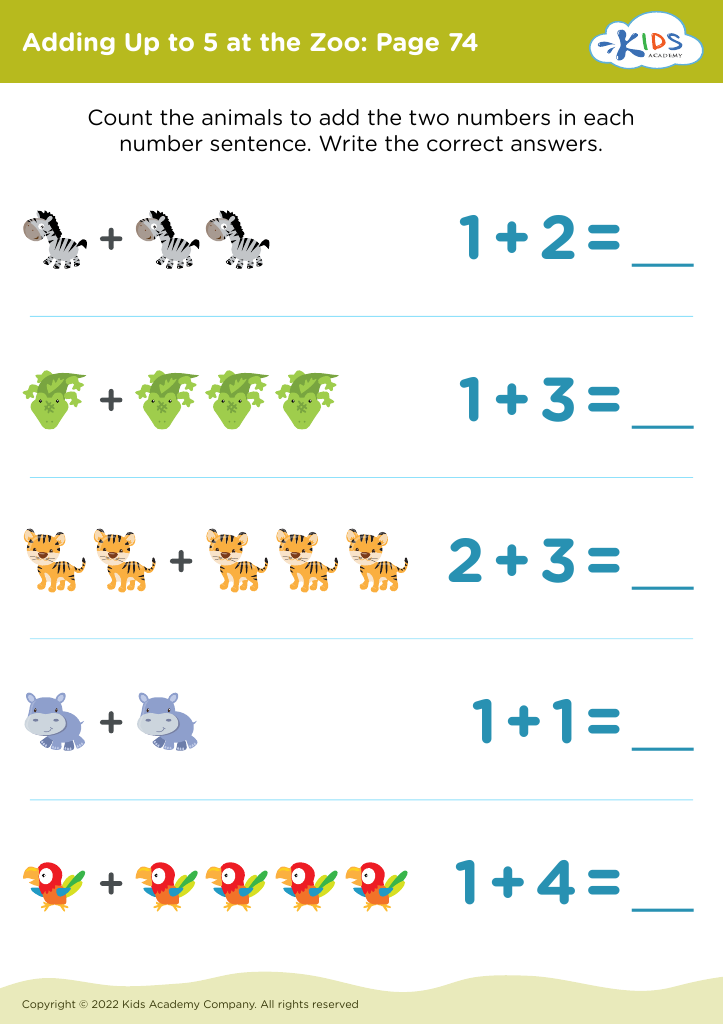
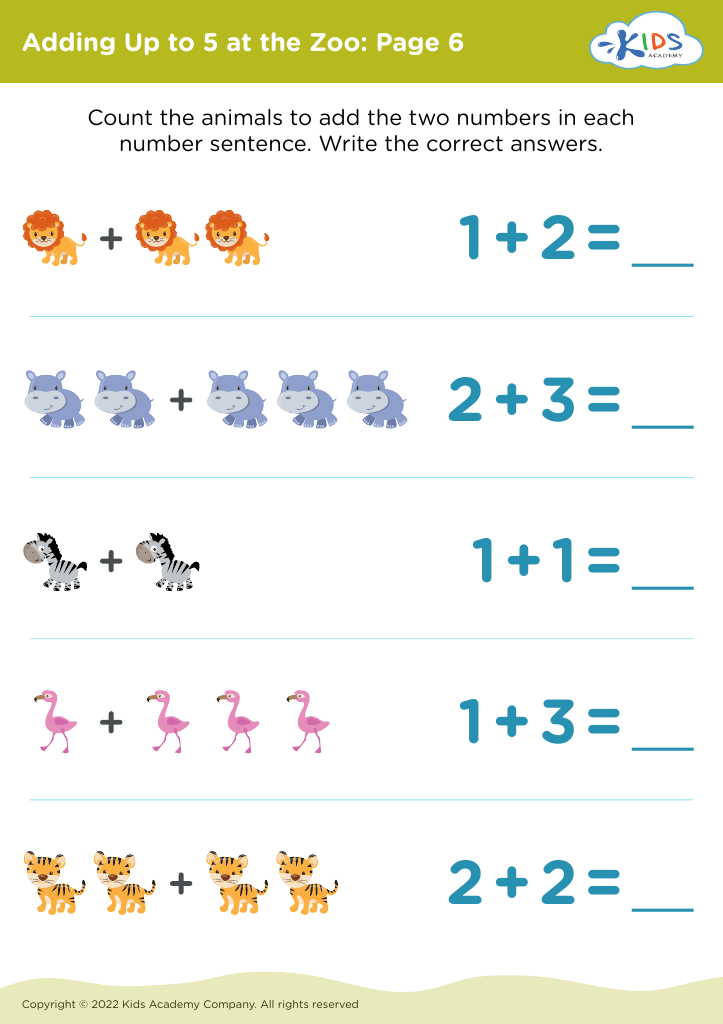
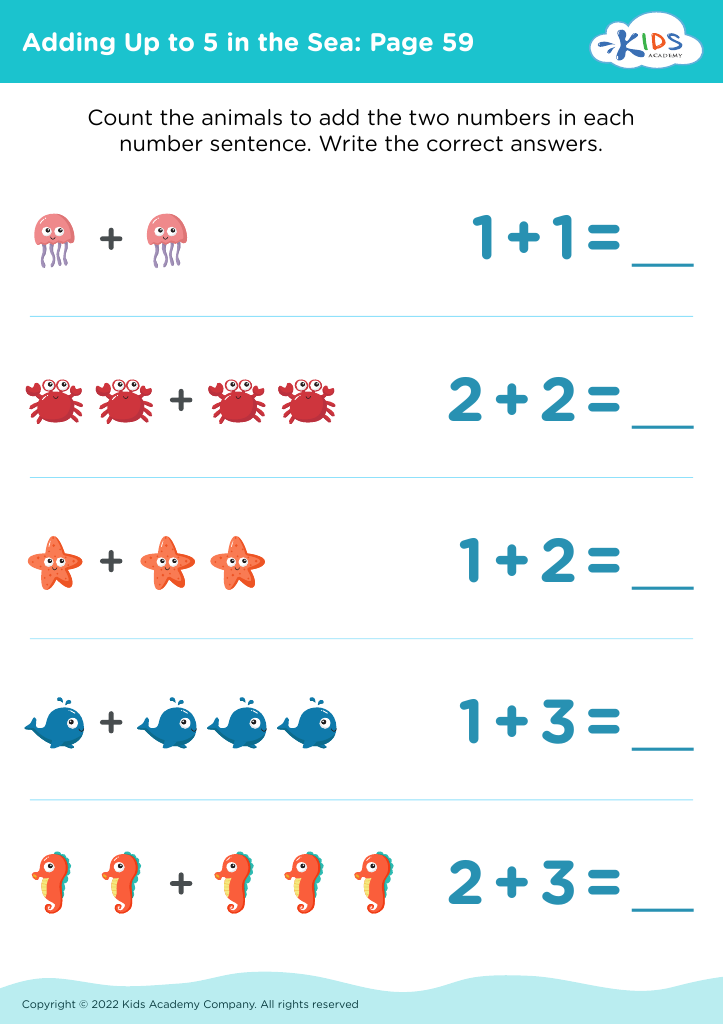
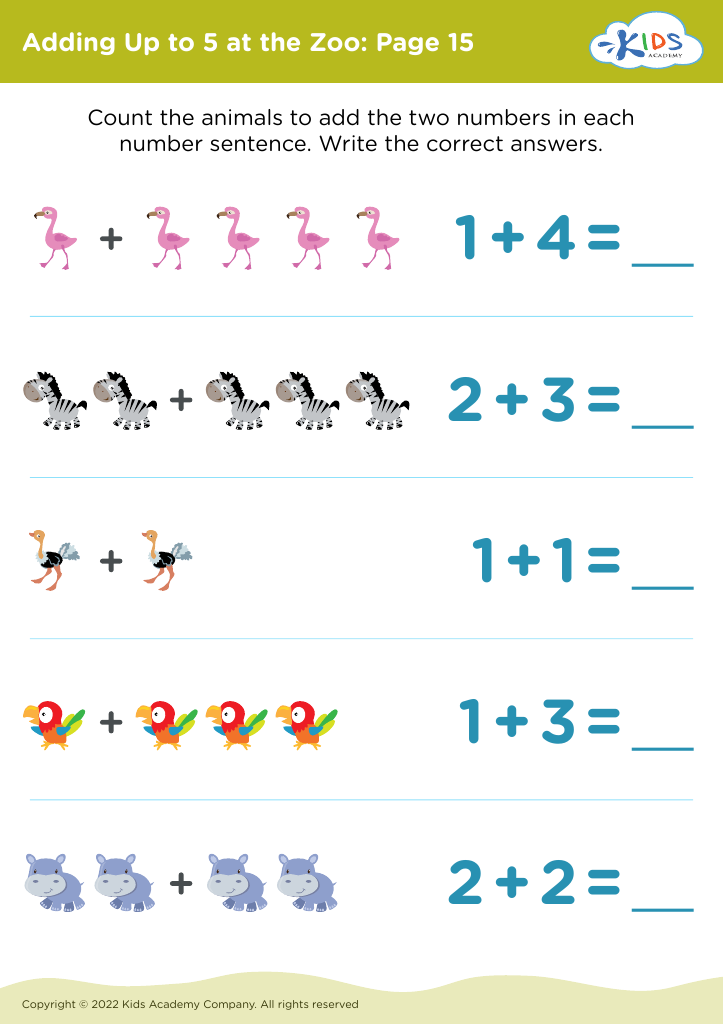
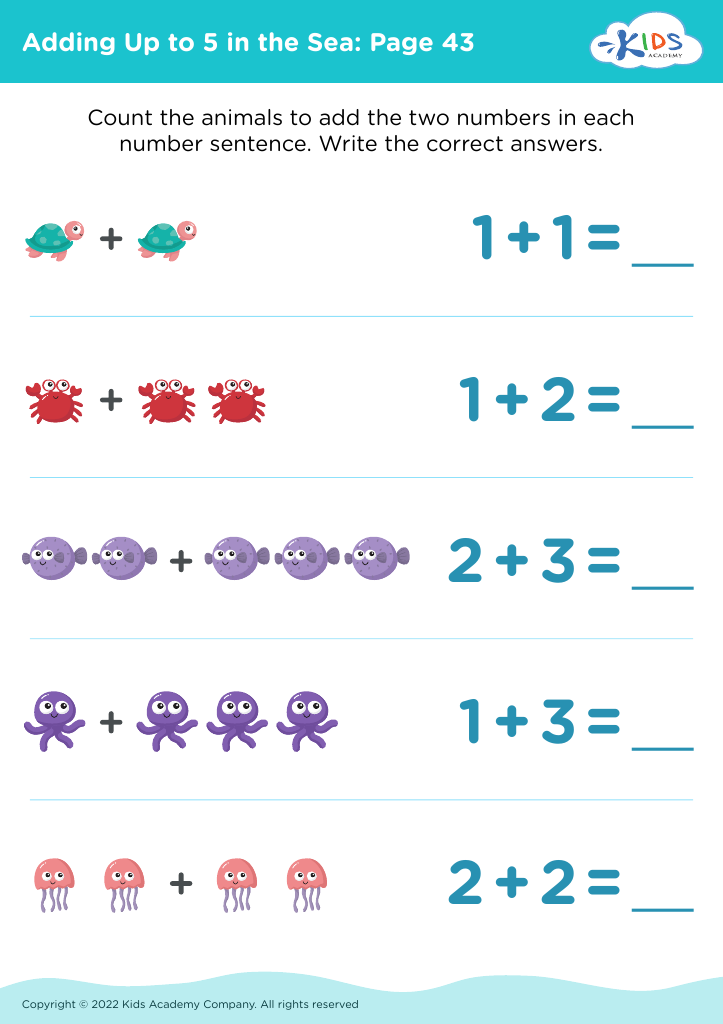
Discover our engaging Basic Addition Practice Worksheets designed specifically for children ages 4-5. These printable resources make learning addition fun and interactive, helping young minds grasp fundamental math concepts seamlessly. Featuring colorful illustrations and age-appropriate exercises, our worksheets promote essential skills such as counting and problem-solving, making them perfect for preschool or early kindergarten learners. Each worksheet encourages hands-on practice, allowing children to develop confidence in their math abilities while fostering a love for learning. Support your child's journey into mathematics with these easy-to-understand, educational worksheets that ensure a solid foundation in addition. Start exploring and watch their skills grow!
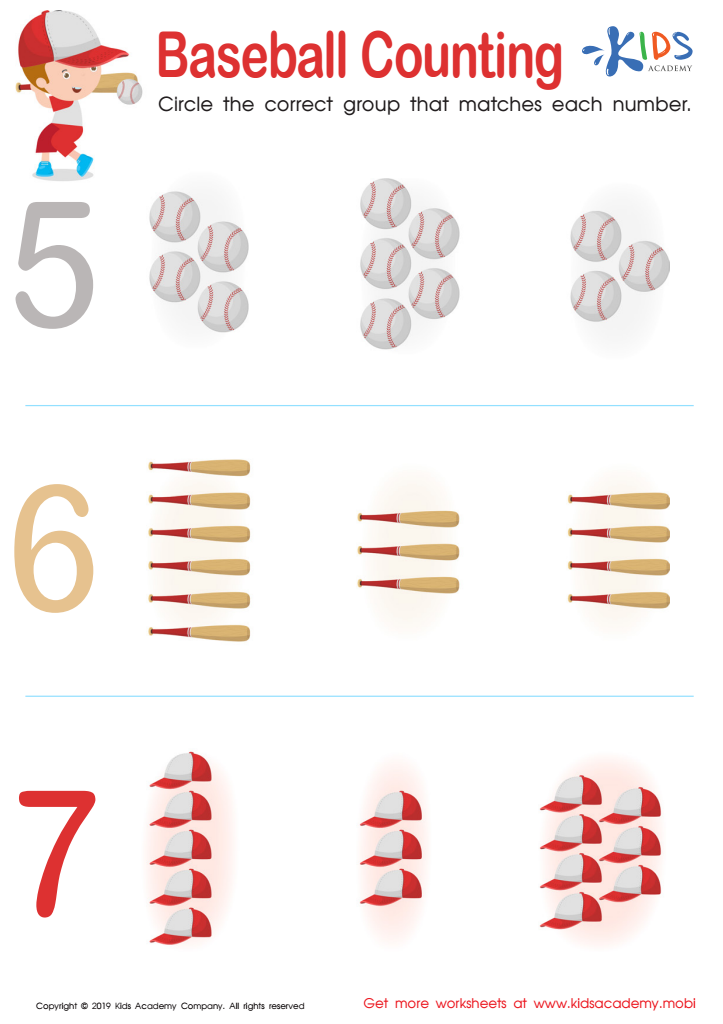
Baseball Counting Worksheet
 Assign to My Students
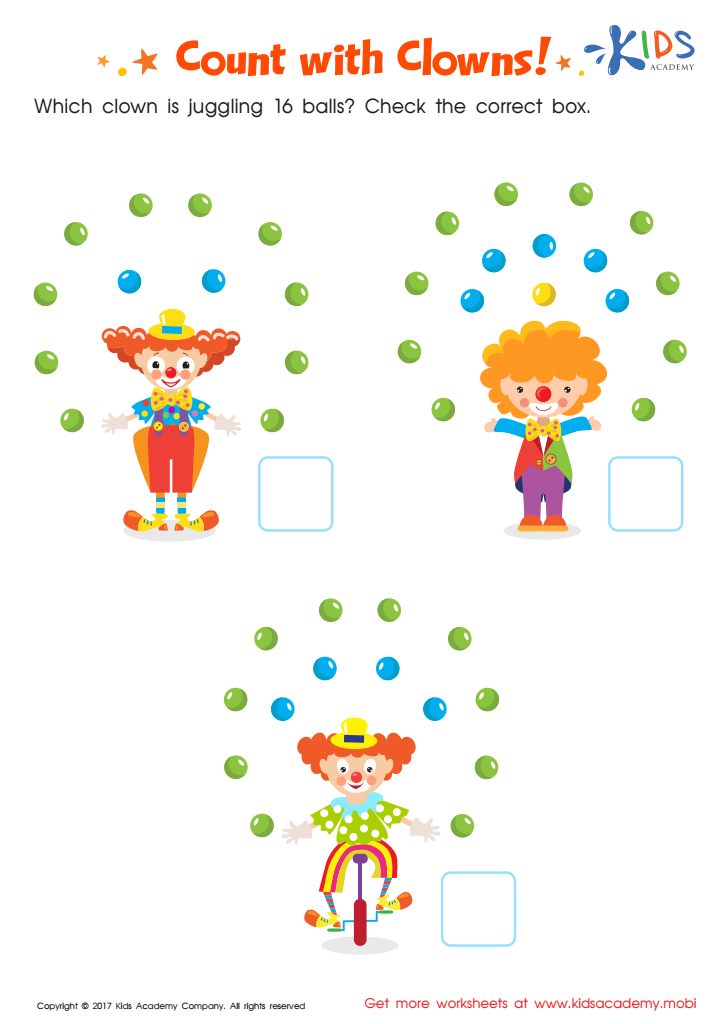
Count with Clowns Worksheet
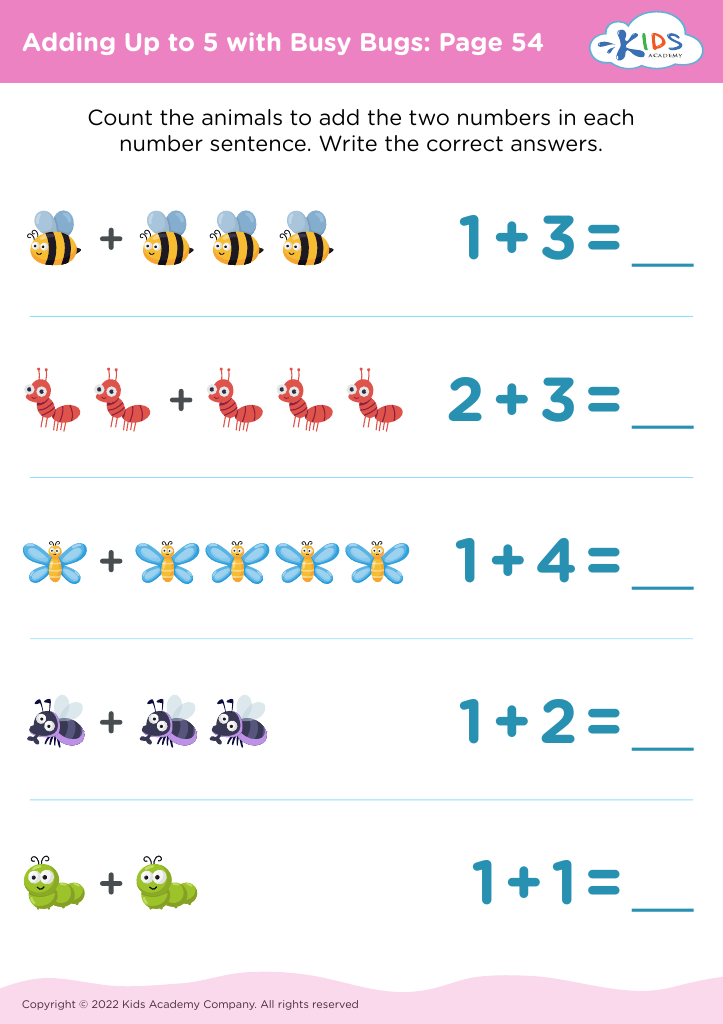
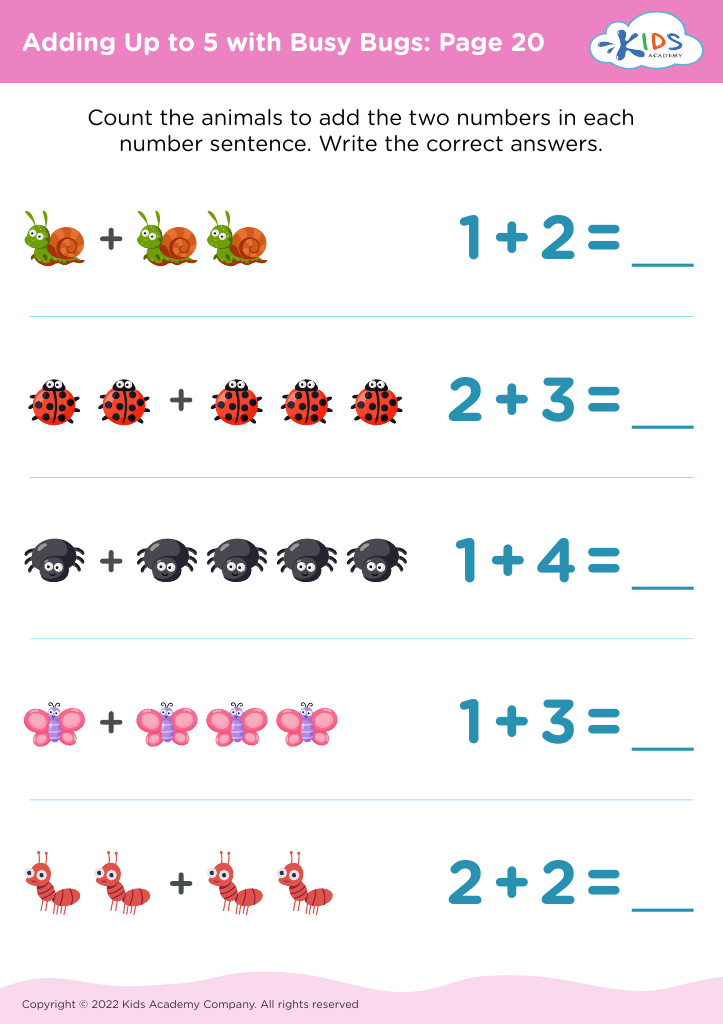
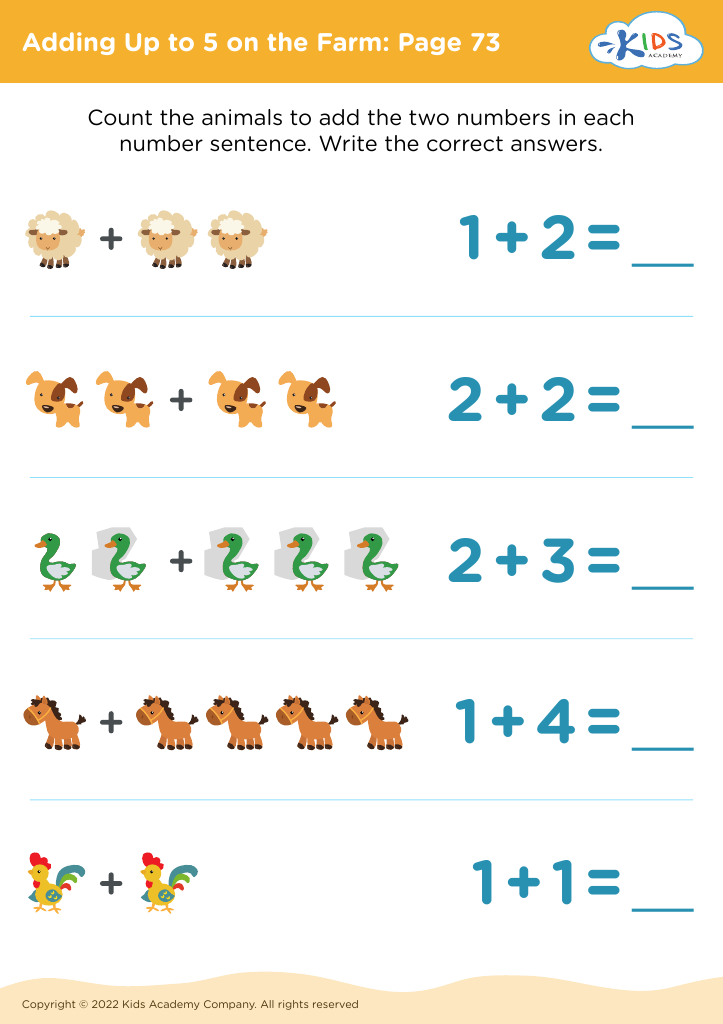








Basic addition practice for children aged 4-5 is crucial as it lays the foundation for their future success in mathematics and overall academic achievement. At this age, children are naturally curious and receptive to learning new concepts. Engaging them in basic addition helps develop their number sense, which is essential for understanding larger mathematical ideas later on.
Additionally, practicing basic addition enhances cognitive development, as it promotes critical thinking, problem-solving, and memory skills. These early experiences with numbers encourage a positive attitude toward math, reducing anxiety and building confidence in their abilities. Moreover, addition practice can be made fun and interactive through games, songs, and hands-on activities, making it an enjoyable experience that keeps children engaged.
Parents and teachers play a pivotal role in supporting this phase of learning. By actively participating in addition activities, they can foster a love for learning and demonstrate its practical application in everyday life. Skills gained during this stage are not just about numbers but also teach discipline, focus, and perseverance. Caring about basic addition practice ultimately sets children on a path towards lifelong learning, empowering them to tackle more complex mathematical challenges in the future.








