Basic Arithmetic Worksheets for Ages 4-5 - Page 3
51 filtered results
-
From - To
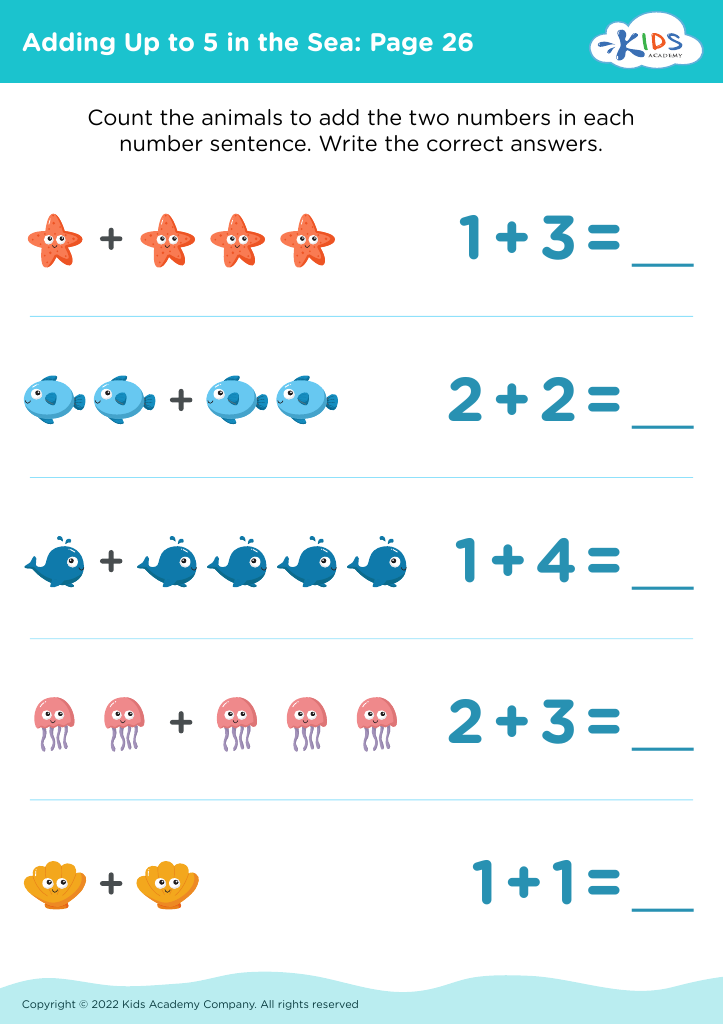
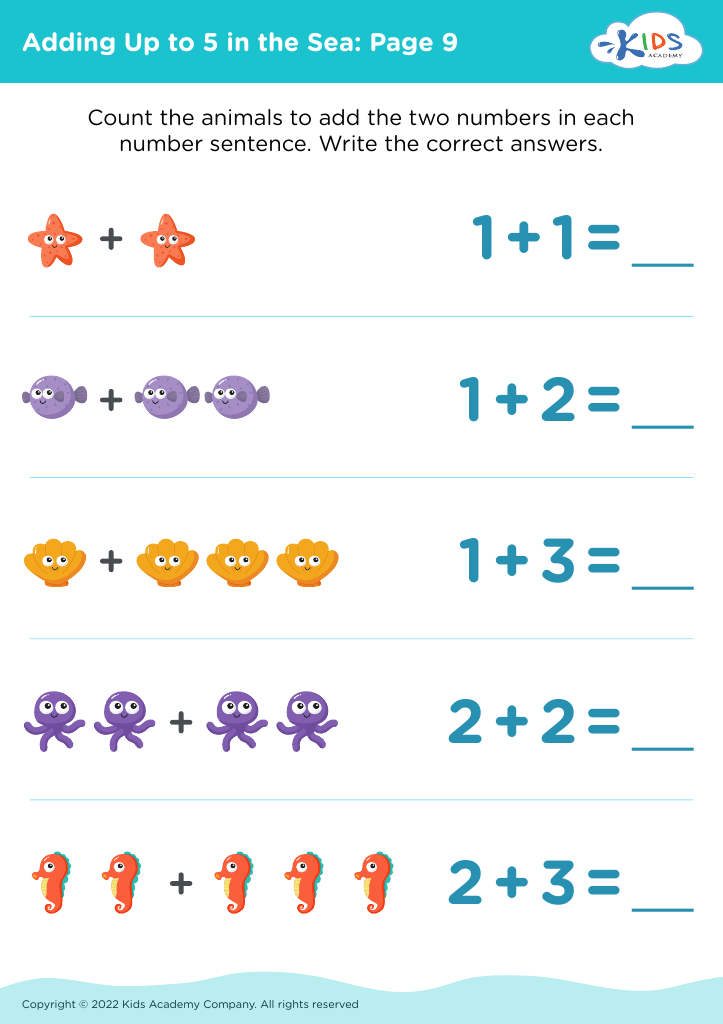








Basic arithmetic serves as the foundation for future mathematical understanding and problem-solving skills, making it a critical focus for parents and teachers of children aged 4-5. At this early age, children are naturally curious and eager to learn, which provides a prime opportunity to introduce concepts such as counting, addition, and subtraction in a fun and engaging way.
Learning basic arithmetic helps children develop essential cognitive skills, improving their ability to think logically and make connections. It fosters their emotional development, bolstering confidence and a sense of achievement when they grasp new concepts. These early mathematical experiences also encourage critical social skills through games and collaborative activities, promoting teamwork and communication.
Moreover, early exposure to arithmetic nurtures a positive attitude towards math, which can counteract common anxieties associated with the subject later in life. Parents and teachers can use everyday situations—like counting toys, distributing snacks, or comparing weights—to shape arithmetic into a practical, relatable endeavor.
Investing time in basic arithmetic today equips children with not just mathematical skills, but also resilience, creativity, and perseverance essential for navigating the complexities of school and beyond. Ultimately, ensuring young children grasp these principles will foster a lifelong appreciation for learning math.








