Check out this FREE "Basic Arithmetic" Trial Lesson for age 4-5!

Arrange up to 10 Objects

Favorites
With answer key
Interactive
  • 4-5
  • Basic Arithmetic
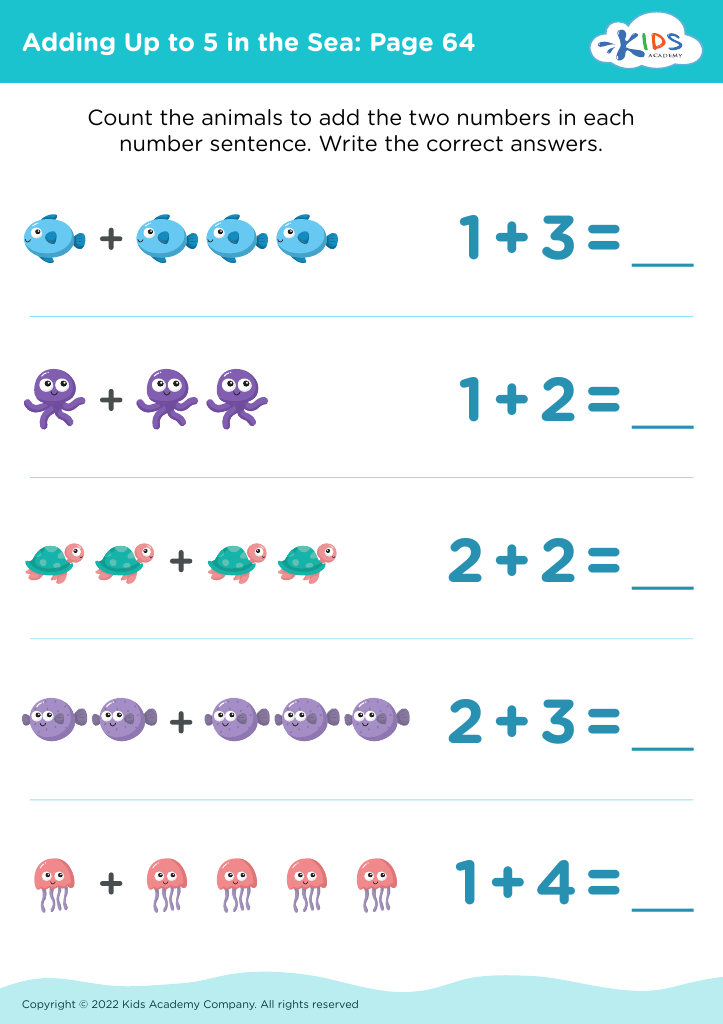
Adding Up to 5 in the Sea: Page 64
Worksheet
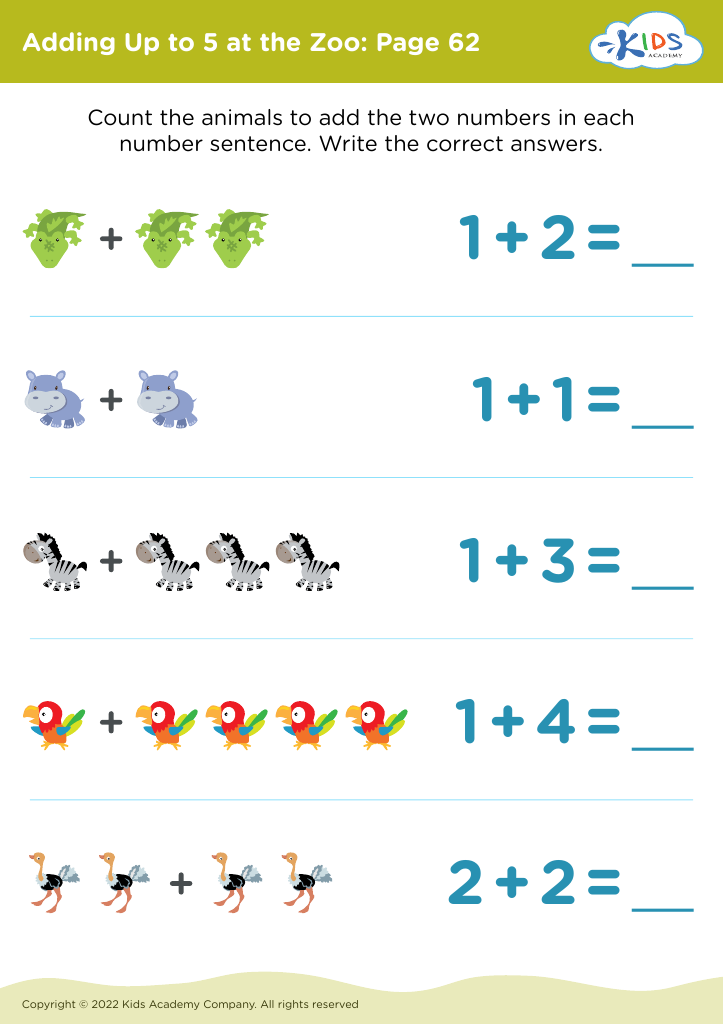
Adding Up to 5 at the Zoo: Page 62
Worksheet
Line up the Tigers Worksheet

Line up the Tigers Worksheet

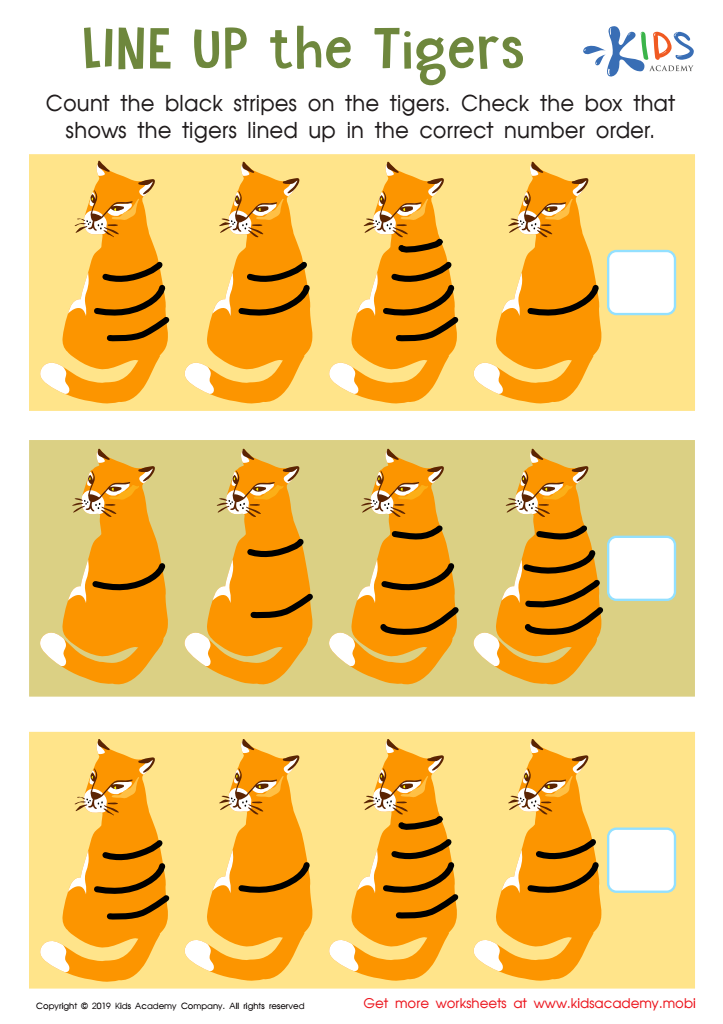
Give your preschoolers the right tools to succeed in math. Show them pictures of animals, then have them count the stripes and check the box that shows the tigers lined up in the right order. This will help them understand and make their journey easier.
Line up the Tigers Worksheet
Worksheet
Solve the Problem: Trick–or–treating Worksheet
Solve the Problem: Trick–or–treating Worksheet

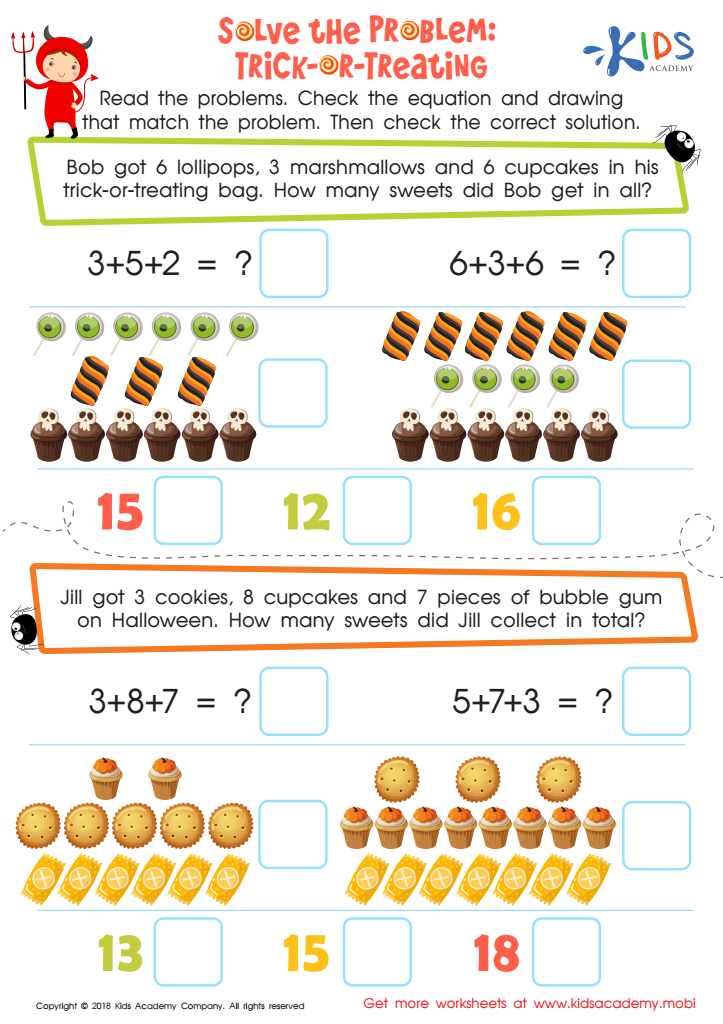
Kids will love this fun PDF worksheet for trick-or-treating! It's packed with yummy images and math practice. They can read the word problems, count and add numbers, check their answers, and match the addition equations with the pictures. Math made delicious!
Solve the Problem: Trick–or–treating Worksheet
Worksheet
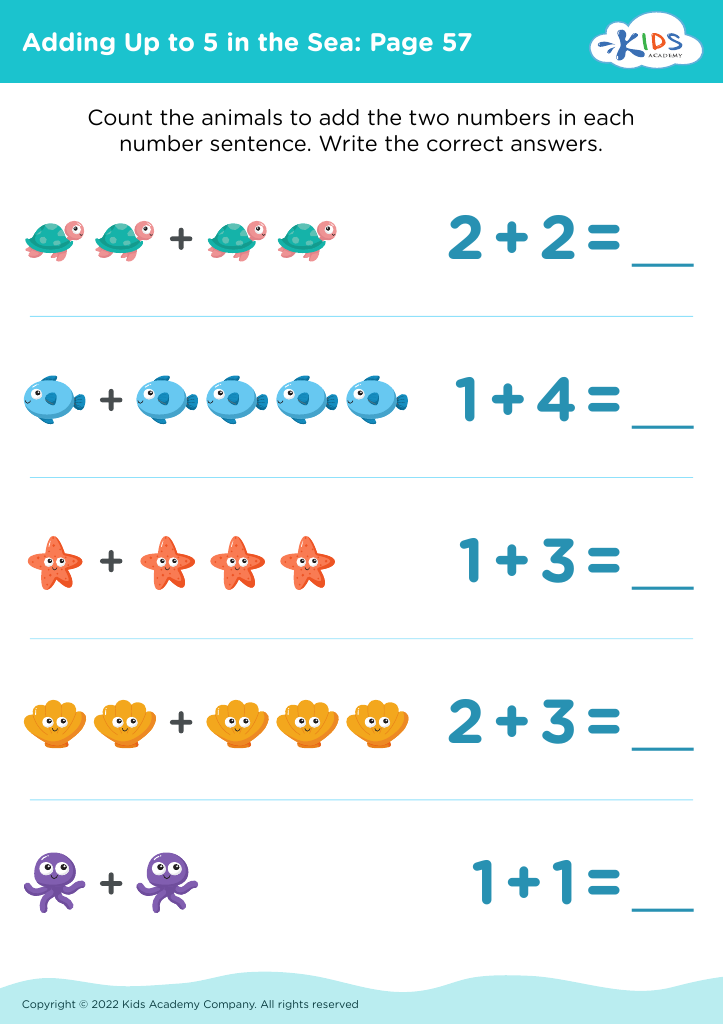
Adding Up to 5 in the Sea: Page 57
Worksheet
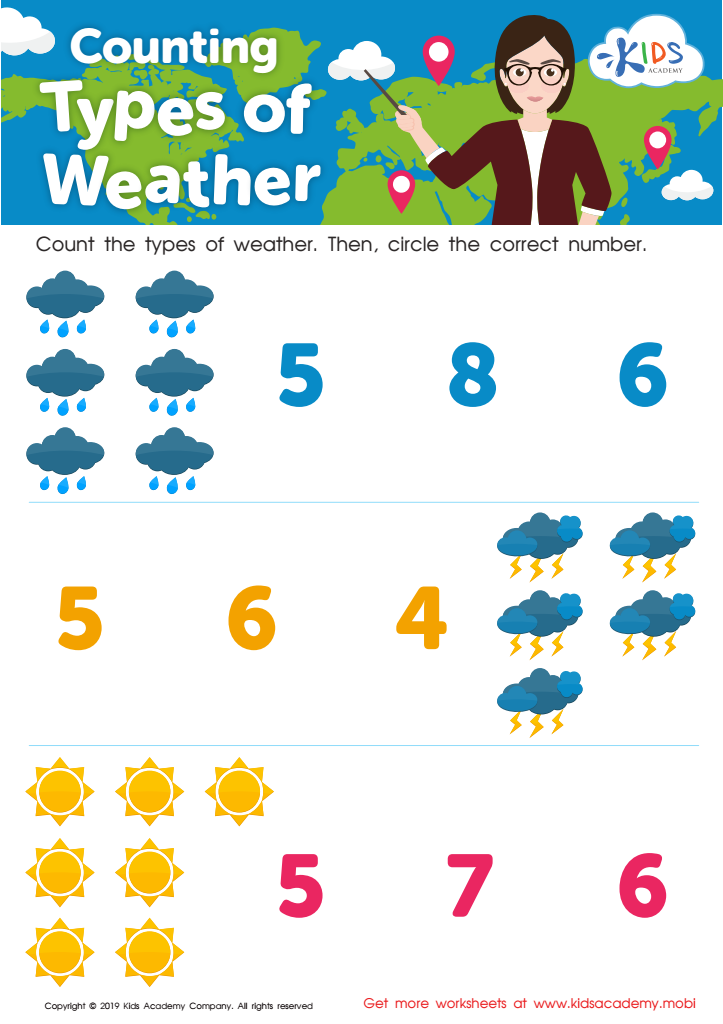
Counting Types of Weather Worksheet

Counting Types of Weather Worksheet

Have your students look outside and tell you the weather today. Get kindergartners thinking by asking them to name different types of weather. Point to each one in the picture and get them to tell you what it is. Then, have them count the types and circle the number.
Counting Types of Weather Worksheet
Worksheet
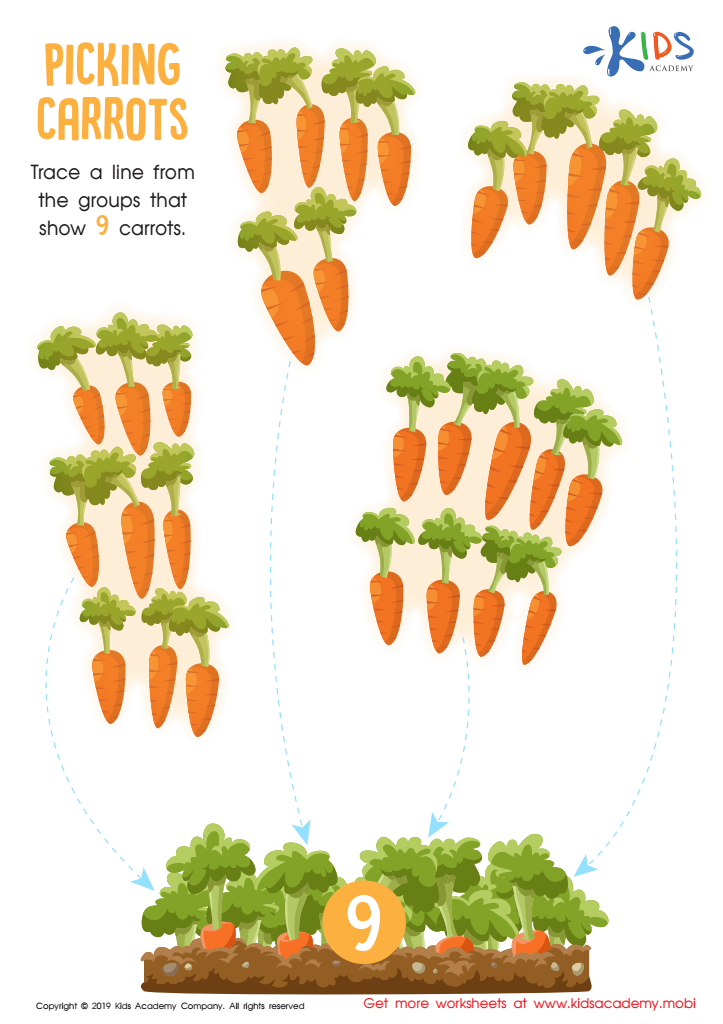
Picking Carrots Worksheet

Picking Carrots Worksheet

Do your kids know what carrots are? They're nutritious veggies we should eat. Look at the worksheet with them; can they spot the carrots? It's an exercise to practice counting. Show them how to count all the carrots in the groups and trace the line to the groups with 9 carrots.
Picking Carrots Worksheet
Worksheet
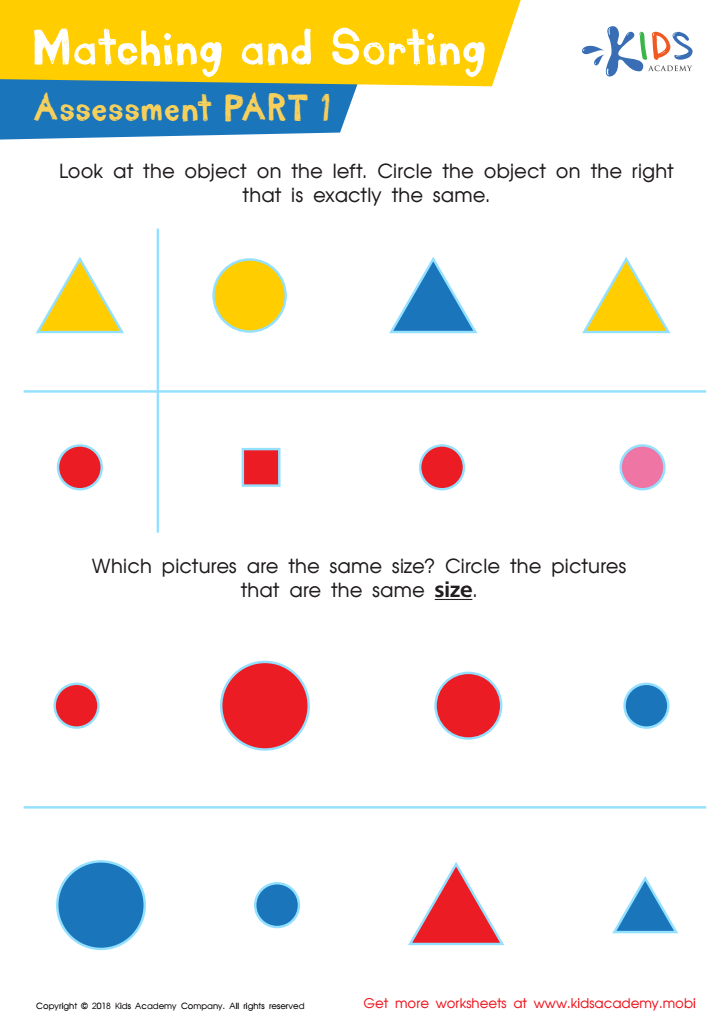
Matching and Sorting for Kindergarten: Assessment 1 Worksheet
Matching and Sorting for Kindergarten: Assessment 1 Worksheet

Kids can sharpen their visual discrimination skills and analyze properties of shapes with this free downloadable worksheet. They'll identify color, size, shape, and symmetry, working with bright primary colors. This helps build a strong geometric foundation, learning to identify shape attributes.
Matching and Sorting for Kindergarten: Assessment 1 Worksheet
Worksheet
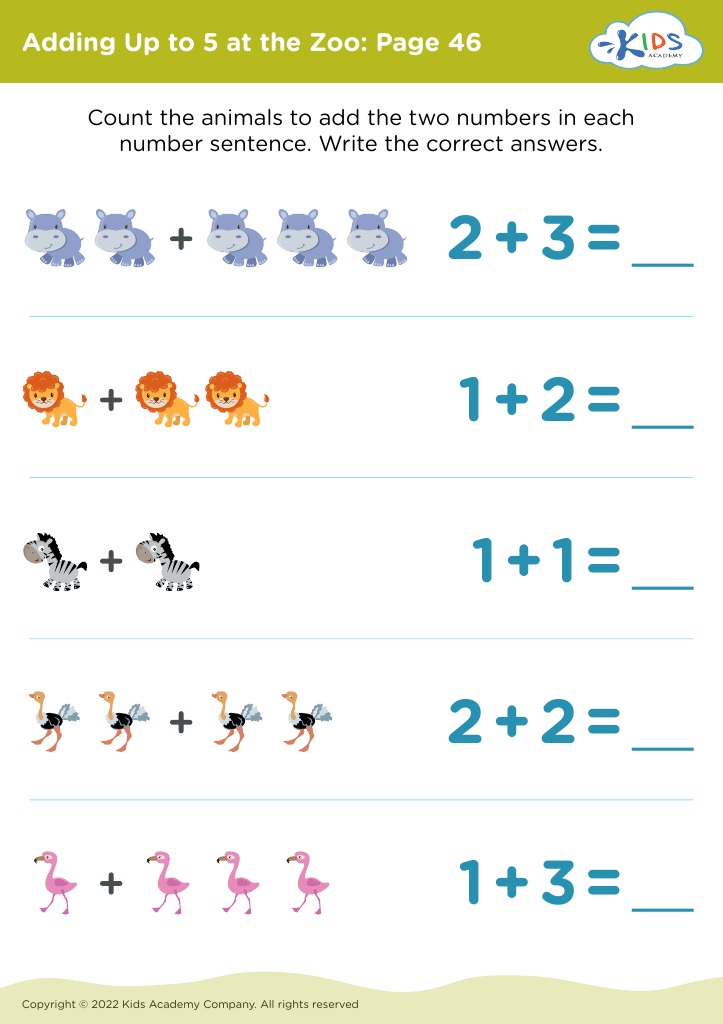
Adding Up to 5 at the Zoo: Page 46
Worksheet
Addition Worksheet PDF for Kindergarten

Star Addition Printable

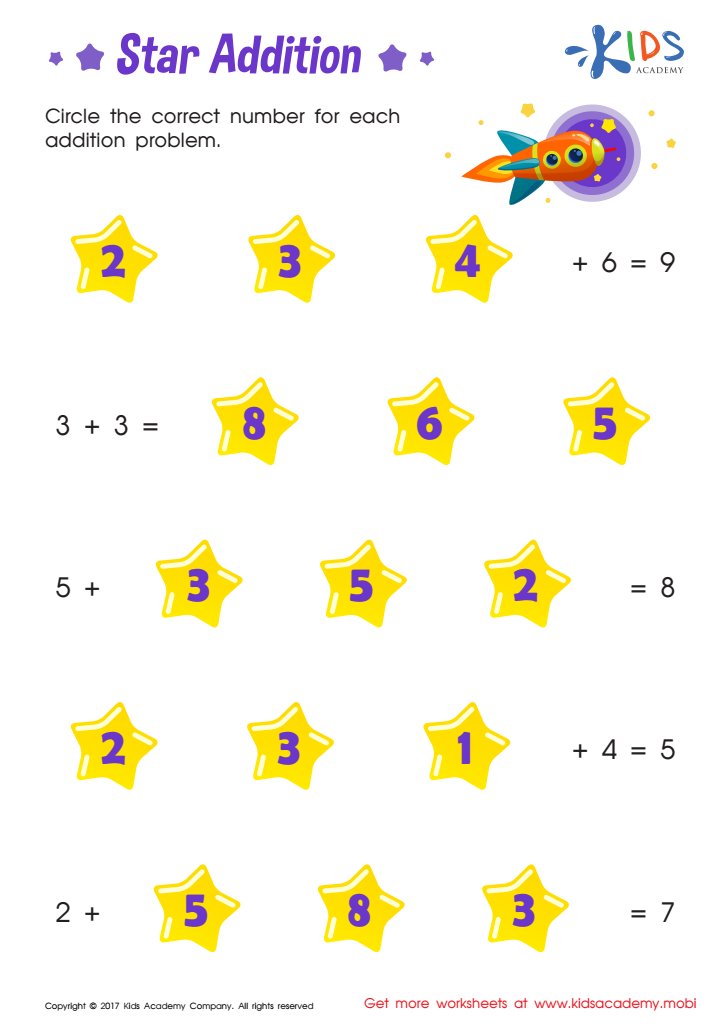
Is your child bored with the school math assignments? For those who love a challenge, this addition worksheet is perfect. It'll help your child practice addition, understand equations and switch between methods. Have them try each answer choice to eliminate wrong ones and for advanced learners, teach them to use subtraction. Let your child have fun while learning more advanced math concepts!
Star Addition Printable
Worksheet
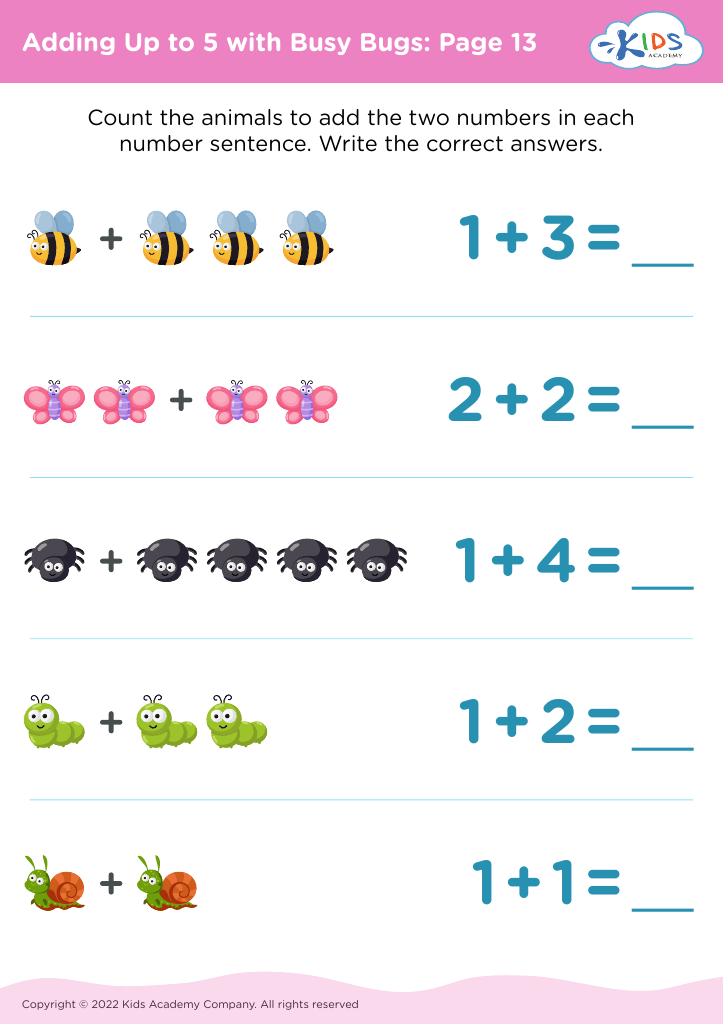
Adding Up to 5 with Busy Bugs: Page 13
Worksheet
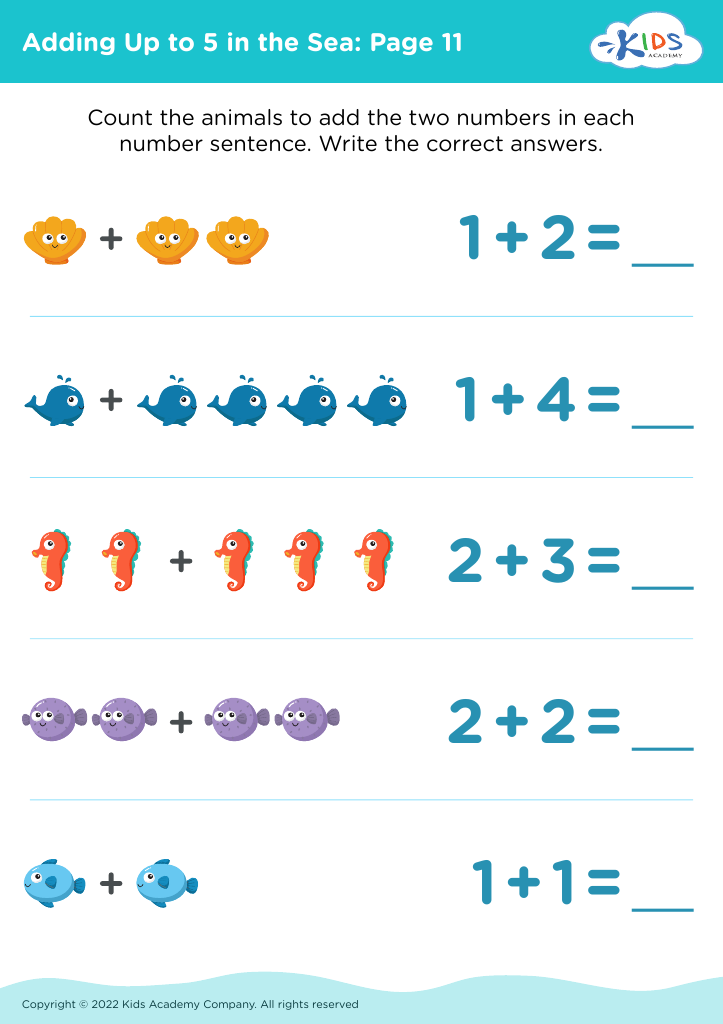
Adding Up to 5 in the Sea: Page 11
Worksheet
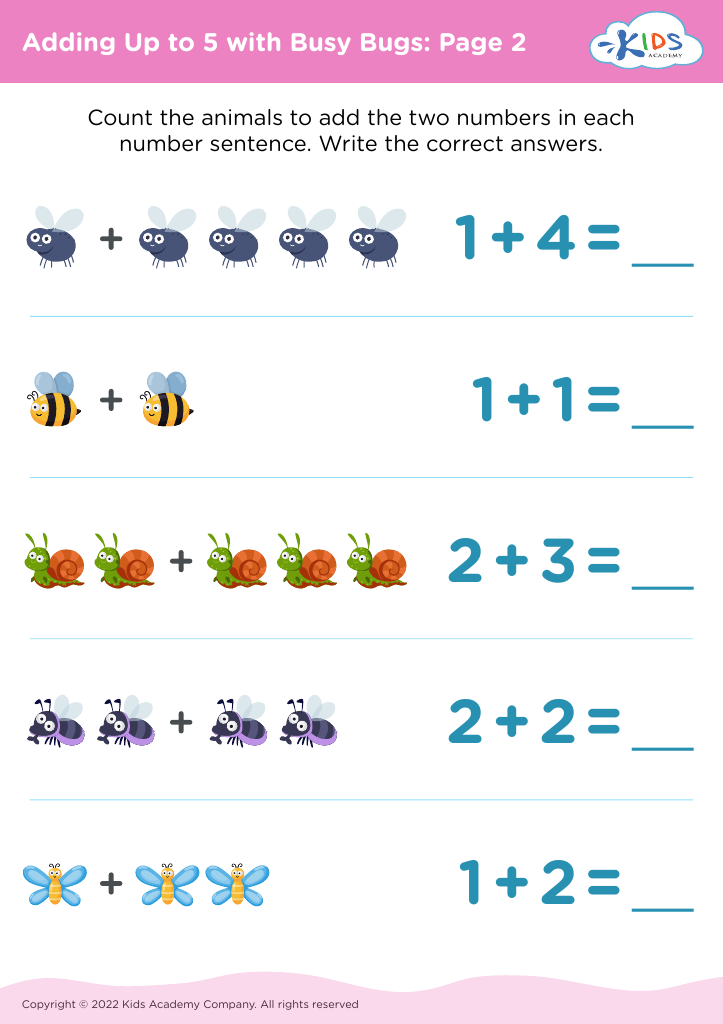
Adding Up to 5 with Busy Bugs: Page 2
Worksheet
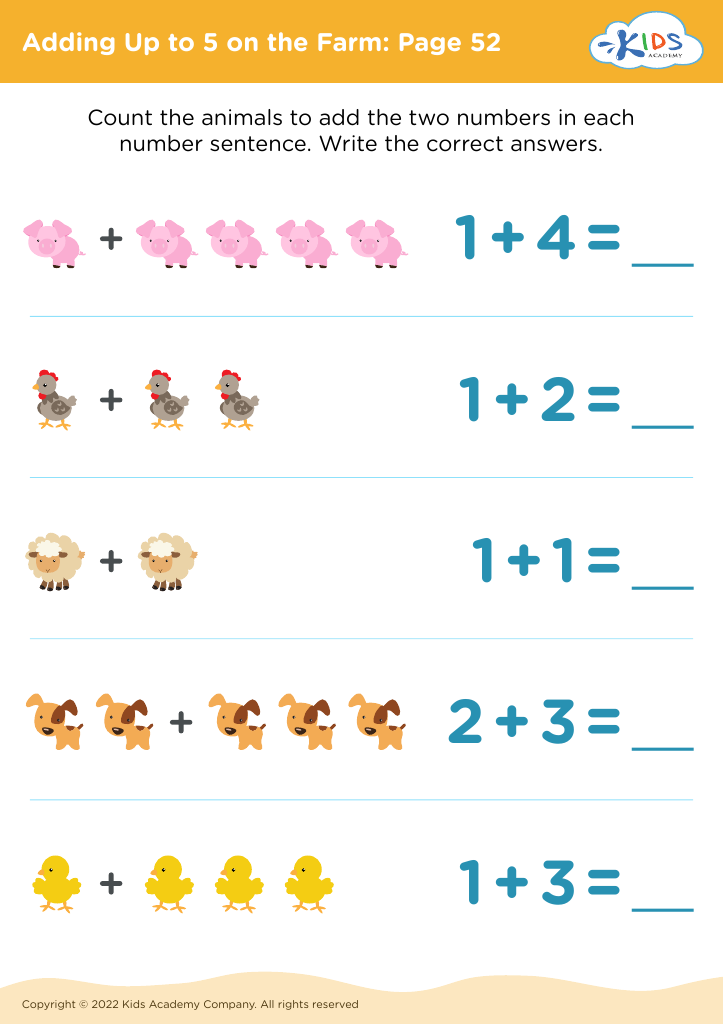
Adding Up to 5 on the Farm: Page 52
Worksheet
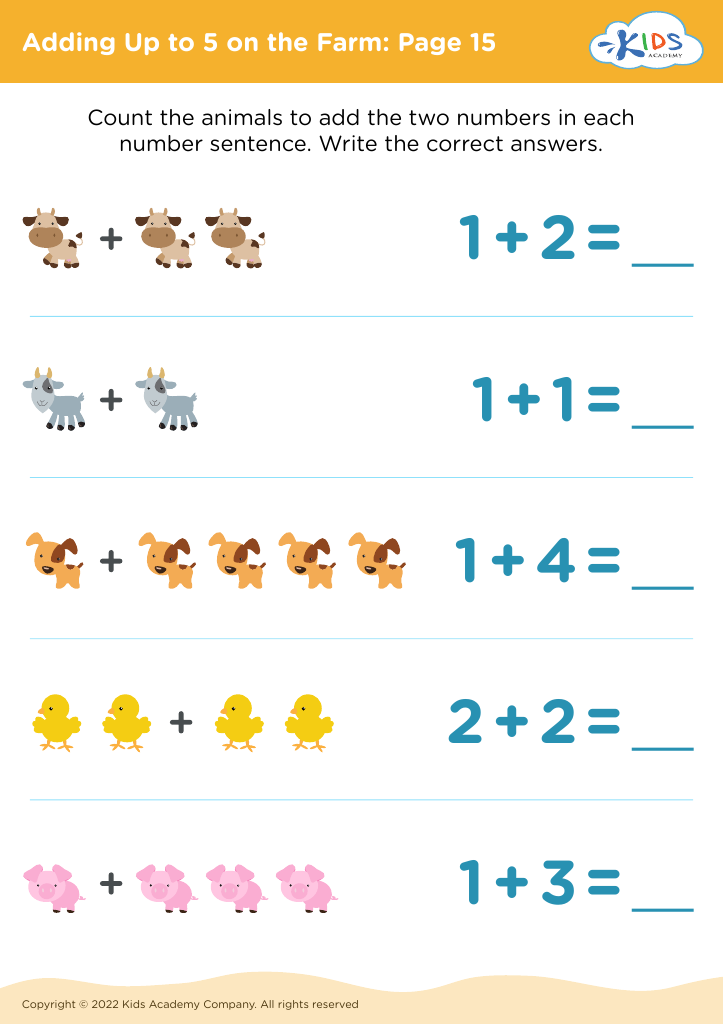
Adding Up to 5 on the Farm: Page 15
Worksheet
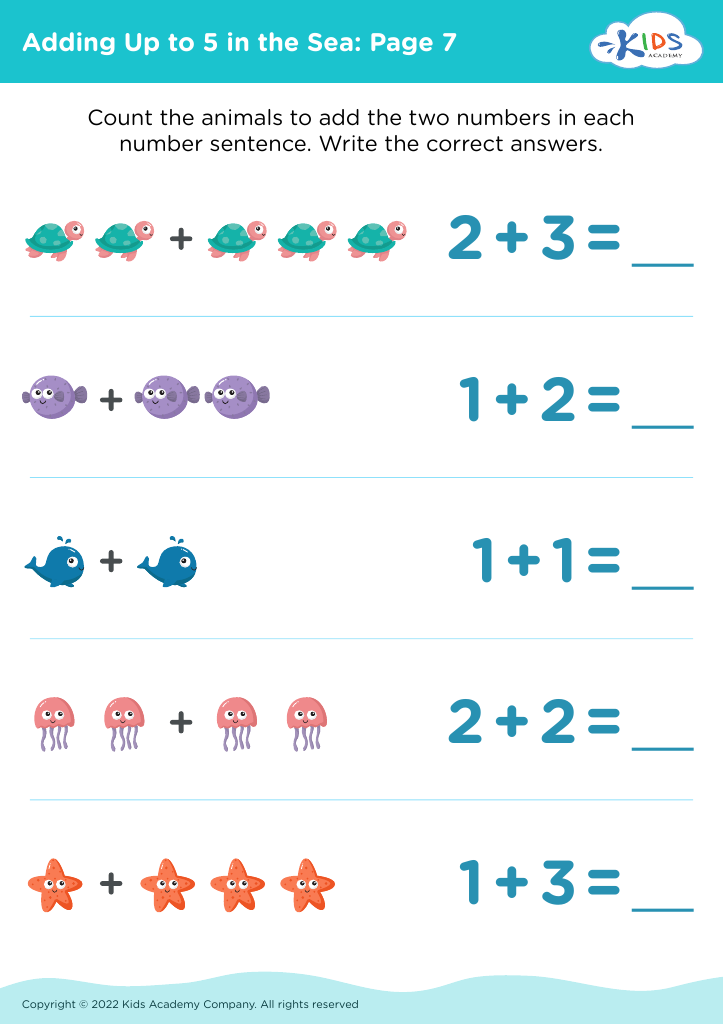
Adding Up to 5 in the Sea: Page 7

Adding Up to 5 in the Sea: Page 7

Adding Up to 5 in the Sea: Page 7
Worksheet
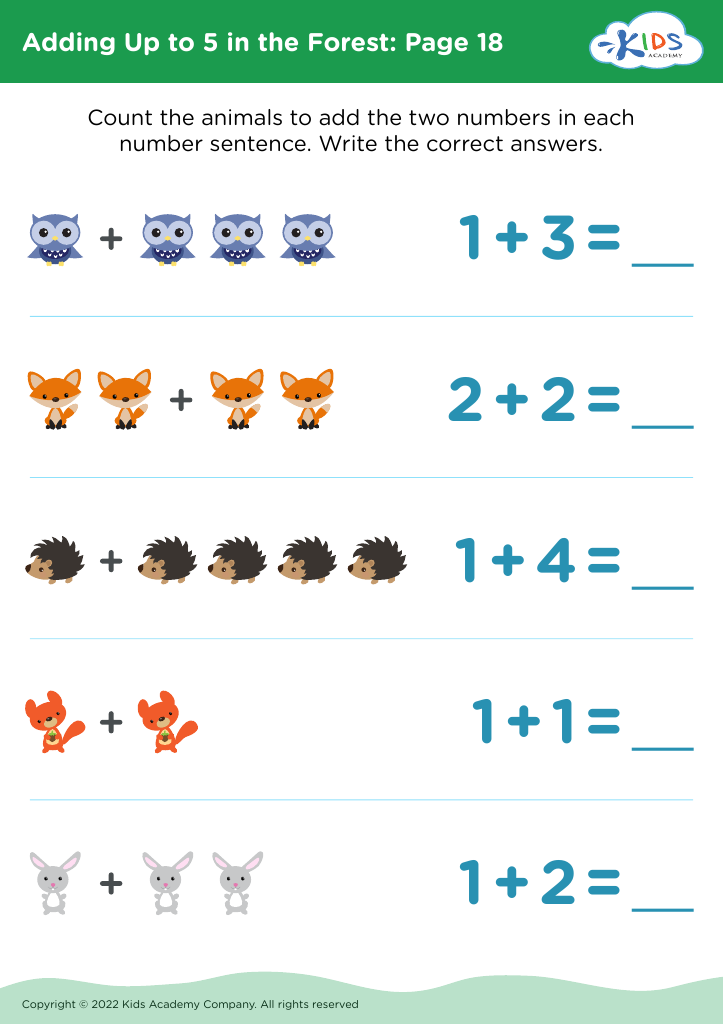
Adding Up to 5 in the Forest: Page 18
Worksheet
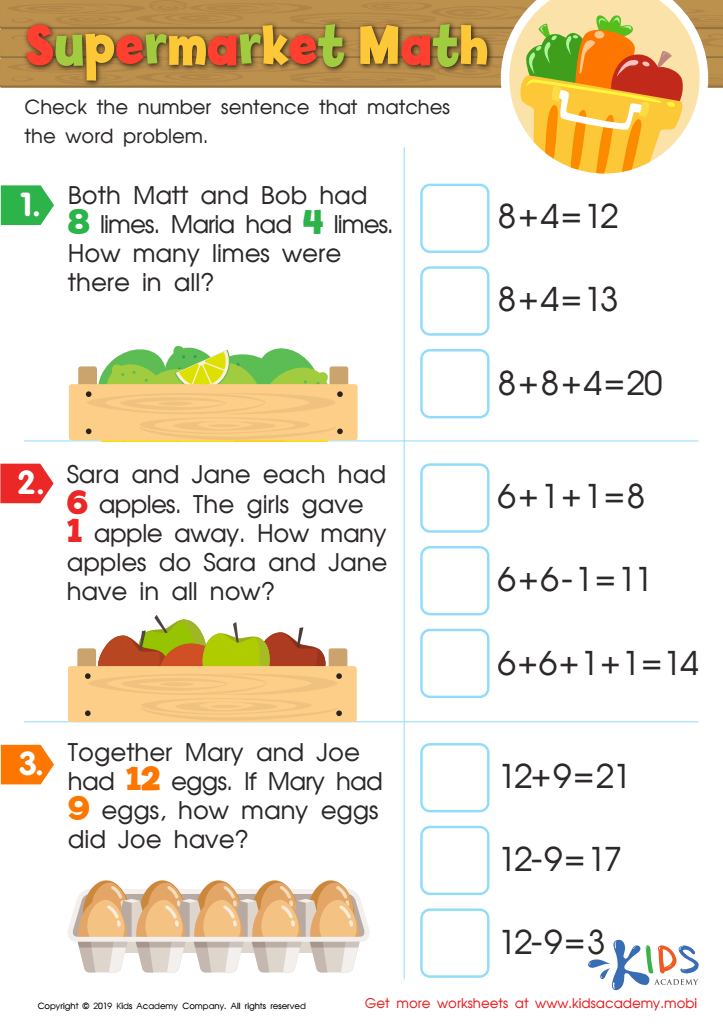
Supermarket Math Worksheet
Supermarket Math Worksheet

Take your kids to the supermarket and ask what they're looking forward to buying. Help them solve the three questions in the worksheet by interpreting each one into an equation, then choose the right answer.
Supermarket Math Worksheet

Worksheet
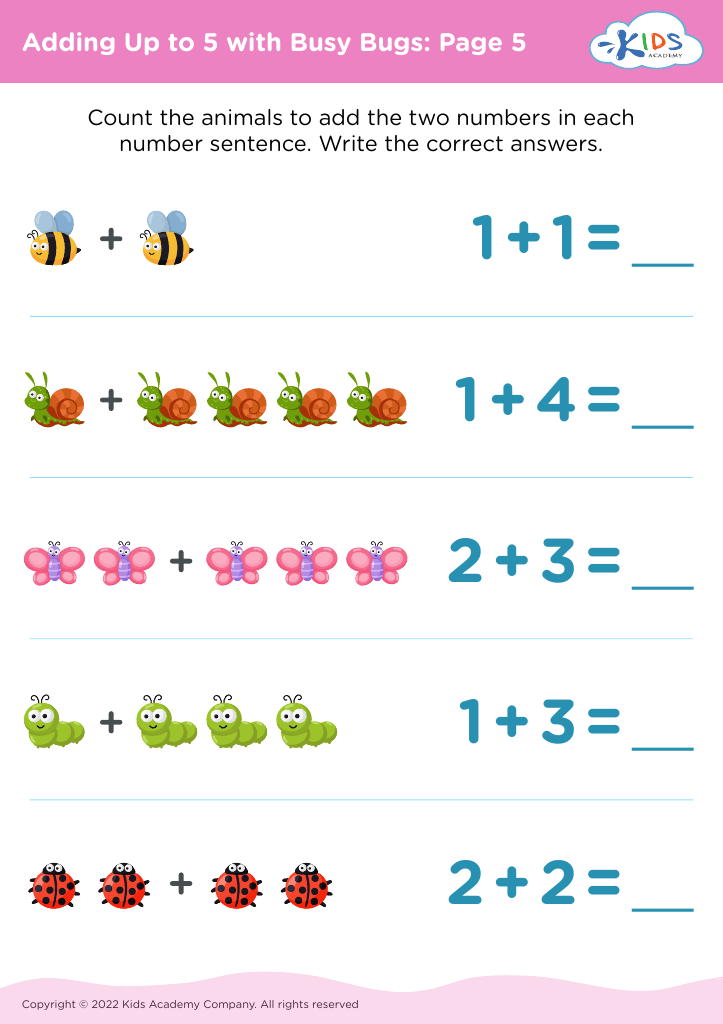
Adding Up to 5 with Busy Bugs: Page 5
Worksheet
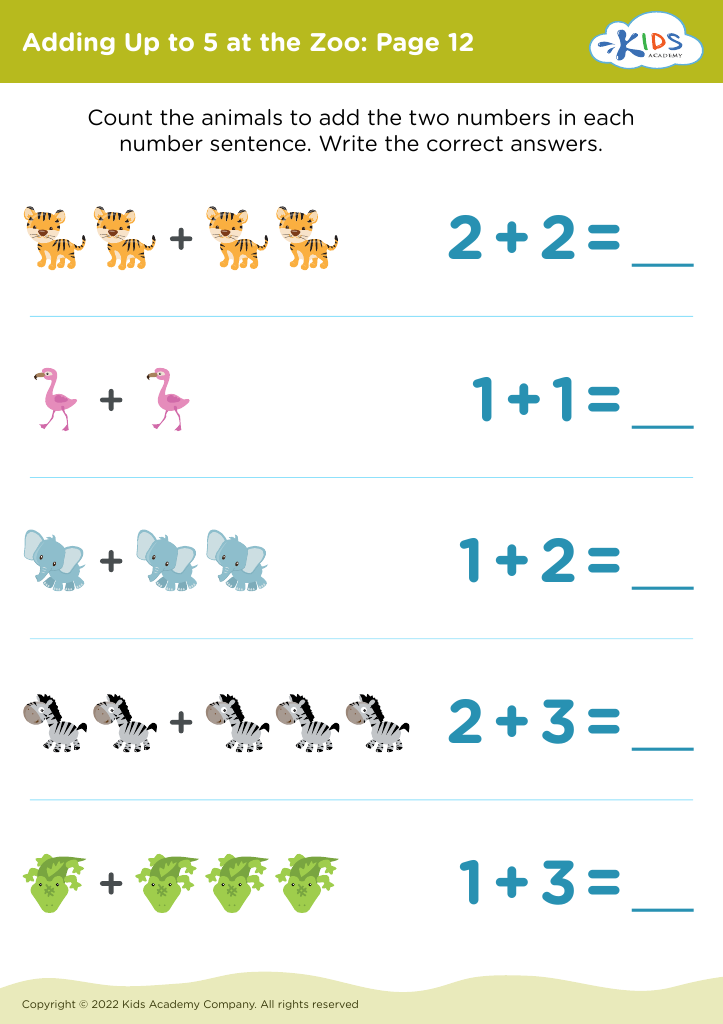
Adding Up to 5 at the Zoo: Page 12
Worksheet
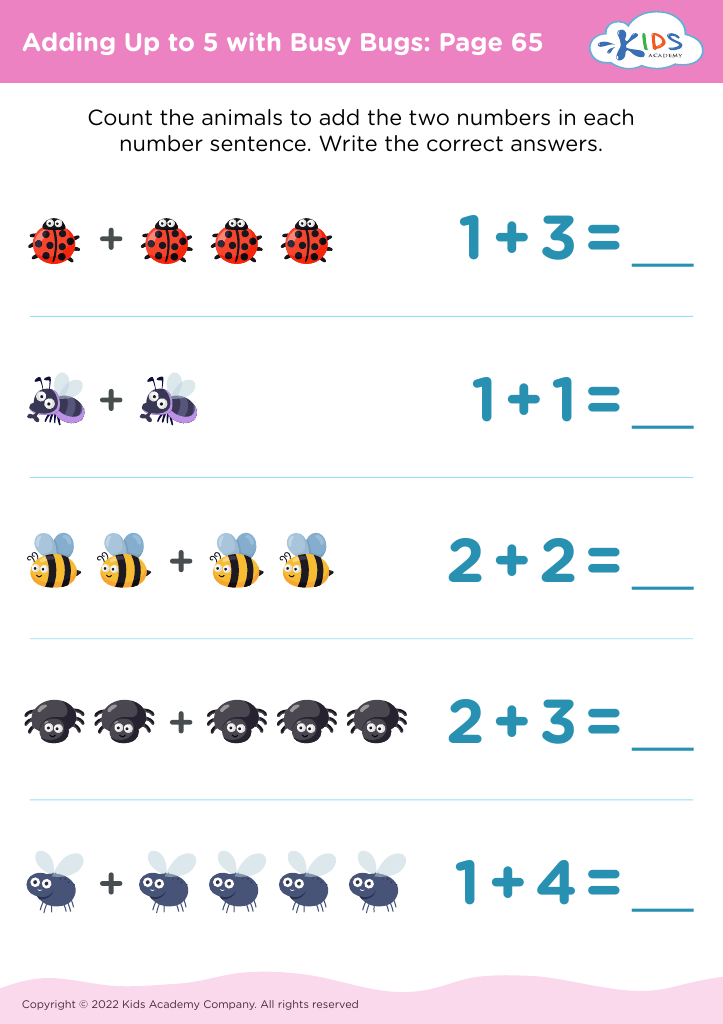
Adding Up to 5 with Busy Bugs: Page 65
Worksheet
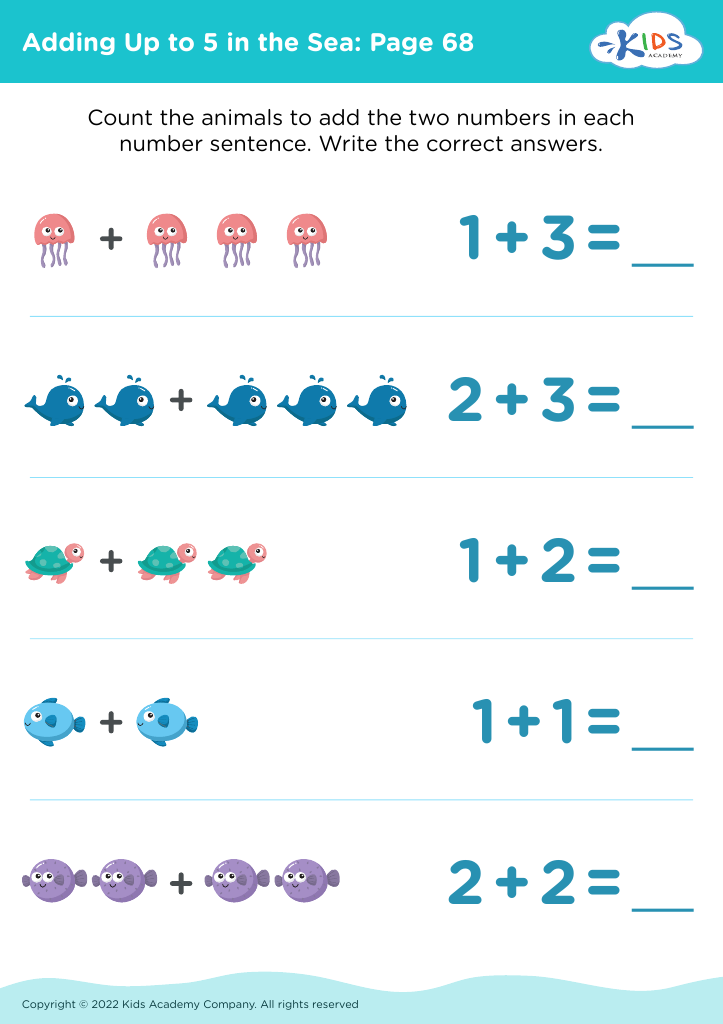
Adding Up to 5 in the Sea: Page 68
Worksheet
Adding Up to 5 in the Forest: Page 5
Worksheet
Adding Up to 5 at the Zoo: Page 39
Worksheet


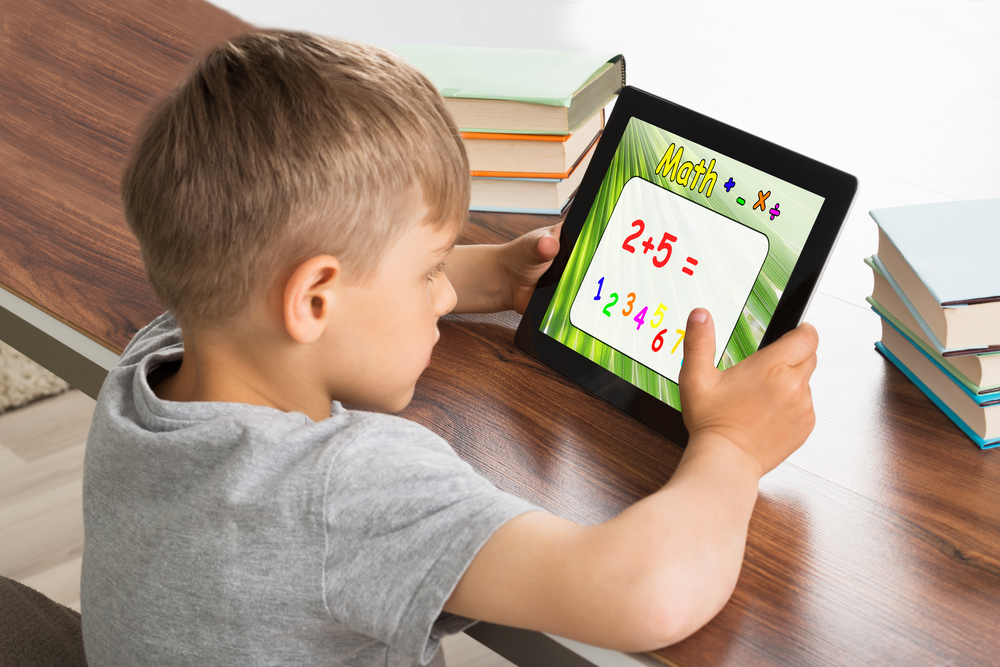
Basic arithmetic serves as the foundation for future mathematical understanding and problem-solving skills, making it a critical focus for parents and teachers of children aged 4-5. At this early age, children are naturally curious and eager to learn, which provides a prime opportunity to introduce concepts such as counting, addition, and subtraction in a fun and engaging way.

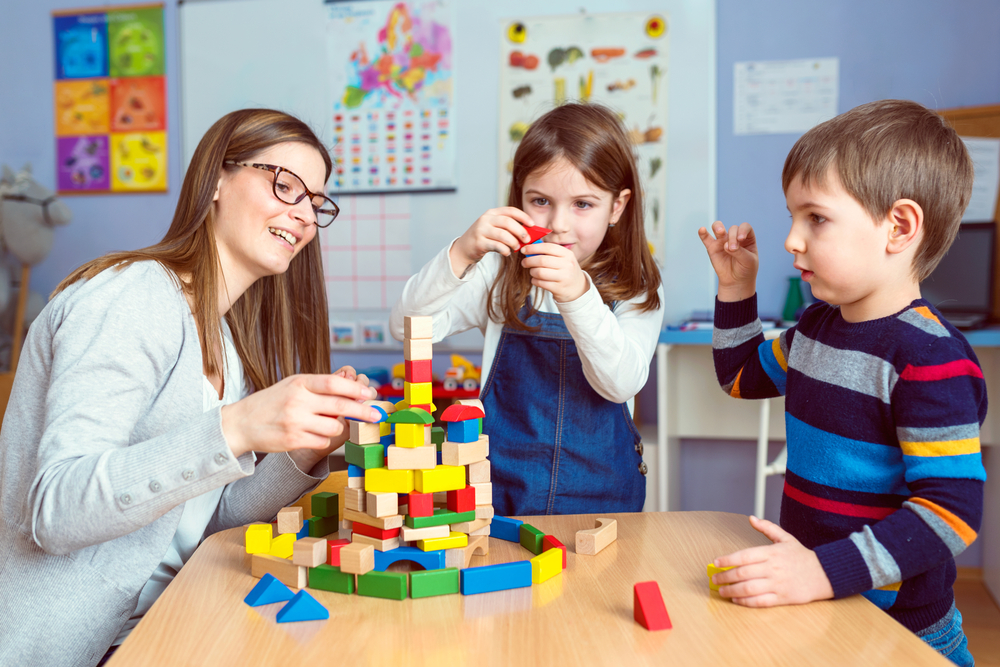
Learning basic arithmetic helps children develop essential cognitive skills, improving their ability to think logically and make connections. It fosters their emotional development, bolstering confidence and a sense of achievement when they grasp new concepts. These early mathematical experiences also encourage critical social skills through games and collaborative activities, promoting teamwork and communication.

Moreover, early exposure to arithmetic nurtures a positive attitude towards math, which can counteract common anxieties associated with the subject later in life. Parents and teachers can use everyday situations—like counting toys, distributing snacks, or comparing weights—to shape arithmetic into a practical, relatable endeavor.

Investing time in basic arithmetic today equips children with not just mathematical skills, but also resilience, creativity, and perseverance essential for navigating the complexities of school and beyond. Ultimately, ensuring young children grasp these principles will foster a lifelong appreciation for learning math.