Comparing object weights Worksheets for Ages 4-5
3 filtered results
-
From - To
Boost your child's understanding of weight comparison with our engaging and educational worksheets for ages 4-5. These expertly designed printables help young learners develop essential skills by comparing the weights of various objects. Through fun activities, children will practice observing differences, enhancing their analytical thinking, and improving their vocabulary. Perfect for both classroom and at-home learning, these worksheets provide a solid foundation for future math and science exploration. Visit Kids Academy to download and start building your child's confidence in understanding measurement concepts today. Let learning become a joyful adventure!
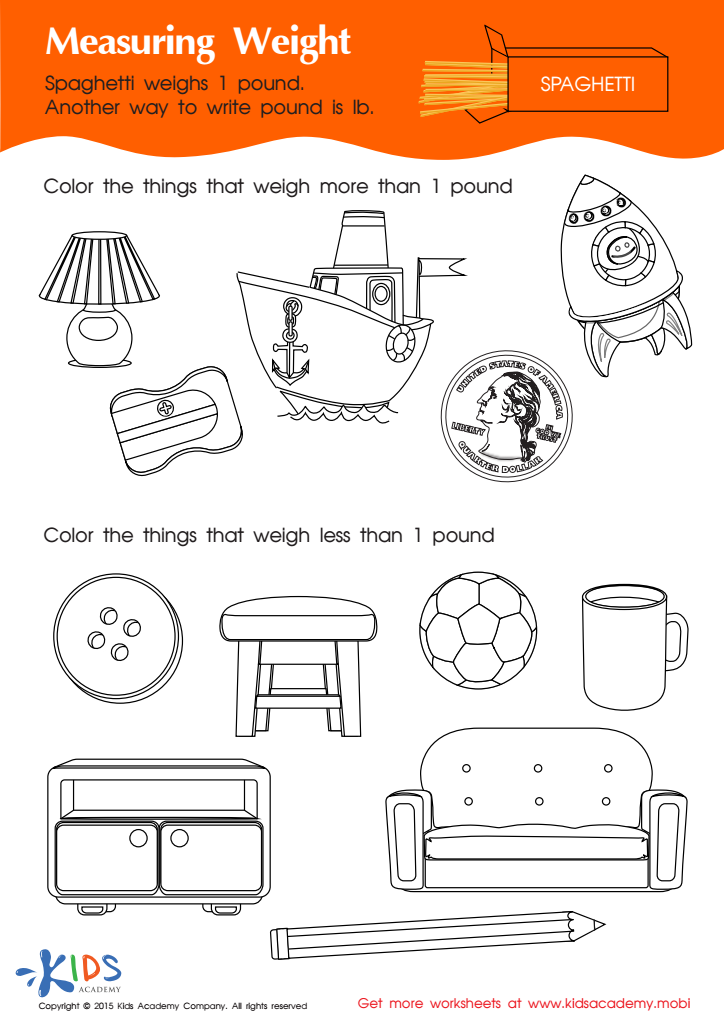
 Assign to My Students
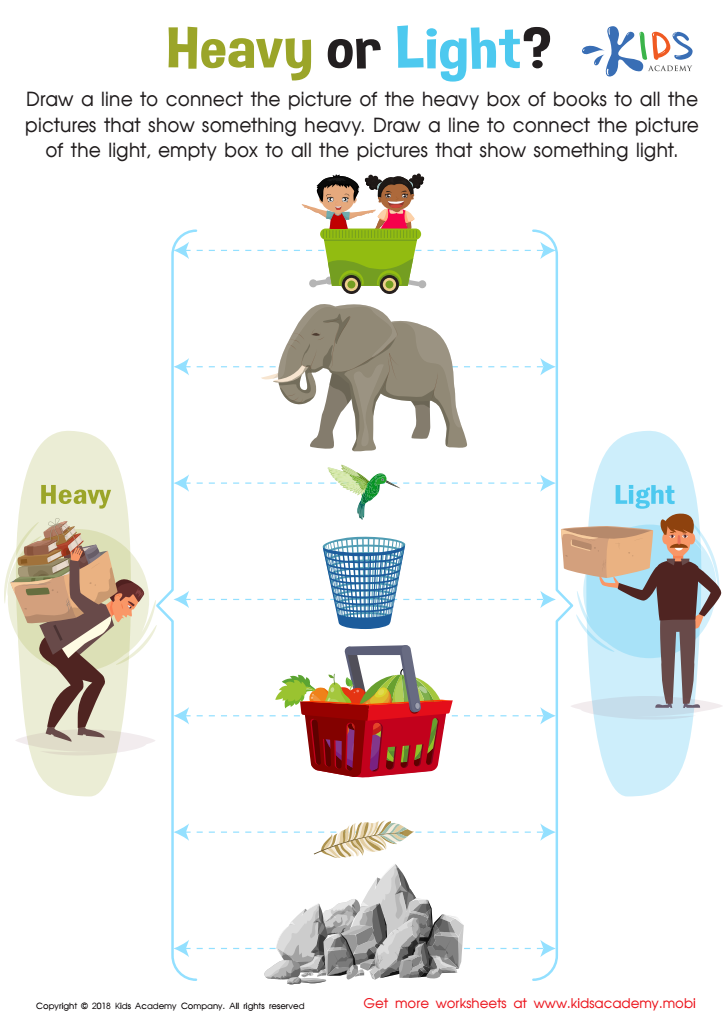
Heavy or Light? Worksheet
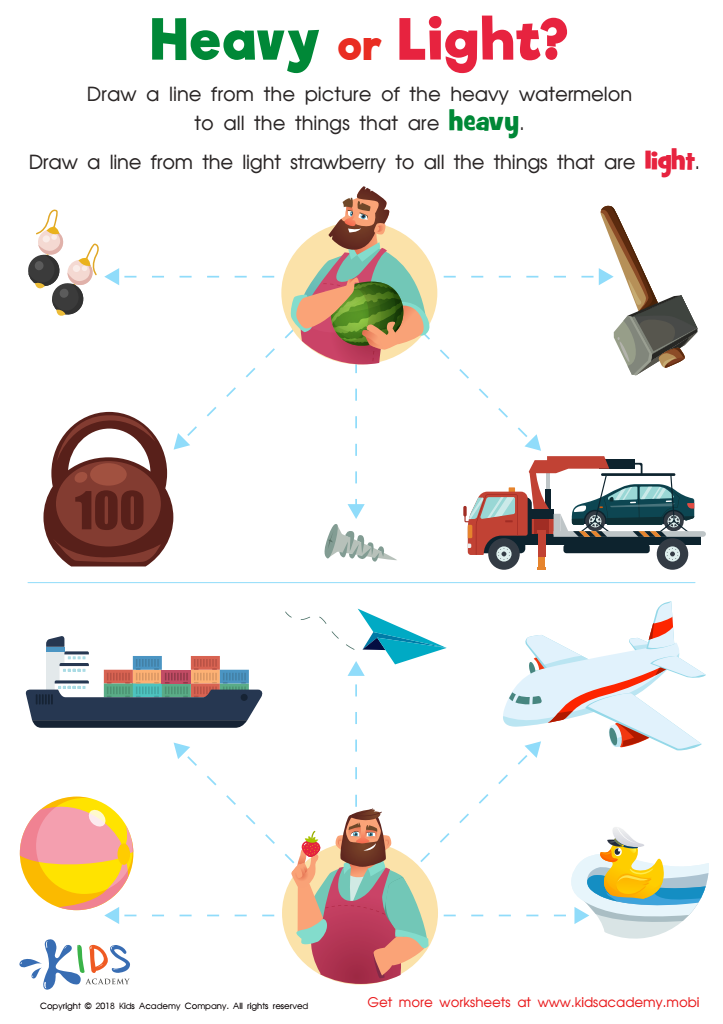
Heavy or Light? Worksheet





At ages 4-5, children are in a critical stage of cognitive development where they begin to grasp basic concepts that form the foundation for future learning. Comparing object weights is an essential early math skill that engages young minds in hands-on experiences, fostering curiosity and comprehension of the world around them.
Parents and teachers should care about this activity for several reasons. Firstly, it introduces fundamental principles of measurement and comparison, helping children understand that objects can be quantified and compared in different ways. This paves the way for more complex mathematical concepts later on.
Secondly, comparing weights enhances observational and critical thinking skills. Children learn to focus on differences and similarities, promoting analytical thought processes. This activity requires them to make predictions, observe outcomes, and process information, which are critical aspects of scientific reasoning.
Additionally, it supports fine motor development as children handle various objects and use scales or balances. These practical experiences also improve hand-eye coordination and motor planning.
Finally, engaging in discussions about weight introduces vocabulary like "heavier," "lighter," and "weight," enhancing language skills. Parents and teachers can foster interactive, playful learning, making math both fun and meaningful, and setting a positive trajectory for future educational experiences.








