Counting proficiency Worksheets for Ages 4-5
12 filtered results
-
From - To
Enhance your child's counting skills with our engaging Counting Proficiency Worksheets designed for ages 4-5. These worksheets offer a fun and interactive way to develop foundational math concepts through colorful illustrations and lively activities. Children will practice counting objects, recognizing numbers, and developing one-to-one correspondence in a supportive learning environment. Our carefully-crafted exercises align with early childhood education standards, ensuring a comprehensive learning experience. By utilizing our Counting Proficiency Worksheets, young learners will build confidence and proficiency in numbers, setting them on a path to success in mathematics. Start exploring our collection today to inspire a love for numbers!
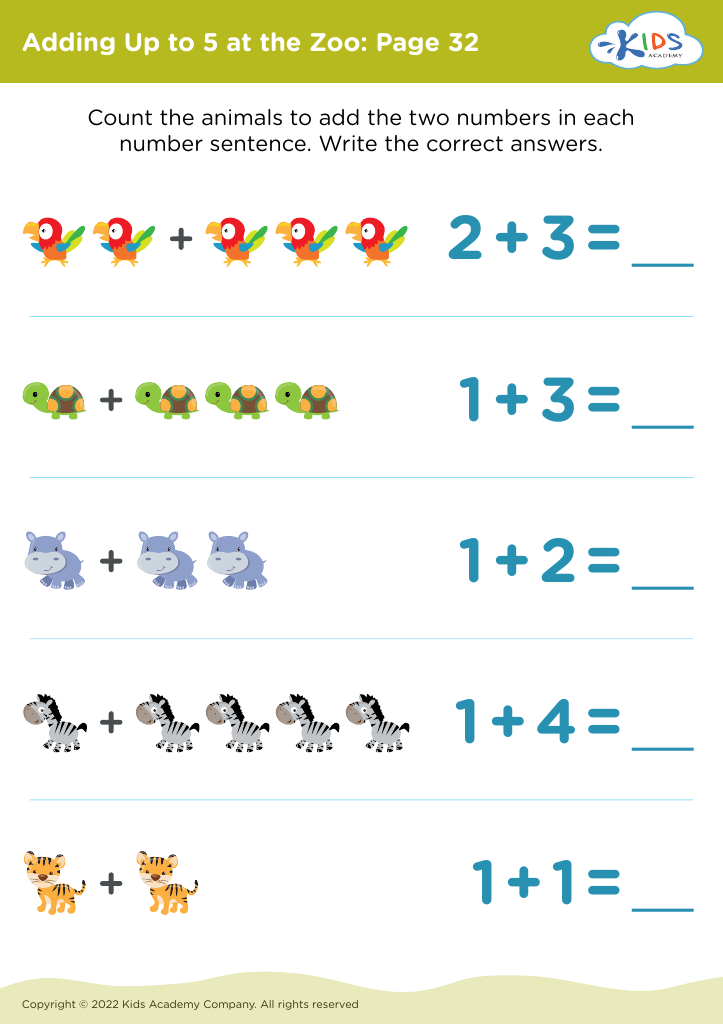
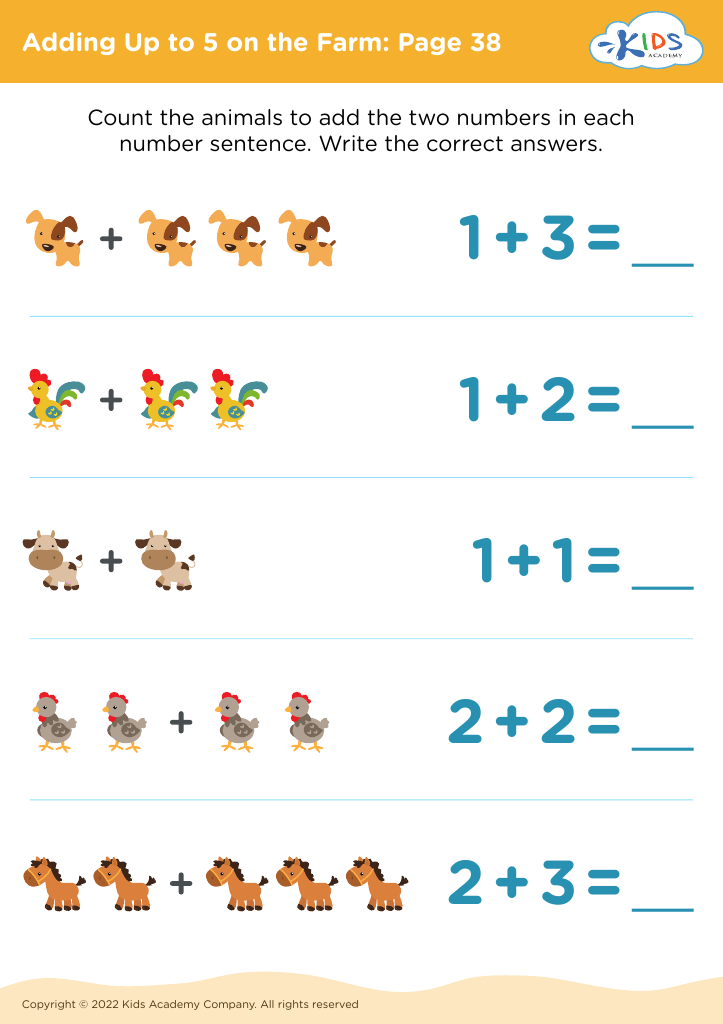
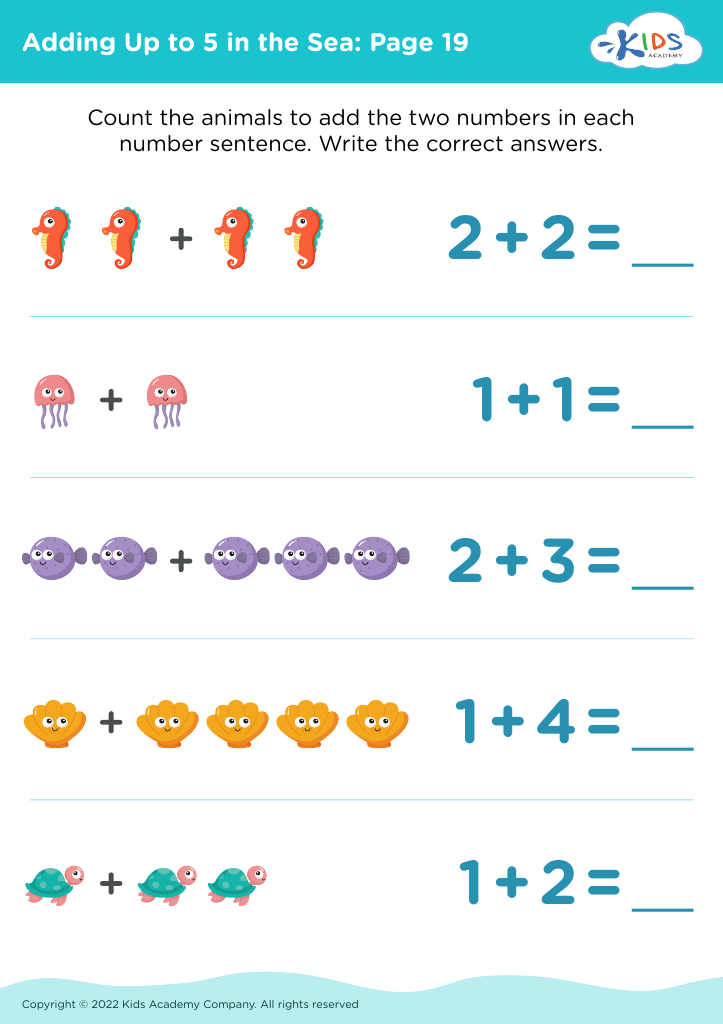
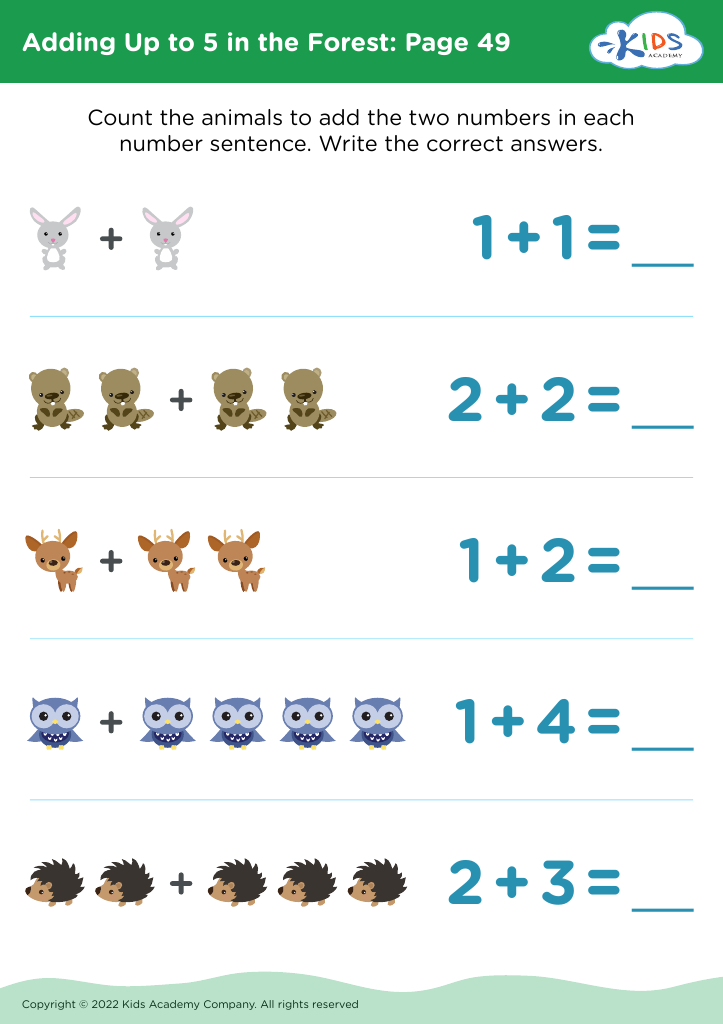
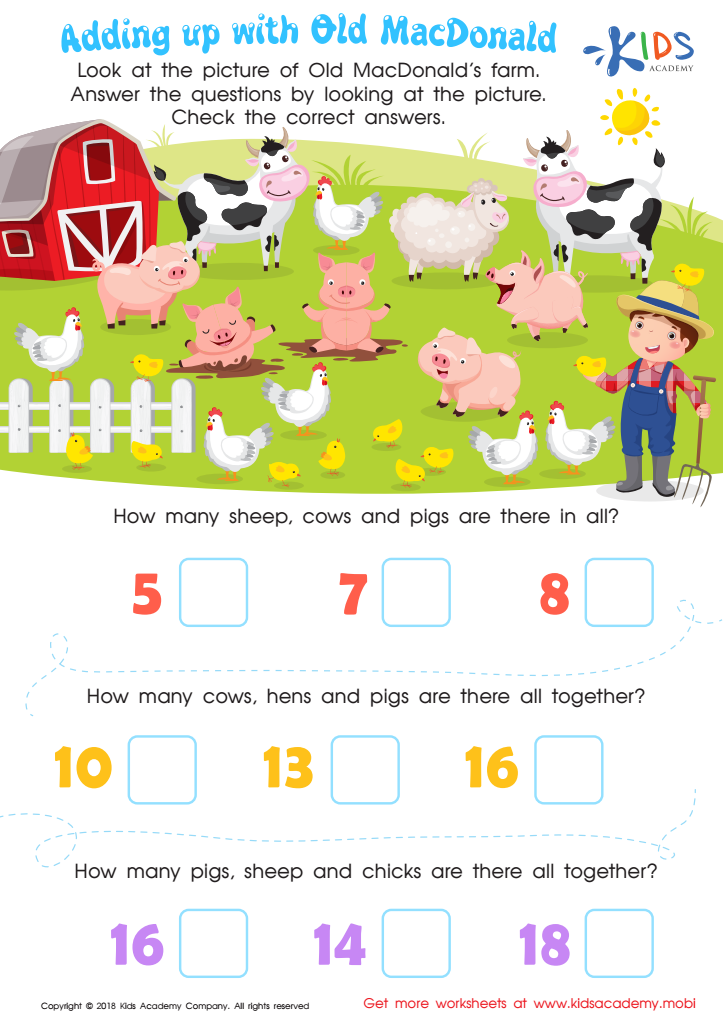
Adding Up with Old MacDonald Worksheet
 Assign to My Students
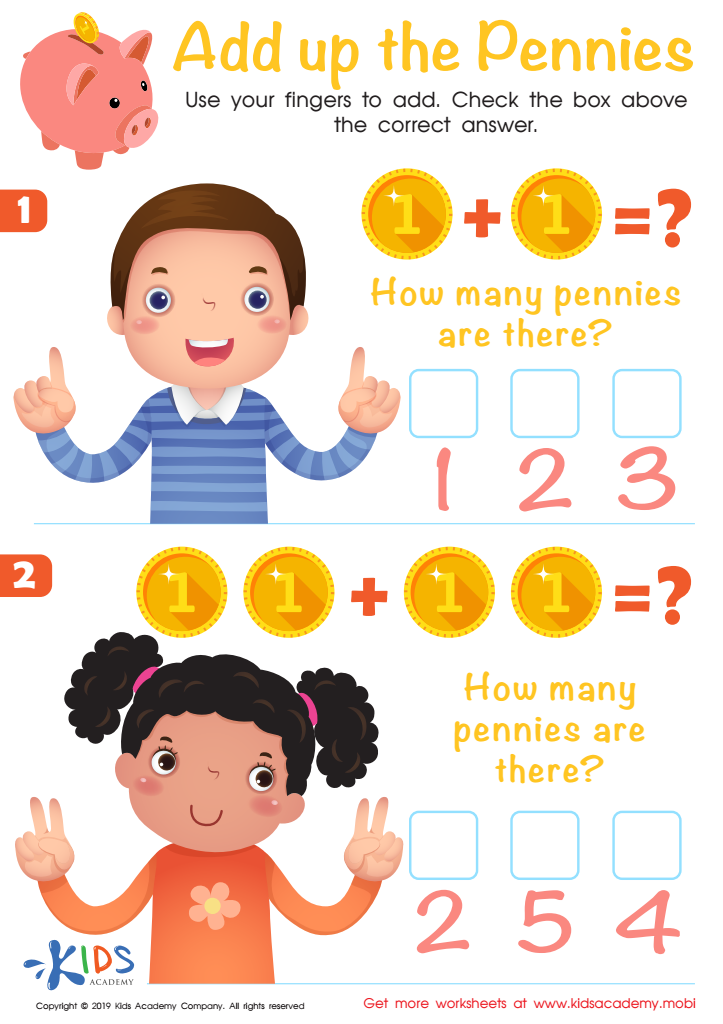
Add up the Pennies Worksheet
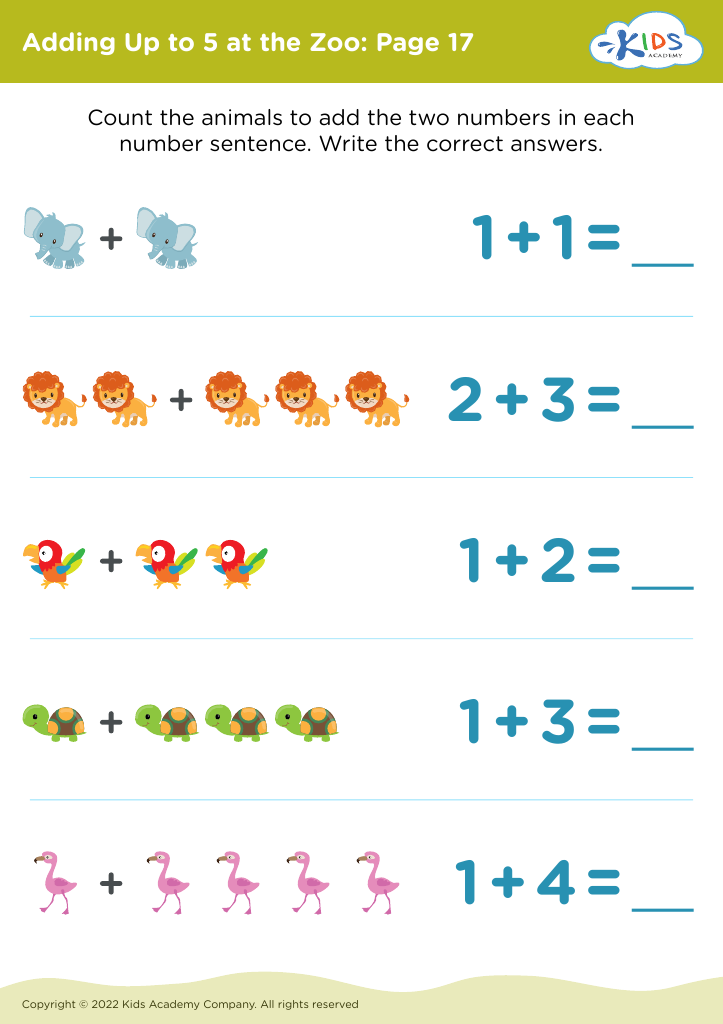
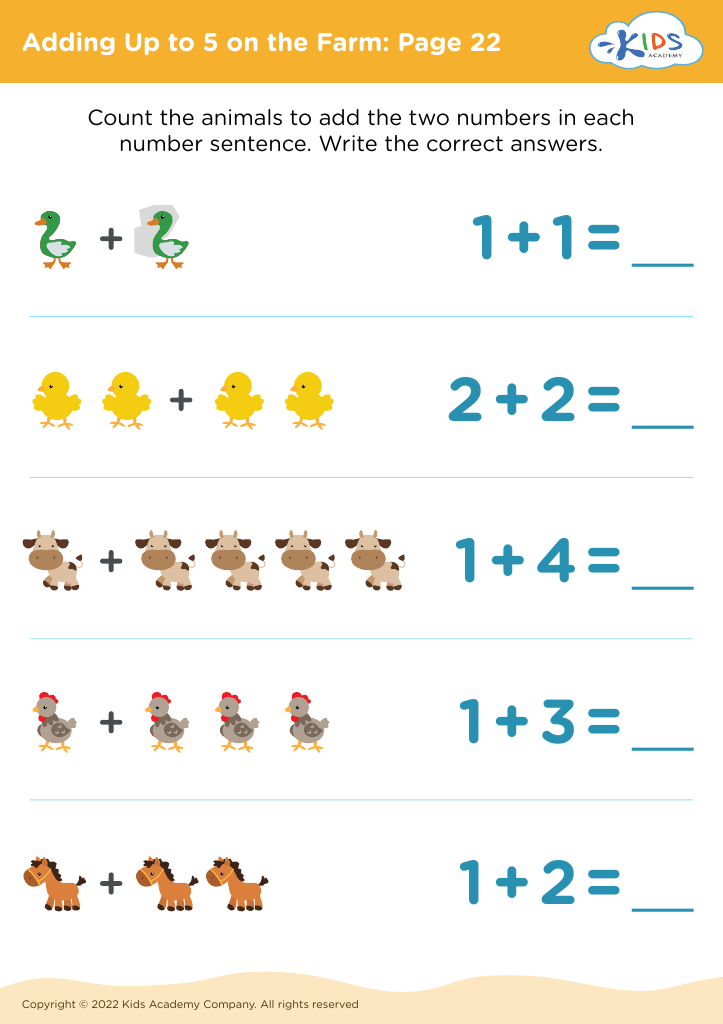
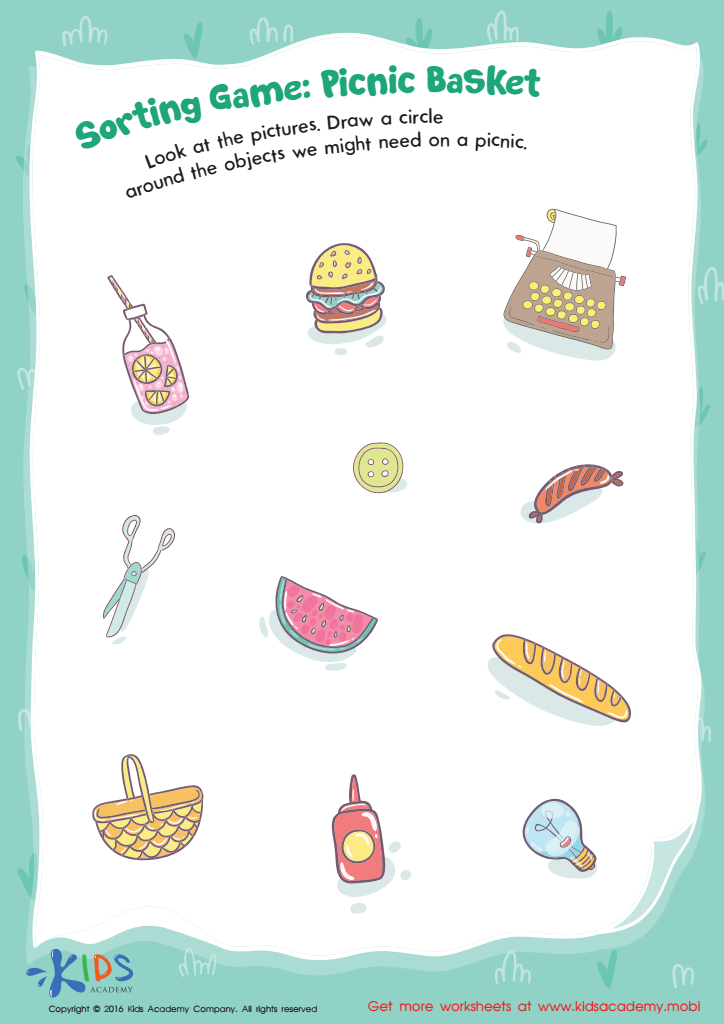
Picnic Basket Sorting Worksheet
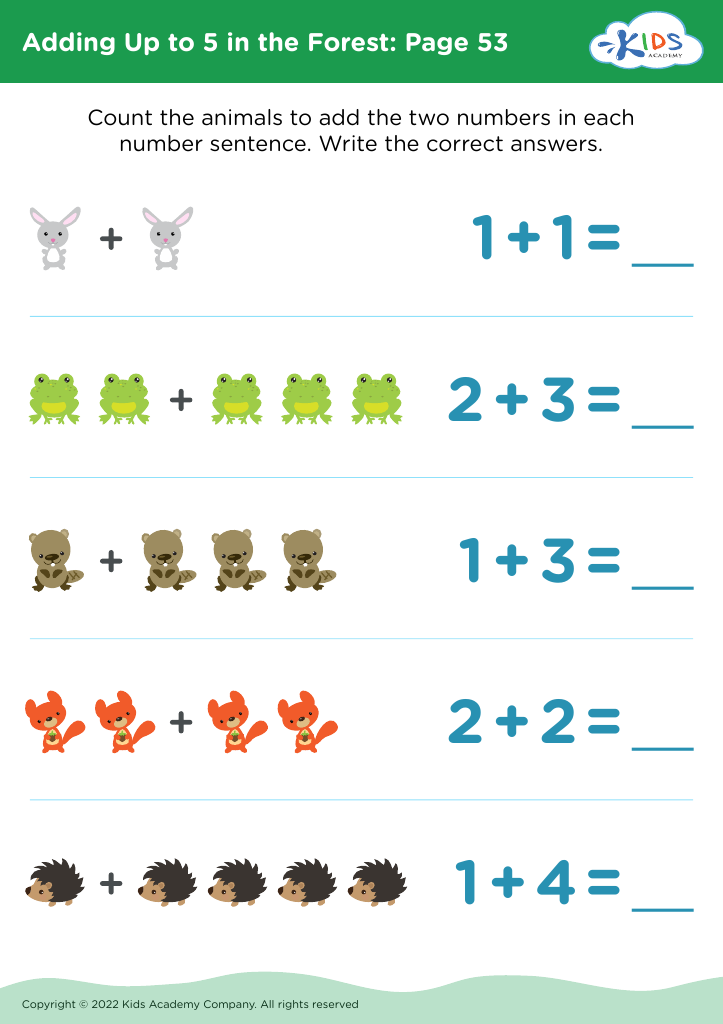
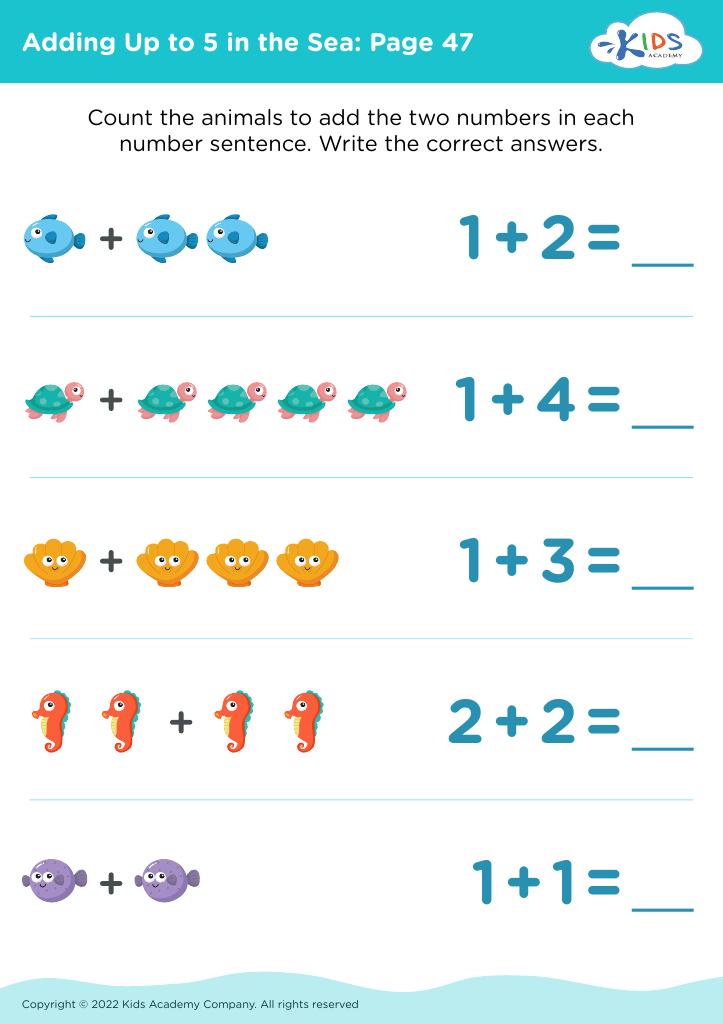
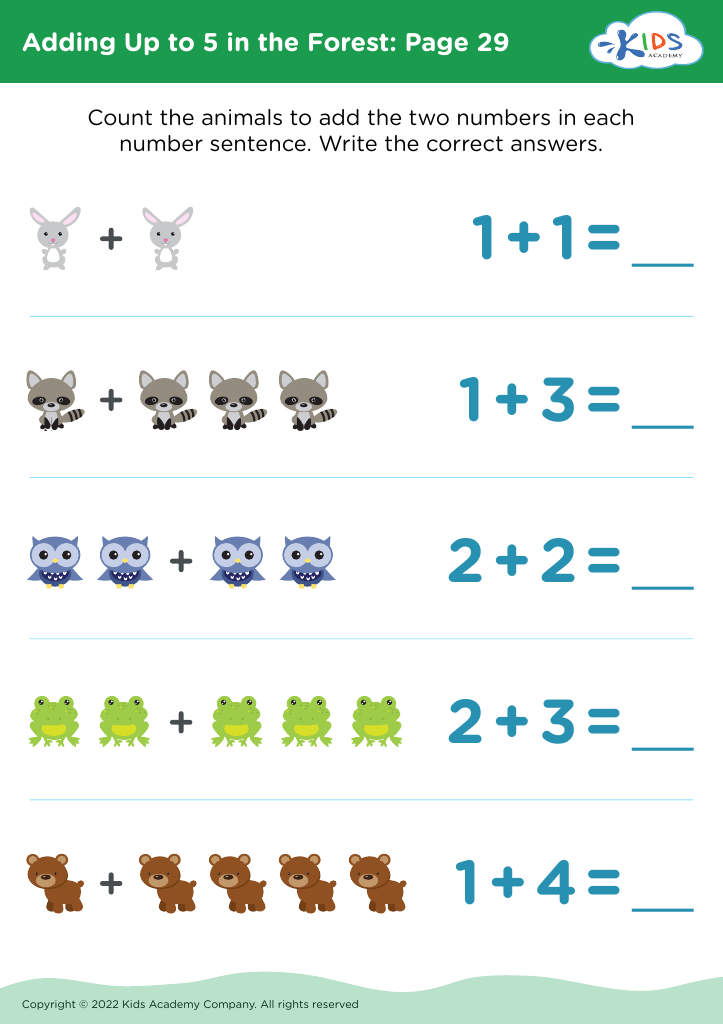







Counting proficiency for children aged 4-5 lays the foundation for their future mathematical understanding and overall cognitive development. At this early stage, children begin to grasp fundamental concepts that will be crucial as they progress in school. When children learn to count, they develop number sense, which includes recognizing quantities and understanding the relationships between numbers.
Moreover, counting plays a vital role in enhancing children's problem-solving skills and critical thinking. It encourages them to think abstractly and boosts their confidence in handling mathematical concepts later on. Research indicates that early counting proficiency correlates with later academic success, making it a key area for parents and teachers to focus on.
Additionally, counting engages children's curiosity and imagination. It often involves fun activities, such as counting objects during play, which fosters a positive attitude toward learning. By introducing engaging counting activities, teachers and parents can promote a love for mathematics early in life, which can lead to better outcomes in subjects like science and engineering later on.
In summary, nurturing counting proficiency at this tender age is crucial for building a strong foundation for children's future educational journeys, fostering their cognitive skills and positive attitudes toward learning.








