Directional understanding Worksheets for Ages 4-5
4 filtered results
-
From - To
Enhance your child’s spatial awareness and directional language skills with our engaging Directional Understanding Worksheets, specifically designed for ages 4-5. These worksheets use fun, interactive activities to help young learners understand concepts such as left, right, up, down, and more. With colorful visuals and age-appropriate exercises, children will develop essential skills in directionality essential for navigation and everyday tasks. Encourage independent learning while your little one enjoys exploring positions and movements through playful illustrations. Whether at home or in the classroom, these worksheets create an enjoyable foundation for your child's growing knowledge and confidence in understanding direction. Download now and watch them thrive!
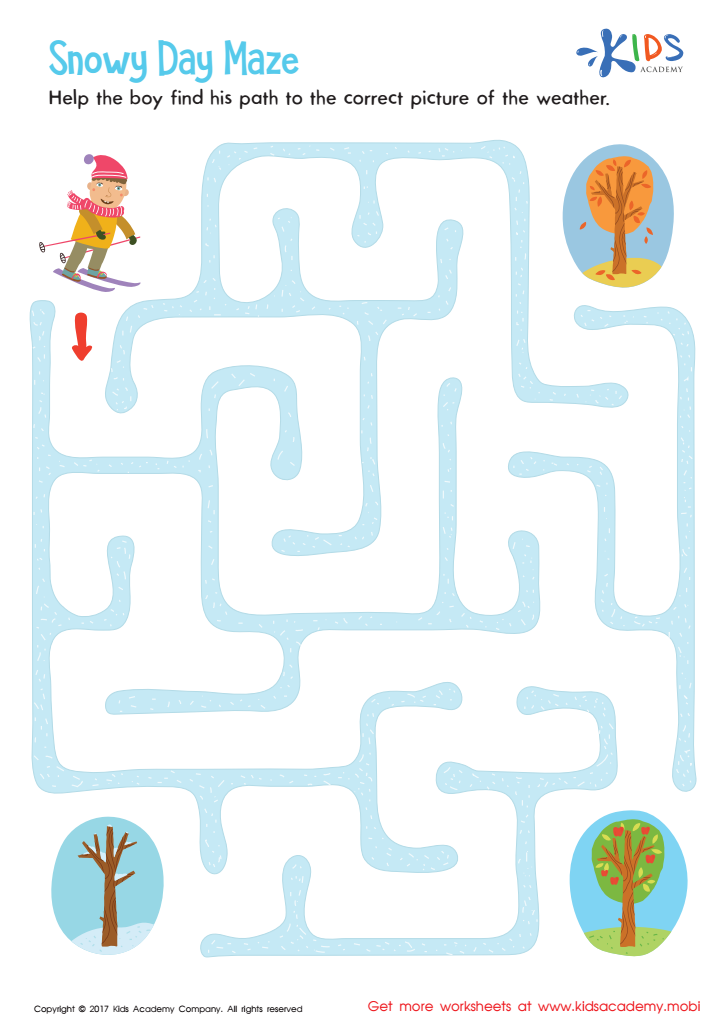
 Assign to My Students
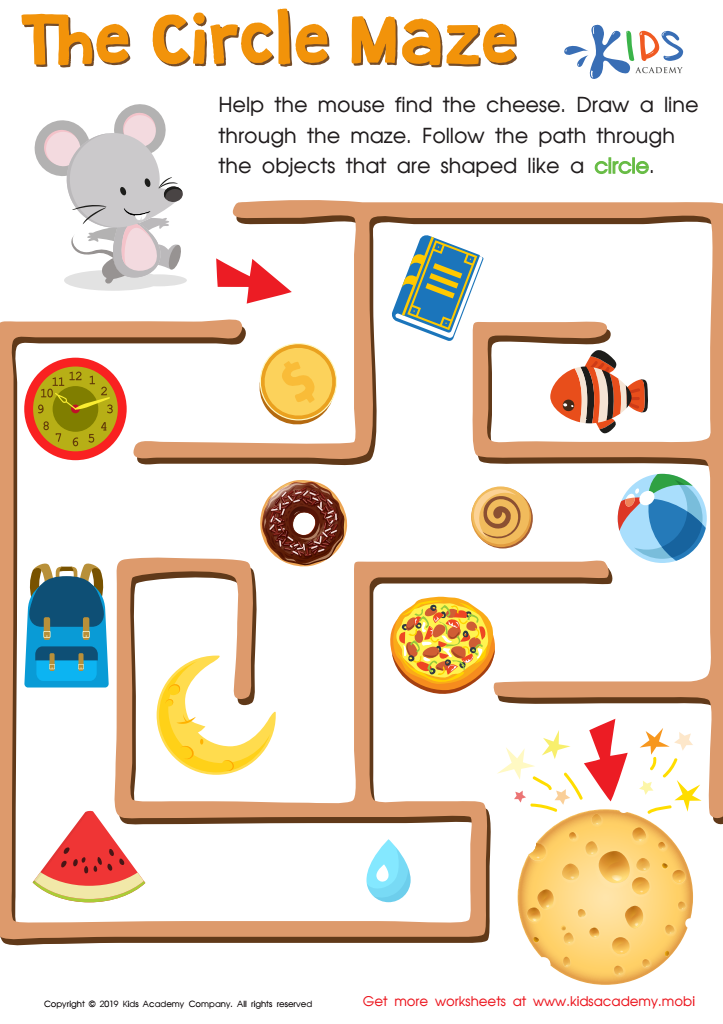
The Circle Maze Worksheet
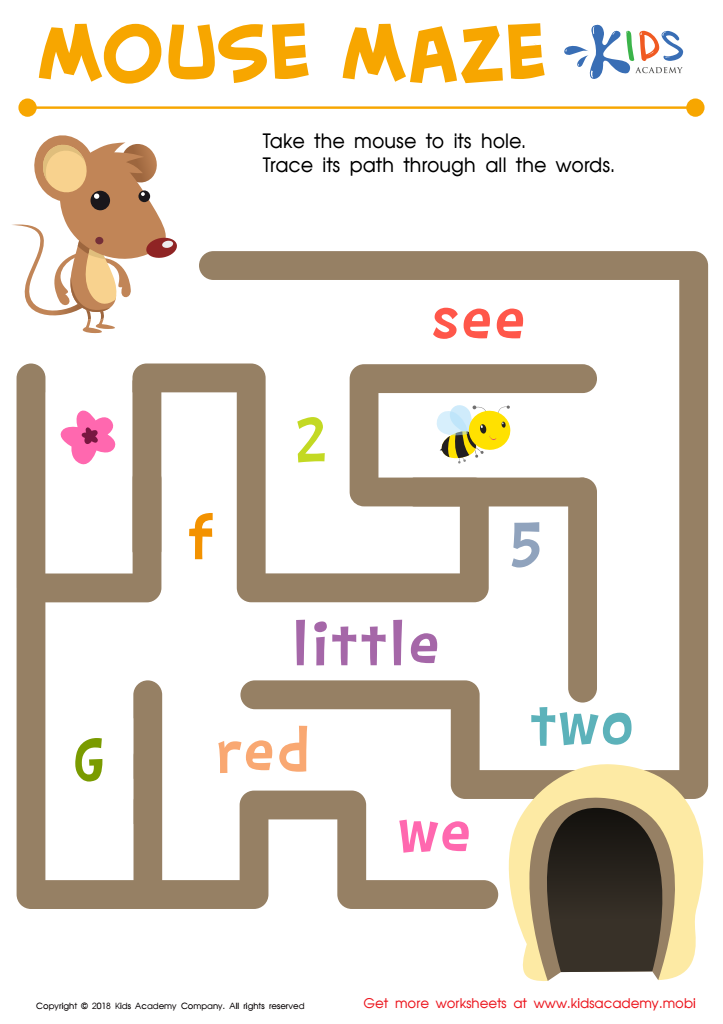
Find Words Mouse Maze Worksheet
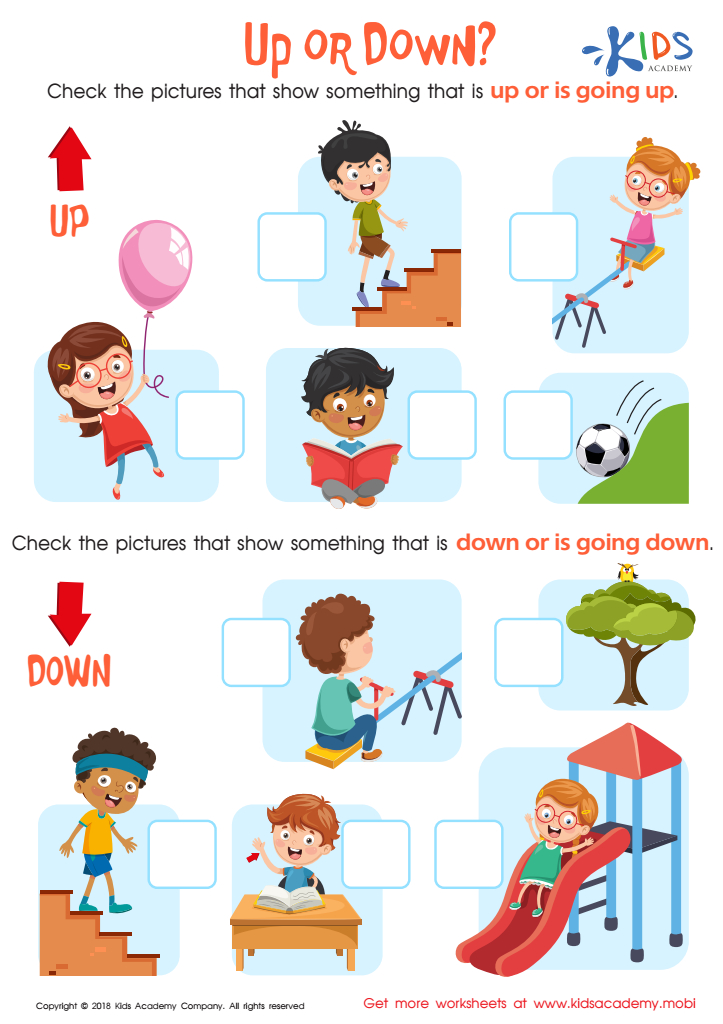
Up or Down Worksheet







Directional understanding is crucial for children aged 4-5 as it lays the foundation for their overall cognitive development and spatial awareness. At this age, kids are like little explorers, eager to make sense of the world around them. Understanding concepts such as left, right, up, down, front, back, and in-between helps children navigate their environment more effectively. This skill not only enhances their ability to move safely and confidently but also supports their early math skills, laying the groundwork for concepts like geometry and measurement later on.
Moreover, directional understanding plays a pivotal role in language development and social interactions. When children can follow instructions that involve directions, or understand positional words during conversations and play, they become more engaged learners. This, in turn, nurtures their communication skills and fosters collaboration during group activities.
For parents and teachers, fostering directional understanding is a way to enrich playtime and learning experiences. Simple activities like scavenger hunts, direction-based games, and real-life navigation tasks can be both fun and educational. It’s not just about teaching kids where to go—it's about empowering them to explore, establish relationships in their surroundings, and develop essential problem-solving skills that will benefit them for a lifetime.








