Letter recognition Worksheets for Ages 4-5 - Page 5
99 filtered results
-
From - To
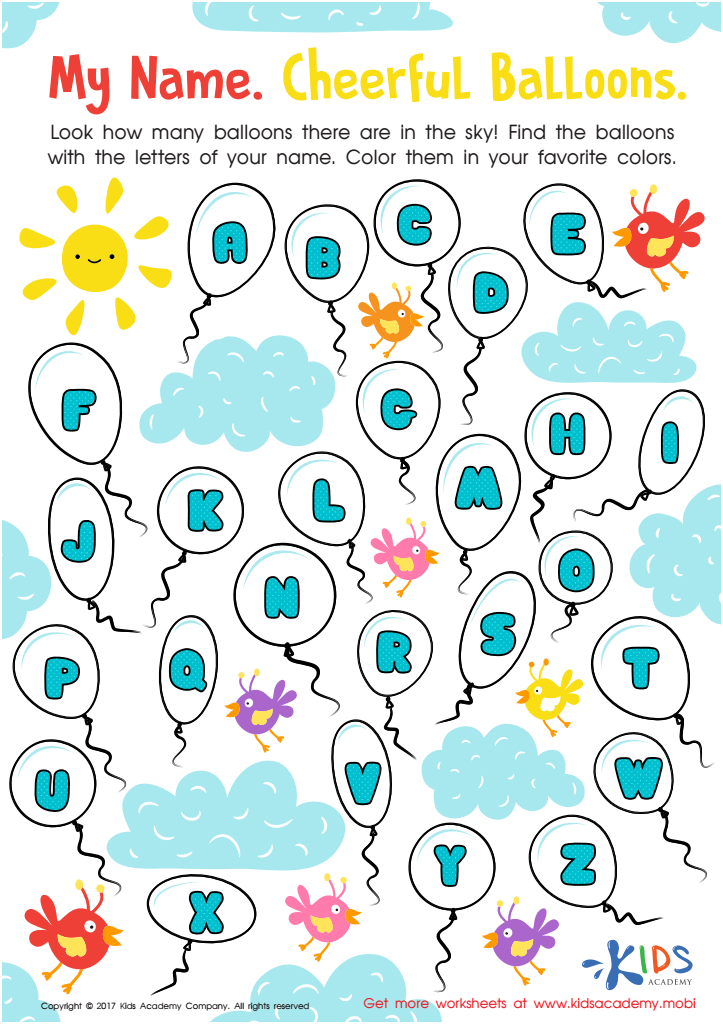
My Name: Cheerful Balloons Worksheet
 Assign to My Students
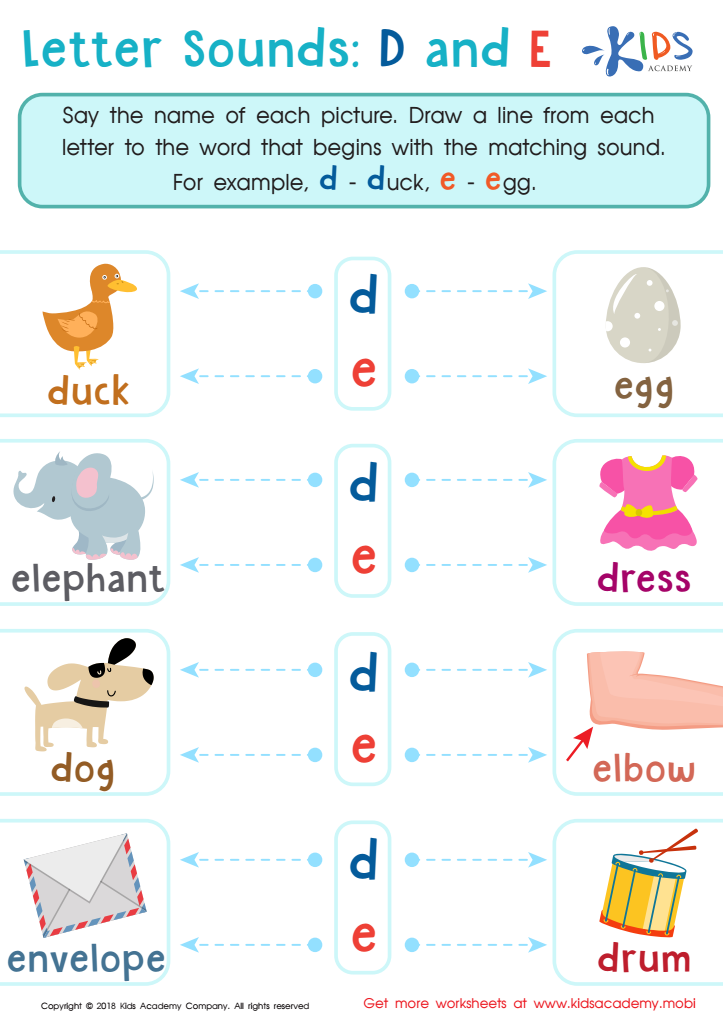
Letter D and E Sounds Worksheet
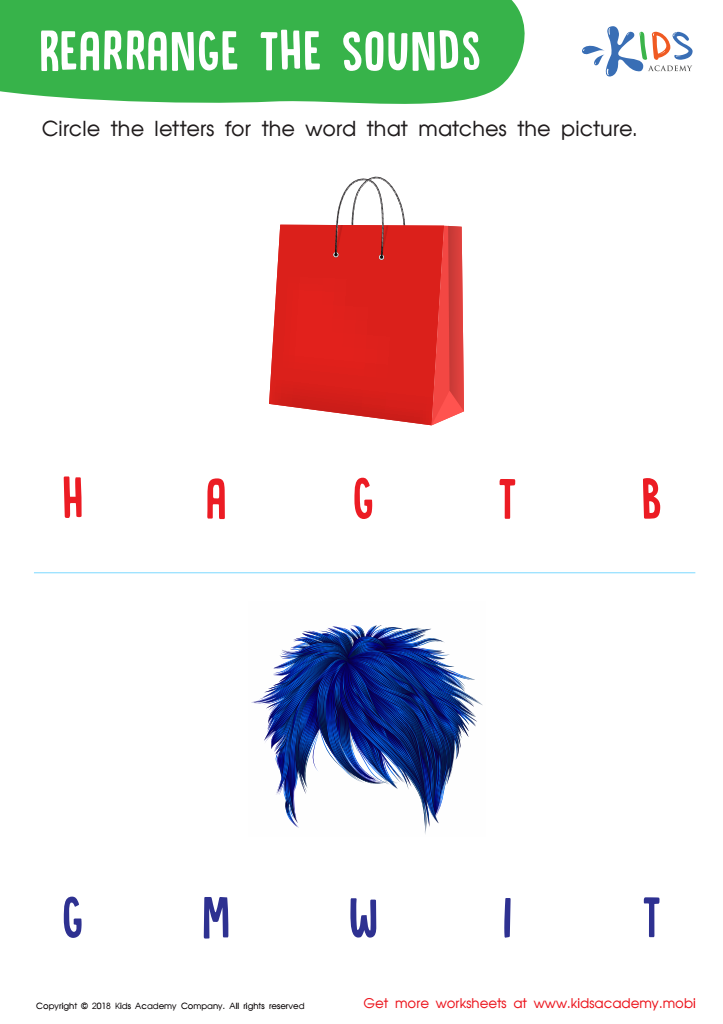
Rearrange the Sounds Worksheet






Letter recognition is a fundamental skill that lays the groundwork for reading and writing, making it crucial for children ages 4-5. At this early stage, children begin to connect letters with sounds and understand the concept that written text conveys meaning. Recognizing letters allows kids to decode words, paving the way for improved literacy skills in the future.
For parents and teachers, fostering letter recognition can boost children's confidence and motivation in learning. It incorporates play-based activities, like singing the alphabet song or playing letter games, making learning engaging and enjoyable. Moreover, when children are proficient in recognizing letters, they are more likely to participate in reading activities, increasing their exposure to vocabulary and language structure.
By prioritizing letter recognition, parents and teachers help establish essential foundational skills. This not only supports academic growth but also promotes cognitive development. As children transition into more complex literacy tasks, their early familiarity with letters will serve as a stepping stone, facilitating smoother reading acquisition with less frustration. Ultimately, letter recognition can galvanize a lifelong love for reading and learning, enriching children's educational journeys.








