Mathematical Comprehension Worksheets for Ages 4-5
3 filtered results
-
From - To
Discover our engaging Mathematical Comprehension Worksheets for ages 4-5, designed to build foundational math skills while making learning fun! These interactive worksheets aim to develop counting, number recognition, and basic addition concepts through colorful illustrations and playful exercises. Children will explore shapes, patterns, and simple problem-solving with engaging activities tailored to their developmental level. Our resources encourage hands-on learning and boost confidence in young learners. Ideal for both classroom and home activities, these worksheets foster a love for mathematics, preparing children for future challenges. Download today to inspire math mastery in your little ones!
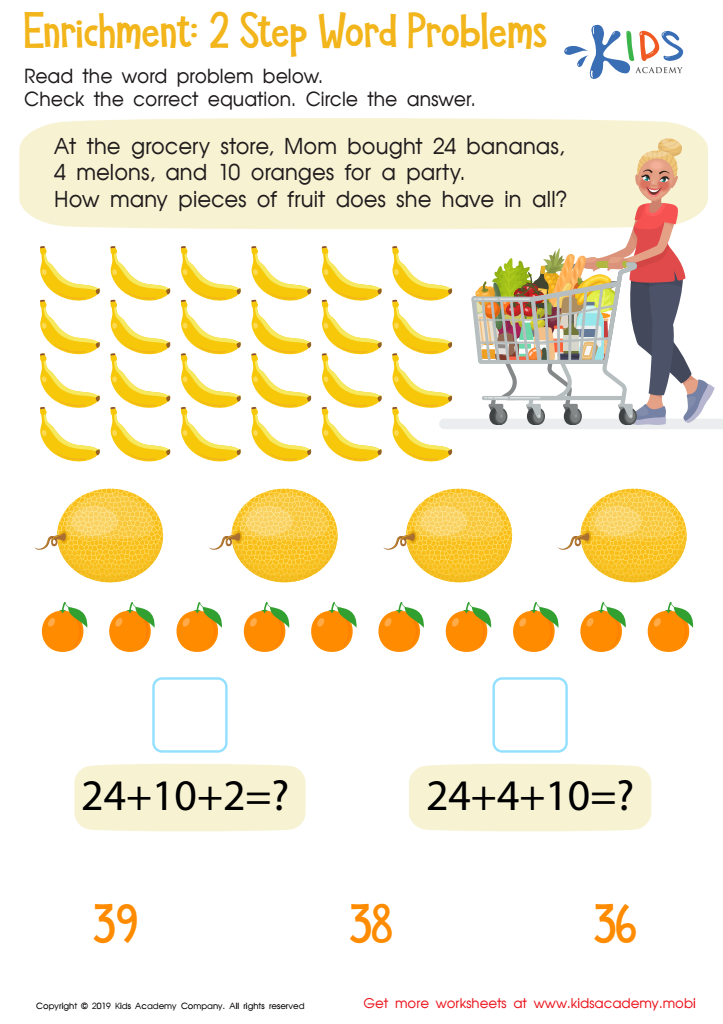
Enrichment -2 Step Word Problems Worksheet
 Assign to My Students
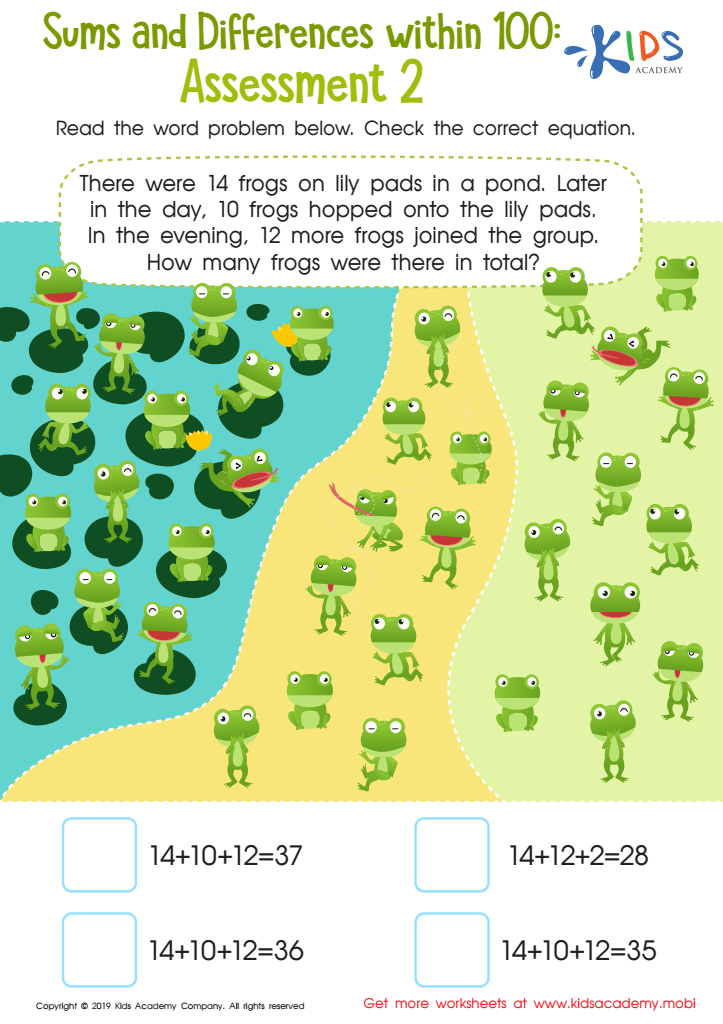
Sums and Differences Within 1 - Assessment 2 Worksheet
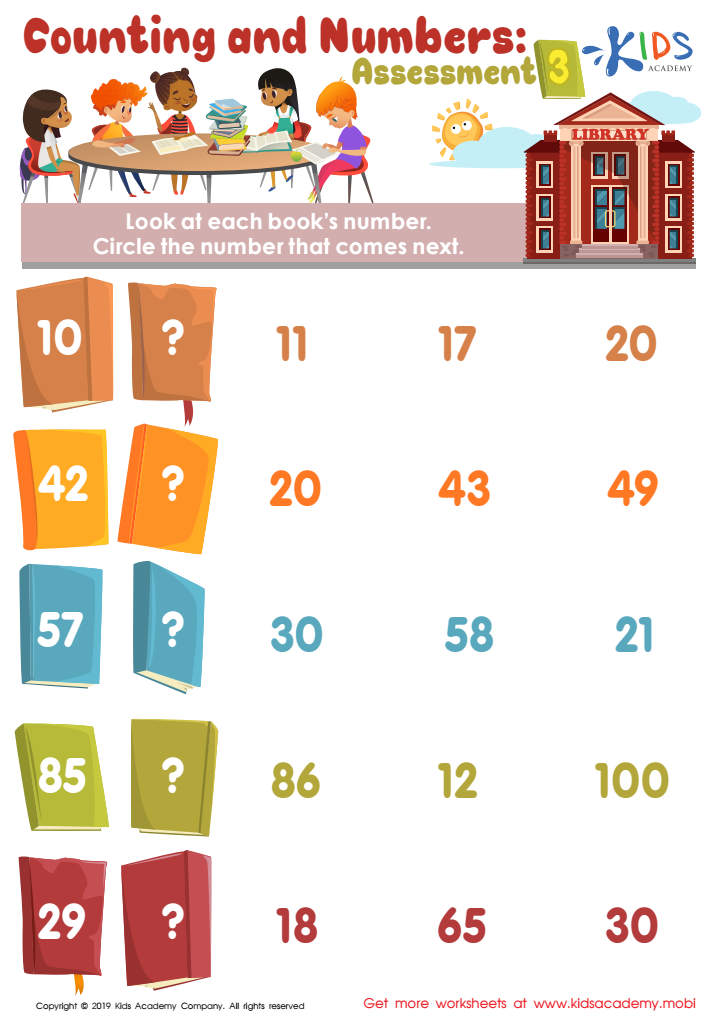
Counting and Numbers: Assessment Worksheet








Mathematical comprehension is crucial for children aged 4-5, as it serves as the foundation for their future learning and cognitive development. At this age, children are naturally curious and eager to explore the world around them, making it an ideal time to introduce fundamental math concepts.
Firstly, early mathematical skills contribute to critical thinking and problem-solving abilities. When children understand numbers and basic operations such as addition and subtraction, they learn to analyze and approach problems logically. This skillset extends beyond math and supports overall cognitive development.
Moreover, mathematical comprehension enhances a child’s ability to recognize patterns, shapes, and spatial relationships, fostering creativity and analytical skills. Engaging children in fun math activities, like counting objects or measuring ingredients while baking, creates meaningful connections and encourages a positive attitude towards learning.
Additionally, early math skills correlate strongly with later academic success. By building a solid mathematical foundation, children are more likely to excel in science and technology subjects in school.
Ultimately, promoting mathematical comprehension in young children not only prepares them for future academic challenges but also equips them with essential life skills they will carry into adulthood. Therefore, parents and teachers should prioritize early math education to support children’s holistic development.








