Number Matching Worksheets for Ages 4-5
4 filtered results
-
From - To
Enhance your young learner's math skills with our engaging Number Matching Worksheets designed specifically for ages 4-5! These worksheets provide a fun way for children to practice number recognition and counting while developing their fine motor skills. Featuring colorful illustrations and interactive activities, kids will enjoy matching numbers to their corresponding quantities, reinforcing their understanding of numbers in a playful manner. Perfect for home or classroom use, our resources are easy to print and can be customized to suit every child's learning pace. Start your child's mathematical journey today, making learning an enjoyable adventure with our Number Matching Worksheets!
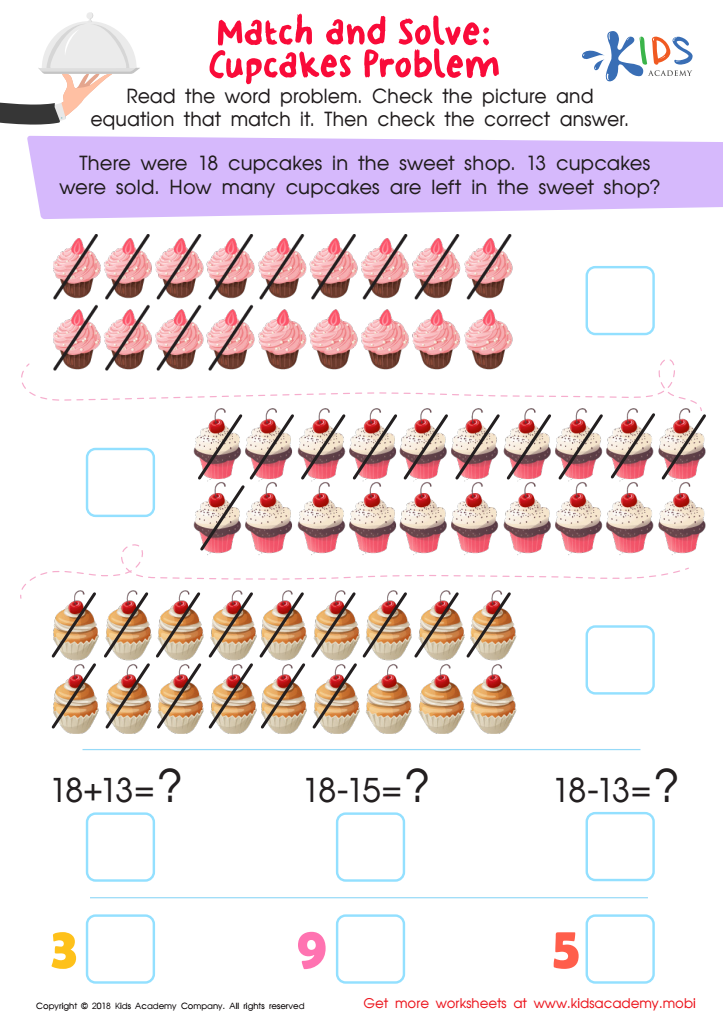
Match and Solve: Cupcakes Problem Worksheet
 Assign to My Students
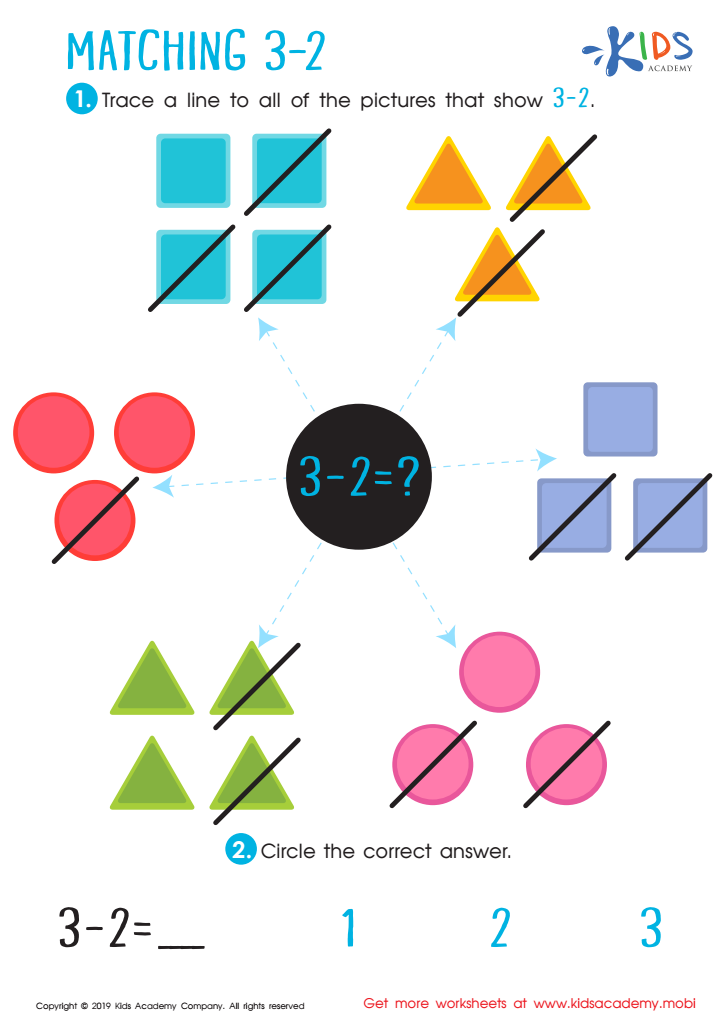
Matching 3-2 Worksheet
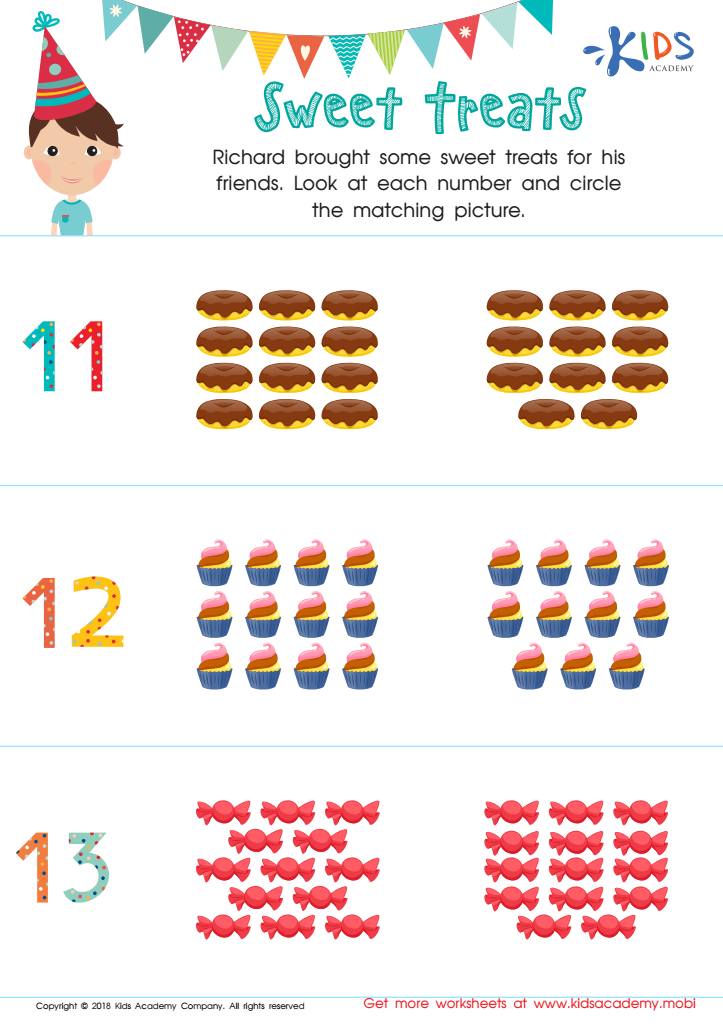
Kindergarten Math Worksheet Matching Numbers
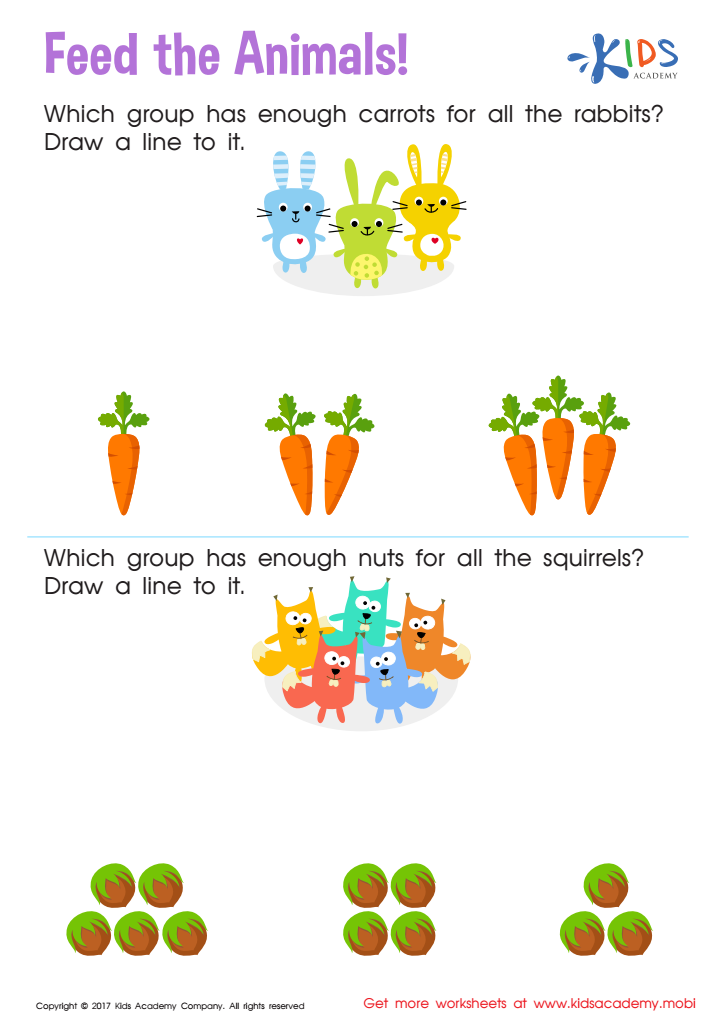
Count and Match: Feed the Animals Worksheet







Number matching for ages 4-5 is a crucial skill that lays the foundation for future math understanding and overall cognitive development. During this stage, children are naturally curious and eager to learn, making it an ideal time to introduce them to numerical concepts. Engaging in number matching activities helps young learners develop a strong number sense, allowing them to recognize and compare quantities.
By practicing number matching, children enhance their fine motor skills, critical thinking, and problem-solving abilities. This process promotes cognitive connections that support not only math competencies but also language development, as children learn to verbalize numbers and quantities. Additionally, number matching fosters social skills when children engage in cooperative games with peers, promoting teamwork and communication.
For teachers and parents, emphasizing number matching is an opportunity to create rich learning environments. It allows for individualized instruction, as children progress at their own pace and explore numbers through play. By nurturing these skills early on, caregivers can instill a lifelong appreciation for math, helping children build confidence and enthusiasm as they transition to more complex mathematical concepts in later grades. Therefore, prioritizing number matching is essential for the holistic development of young learners.








