Understanding measurements Worksheets for Ages 4-5
7 filtered results
-
From - To
Discover our engaging "Understanding Measurements Worksheets" designed specifically for ages 4-5! These worksheets provide a fun and interactive way for young learners to grasp basic measurement concepts, including length, weight, and volume. Through hands-on activities, children will explore comparing sizes, using rulers, and understanding busy terms like "heavy" and "light." Our resources not only nurture critical thinking and problem-solving skills but also promote early math foundations in a playful context. Perfect for parents and educators, these worksheets inspire creativity while fostering an essential understanding of measurements. Begin your child’s measuring adventure today and watch their confidence grow!
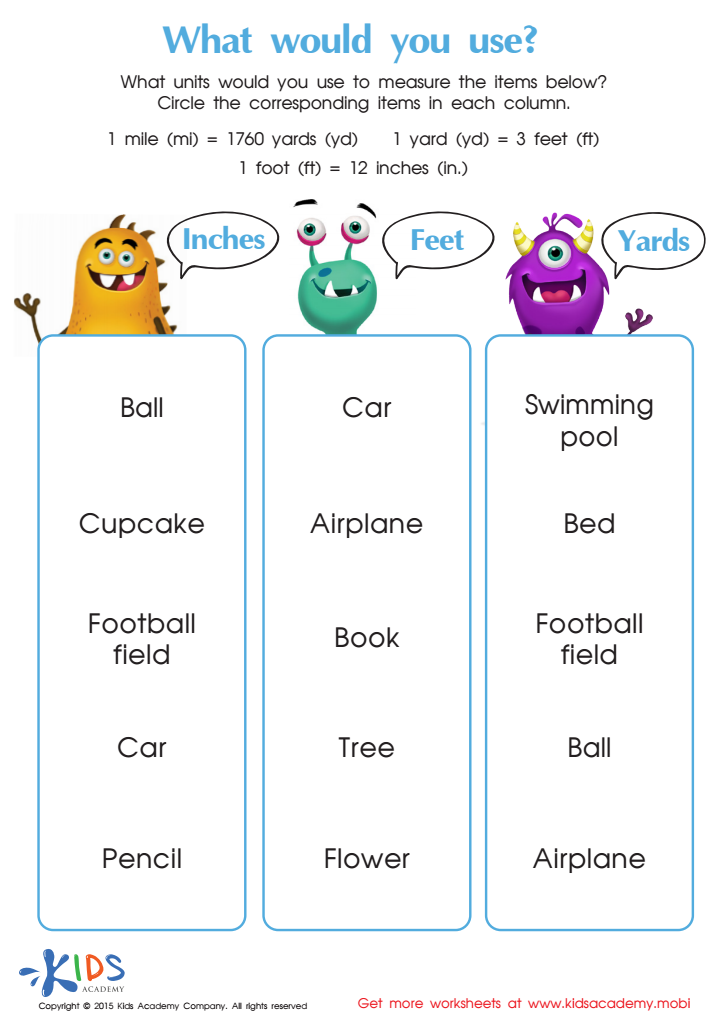
Learning about measuring objects in inches, feet and yards Worksheet
 Assign to My Students
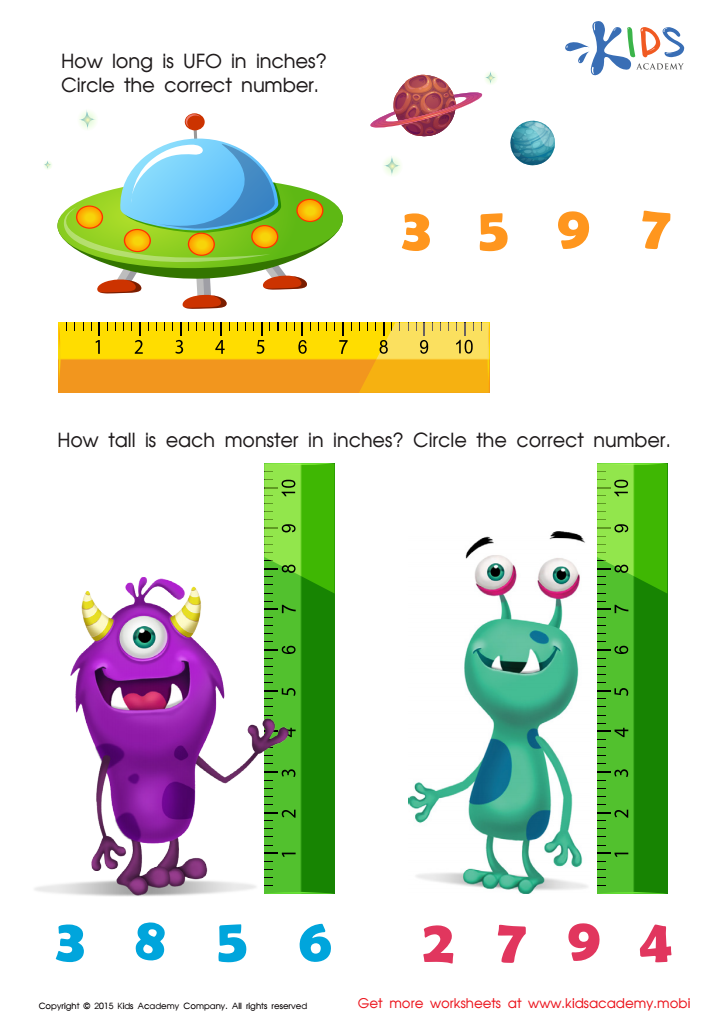
Measuring in Inches Worksheet
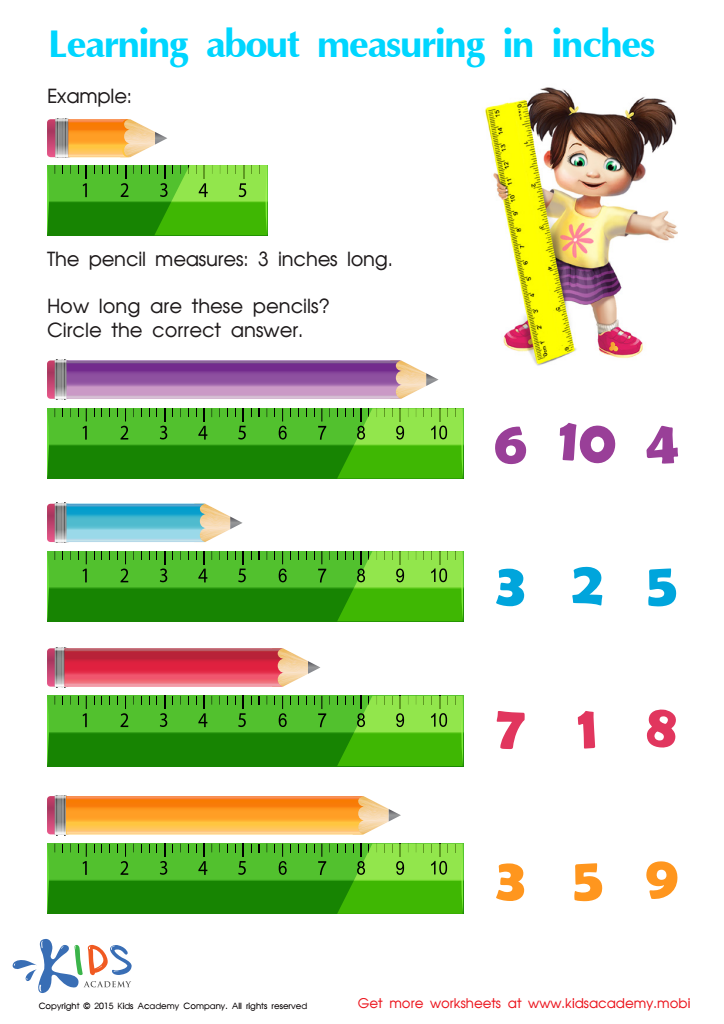
Learning About Measuring In Inches Printable
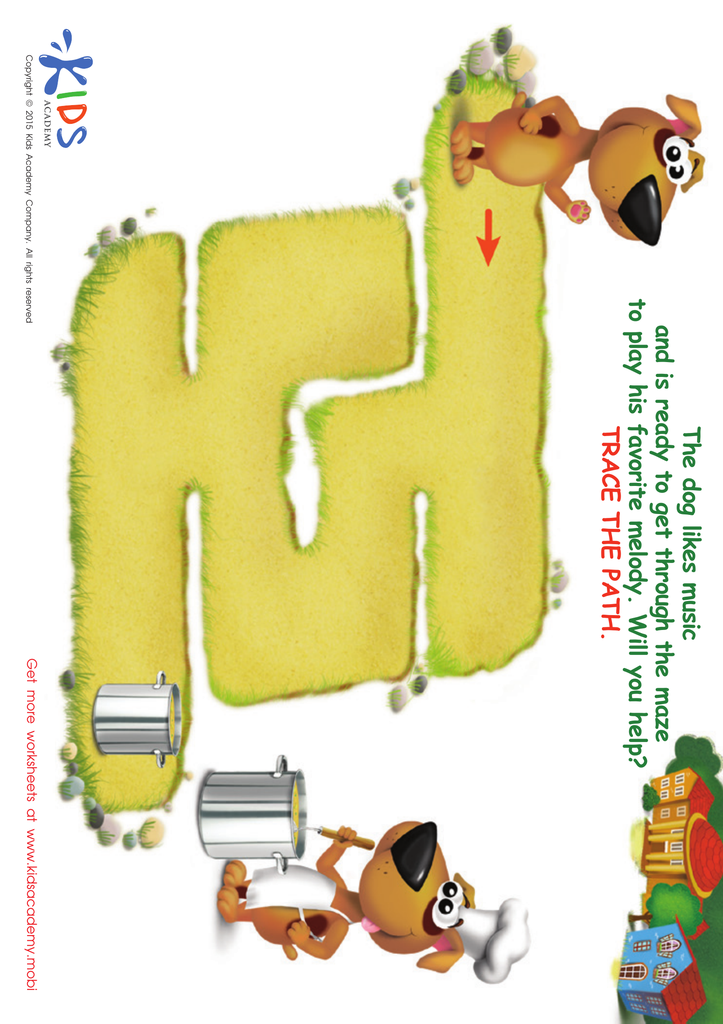
Cook Maze Worksheet
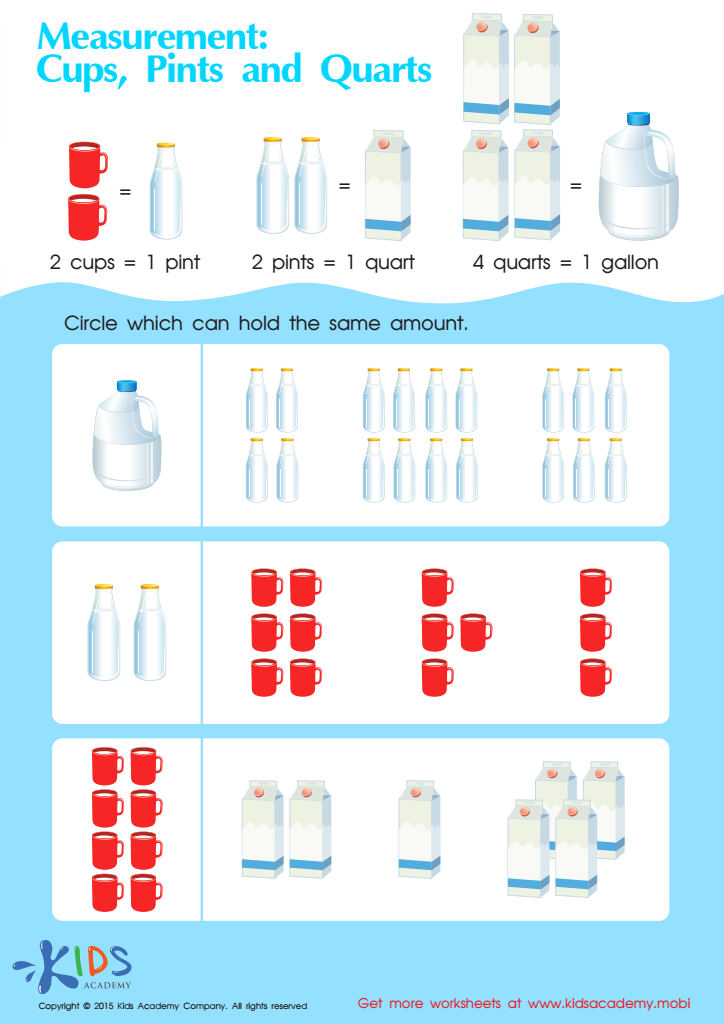
Cups, Pints and Quarts 2 Worksheet
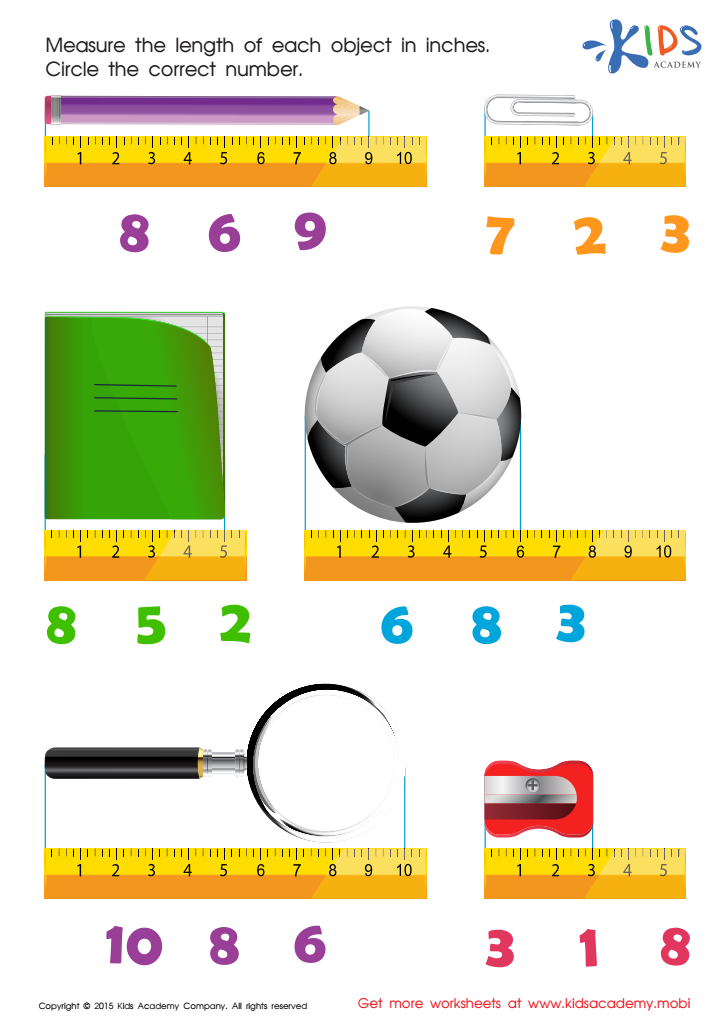
Learning measuring objects in inches Worksheet
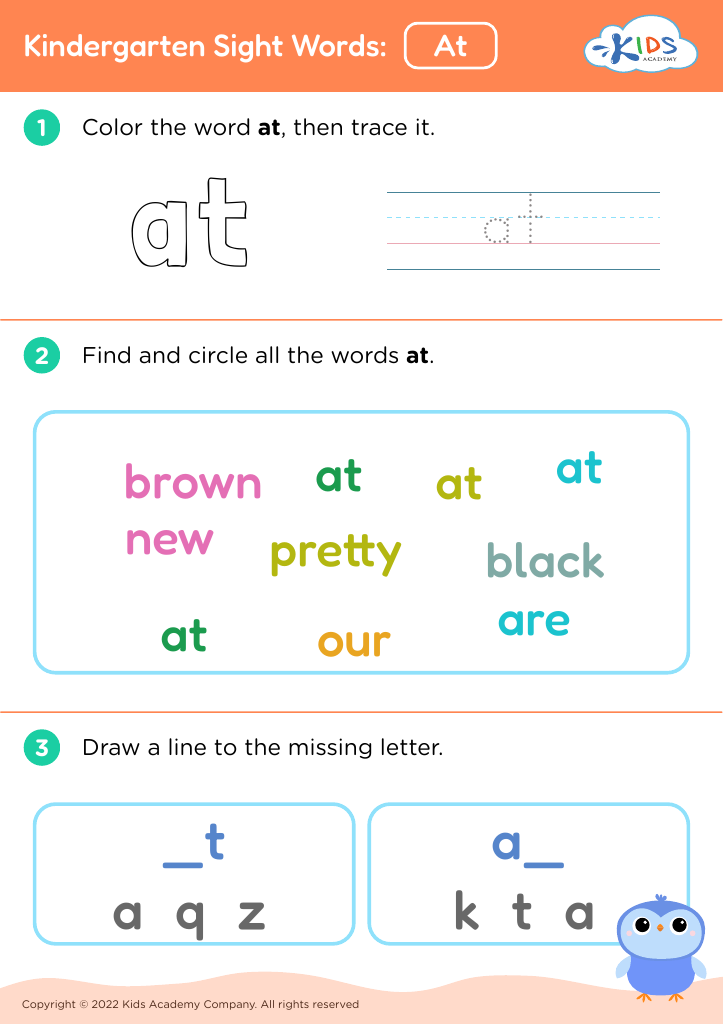







Understanding measurements at ages 4-5 is crucial for young children's cognitive and practical development. At this early stage, children are naturally curious, and introducing them to measurements can engage their inquisitive minds and foster a love for math and science. Engaging with concepts like length, weight, and volume encourages them to explore and describe the world around them, laying the groundwork for more advanced mathematical skills later on.
Additionally, measurements are woven into everyday life—from cooking and building to playing games and sharing. By learning about measurements, children can improve their problem-solving abilities, critical thinking, and even social skills as they work with others on measuring tasks. This attention to measurement nurtures language development, too; children learn new vocabulary linked to size, comparison, and quantity.
Moreover, understanding measurements in a playful context enhances fine motor skills as they use tools like rulers, scales, and measuring cups. Parents and teachers play a vital role in providing engaging, hands-on experiences that promote these skills. Ultimately, fostering measurement understanding not only equips children with foundational mathematical knowledge but also enriches their day-to-day interactions and supports holistic development. It encourages them to become inquisitive learners ready for future educational challenges.








