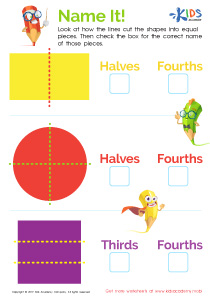
Visual Perception Skills 2D Shapes Worksheets for Ages 4-5
3 filtered results
-
From - To
Enhance your child's visual perception with our engaging "Visual Perception Skills 2D Shapes Worksheets" designed for ages 4-5. These thoughtfully crafted worksheets from Kids Academy help young learners recognize and differentiate various 2D shapes, while improving their cognitive skills and attention to detail. Through fun activities, your child will develop essential abilities to compare shapes, identify patterns, and build a solid foundation for future mathematical learning. Perfect for preschoolers, our printable sheets are an ideal resource for parents and educators aiming to make early education exciting and fruitful. Download now for a comprehensive learning experience!
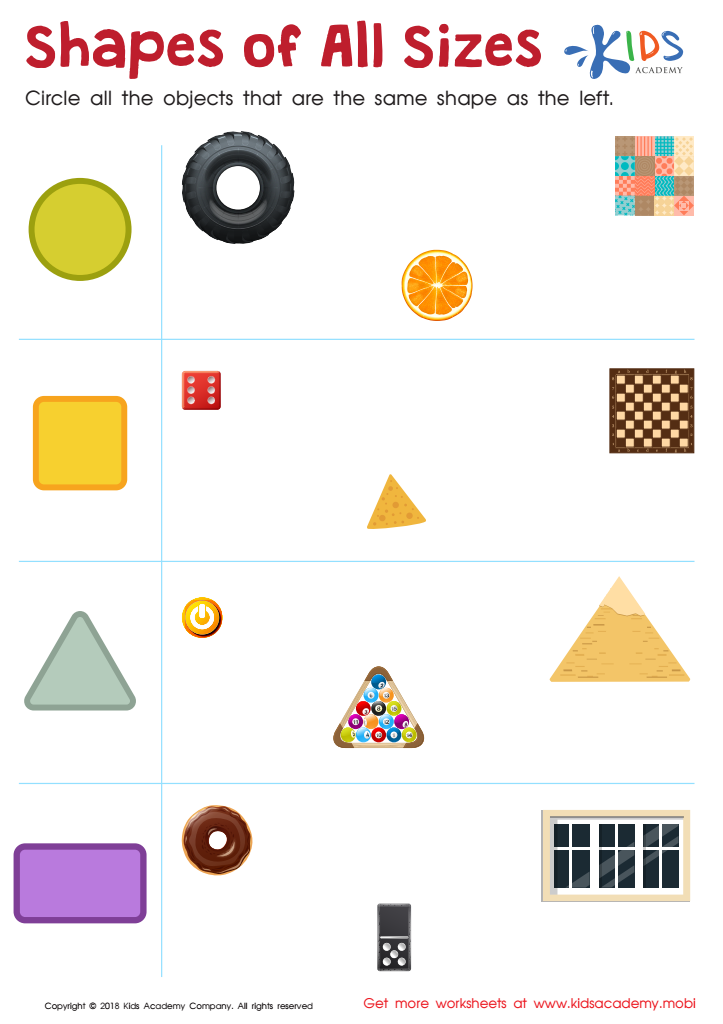
Shapes of All Sizes Worksheet
 Assign to My Students


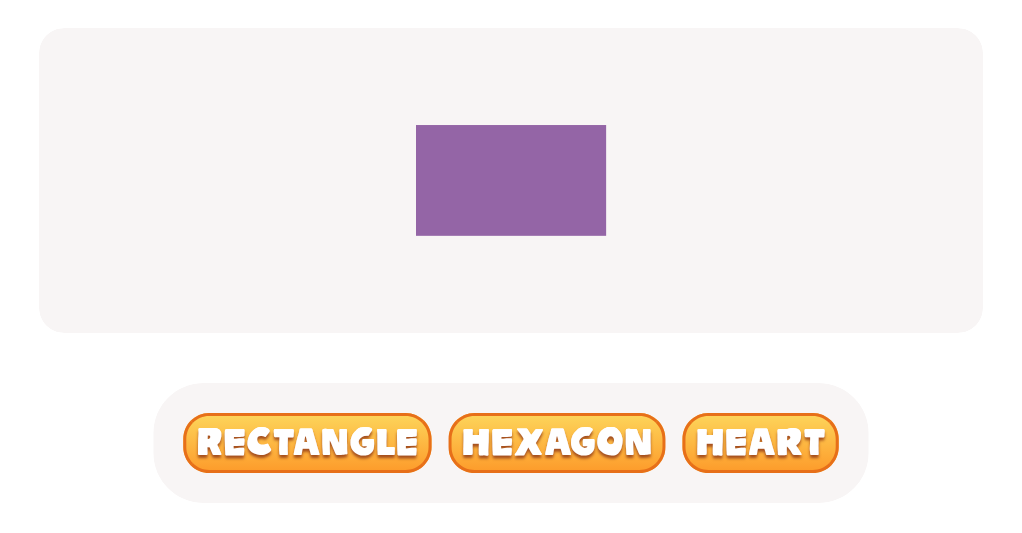
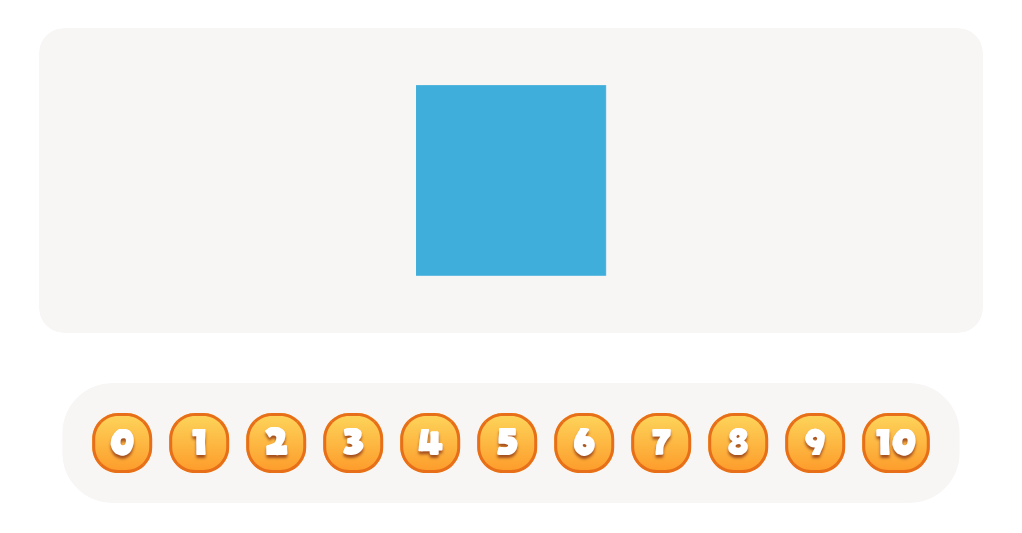
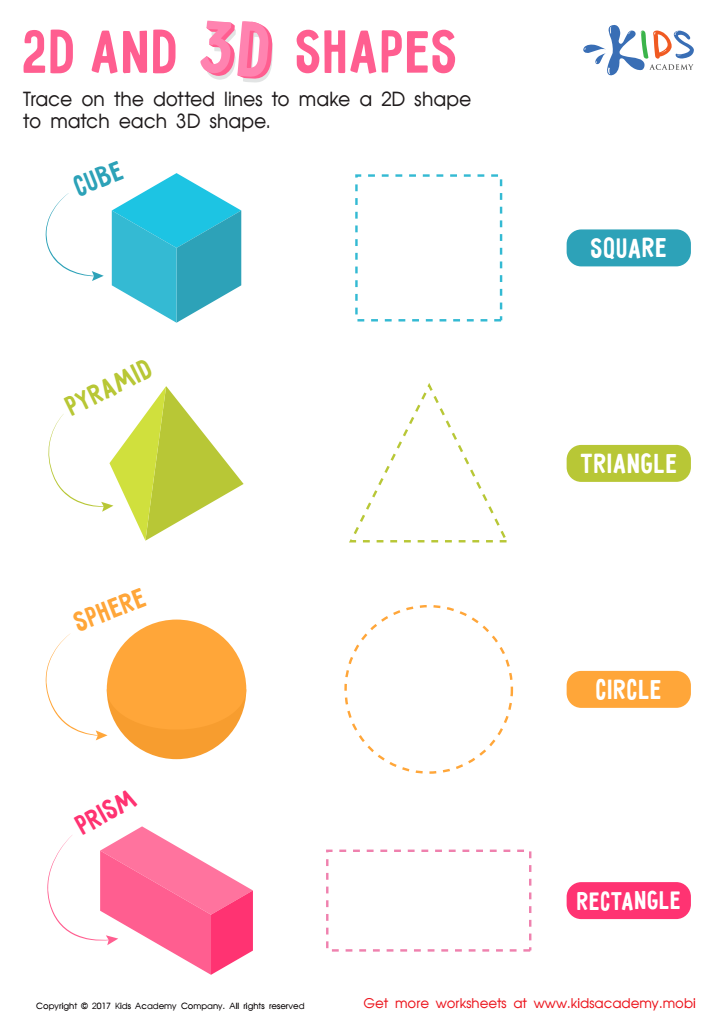
2D and 3D Shapes Worksheet
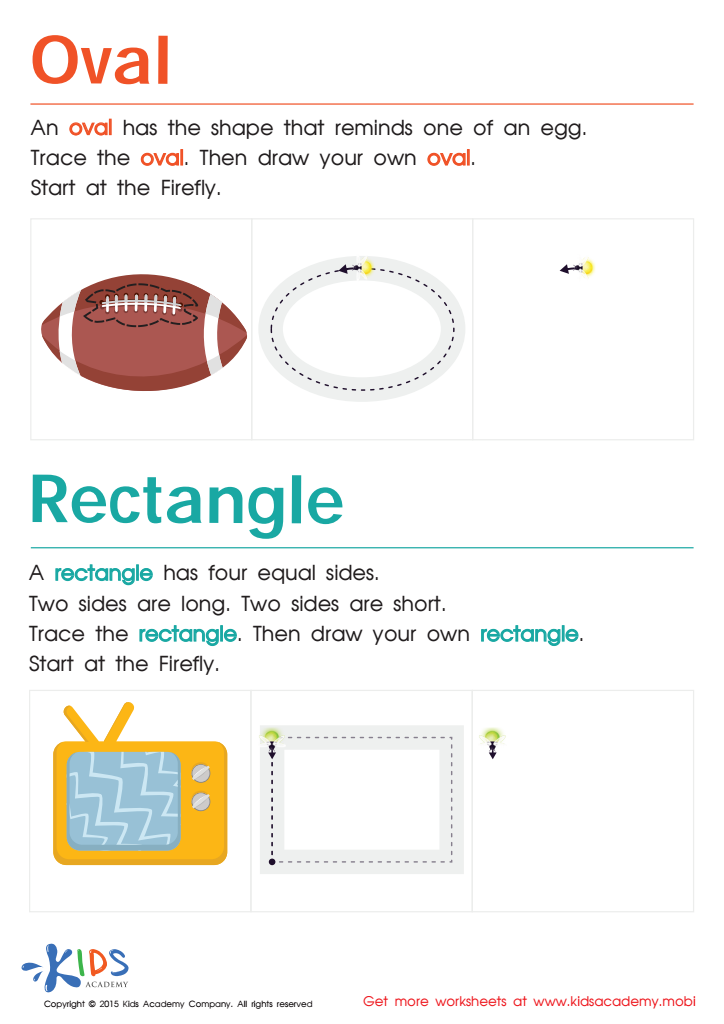
Easy Drawing of Ovals And Rectangles Worksheet








Visual perception skills are crucial building blocks for the intellectual development of children, particularly at ages 4-5, when foundational cognitive abilities are developing rapidly. Parents and teachers should keenly focus on visual perception skills involving 2D shapes for several significant reasons.
Firstly, identifying and distinguishing 2D shapes aids in the development of cognitive and problem-solving skills. Recognizing these basic forms sharpens a child’s ability to classify objects, an early math skill vital for future learning in geometry and spatial reasoning. These activities also enhance their attentiveness to detail, teaching them to notice and appreciate the features and differences between shapes.
Secondly, strong visual perception skills underpin essential reading and writing abilities. Awareness of shapes directly correlates with letter recognition; distinguishing between similar-looking letters (like 'b' and 'd') requires a well-tuned ability to perceive subtle differences, a skill honed through shape exercises.
Lastly, these activities build hand-eye coordination and fine motor skills, important for tasks like writing, cutting, and threading beads. Handling different shapes improves muscle memory and control, preparatory exercises for more complex tasks encountered in kindergarten.
Incorporating 2D shapes in early education not only makes learning fun and tangible but also lays a strong foundation for overall academic success and cognitive development. Thus, it is vital that parents and teachers actively engage children in such activities.