Visual Learning Adding in the Sea Worksheets for Ages 4-5
18 filtered results
-
From - To
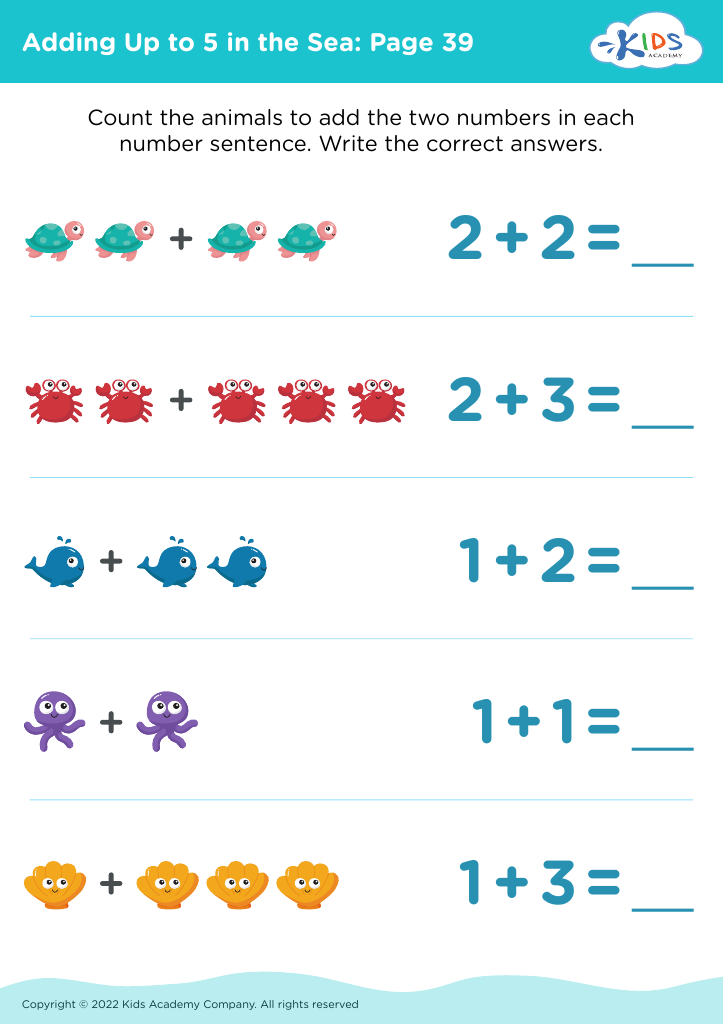
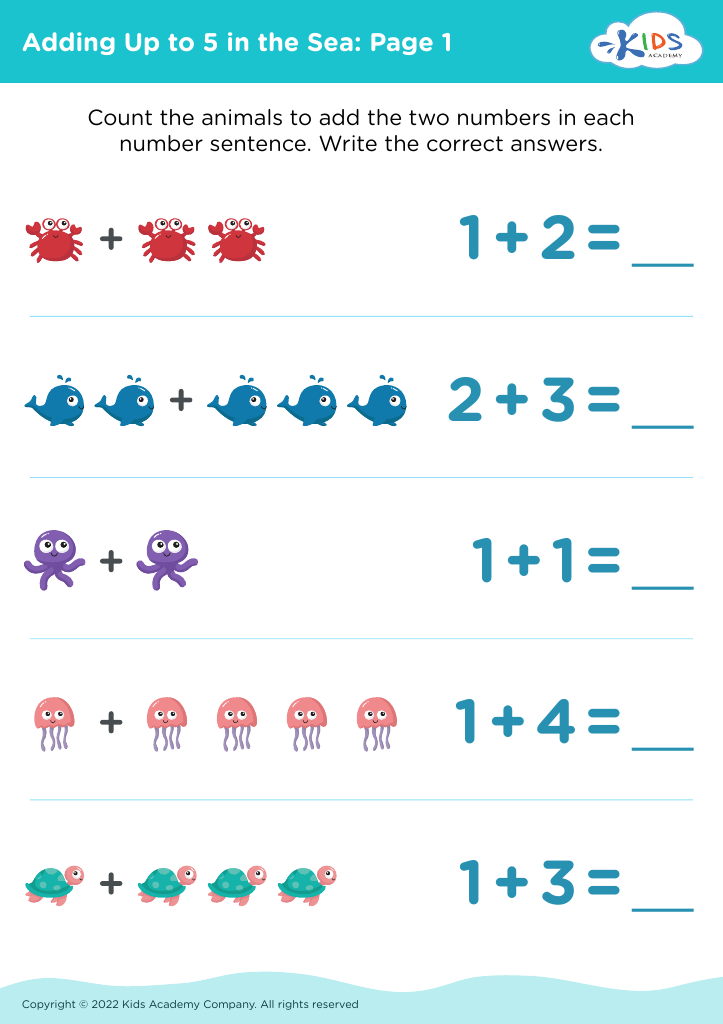
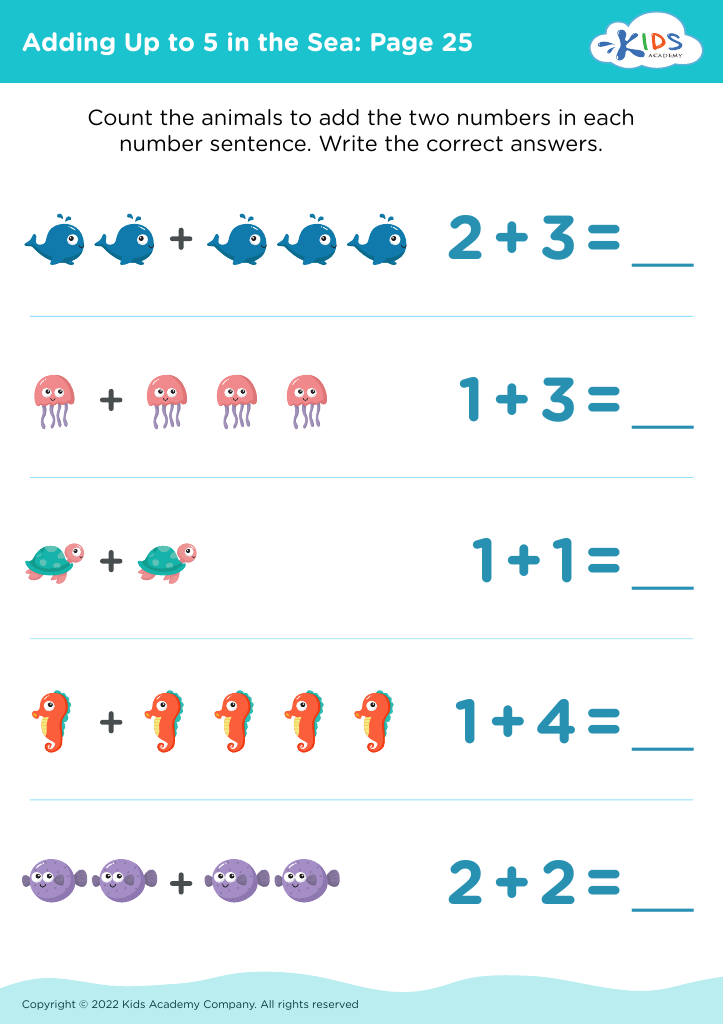
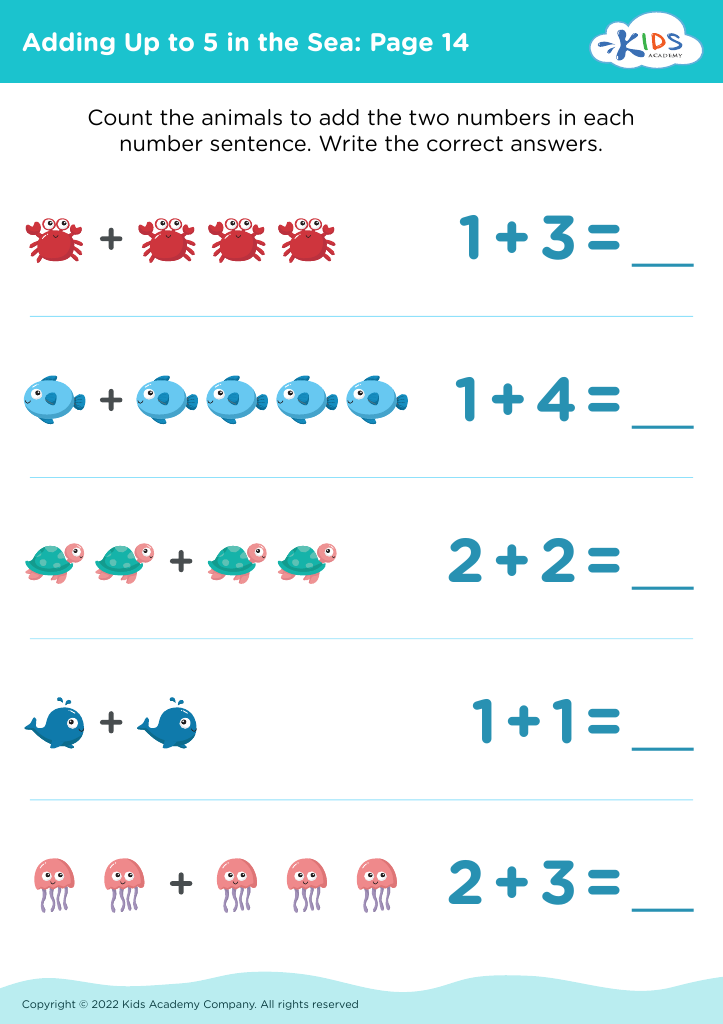
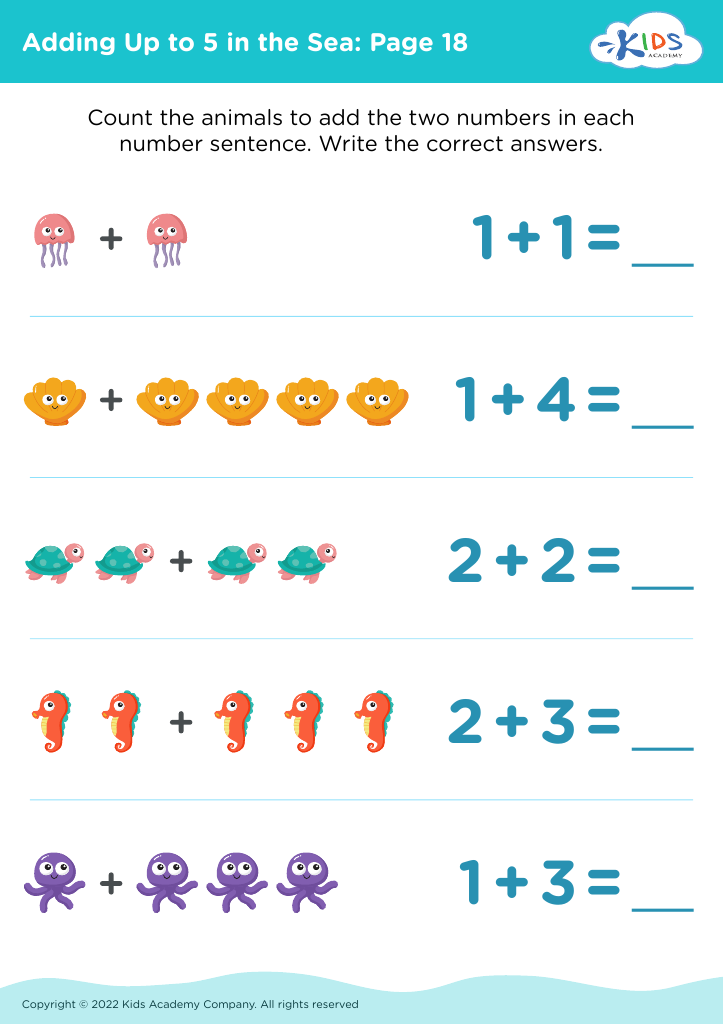
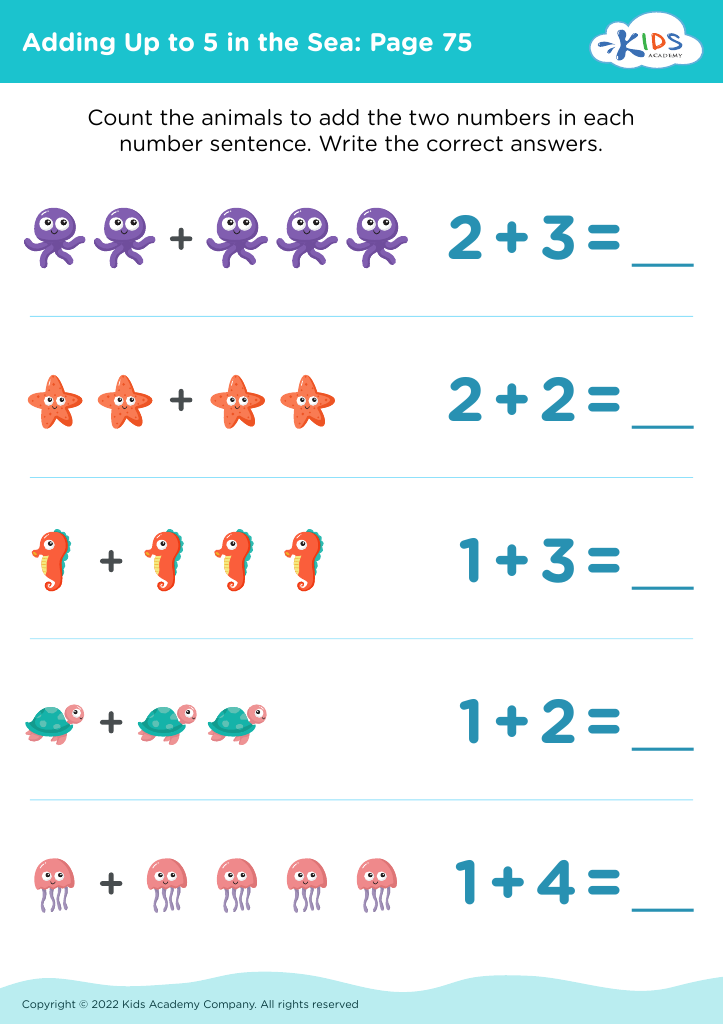
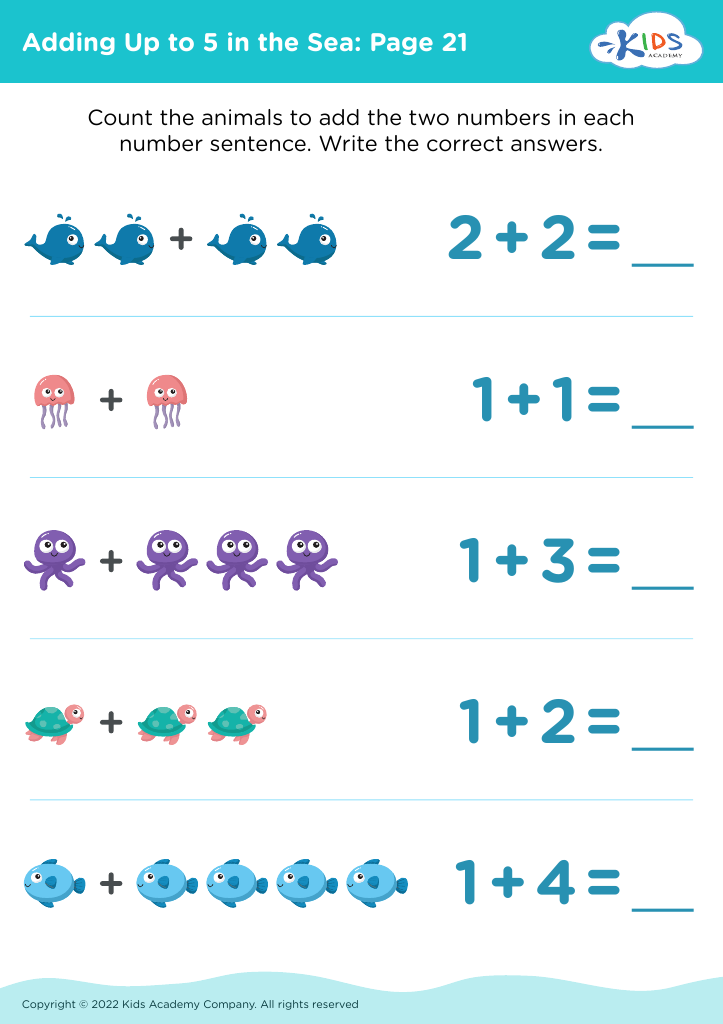
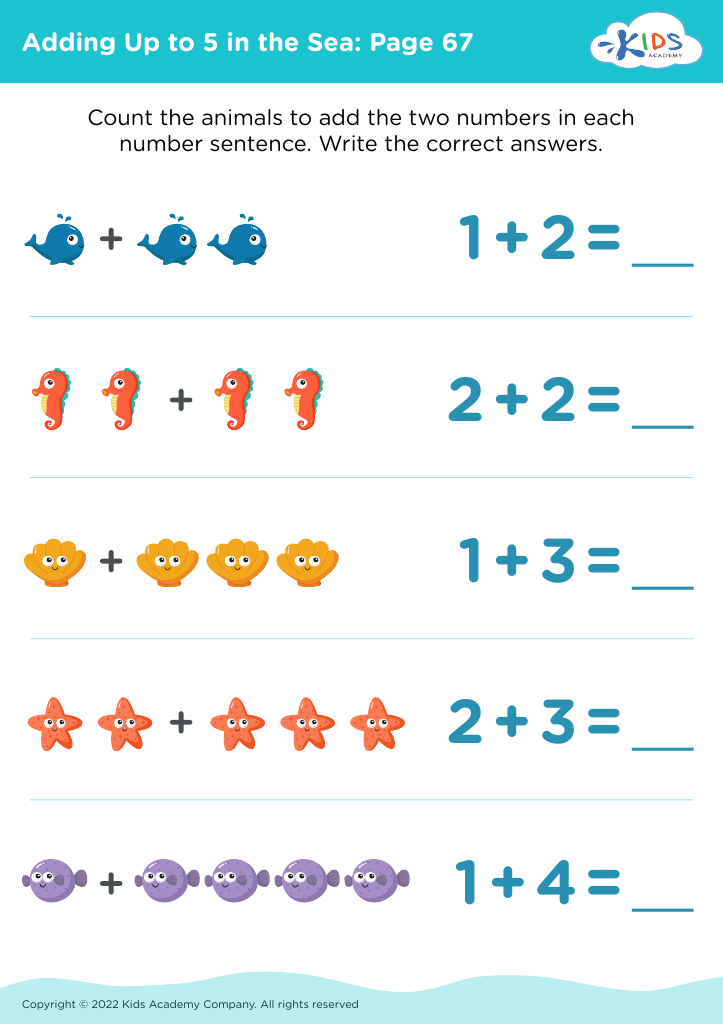
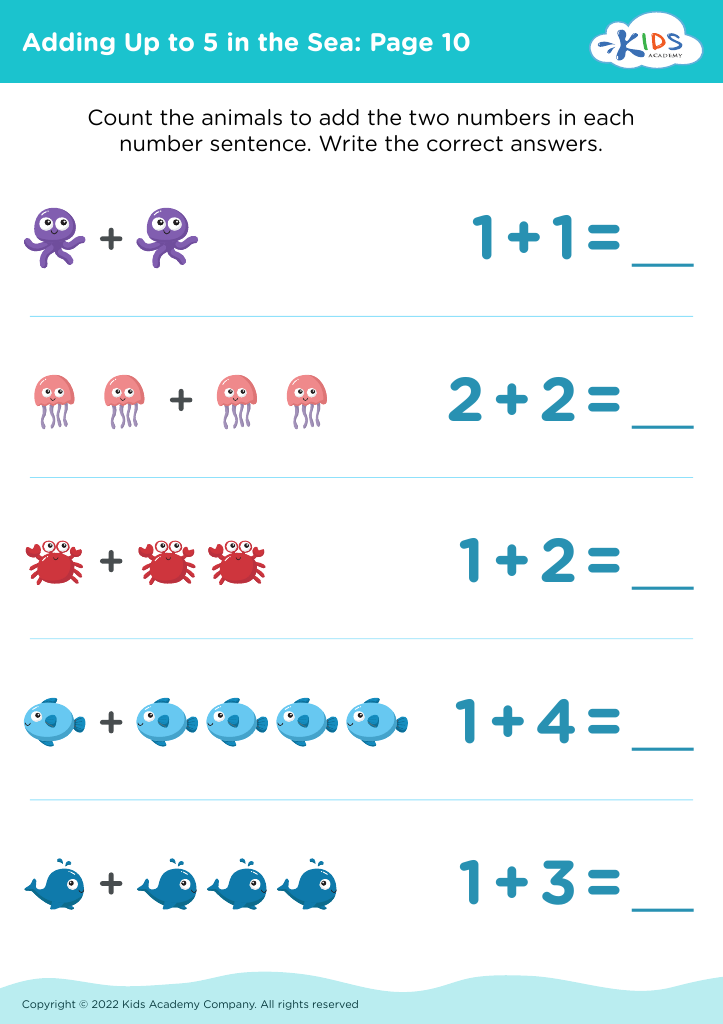
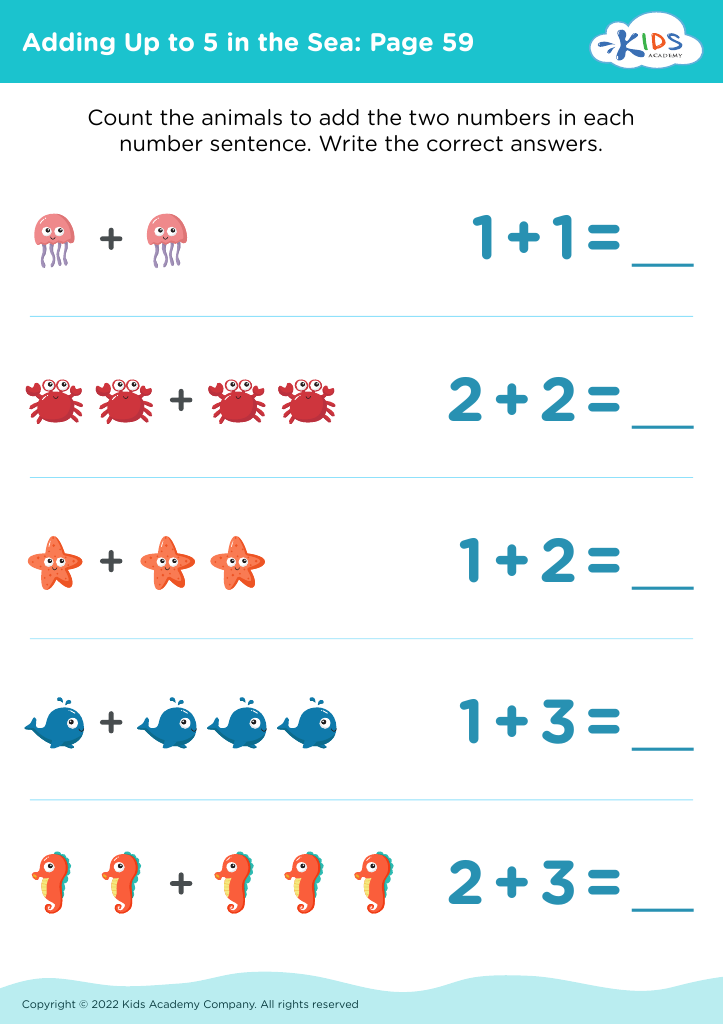
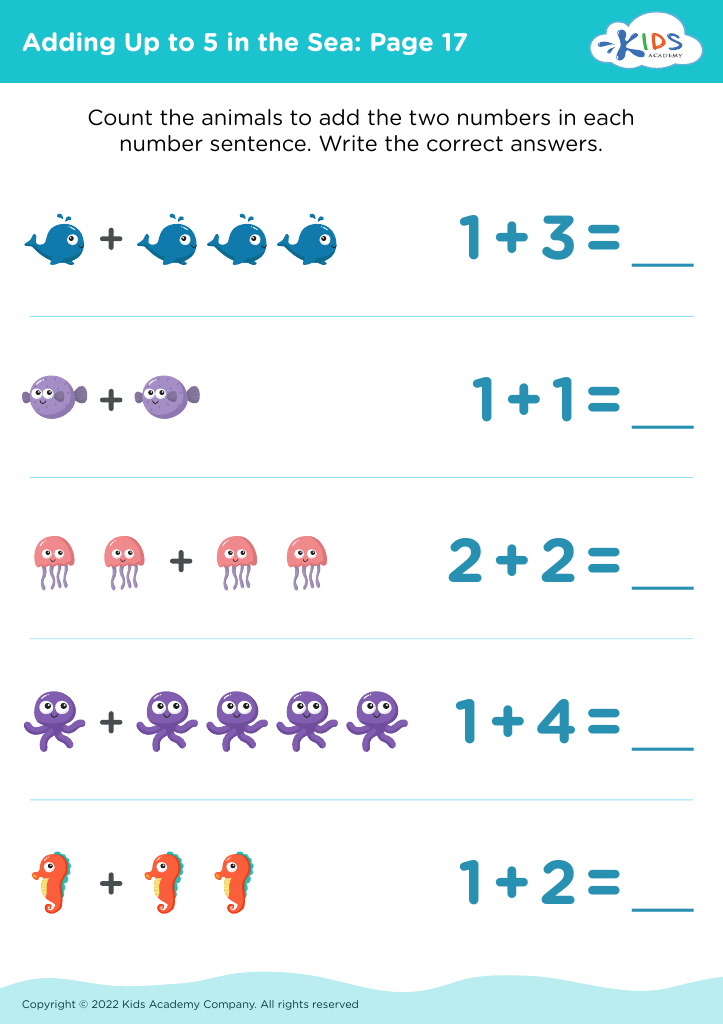
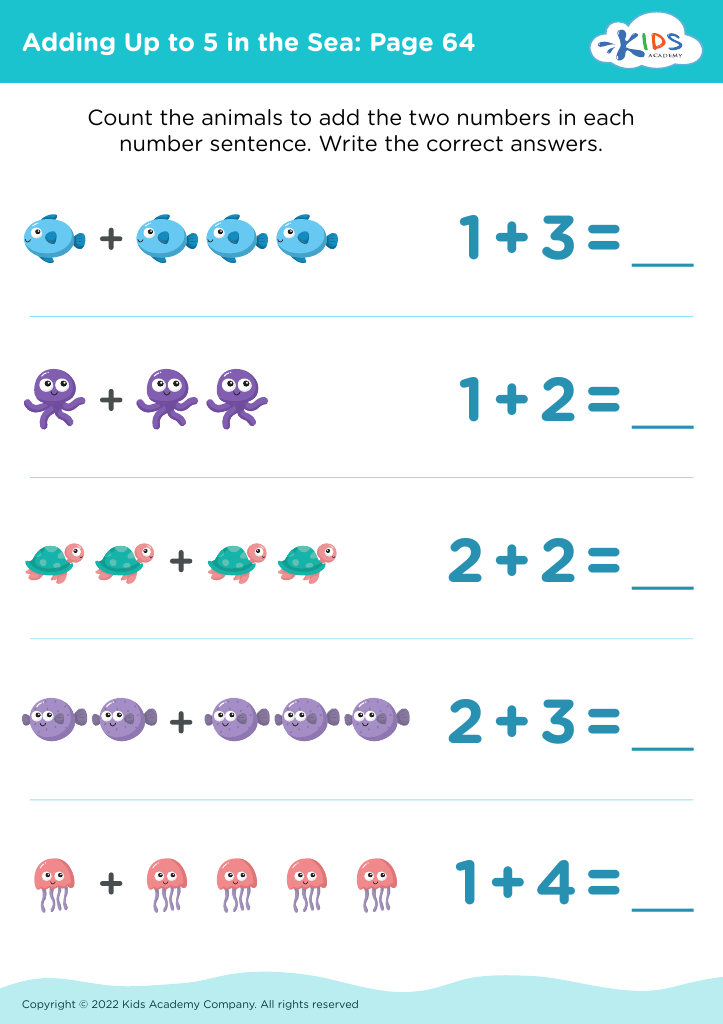
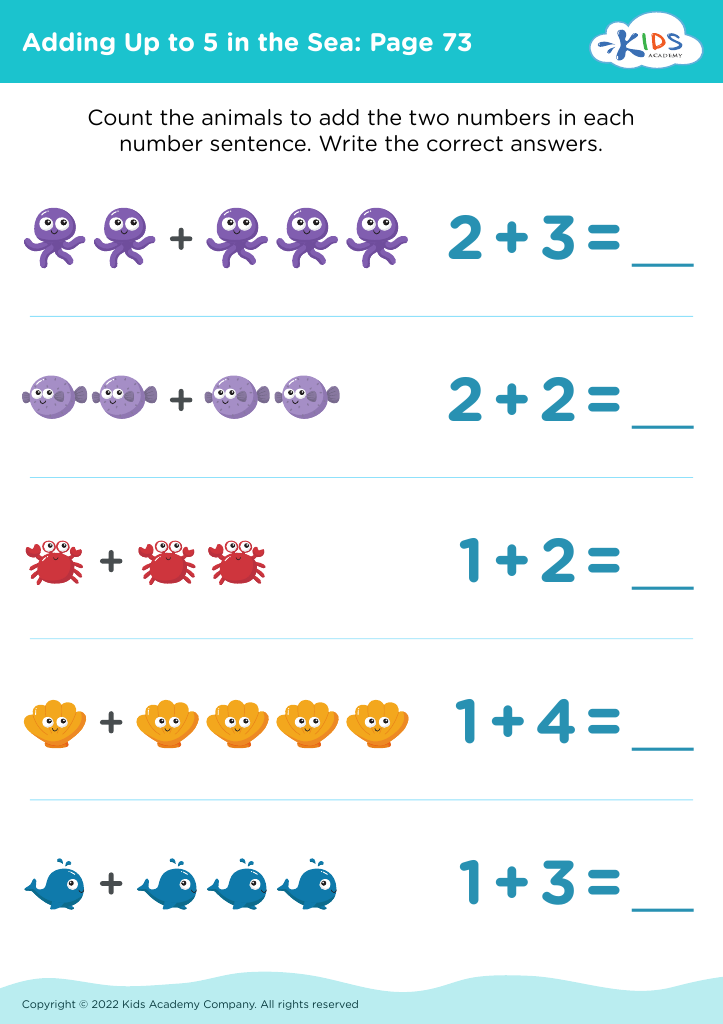
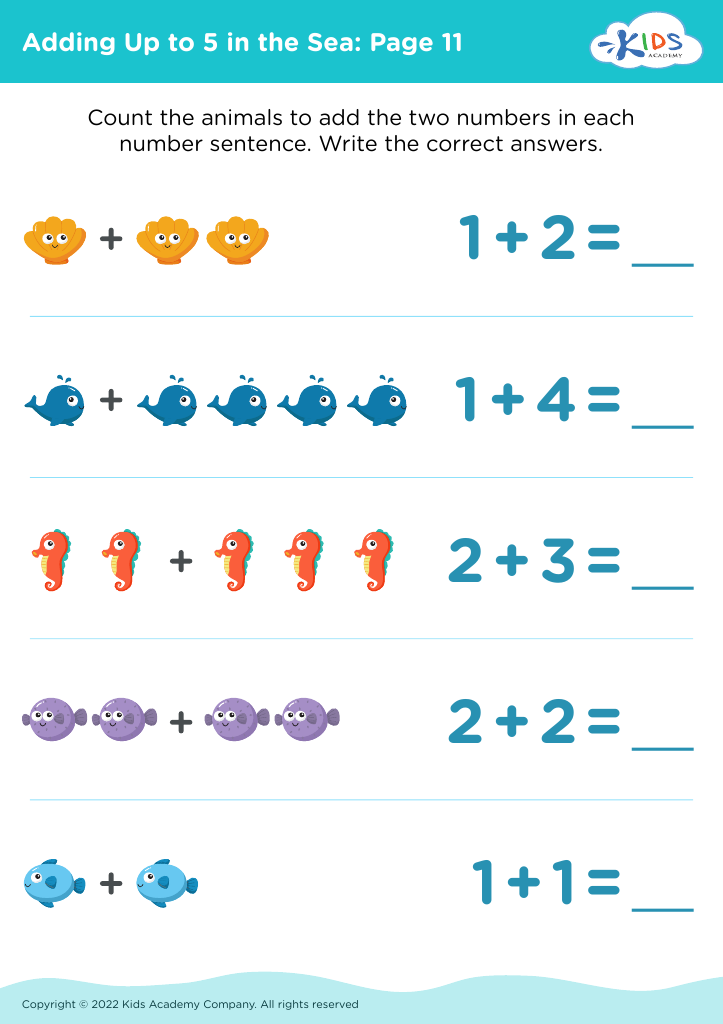
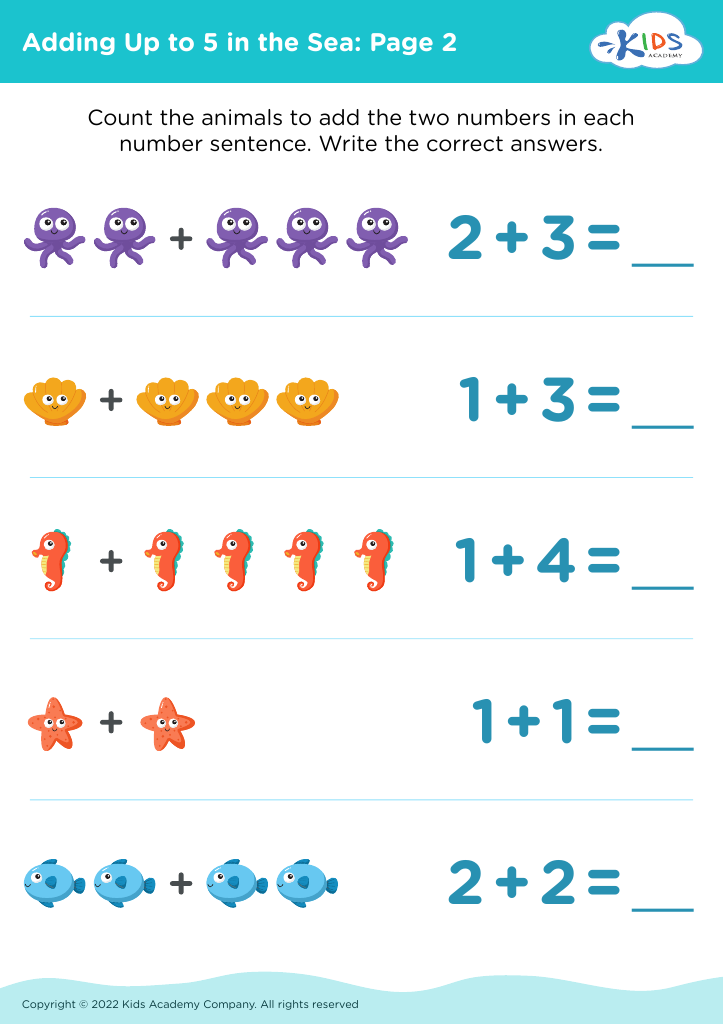
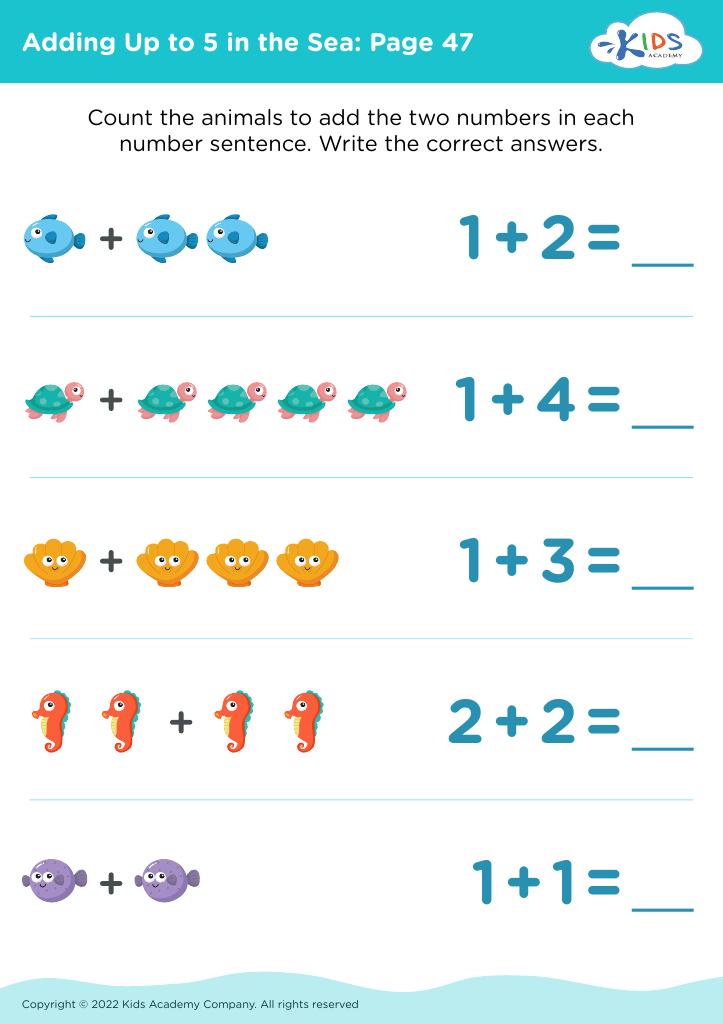
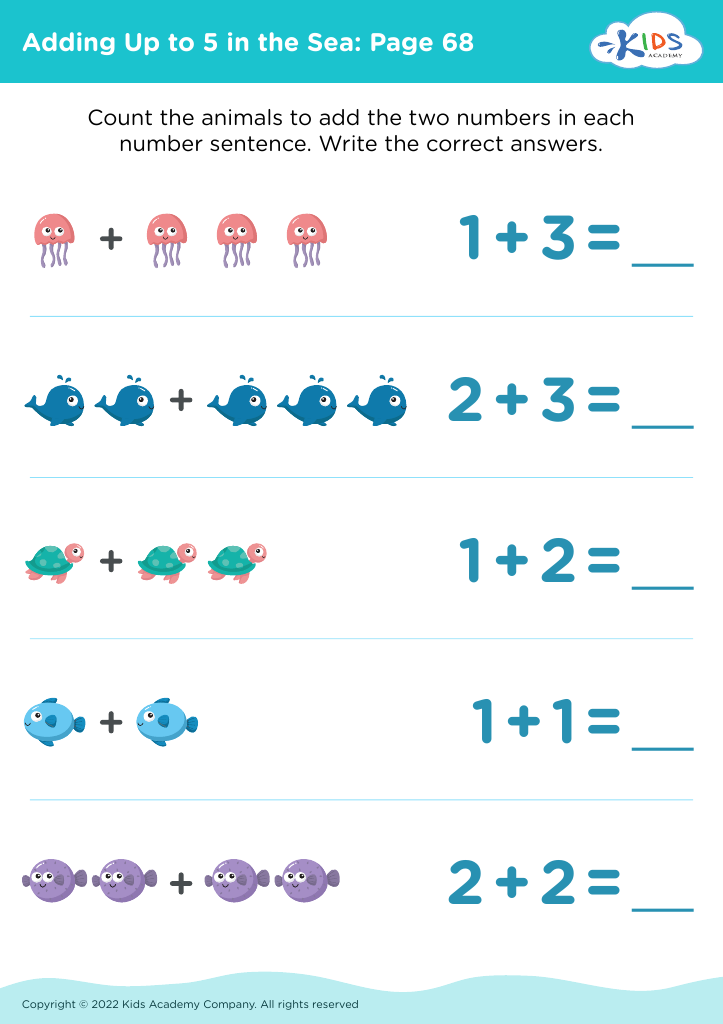
Dive into fun with our "Adding in the Sea" worksheets designed for ages 4-5! This vibrant collection encourages visual learning through engaging underwater themes, helping your little ones master addition in an enjoyable way. Each worksheet features colorful sea creatures, making math lessons fun and interactive. Children can enhance their counting, number recognition, and basic arithmetic skills while exploring the ocean's wonders. Perfect for preschool and kindergarten settings, these worksheets support a hands-on learning approach, ensuring kids stay motivated and excited about math. Help your child develop a strong mathematical foundation with our captivating visual learning resources today!
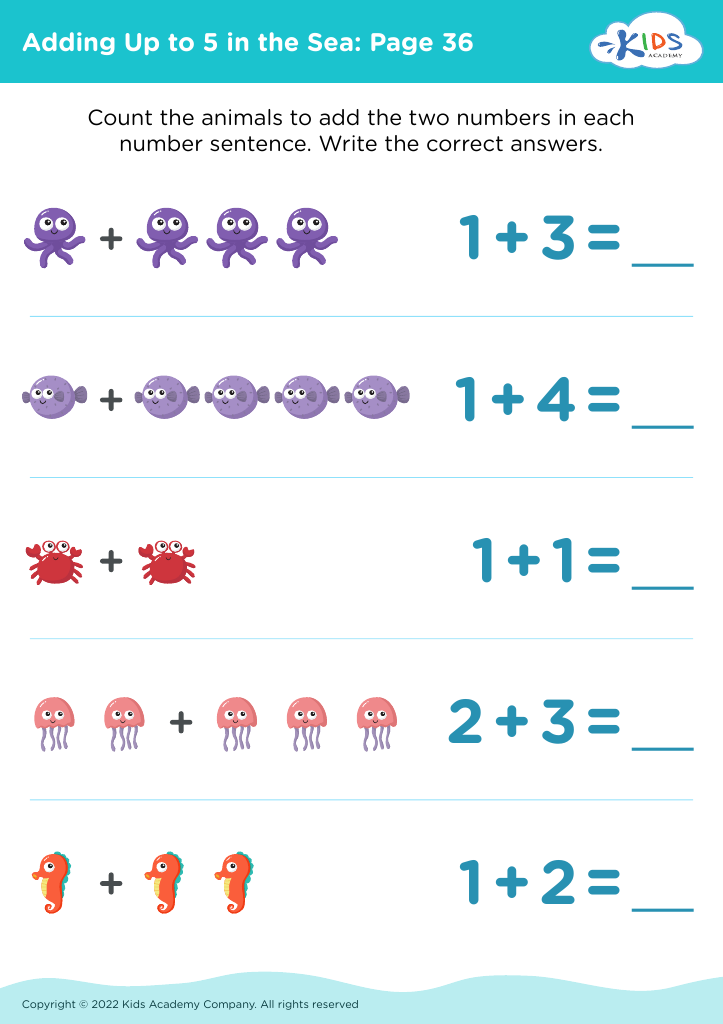



Visual learning is a crucial aspect of early childhood education, particularly for children ages 4-5. At this developmental stage, children are naturally curious and learn best through engaging sensory experiences. By incorporating visual elements into learning, such as images, colors, and interactive materials, parents and teachers can significantly enhance a child's understanding and retention of concepts.
When teaching about the sea, for instance, visual learning can involve vibrant pictures of sea creatures, underwater scenes, and hands-on activities like art projects. This not only captures children’s attention but also strengthens their ability to associate words with images, boosting vocabulary and comprehension skills.
Moreover, visual learning supports different learning styles. Some children may struggle with auditory methods or text-based instruction, while visual stimuli can resonate with them more profoundly. These experiences inspire creativity and critical thinking, enabling young learners to make connections between new information and their existing knowledge.
Understanding the sea through visual learning cultivates a sense of wonder and exploration. Such positive and immersive experiences can foster a lifelong love for learning and nature. Therefore, by integrating visual learning strategies, parents and teachers can create enriching educational environments that cater to early learners’ developmental needs.