Check out this FREE Trial Lesson on Adding Up to 5 for age 4-5!

X

Favorites
With answer key
Interactive
  • 4-5
  • Visual Learning
  • Adding Up to 5
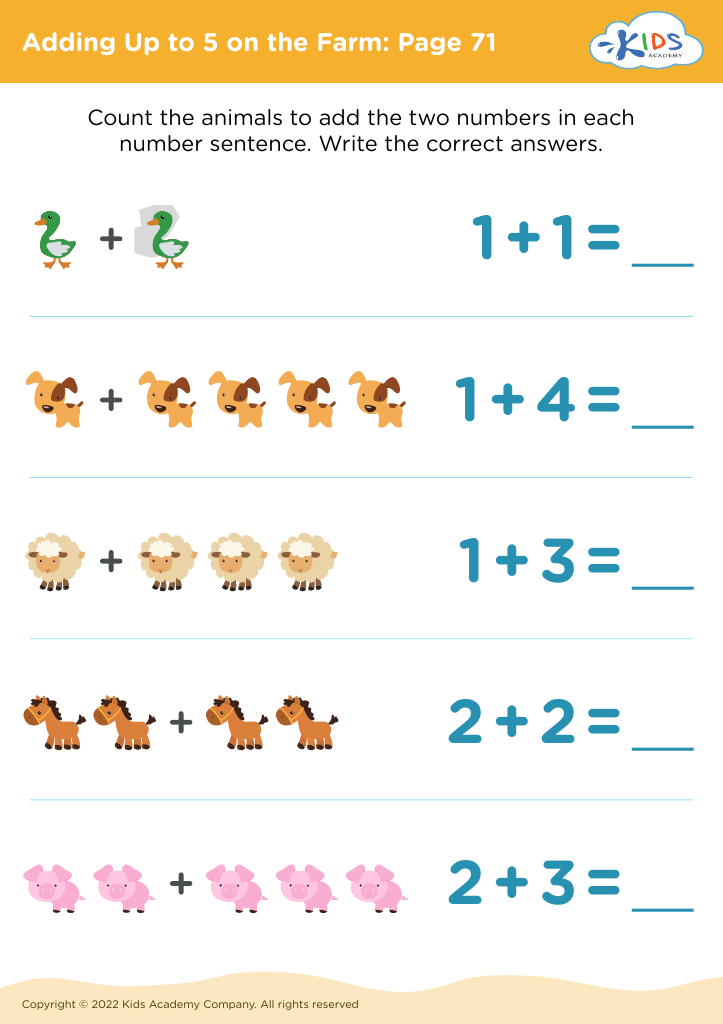
Adding Up to 5 on the Farm: Page 71
Worksheet
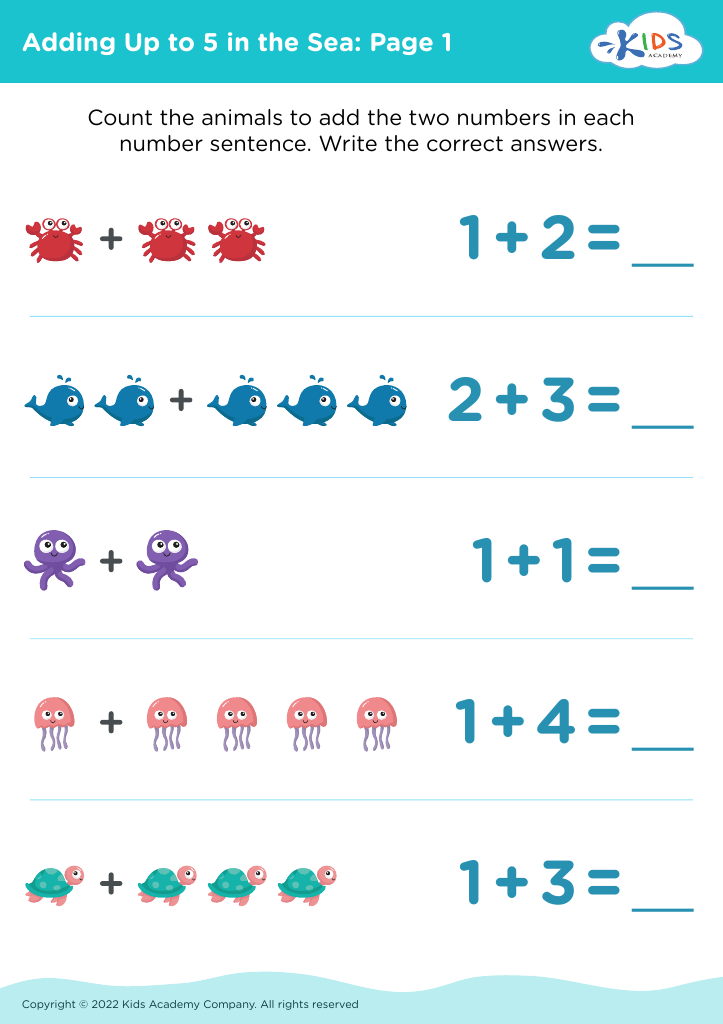
Adding Up to 5 in the Sea: Page 1

Adding Up to 5 in the Sea: Page 1

Adding Up to 5 in the Sea: Page 1
Worksheet
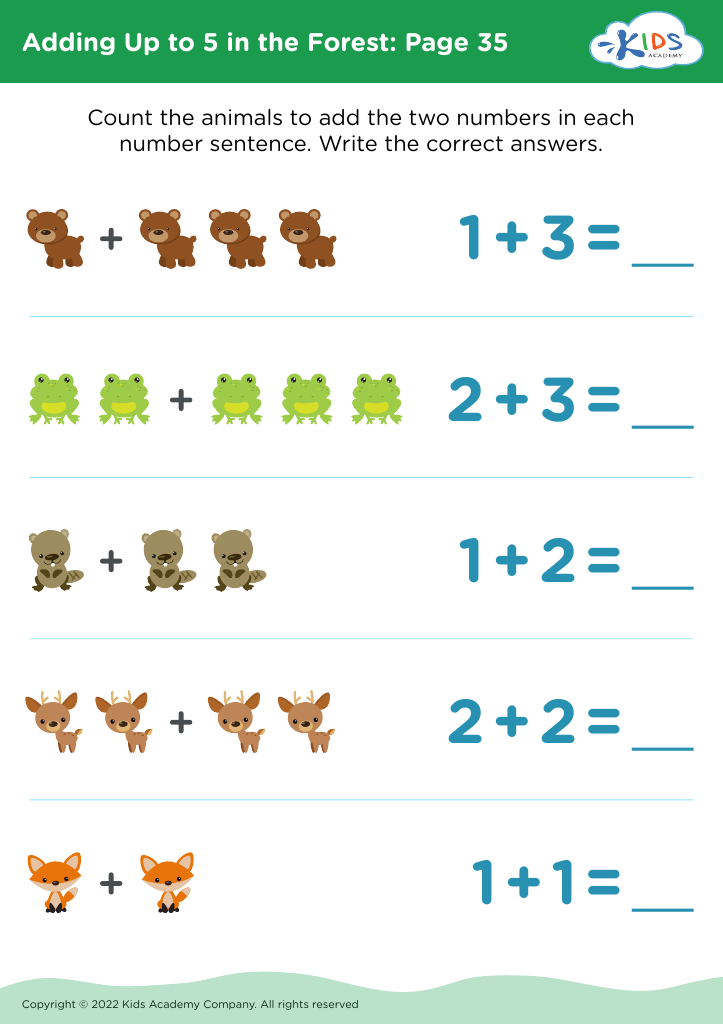
Adding Up to 5 in the Forest: Page 35
Worksheet
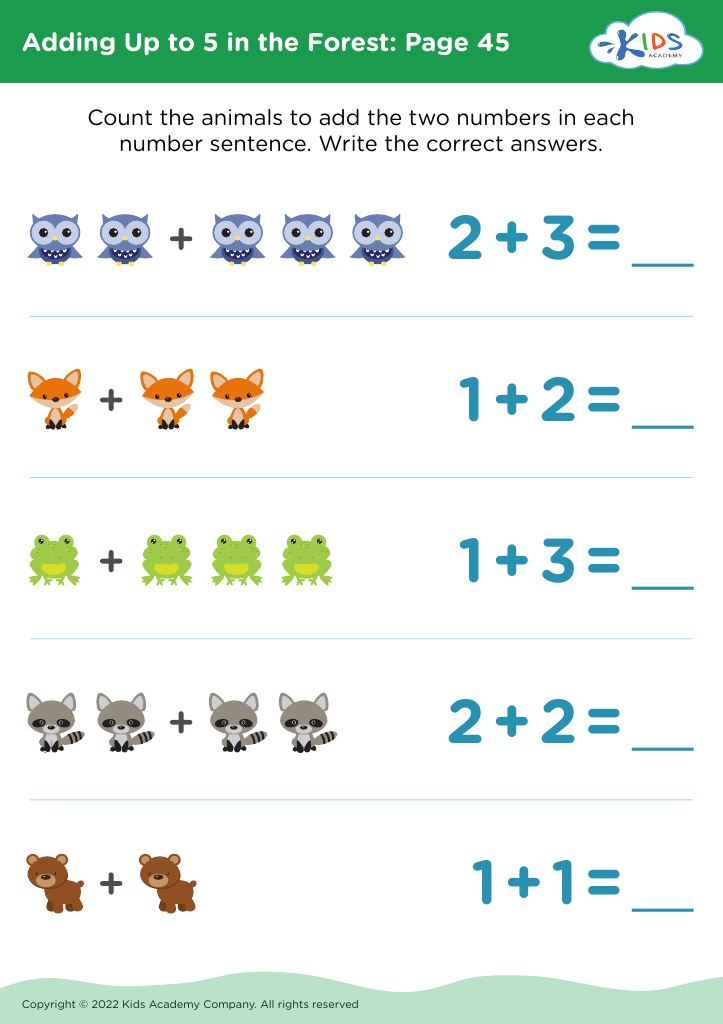
Adding Up to 5 in the Forest: Page 45
Worksheet
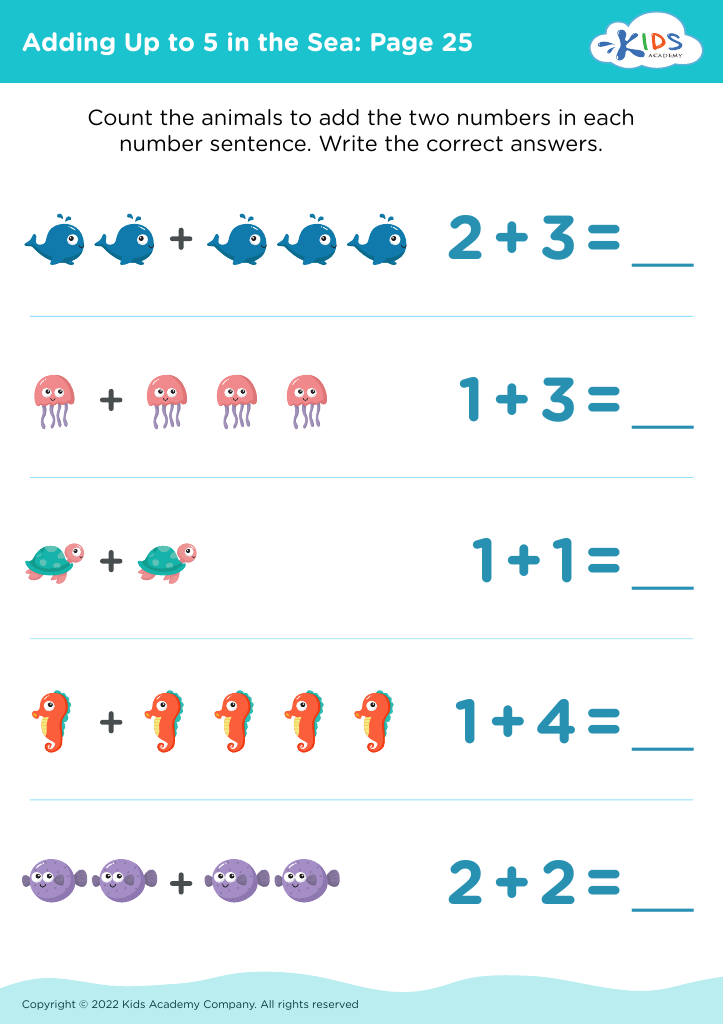
Adding Up to 5 in the Sea: Page 25
Worksheet
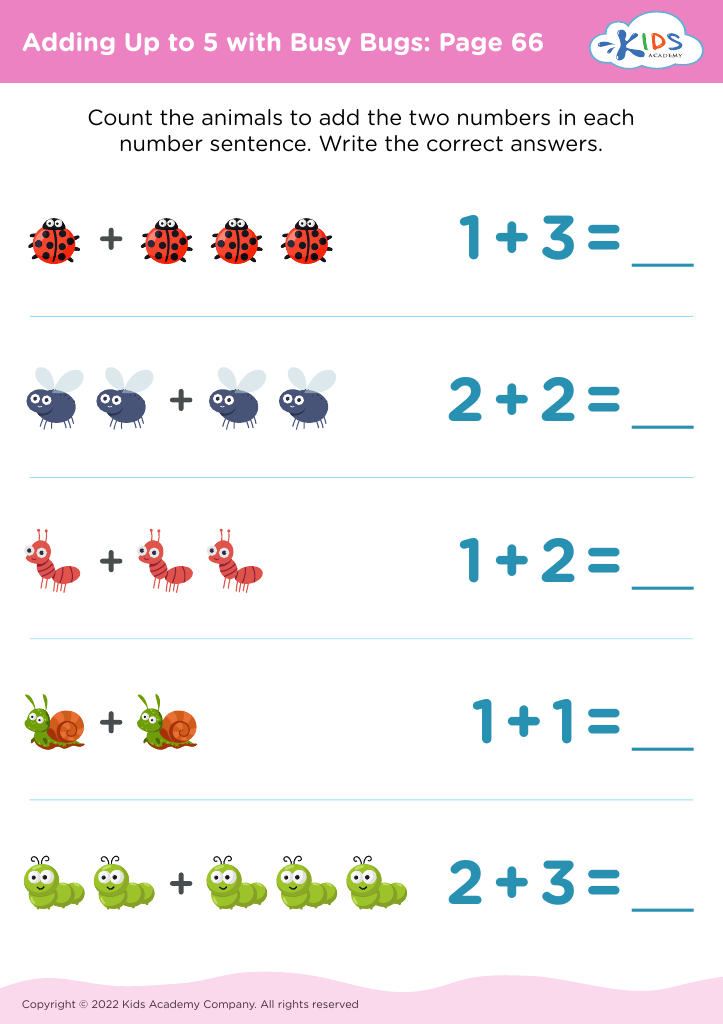
Adding Up to 5 with Busy Bugs: Page 66
Worksheet
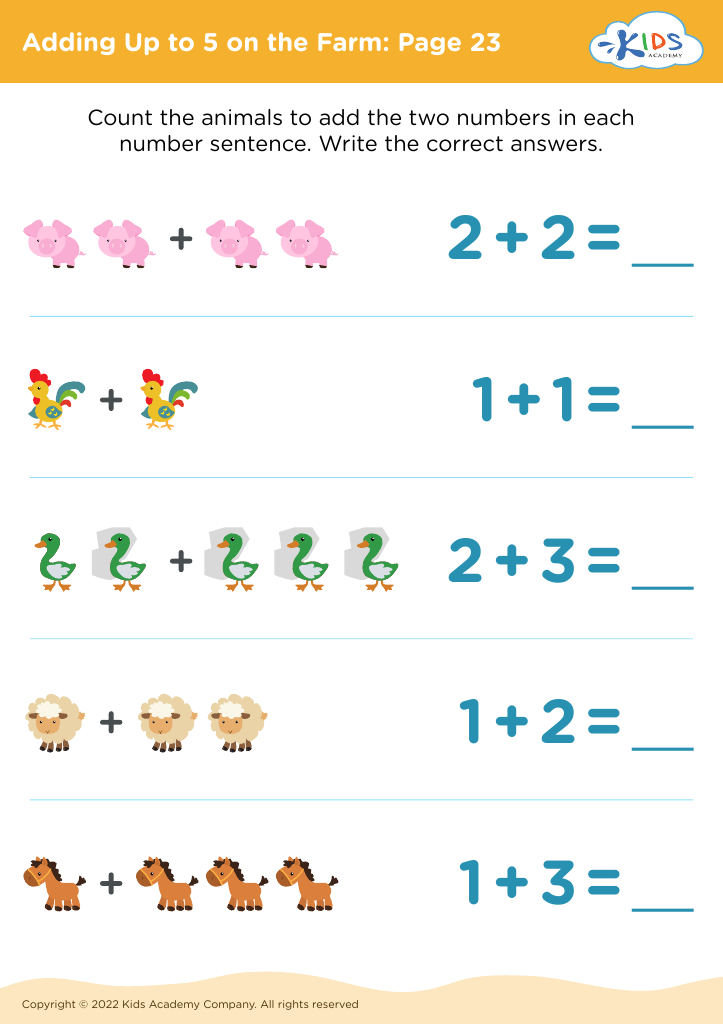
Adding Up to 5 on the Farm: Page 23
Worksheet
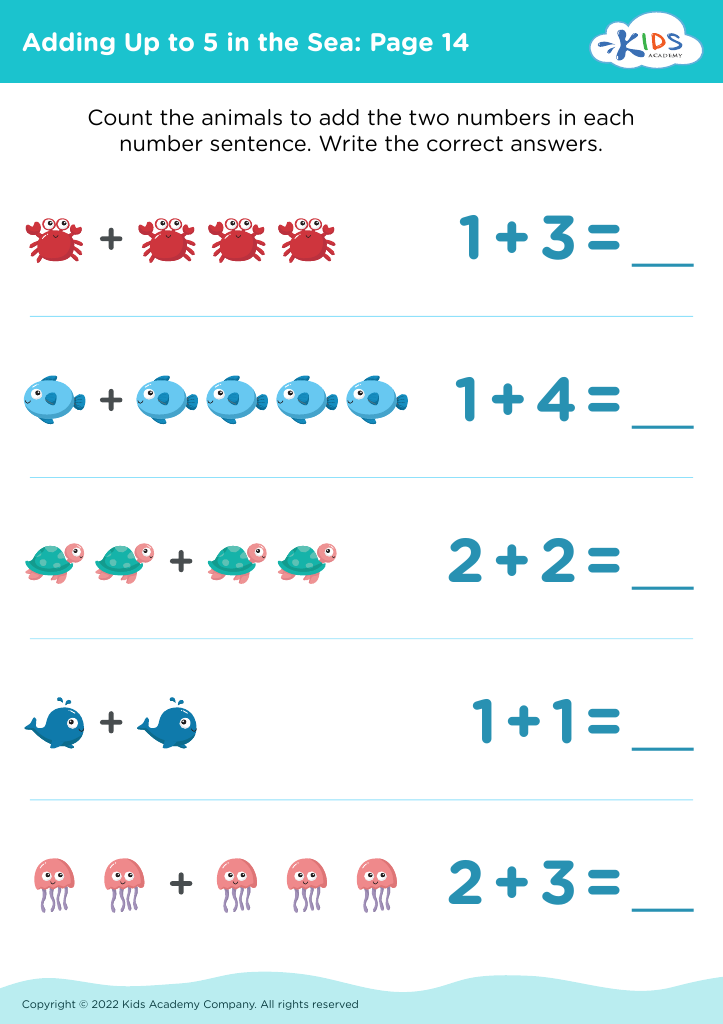
Adding Up to 5 in the Sea: Page 14
Worksheet
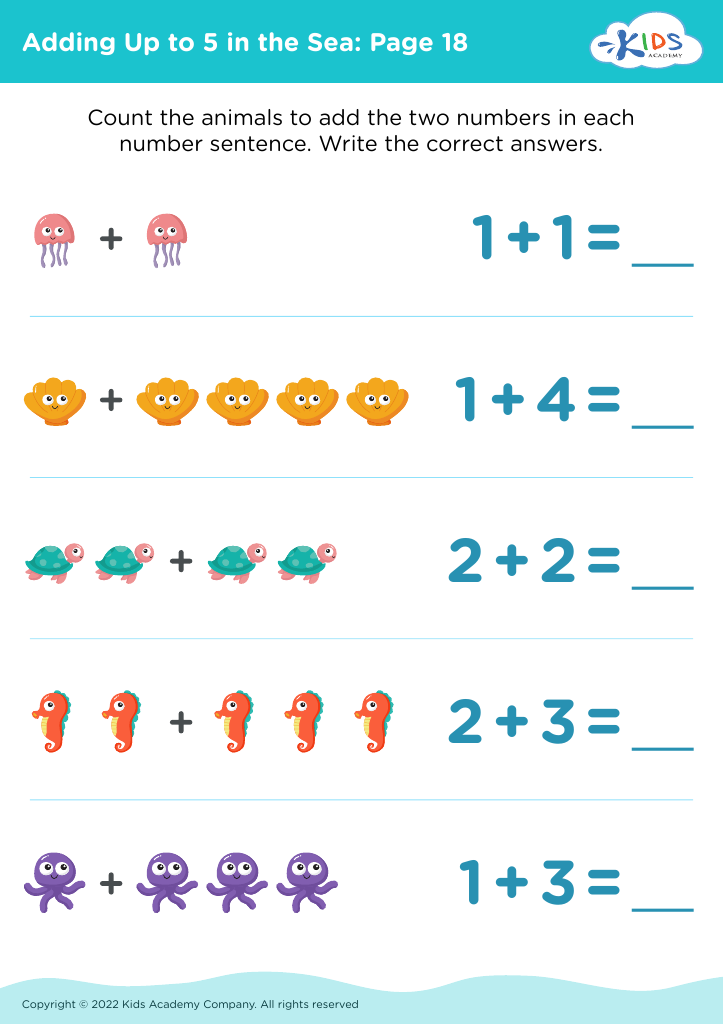
Adding Up to 5 in the Sea: Page 18
Worksheet
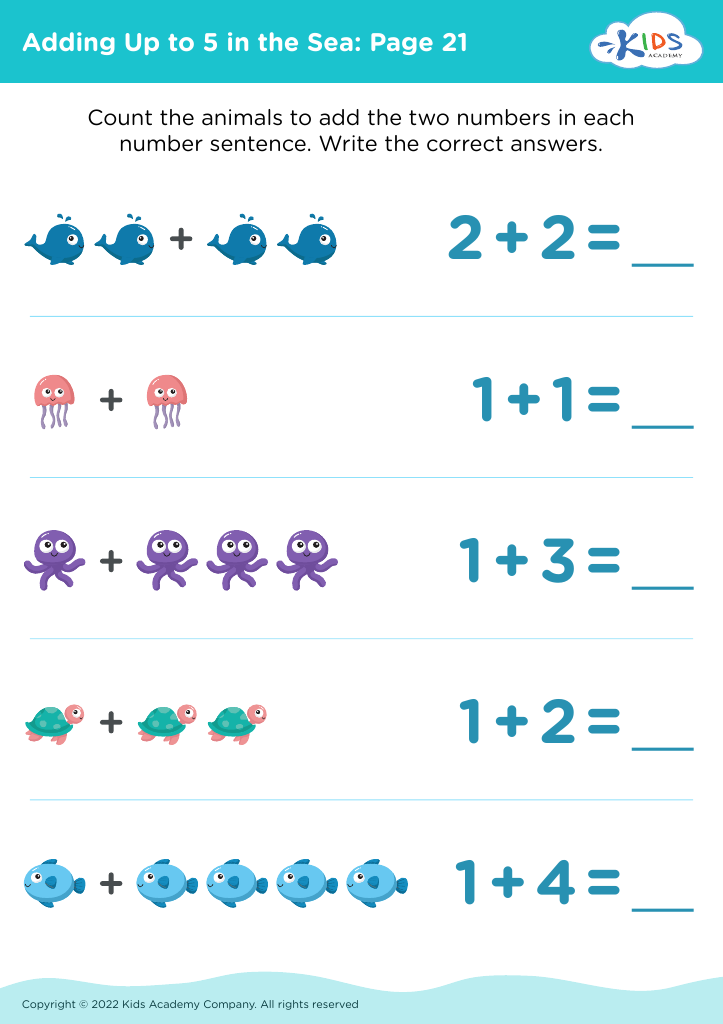
Adding Up to 5 in the Sea: Page 21
Worksheet
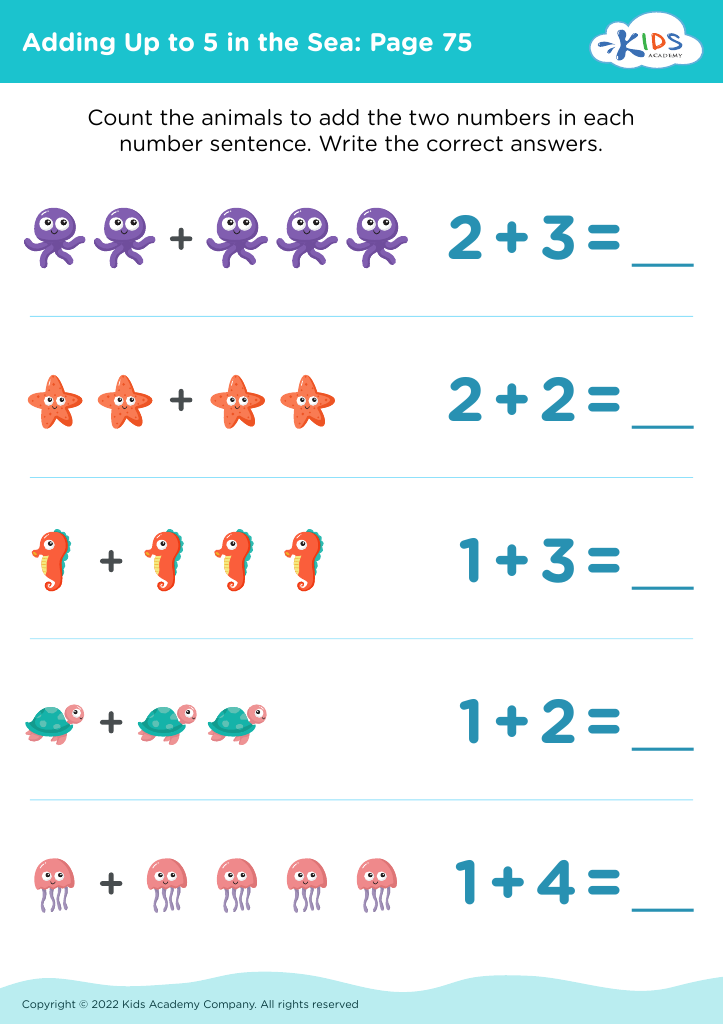
Adding Up to 5 in the Sea: Page 75
Worksheet
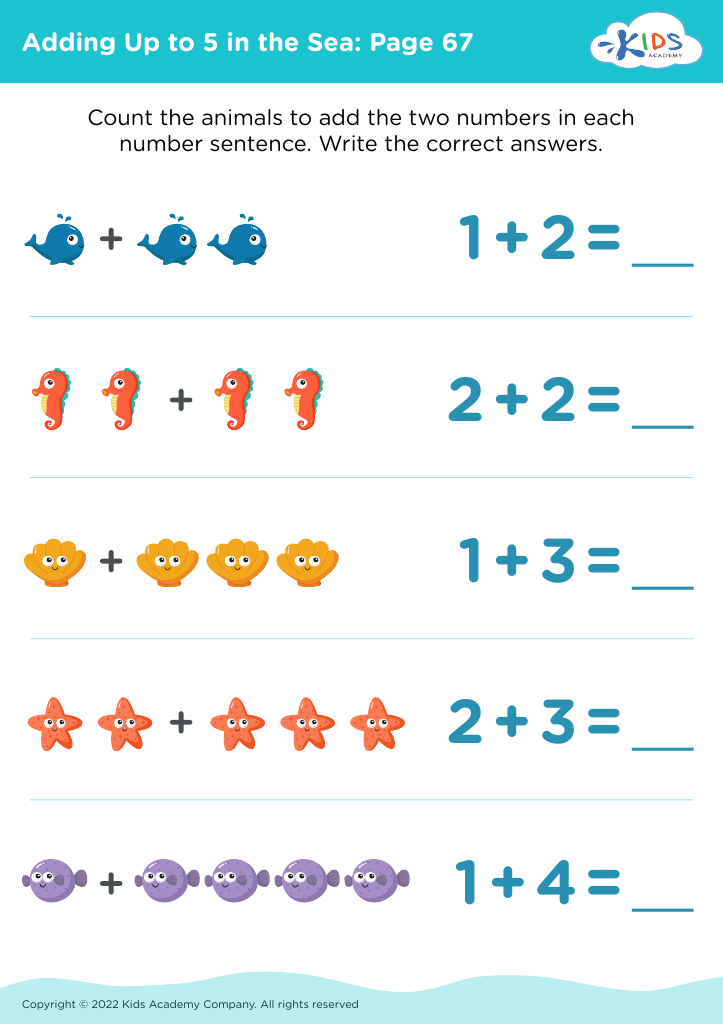
Adding Up to 5 in the Sea: Page 67
Worksheet
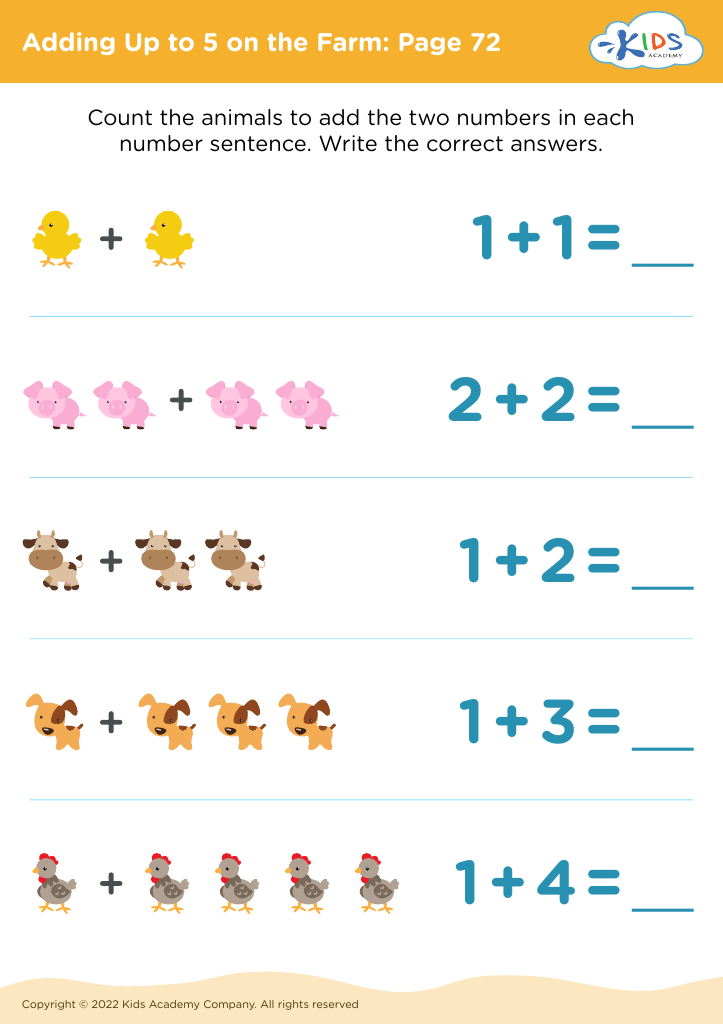
Adding Up to 5 on the Farm: Page 72
Worksheet
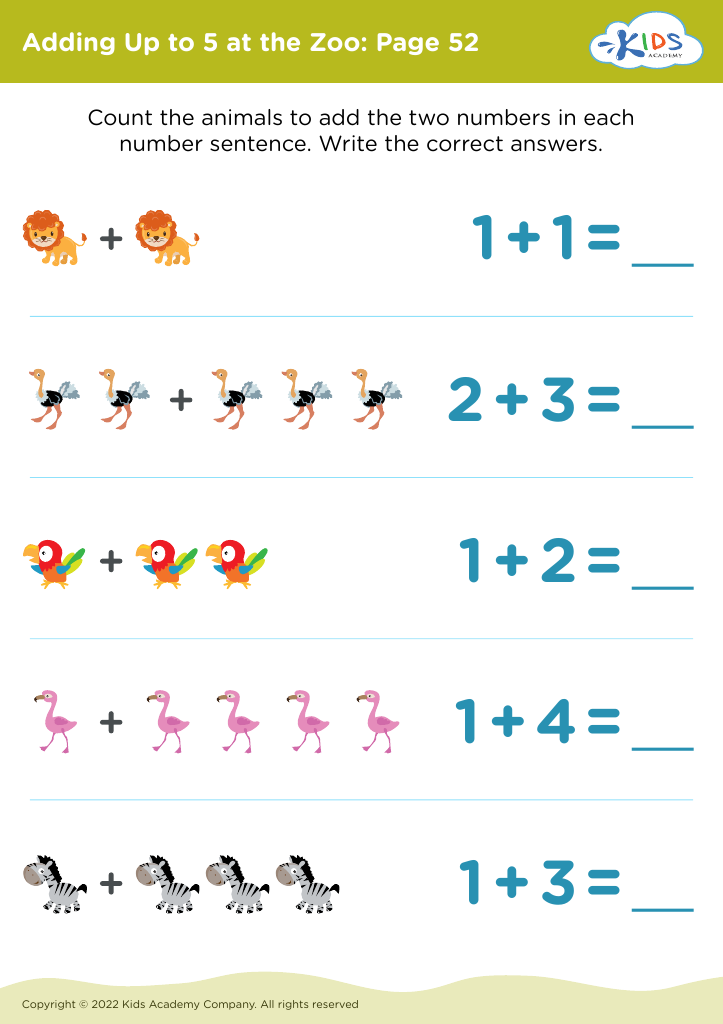
Adding Up to 5 at the Zoo: Page 52
Worksheet
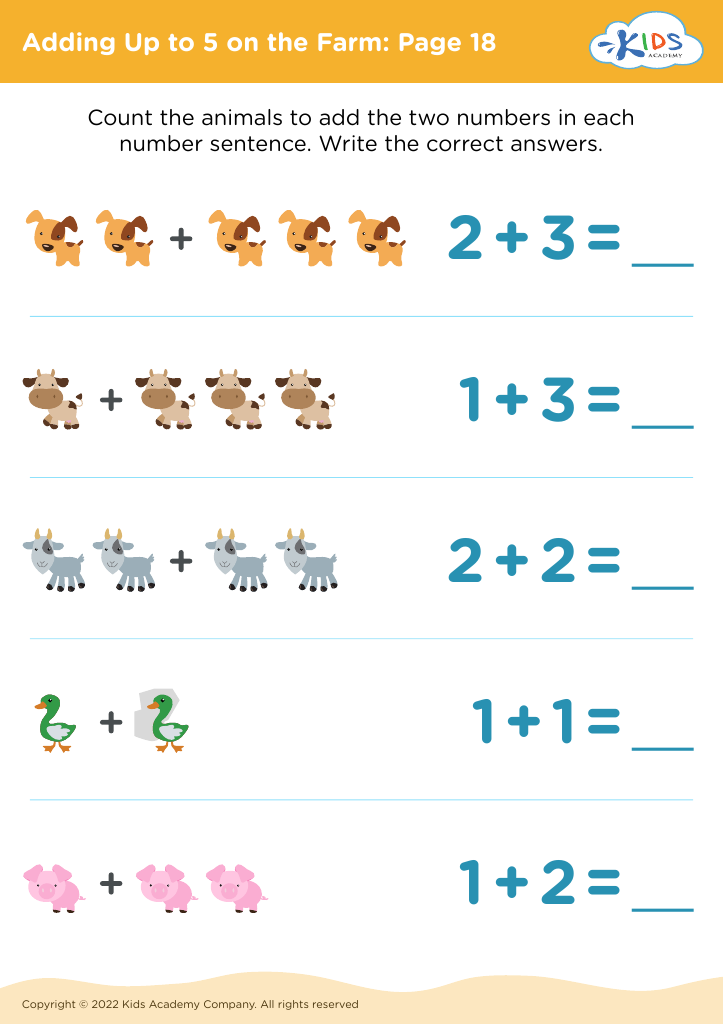
Adding Up to 5 on the Farm: Page 18
Worksheet
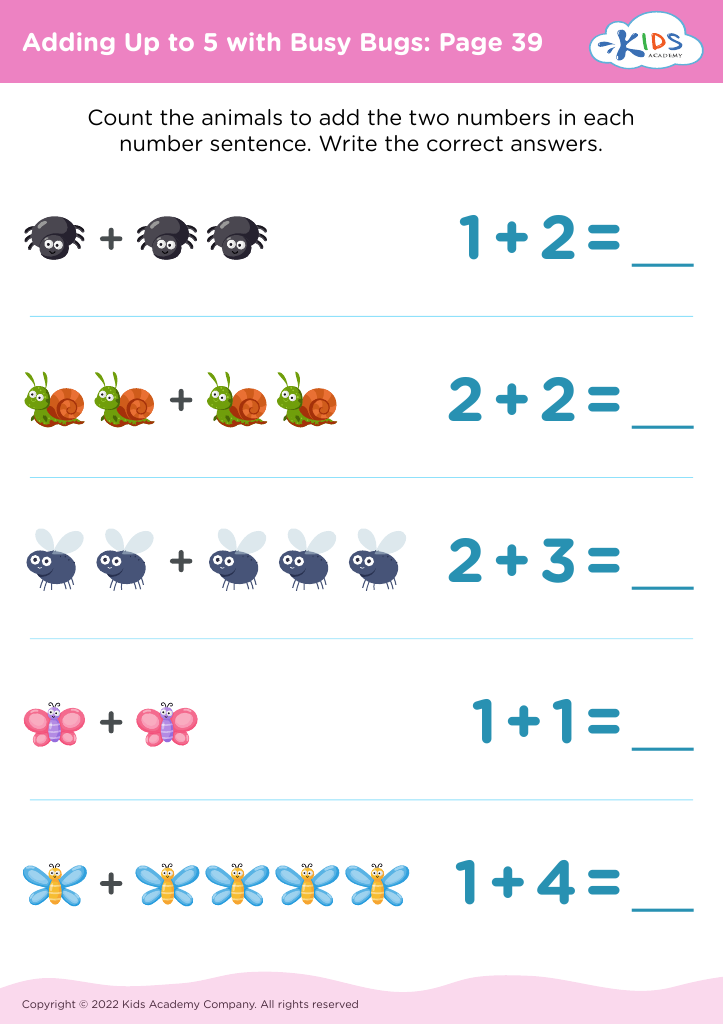
Adding Up to 5 with Busy Bugs: Page 39
Worksheet
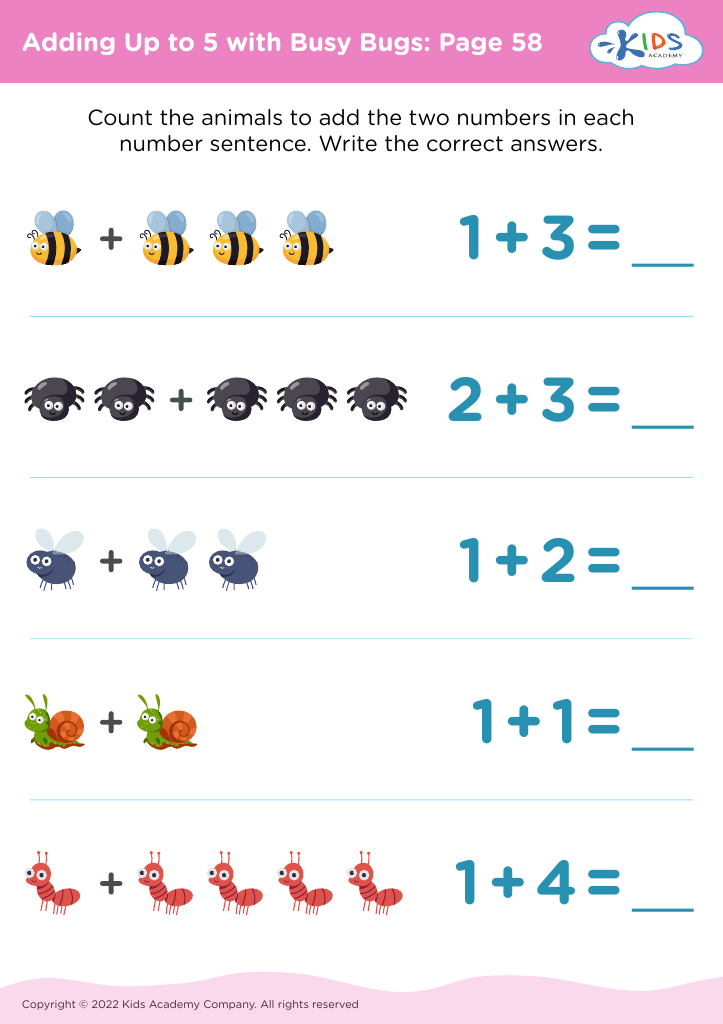
Adding Up to 5 with Busy Bugs: Page 58
Worksheet
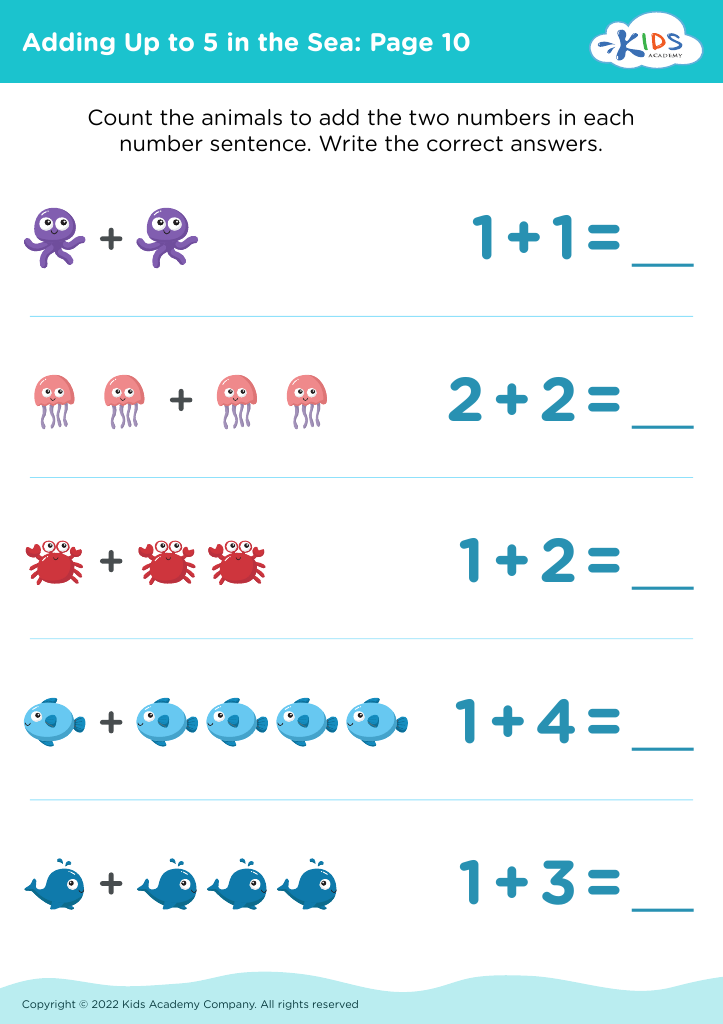
Adding Up to 5 in the Sea: Page 10
Worksheet
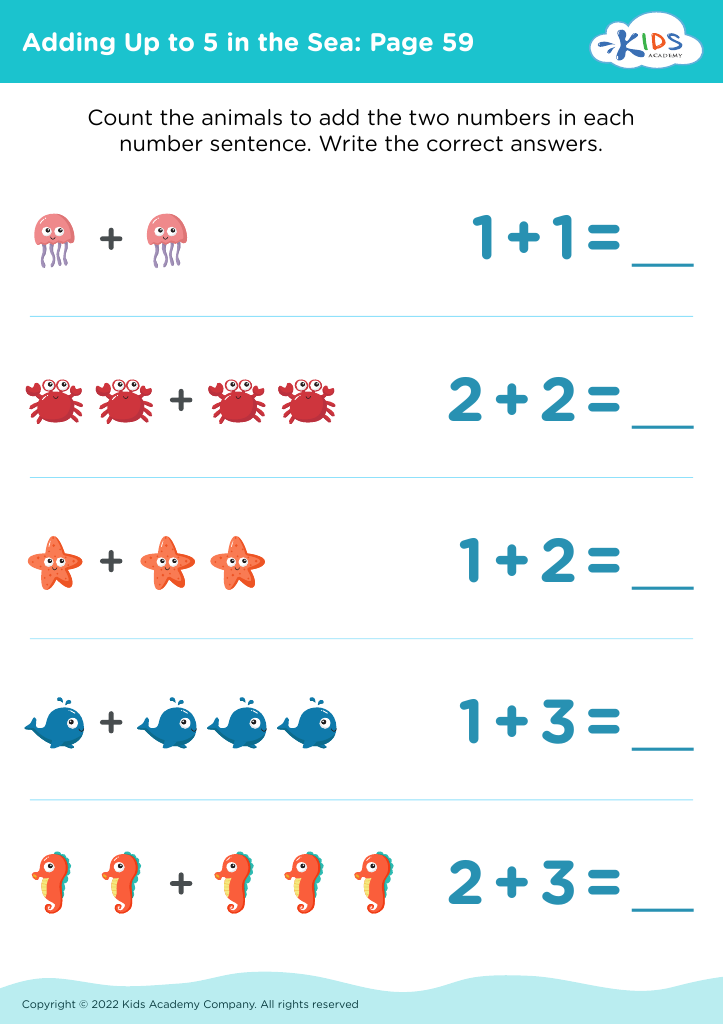
Adding Up to 5 in the Sea: Page 59
Worksheet
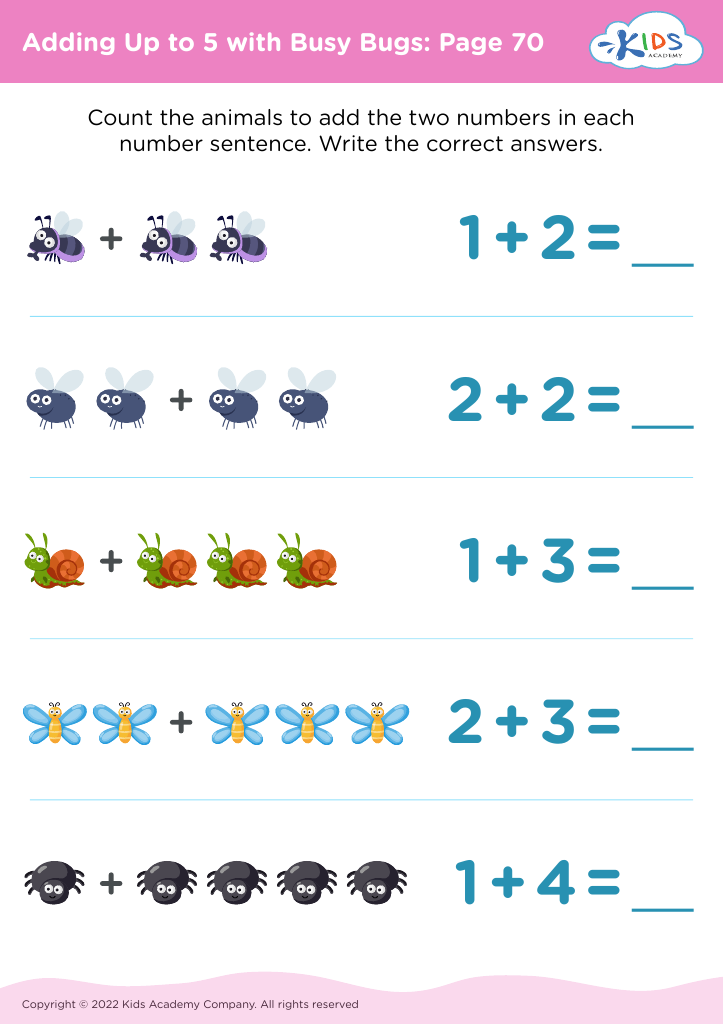
Adding Up to 5 with Busy Bugs: Page 70
Worksheet
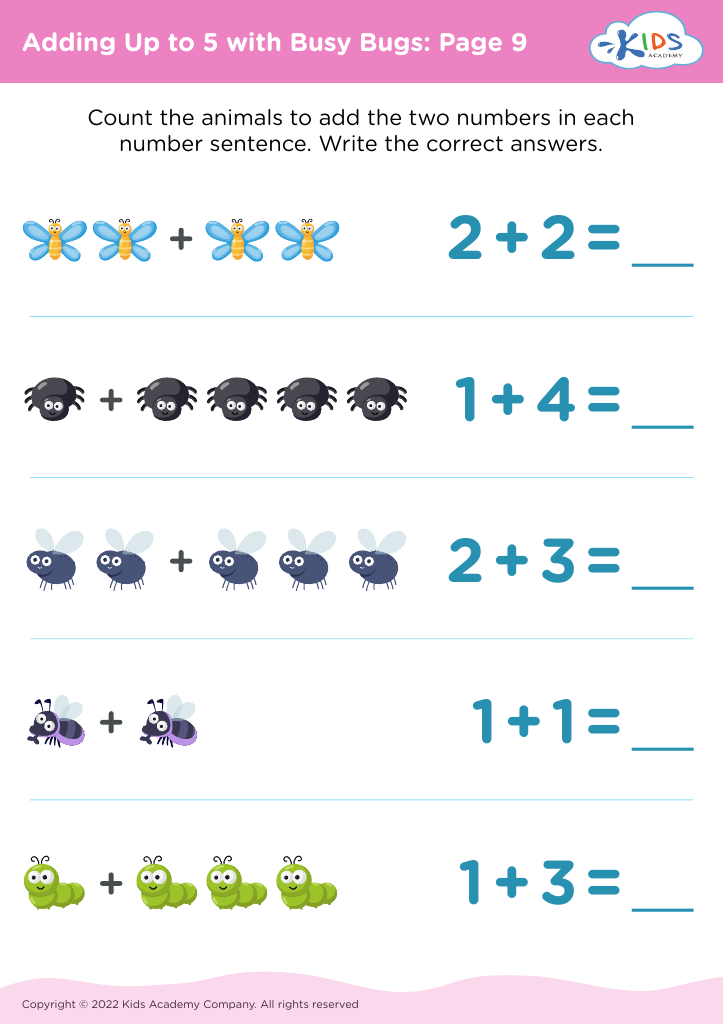
Adding Up to 5 with Busy Bugs: Page 9
Worksheet
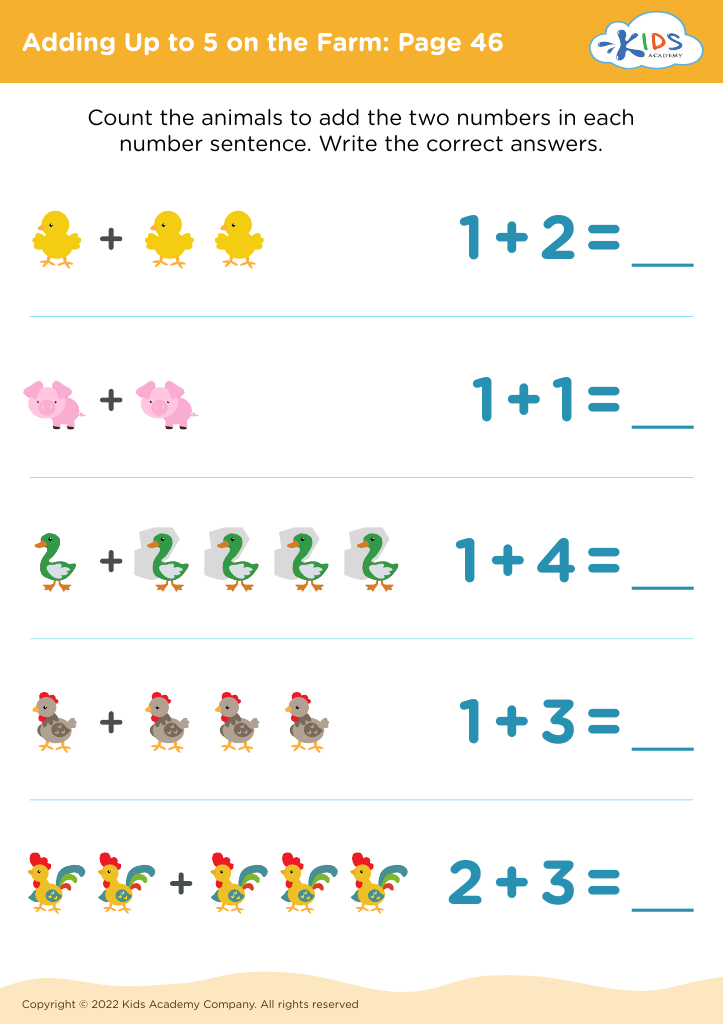
Adding Up to 5 on the Farm: Page 46
Worksheet
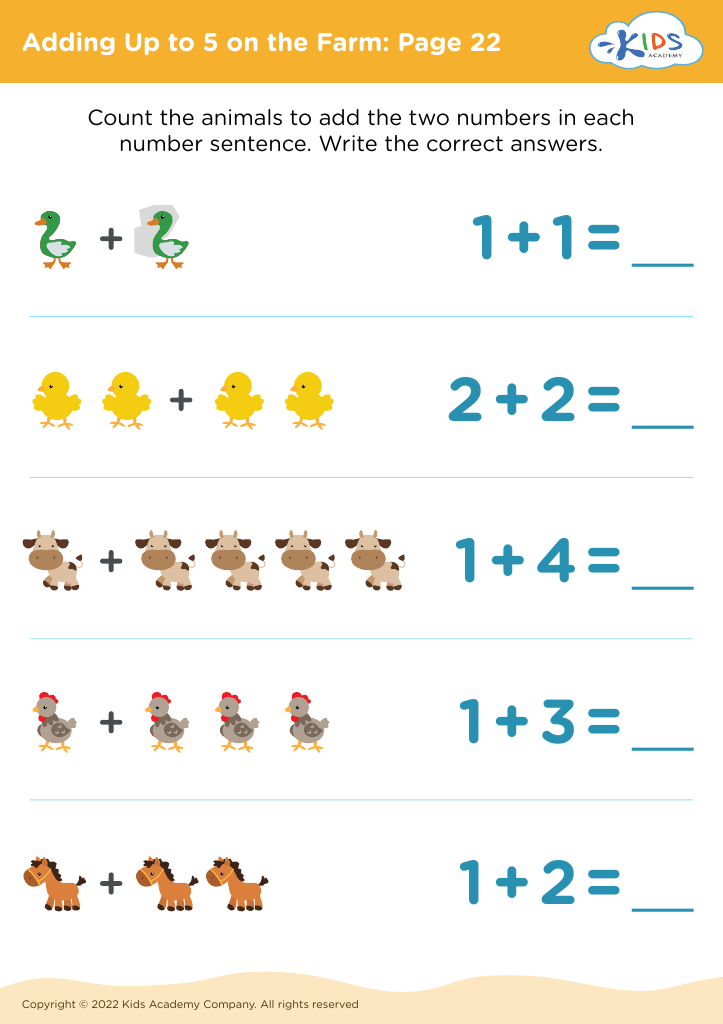
Adding Up to 5 on the Farm: Page 22
Worksheet
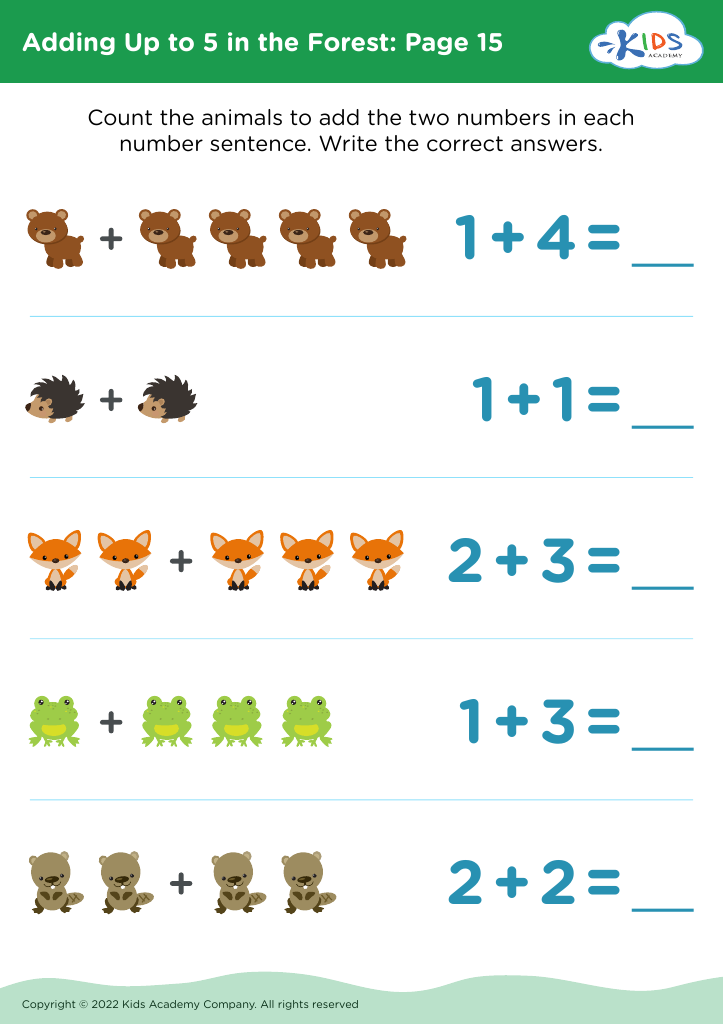
Adding Up to 5 in the Forest: Page 15
Worksheet


Visual learning is critical for young children, especially those aged 4-5, as it significantly enhances their understanding and retention of mathematical concepts, such as adding up to 5. At this developmental stage, children are naturally drawn to visuals; they learn best through engaging images, colors, and manipulatives that can visually demonstrate relationships between numbers.

Teachers and parents should care about visual learning because it facilitates a deeper cognitive grasp of addition. Utilizing visual aids—like counters, number lines, or drawings—helps children conceptualize how numbers come together and equate, making abstract ideas more tangible. For instance, using five blocks to demonstrate adding 2 + 3 provides a clear representation that enhances comprehension.

Moreover, visual learning promotes problem-solving skills by encouraging children to experiment with different configurations and ways to group numbers. It fosters engagement; children are more likely to enjoy learning activities that incorporate visual elements.

By prioritizing visual learning in early education, teachers and parents can build a strong mathematical foundation and foster positive attitudes towards learning, equipping kids with effective tools they will benefit from throughout their educational journey. Thus, visual learning is essential for supporting cognitive development and a love for math.