Filters

419 filtered results

Clear all filters
Favorites
With answer key
Interactive

419 filtered results

Difficulty Level

Grade


Check out this FREE Trial Lesson on Addition & Subtraction for age 4-5!

H

Favorites
With answer key
Interactive
  • 4-5
  • Number Recognition
  • Addition & Subtraction
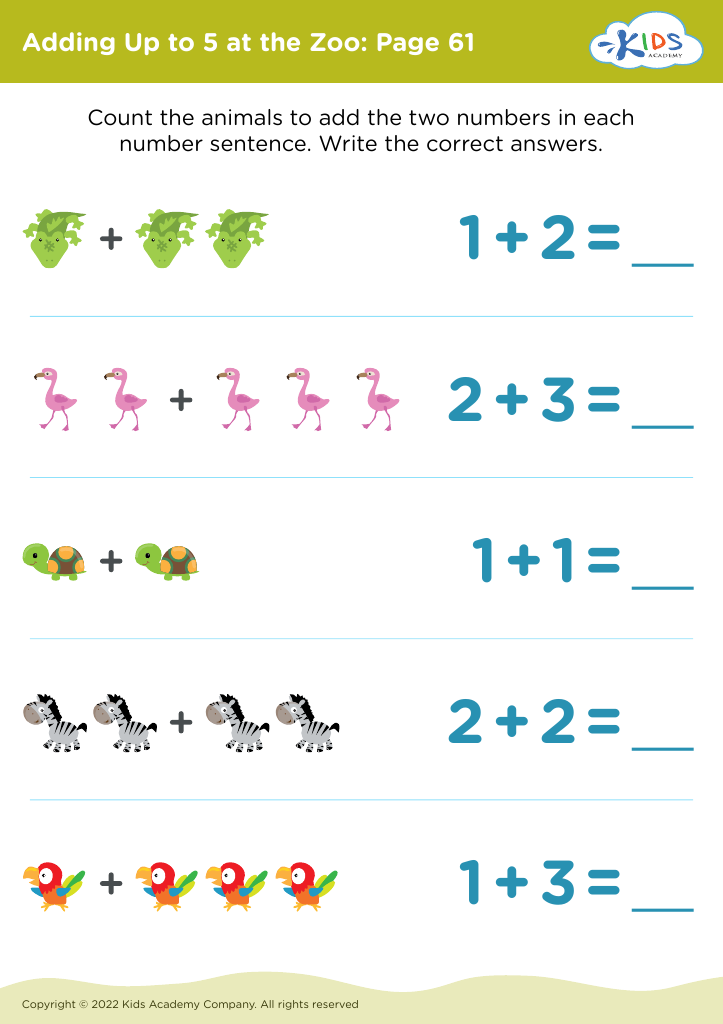
Adding Up to 5 at the Zoo: Page 61
Worksheet
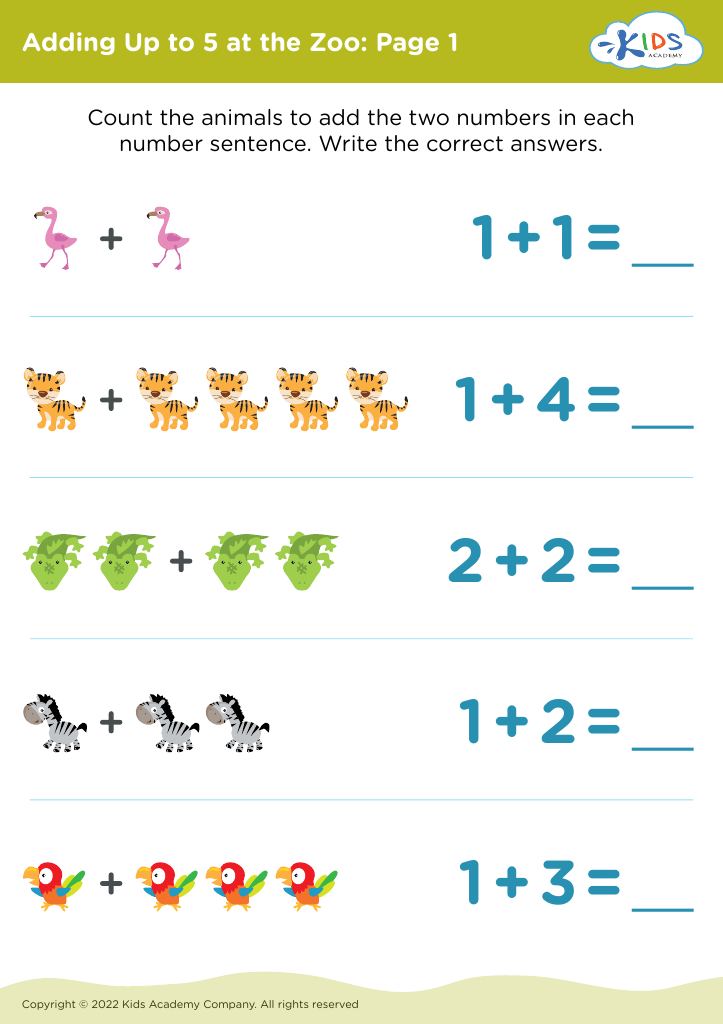
Adding Up to 5 at the Zoo: Page 1

Adding Up to 5 at the Zoo: Page 1

Adding Up to 5 at the Zoo: Page 1
Worksheet
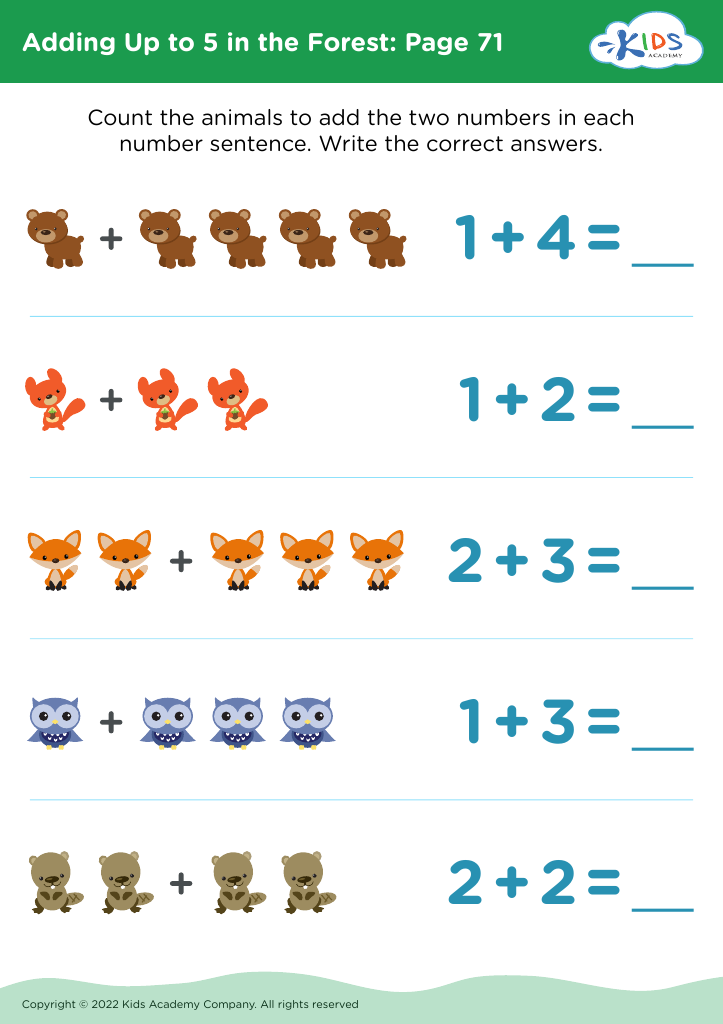
Adding Up to 5 in the Forest: Page 71
Worksheet
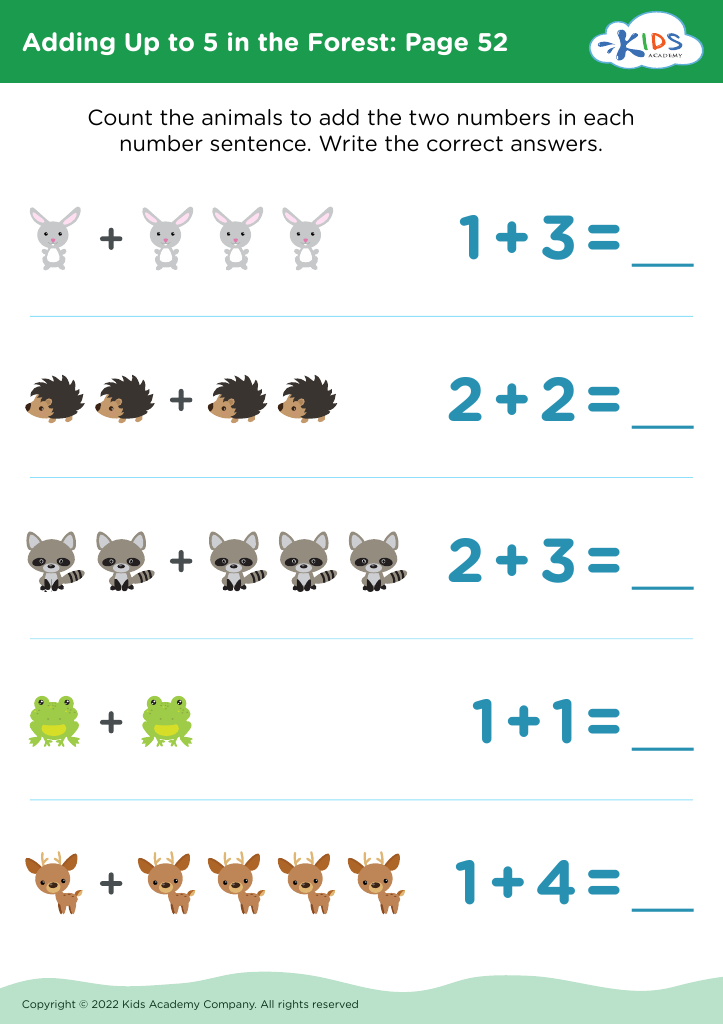
Adding Up to 5 in the Forest: Page 52
Worksheet
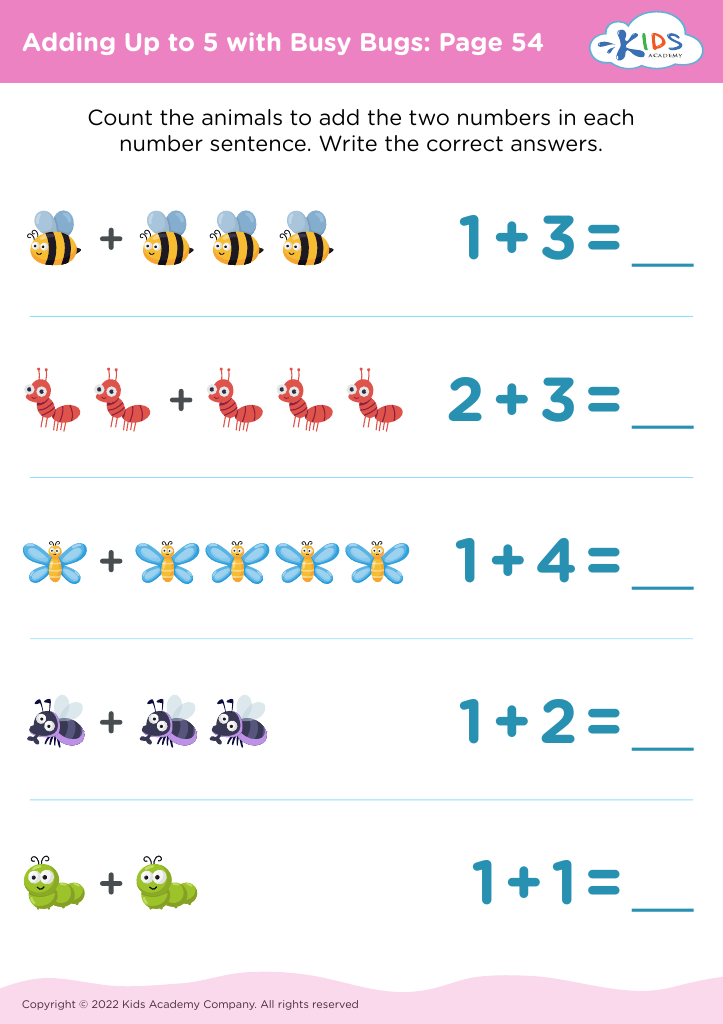
Adding Up to 5 with Busy Bugs: Page 54
Worksheet
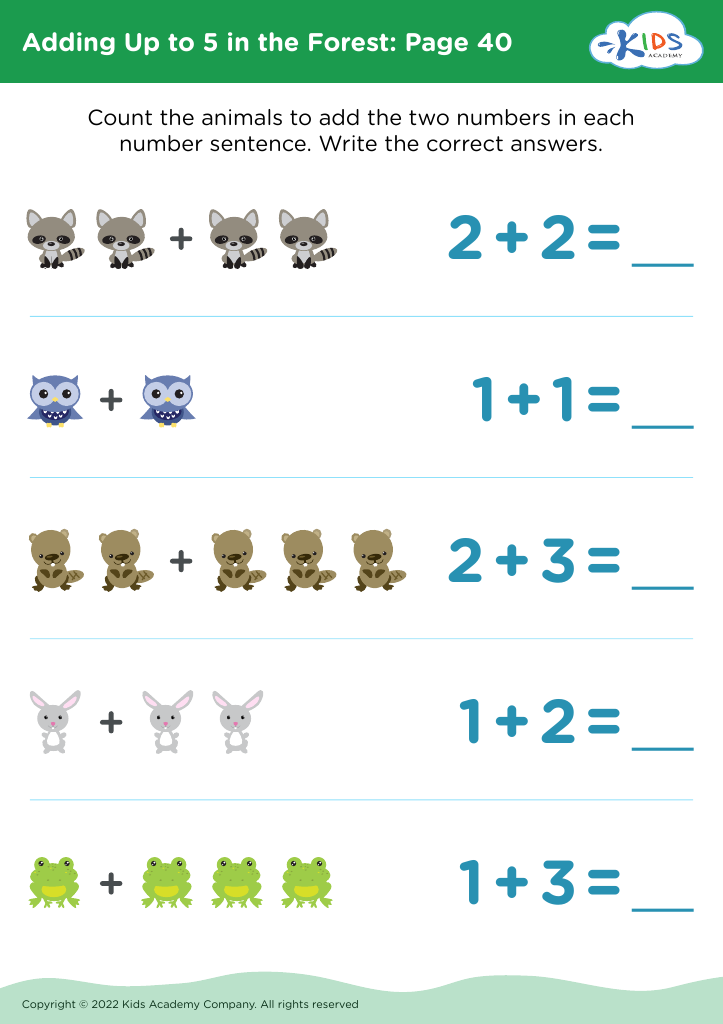
Adding Up to 5 in the Forest: Page 40
Worksheet
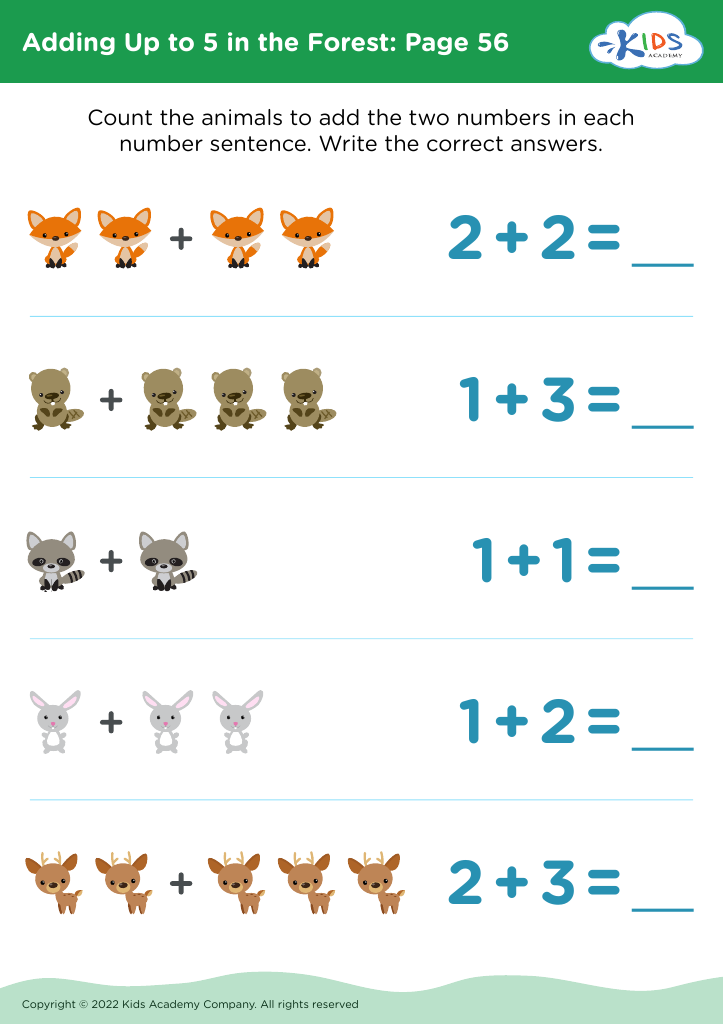
Adding Up to 5 in the Forest: Page 56
Worksheet
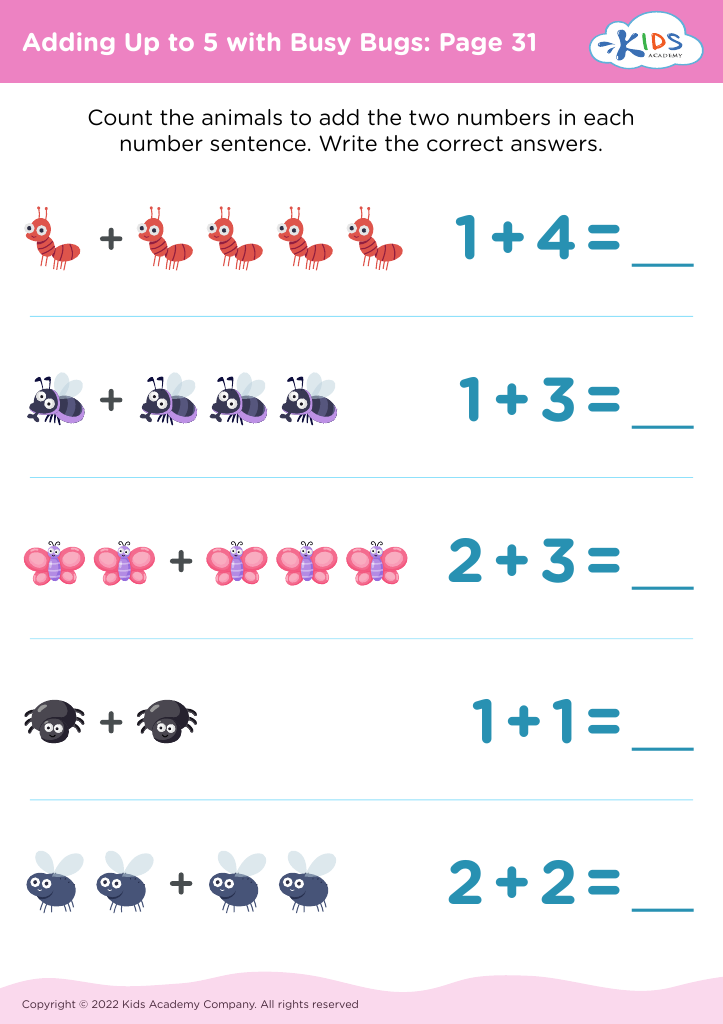
Adding Up to 5 with Busy Bugs: Page 31
Worksheet
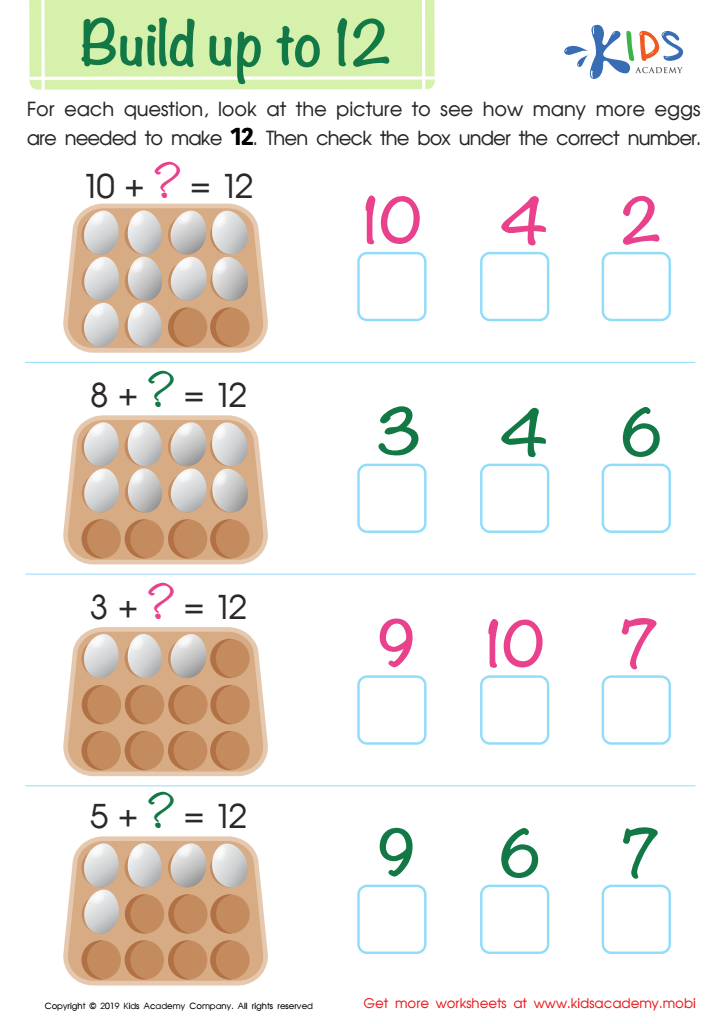
Build up to 12 Worksheet

Build up to 12 Worksheet

Love eggs? Kids can identify them in the picture in this worksheet. We need to add numbers to make 12. Look at the picture and see how many eggs are needed. Check the correct number box. Breakfast or baking, eggs are essential!
Build up to 12 Worksheet
Worksheet
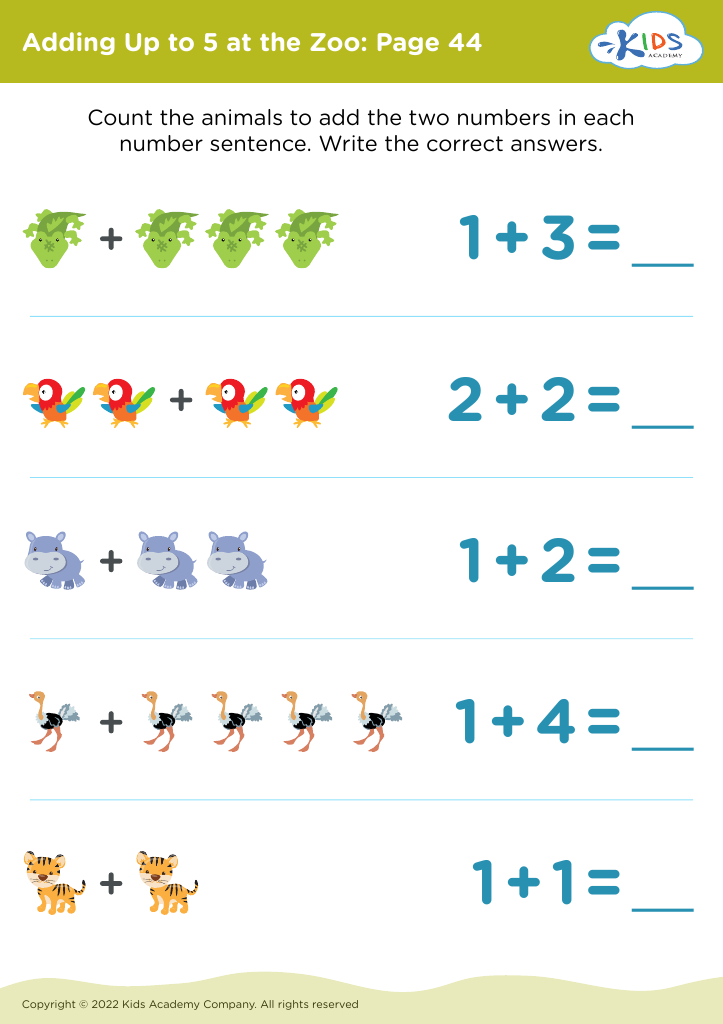
Adding Up to 5 at the Zoo: Page 44
Worksheet
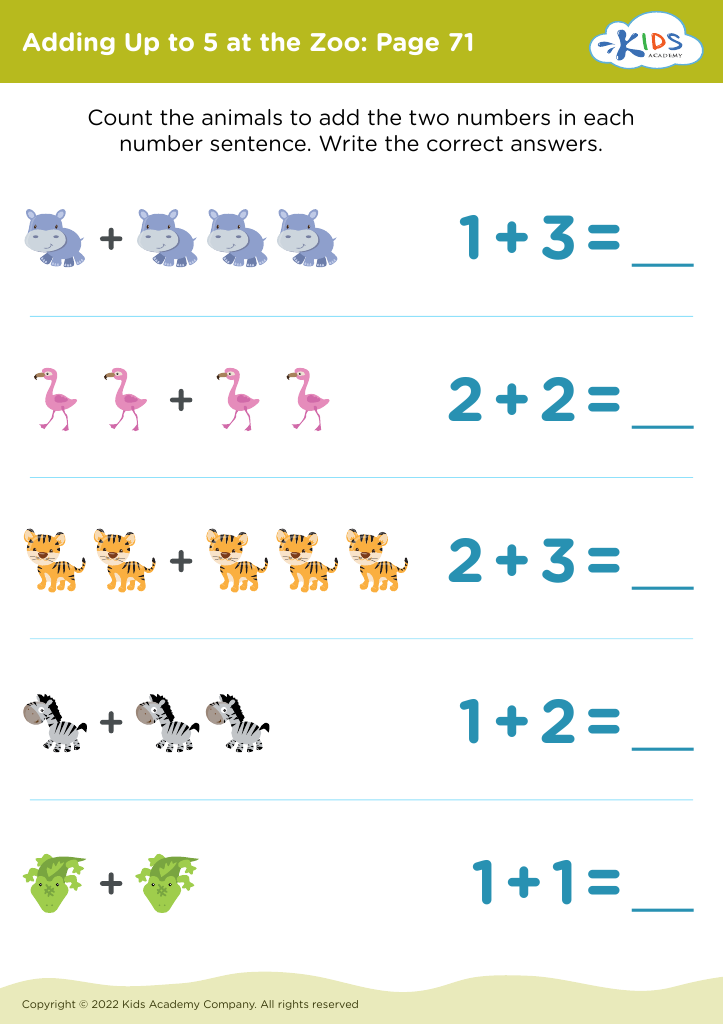
Adding Up to 5 at the Zoo: Page 71
Worksheet
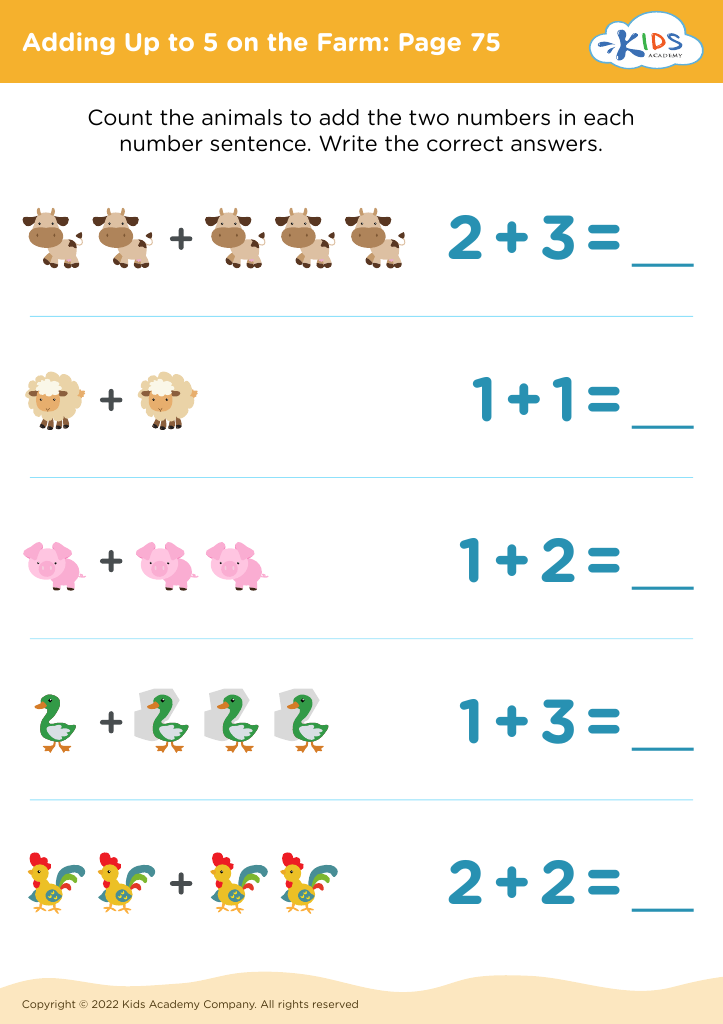
Adding Up to 5 on the Farm: Page 75
Worksheet
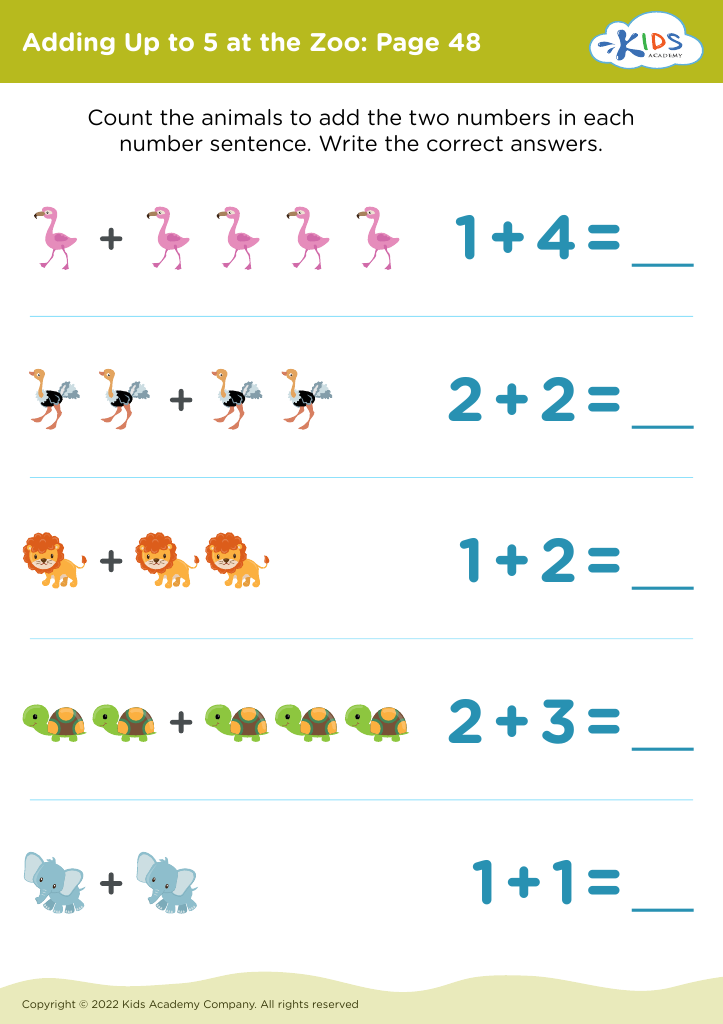
Adding Up to 5 at the Zoo: Page 48
Worksheet
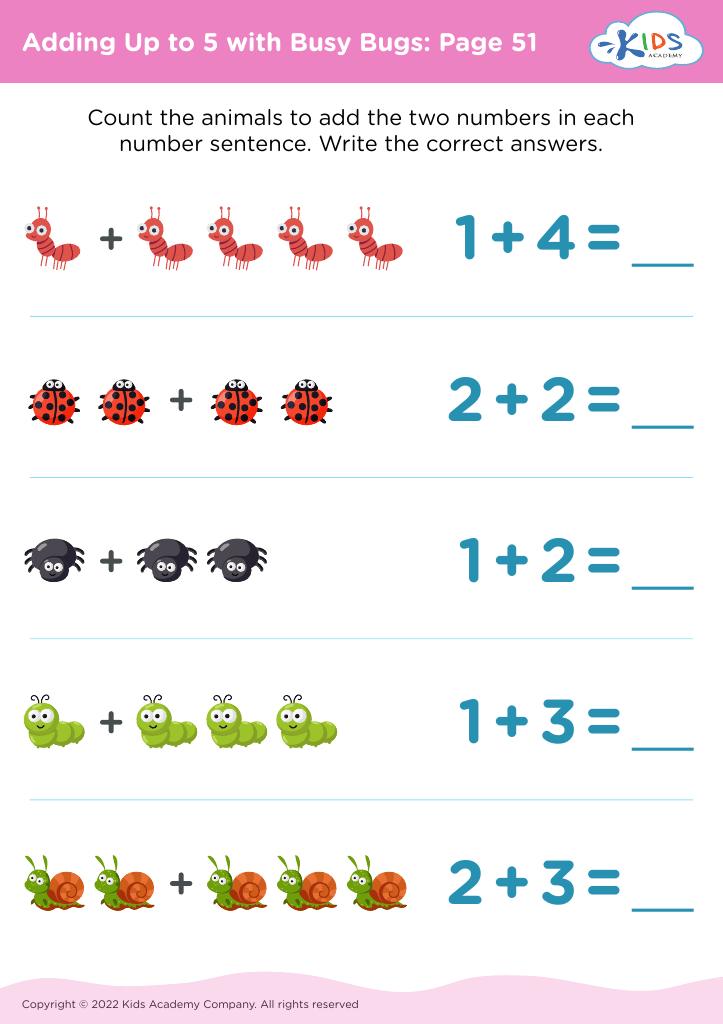
Adding Up to 5 with Busy Bugs: Page 51
Worksheet
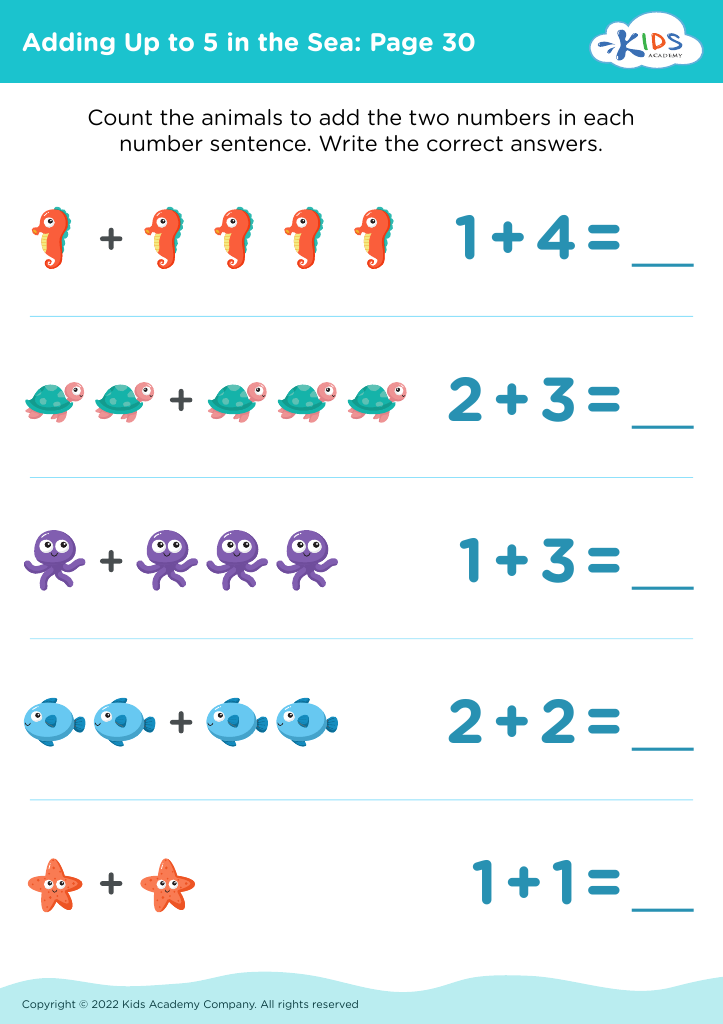
Adding Up to 5 in the Sea: Page 30
Worksheet
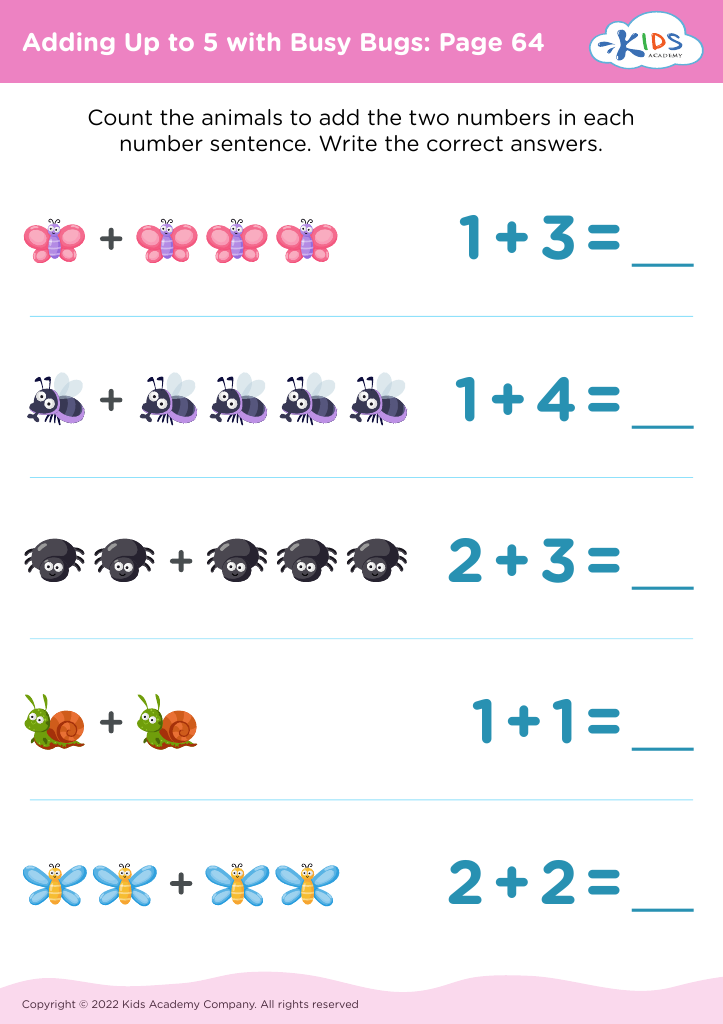
Adding Up to 5 with Busy Bugs: Page 64
Worksheet
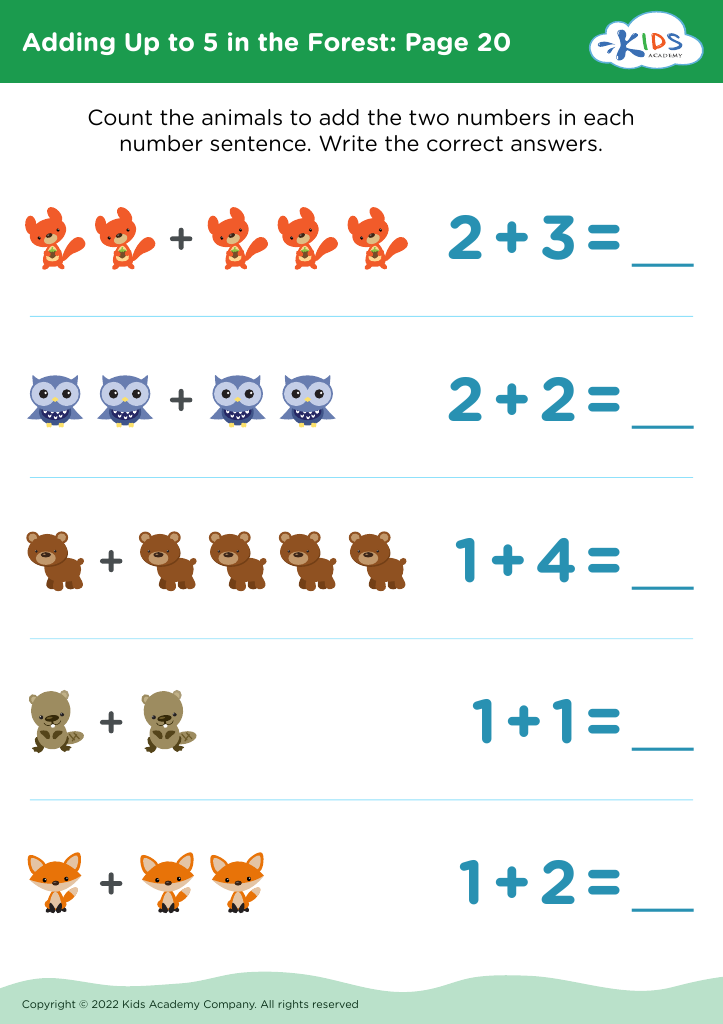
Adding Up to 5 in the Forest: Page 20
Worksheet
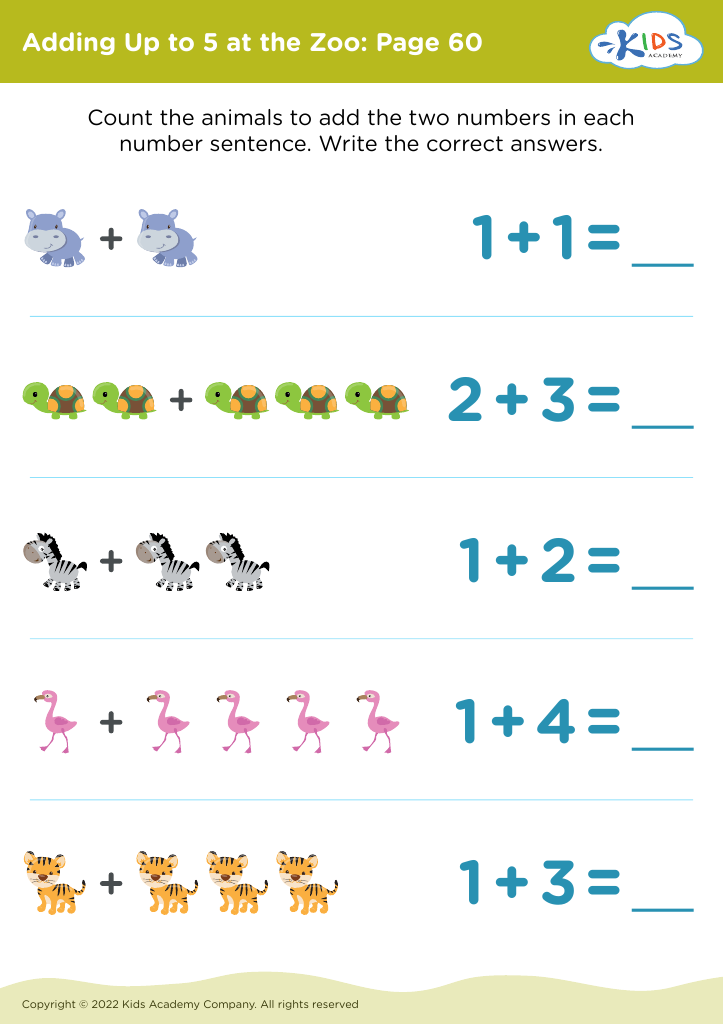
Adding Up to 5 at the Zoo: Page 60
Worksheet
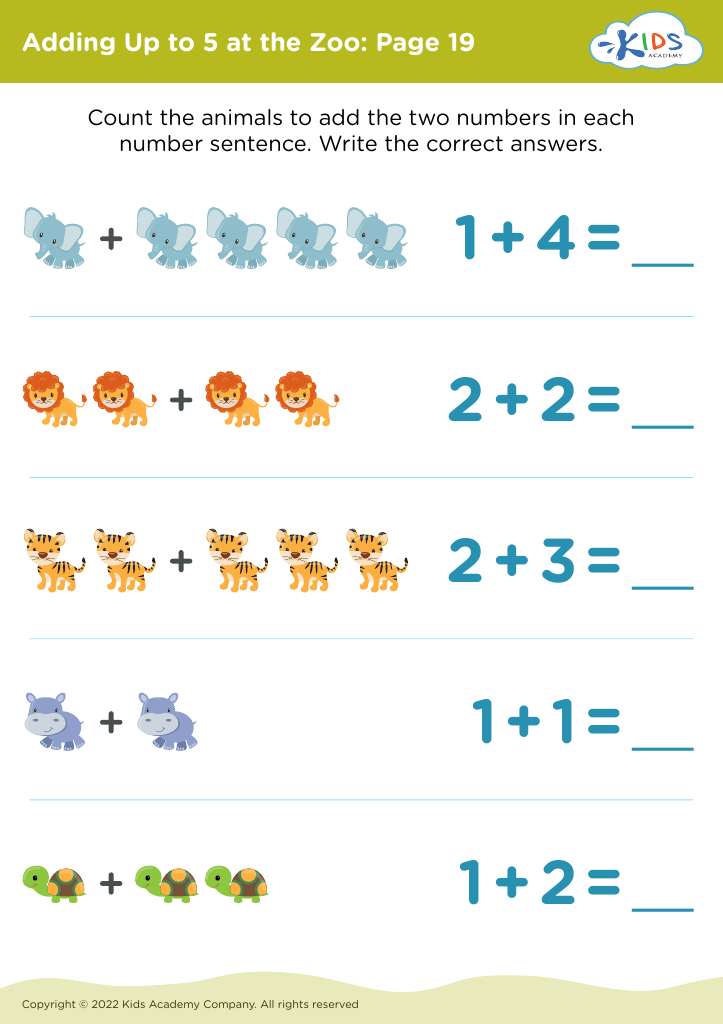
Adding Up to 5 at the Zoo: Page 19
Worksheet
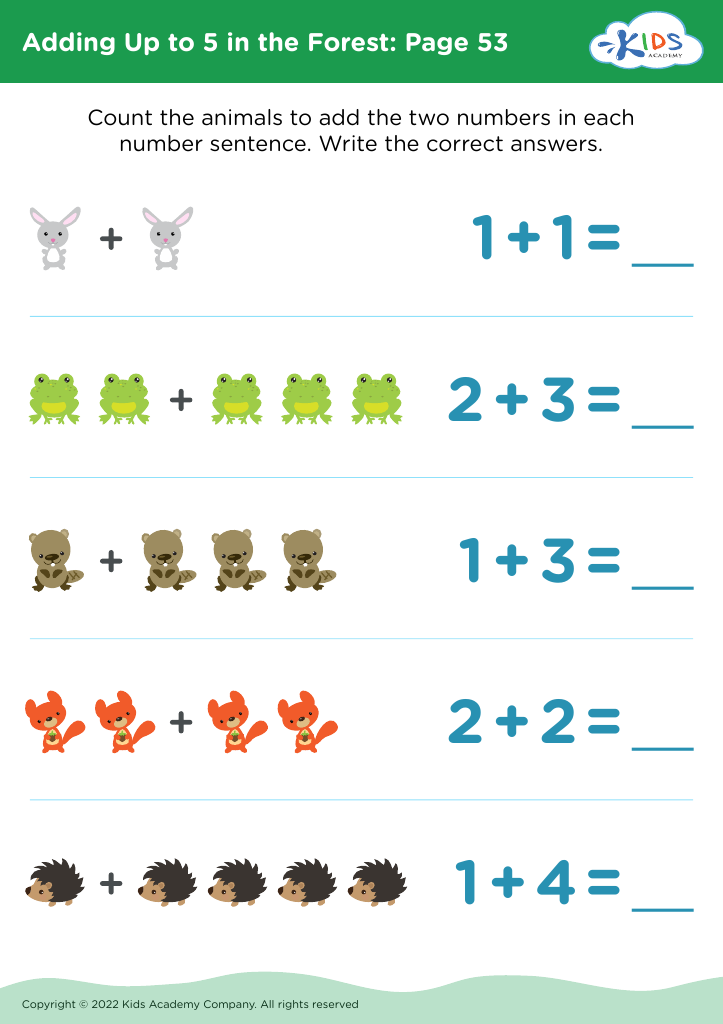
Adding Up to 5 in the Forest: Page 53
Worksheet
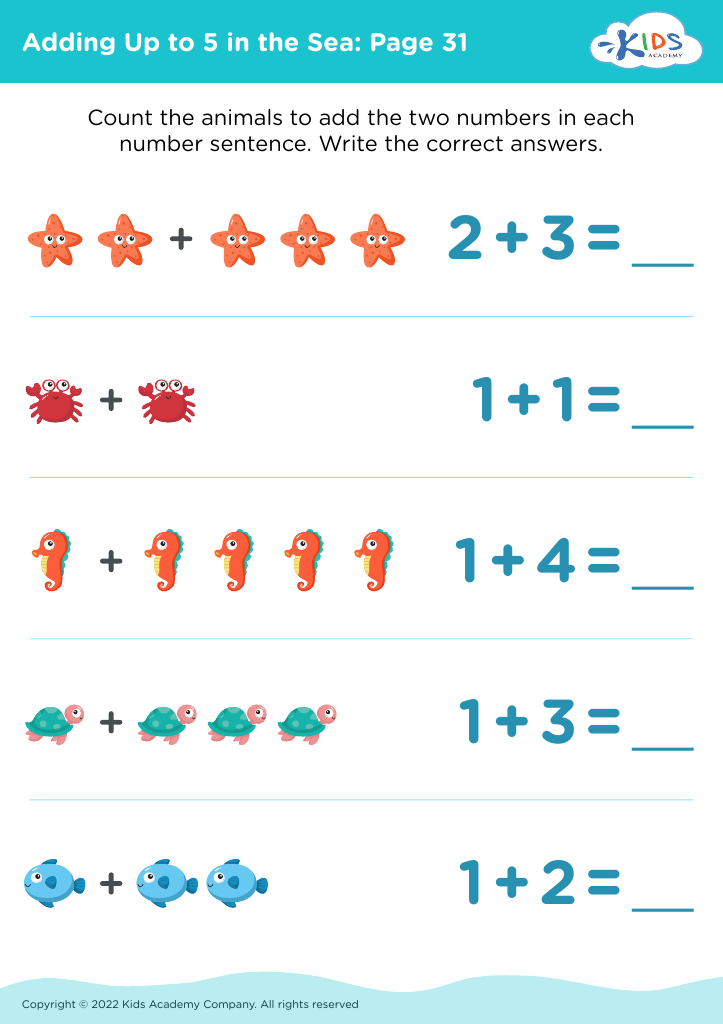
Adding Up to 5 in the Sea: Page 31
Worksheet
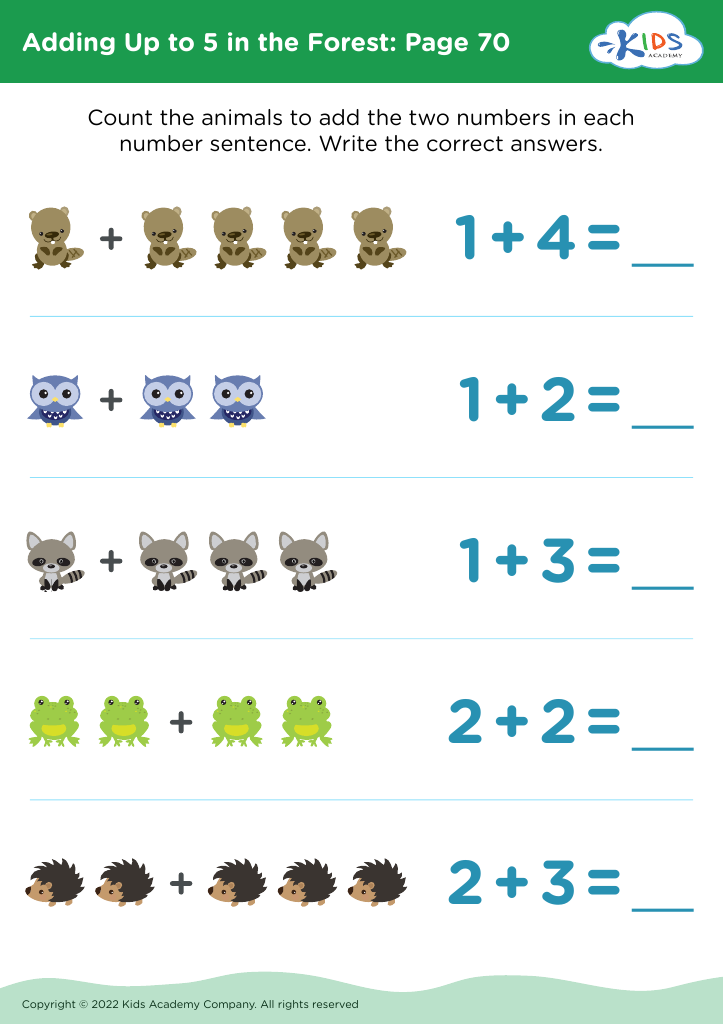
Adding Up to 5 in the Forest: Page 70
Worksheet
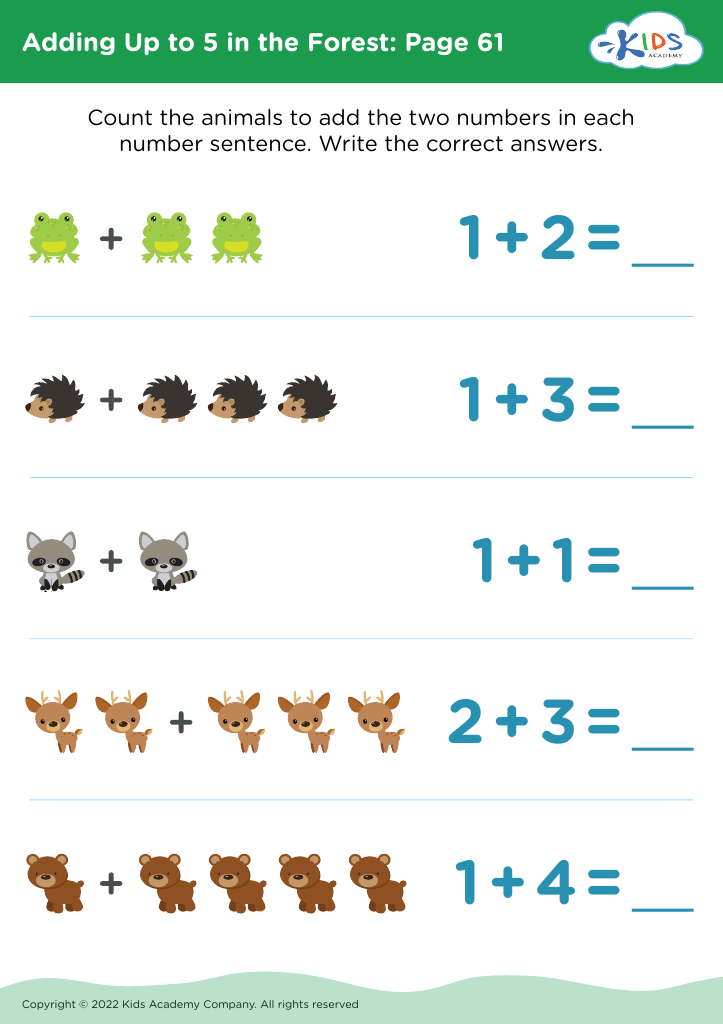
Adding Up to 5 in the Forest: Page 61
Worksheet
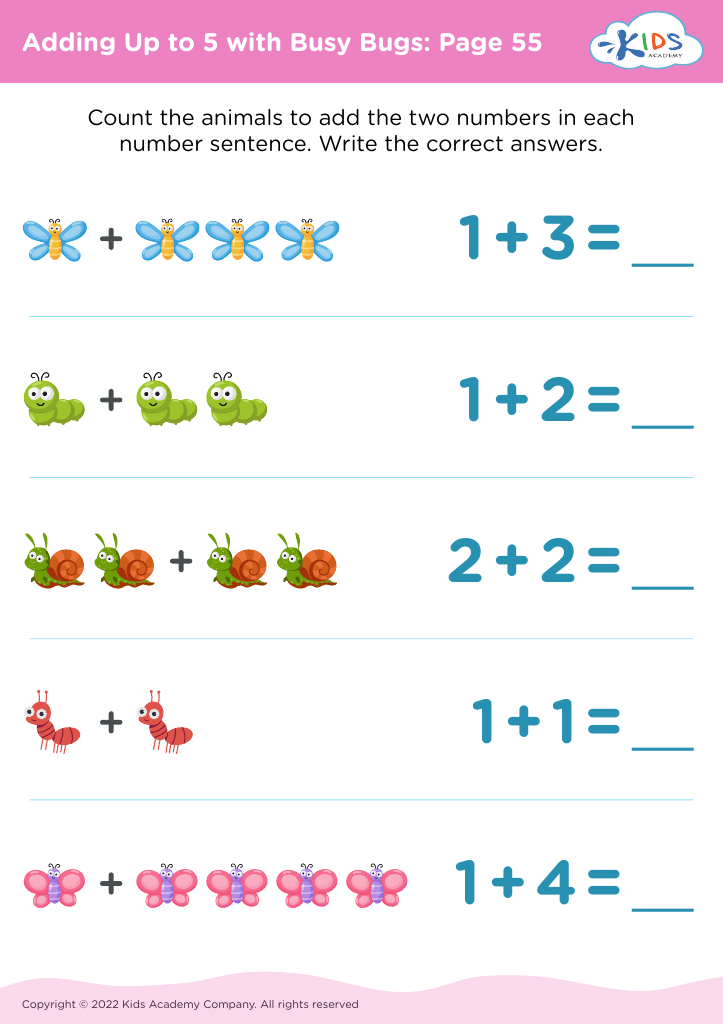
Adding Up to 5 with Busy Bugs: Page 55
Worksheet


Early childhood is a critical period for developing foundational math skills, including number recognition, addition, and subtraction. For children ages 4 to 5, mastering these skills is crucial for several reasons.

Firstly, number recognition allows children to identify and understand numbers, which forms the basis for all subsequent math learning. It helps them not just in math, but also in daily tasks that involve numbers, such as counting objects or telling time.

Addition and subtraction further enhance their cognitive skills, promoting logical thinking and problem-solving abilities. These operations encompass key mental processes like visualization and abstract thinking, helping children grasp more complex mathematical concepts in the future.

Moreover, playful and engaging teaching methods, often used at this age, lay a solid ground for a positive attitude toward math. This fosters confidence and enthusiasm, encouraging lifelong learning.

When parents and teachers prioritize these early math skills, they not only support academic success but also contribute to a child's overall development. Building number and math competence sets the stage for critical thinking and analytical skills that define access to future opportunities in academics and beyond. Investing time in number recognition and basic operations ensures children are well-prepared for subsequent learning challenges.