Check out this FREE Trial Lesson on Addition & Subtraction for age 4-5!

Z

Favorites
With answer key
Interactive
  • 4-5
  • Visual Learning
  • Addition & Subtraction
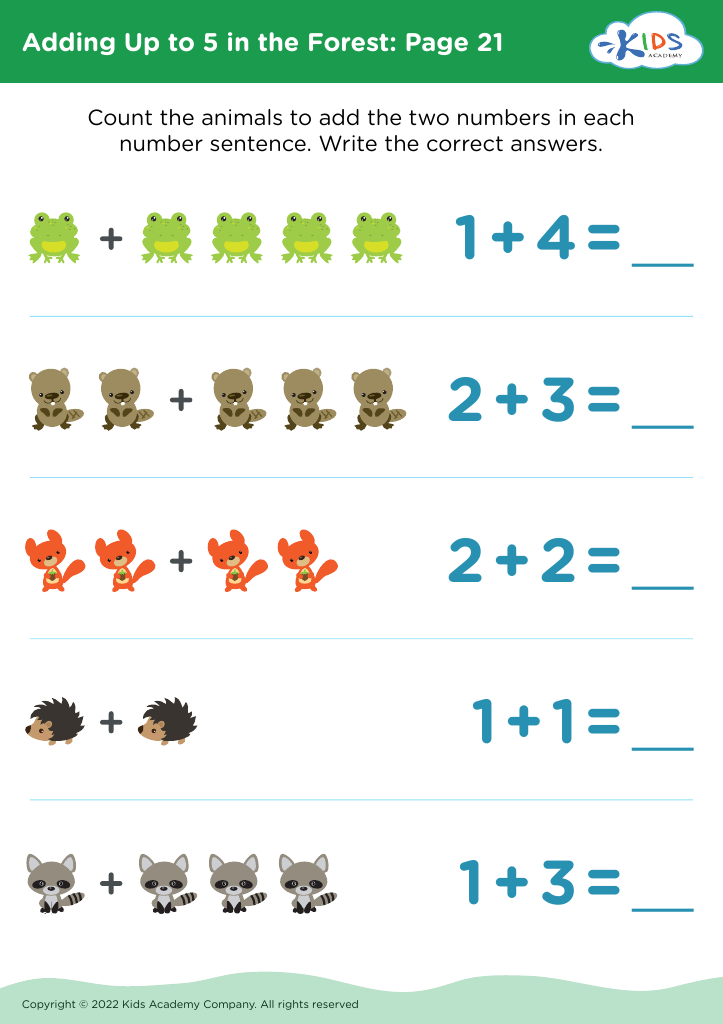
Adding Up to 5 in the Forest: Page 21
Worksheet
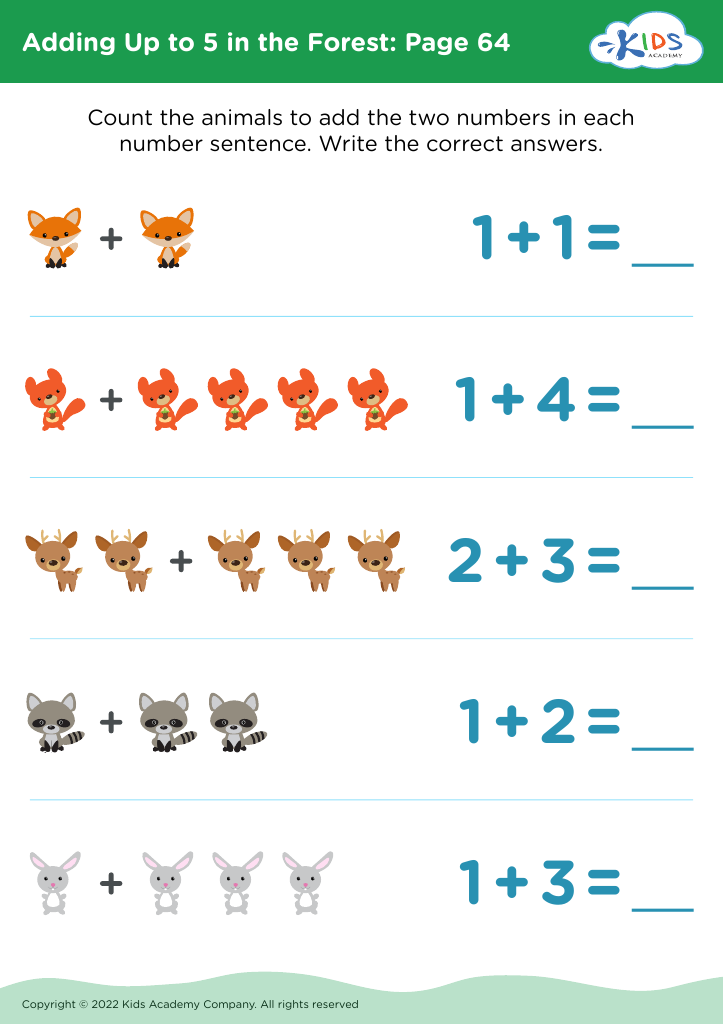
Adding Up to 5 in the Forest: Page 64
Worksheet
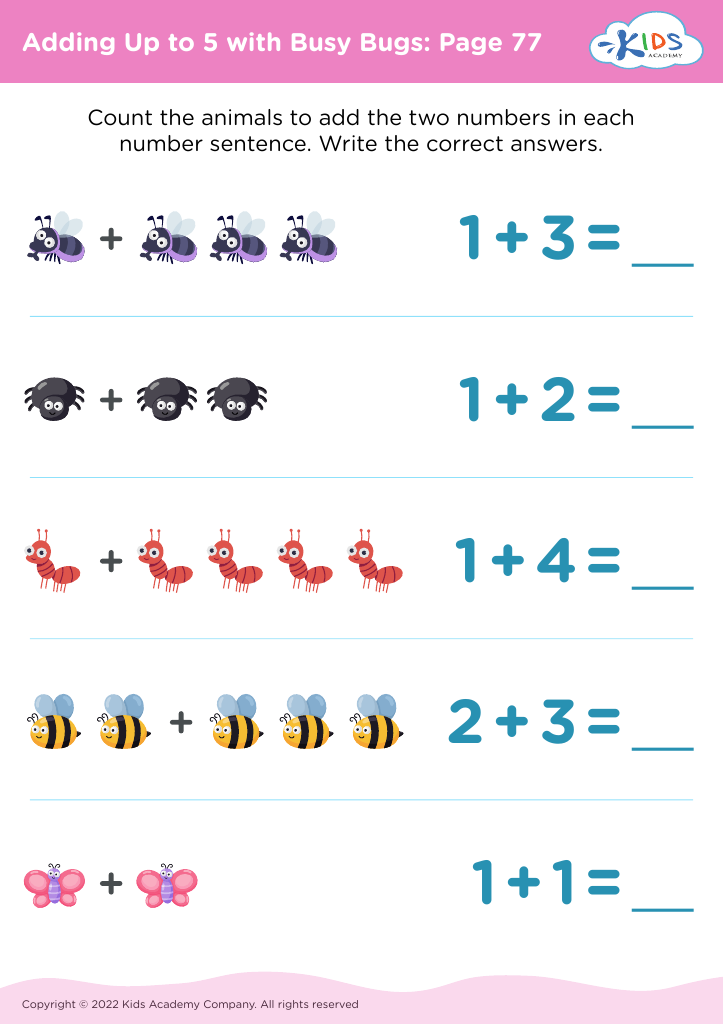
Adding Up to 5 with Busy Bugs: Page 77
Worksheet
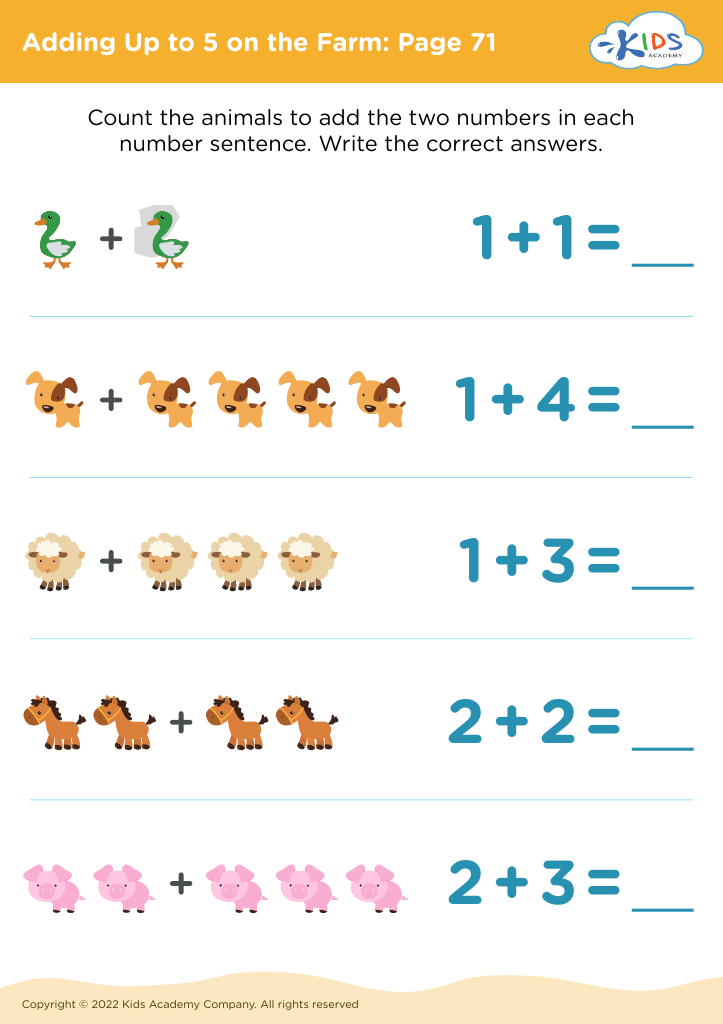
Adding Up to 5 on the Farm: Page 71
Worksheet
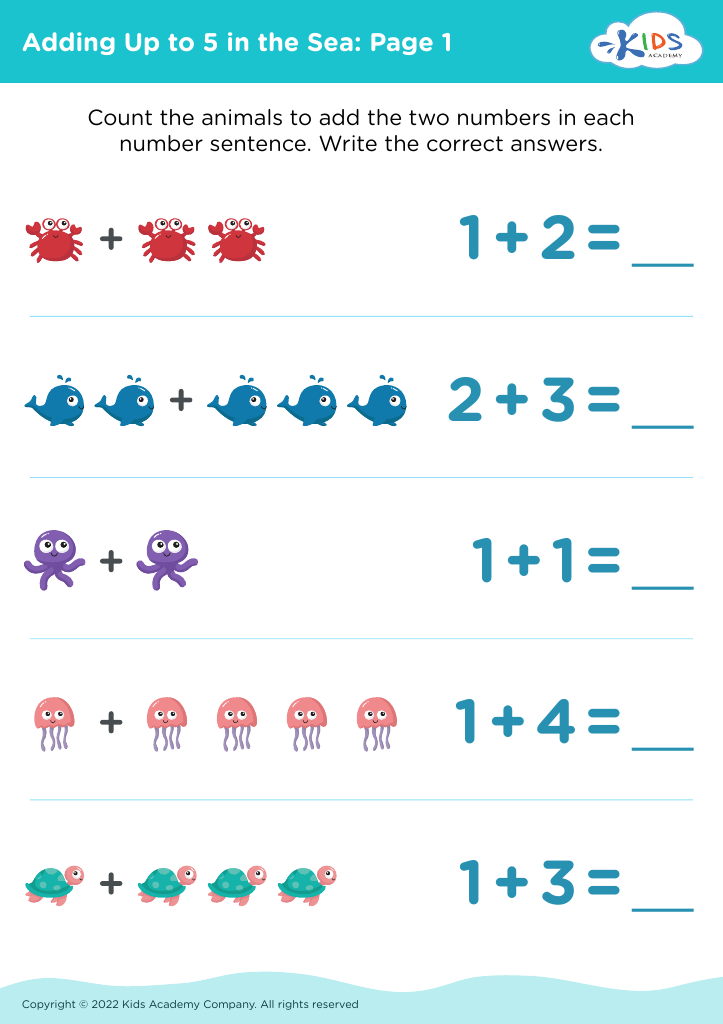
Adding Up to 5 in the Sea: Page 1

Adding Up to 5 in the Sea: Page 1

Adding Up to 5 in the Sea: Page 1
Worksheet
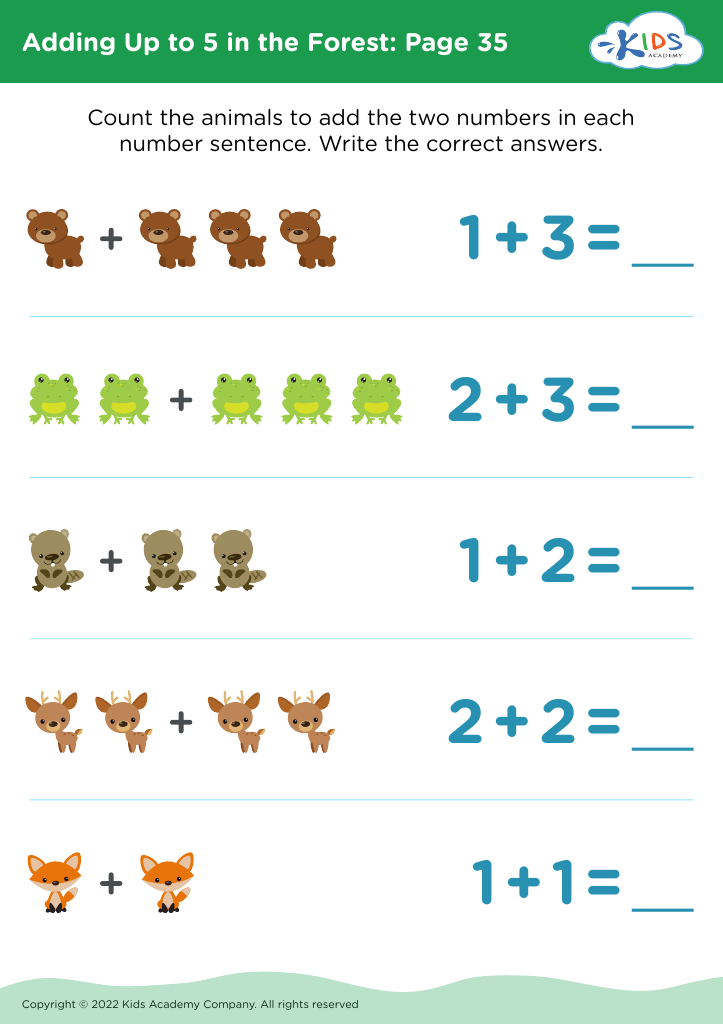
Adding Up to 5 in the Forest: Page 35
Worksheet
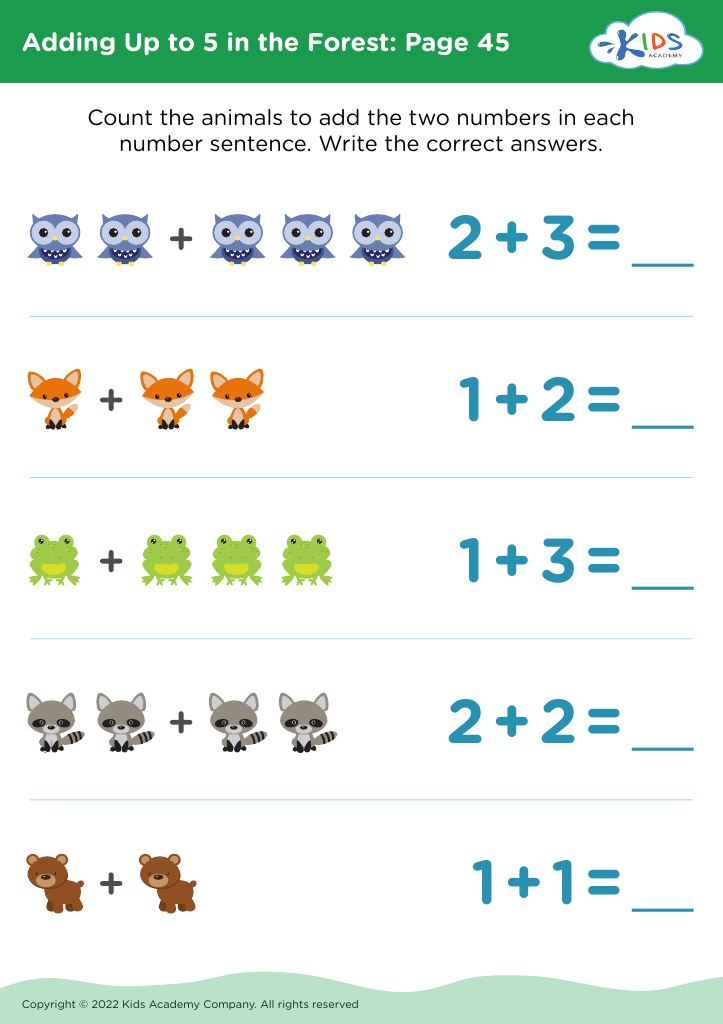
Adding Up to 5 in the Forest: Page 45
Worksheet
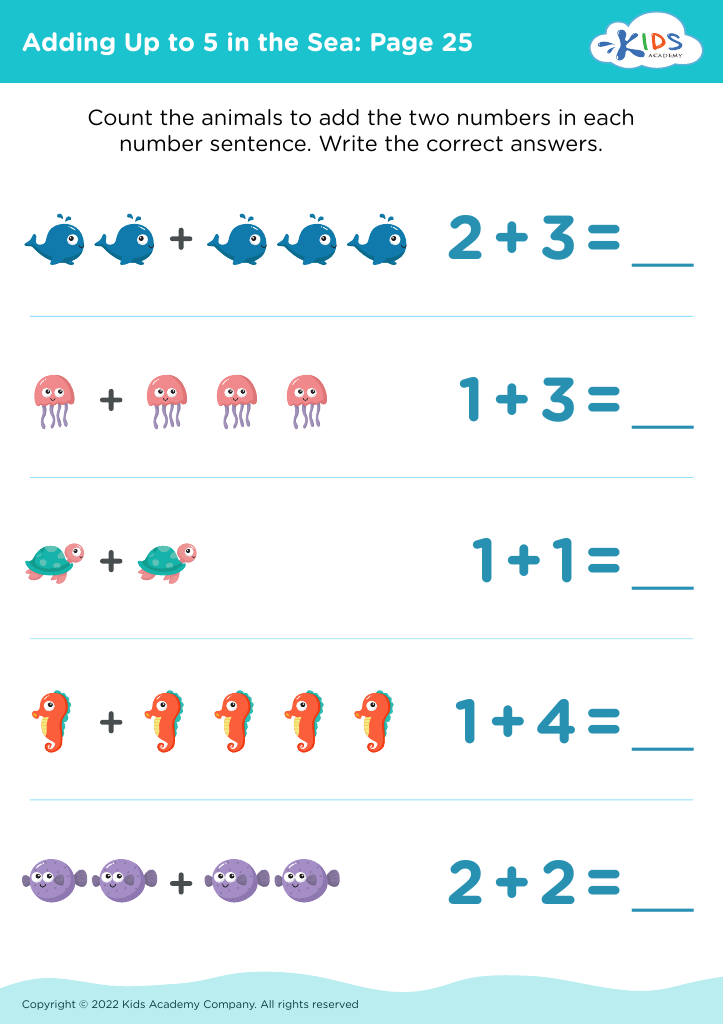
Adding Up to 5 in the Sea: Page 25
Worksheet
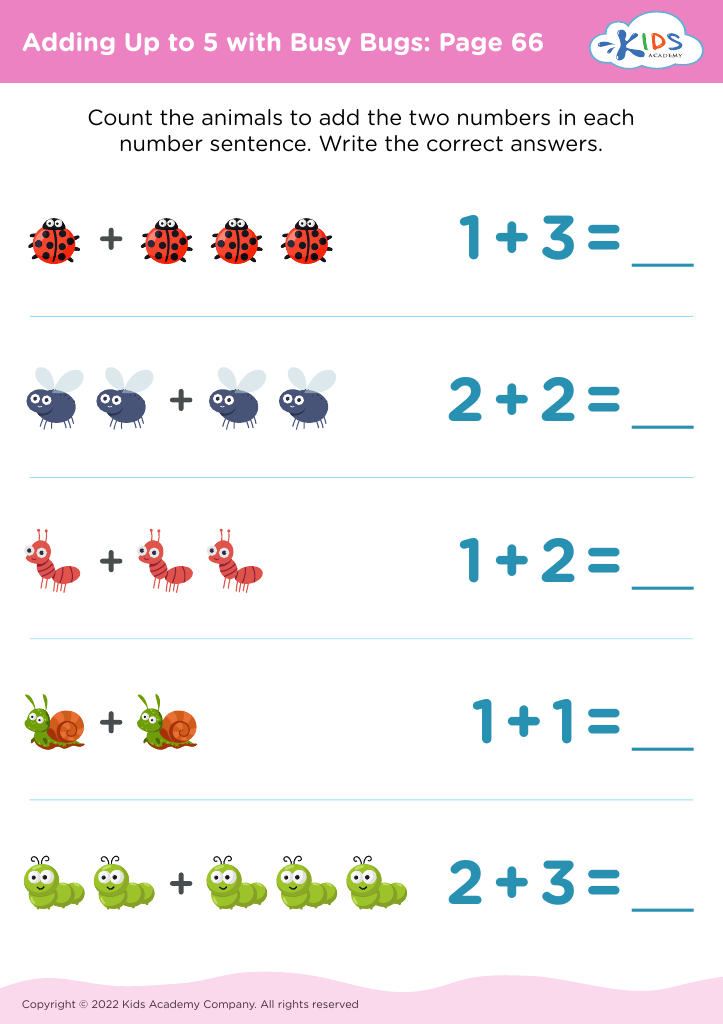
Adding Up to 5 with Busy Bugs: Page 66
Worksheet
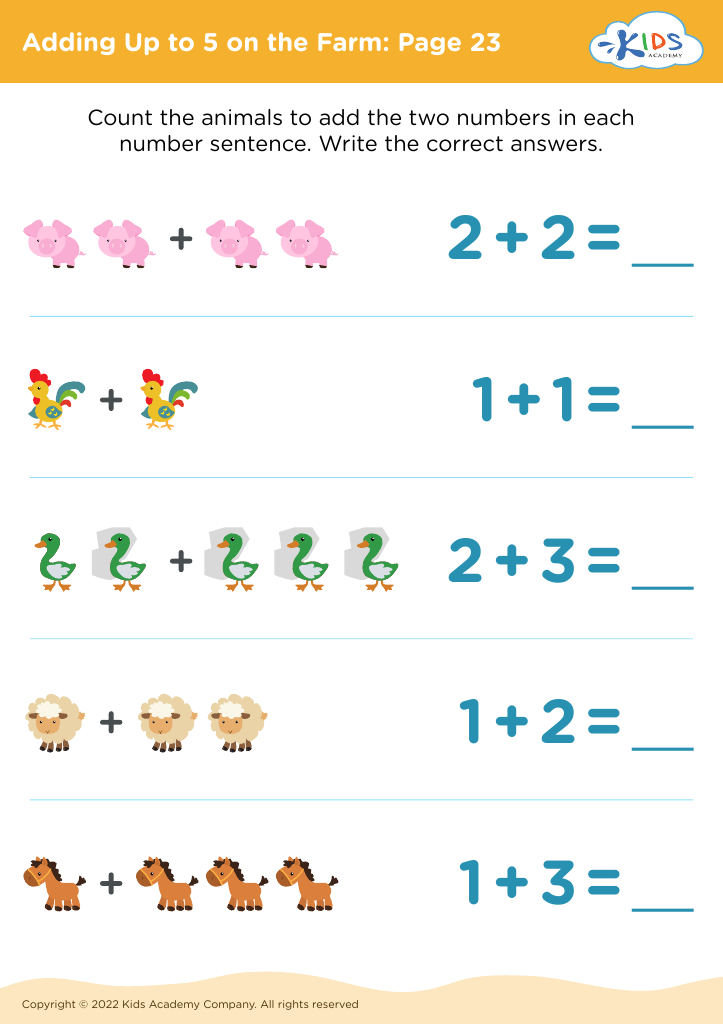
Adding Up to 5 on the Farm: Page 23
Worksheet
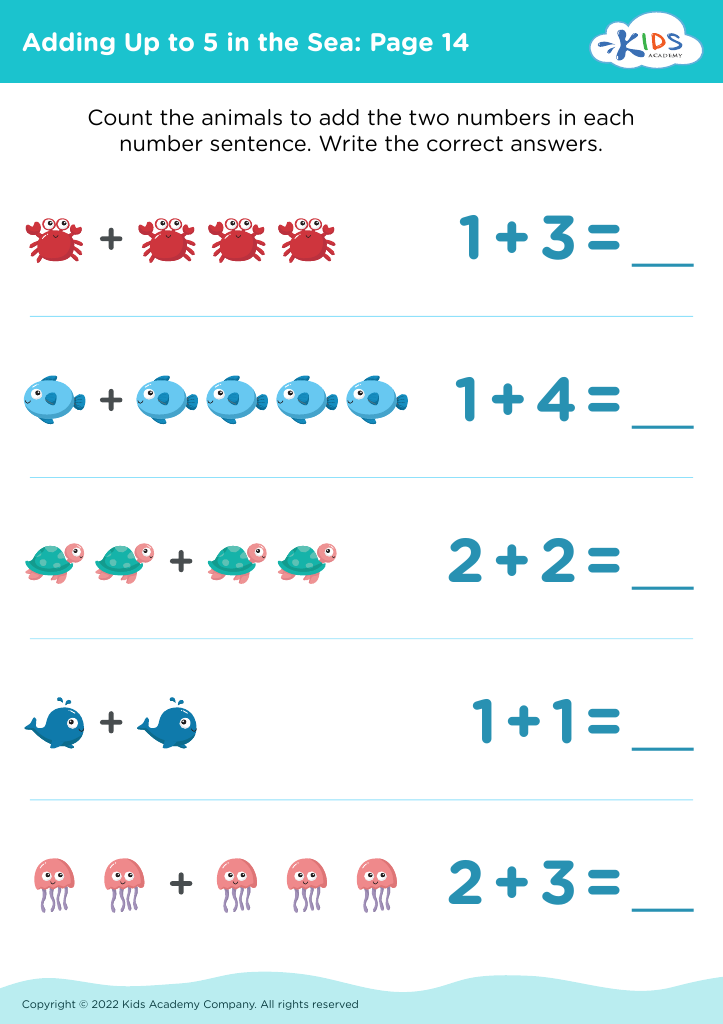
Adding Up to 5 in the Sea: Page 14
Worksheet
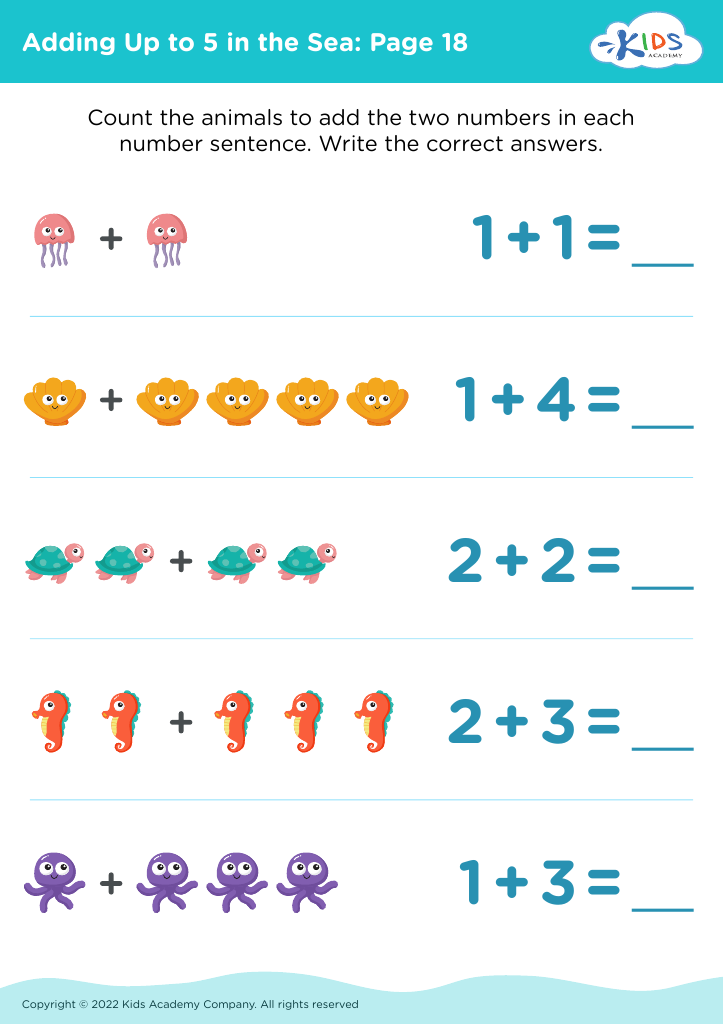
Adding Up to 5 in the Sea: Page 18
Worksheet
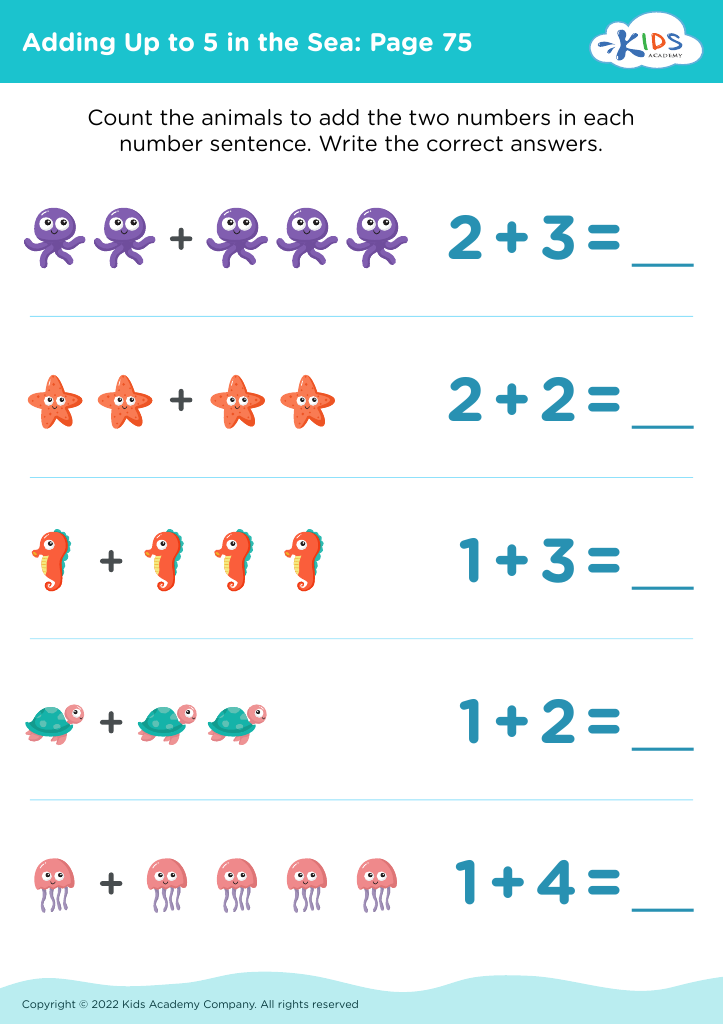
Adding Up to 5 in the Sea: Page 75
Worksheet
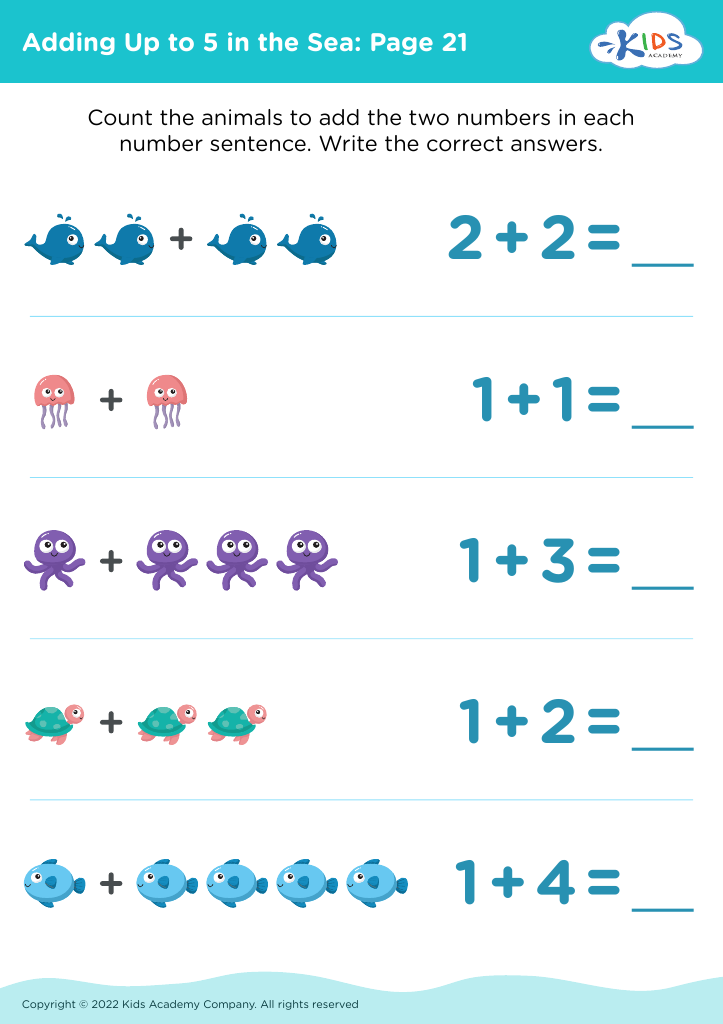
Adding Up to 5 in the Sea: Page 21
Worksheet
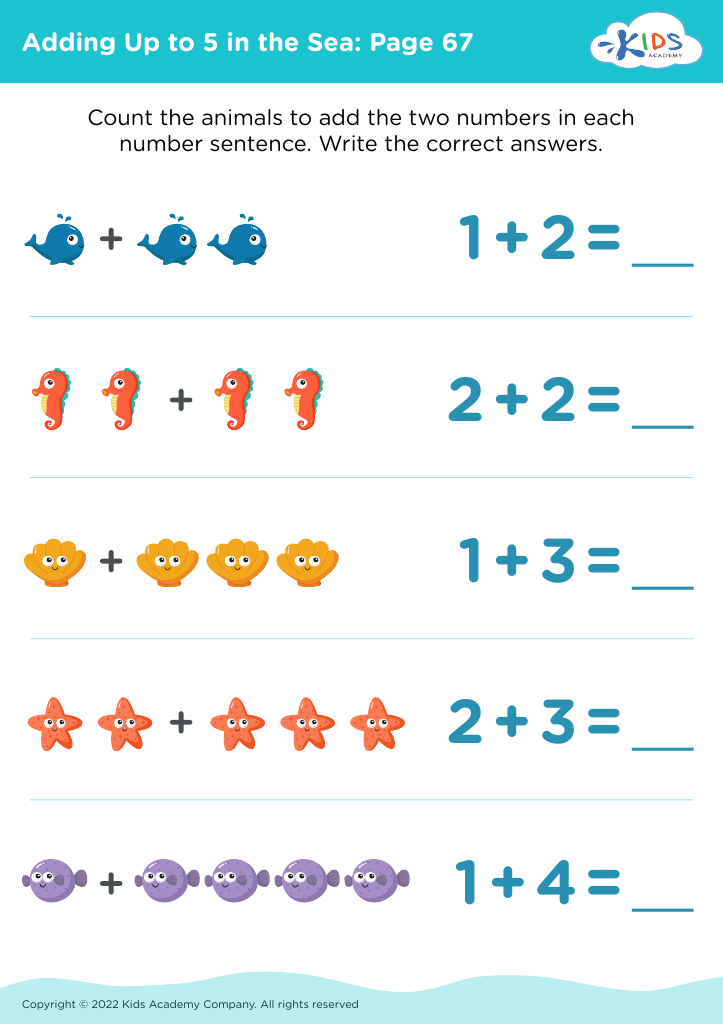
Adding Up to 5 in the Sea: Page 67
Worksheet
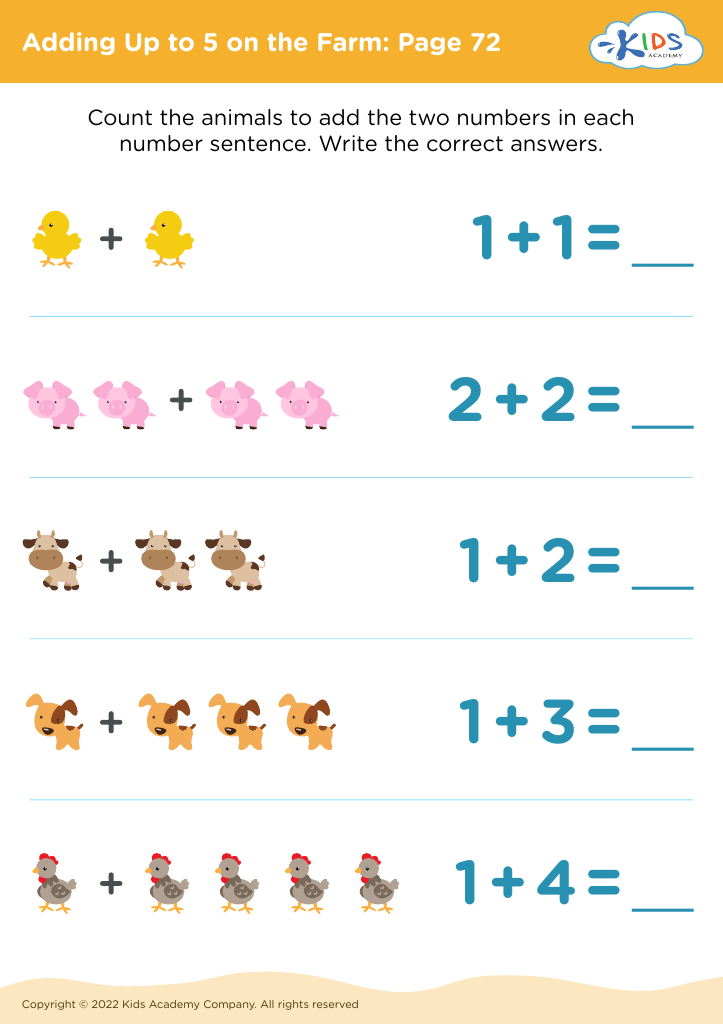
Adding Up to 5 on the Farm: Page 72
Worksheet
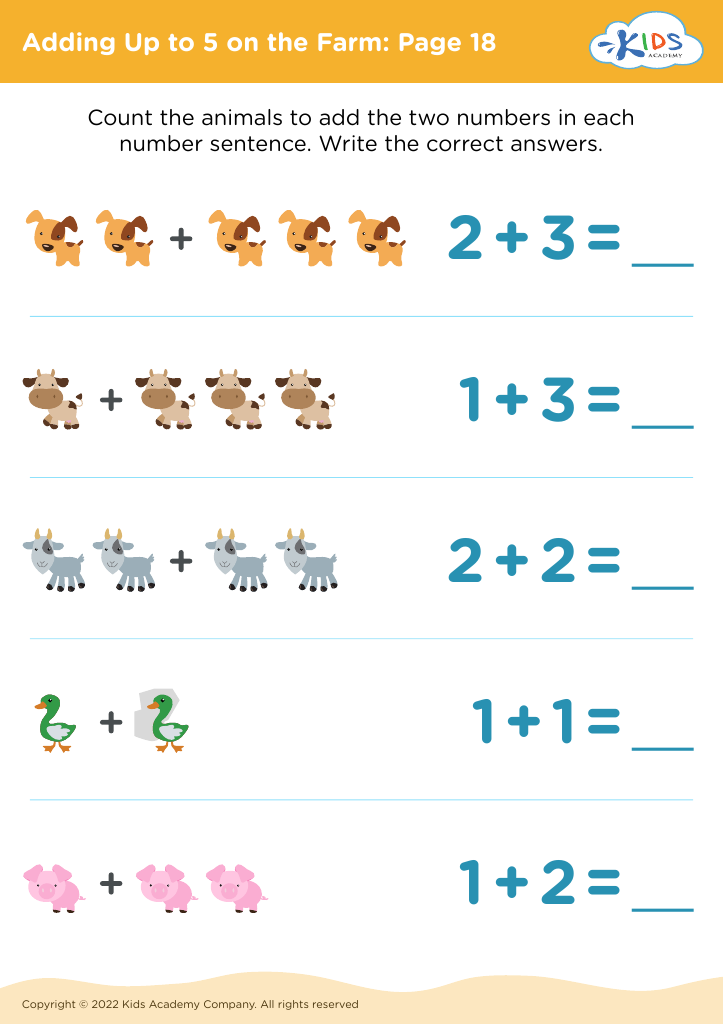
Adding Up to 5 on the Farm: Page 18
Worksheet
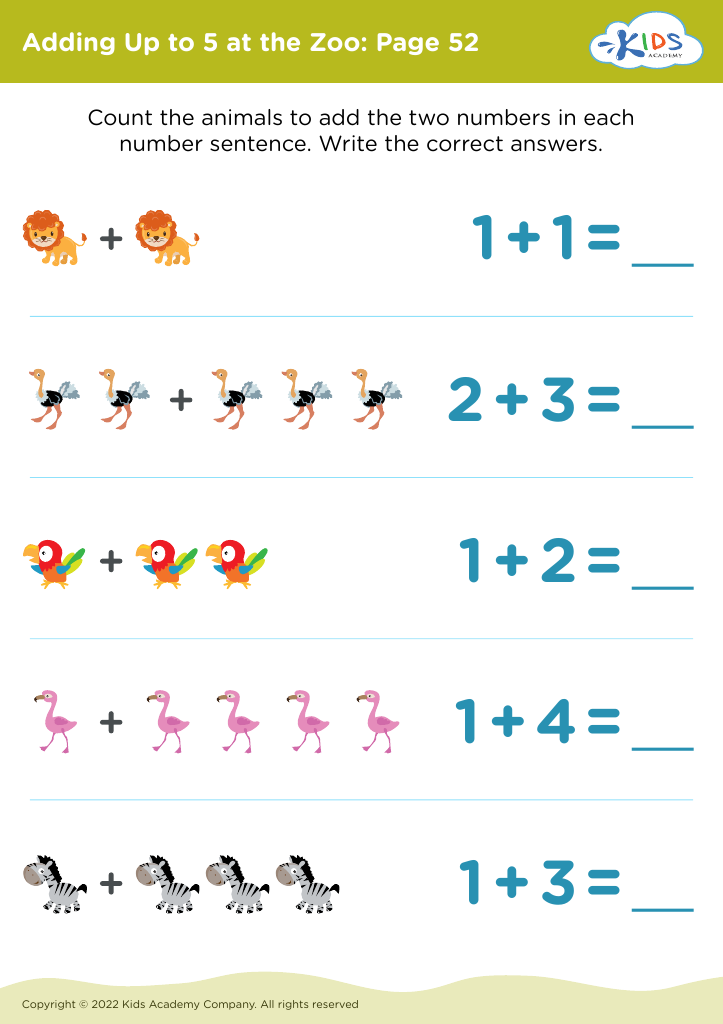
Adding Up to 5 at the Zoo: Page 52
Worksheet
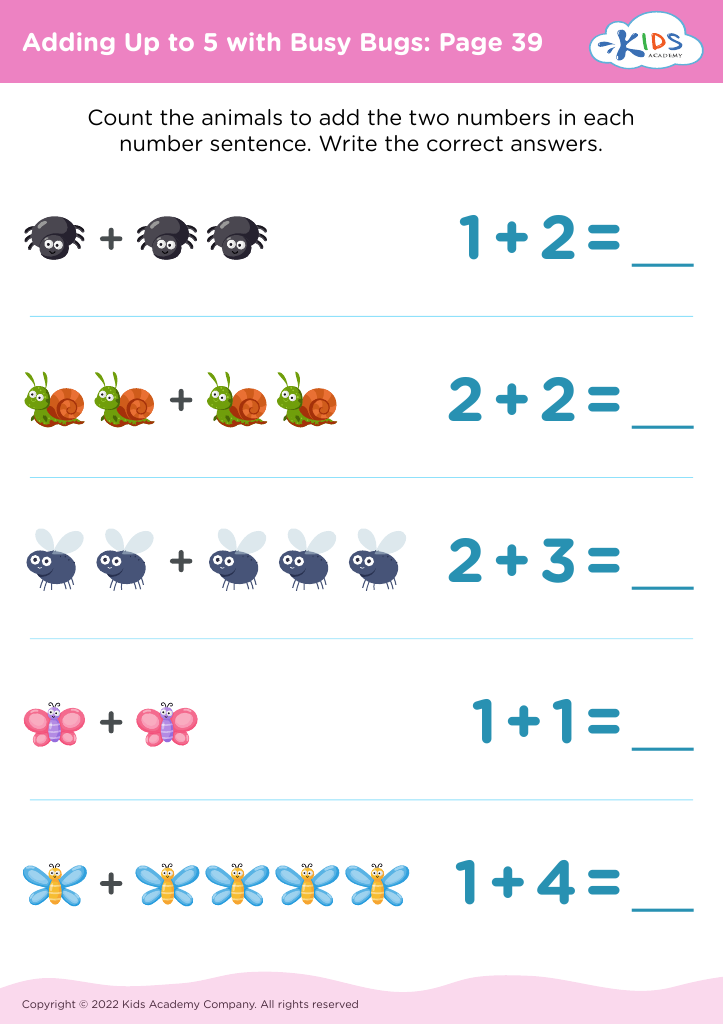
Adding Up to 5 with Busy Bugs: Page 39
Worksheet
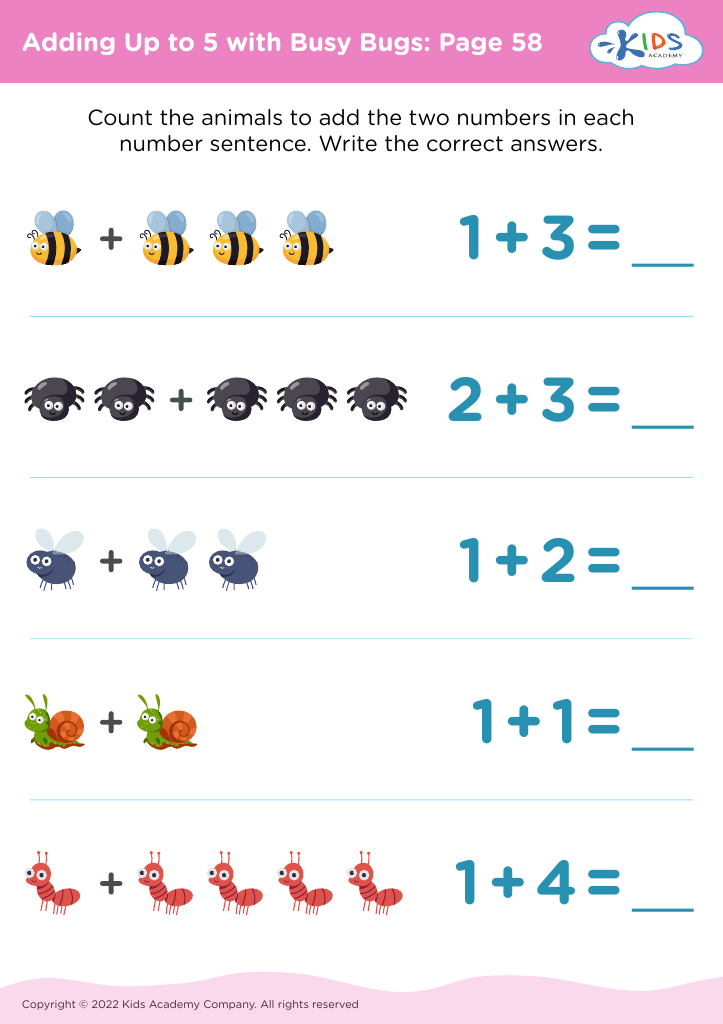
Adding Up to 5 with Busy Bugs: Page 58
Worksheet
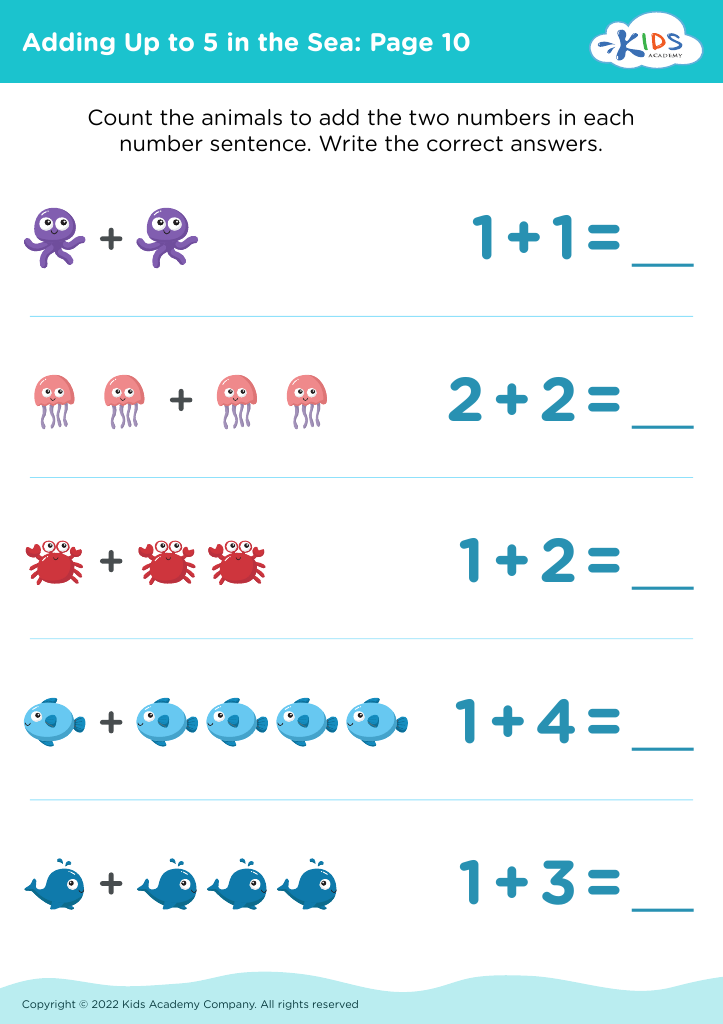
Adding Up to 5 in the Sea: Page 10
Worksheet
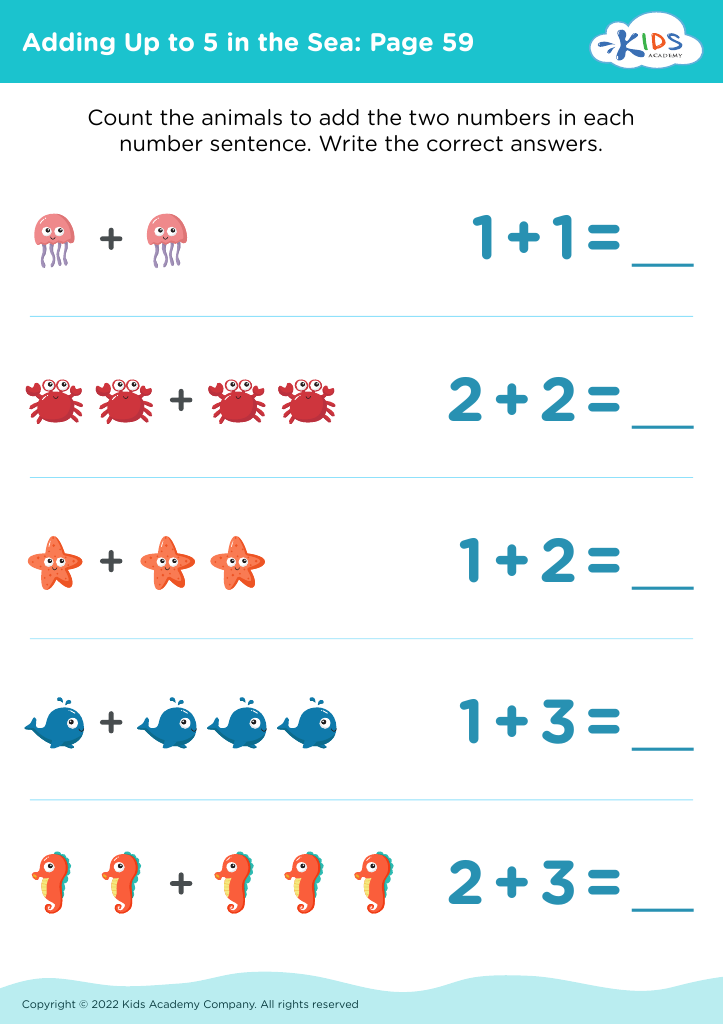
Adding Up to 5 in the Sea: Page 59
Worksheet
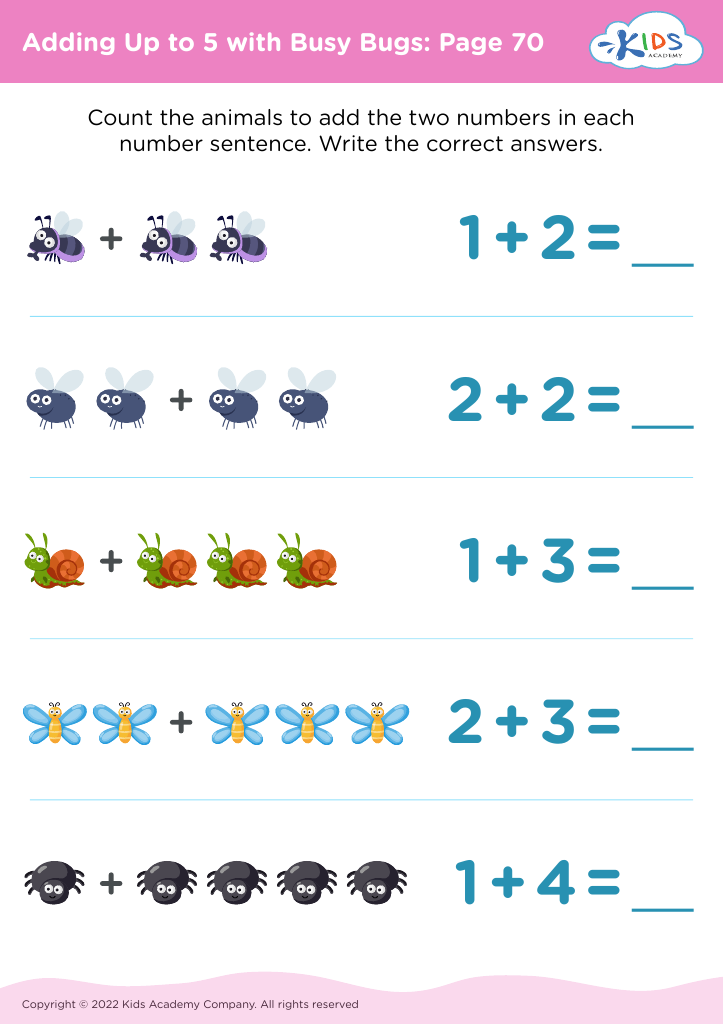
Adding Up to 5 with Busy Bugs: Page 70
Worksheet
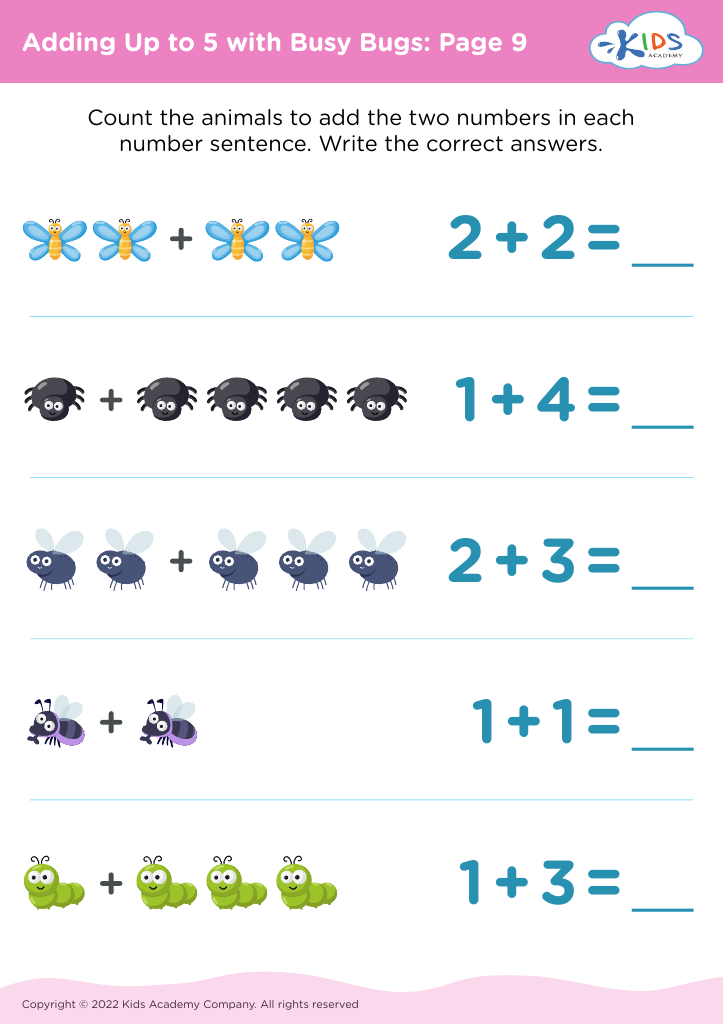
Adding Up to 5 with Busy Bugs: Page 9
Worksheet


Visual learning for addition and subtraction is vital for young children, ages 4-5, as it offers a concrete foundation for mathematical understanding. At this age, children are typically developing their cognitive and motor skills, making visual aids like pictures, number lines, and counters especially effective teaching tools. Here are some key reasons why parents and teachers should focus on visual learning for these fundamental concepts.

First, visual learning makes abstract ideas tangible. By using objects or images, children can better grasp what it means to add or subtract, leading to deeper comprehension. For instance, if a child sees 3 apples and then adds 2 more, they can visualize the total as 5 apples.

Second, this approach enhances engagement and motivation. Colorful pictures and interactive activities are more stimulating for young minds than mere numbers on a page. Engaged students are more likely to retain the concepts being taught.

Third, visual aids accommodate different learning styles. Not all children learn in the same way; visual learners especially benefit from seeing problems worked out graphically.

Finally, early exposure to visual math tools builds confidence and sets a positive foundation for future math learning. When children succeed at these basic skills, they are more likely to approach more complex problems with a positive attitude.

In summary, integrating visual learning into early math instruction can significantly impact a child's mathematical journey, providing the skills and confidence necessary for future success.