Numeracy development Addition Worksheets for Ages 4-5
3 filtered results
-
From - To
Discover our engaging numeracy development addition worksheets specifically designed for children aged 4-5. These interactive activities aim to strengthen foundational math skills by introducing basic addition concepts in a fun and approachable way. Each worksheet features colorful illustrations and age-appropriate exercises that foster understanding and retention. By practicing addition through various formats, including visual aids and simple problems, children can develop confidence and a love for math. Our resources support early learners in building essential cognitive skills, preparing them for future academic success. Explore our extensive collection and watch your child's numeracy abilities flourish while they learn through play!
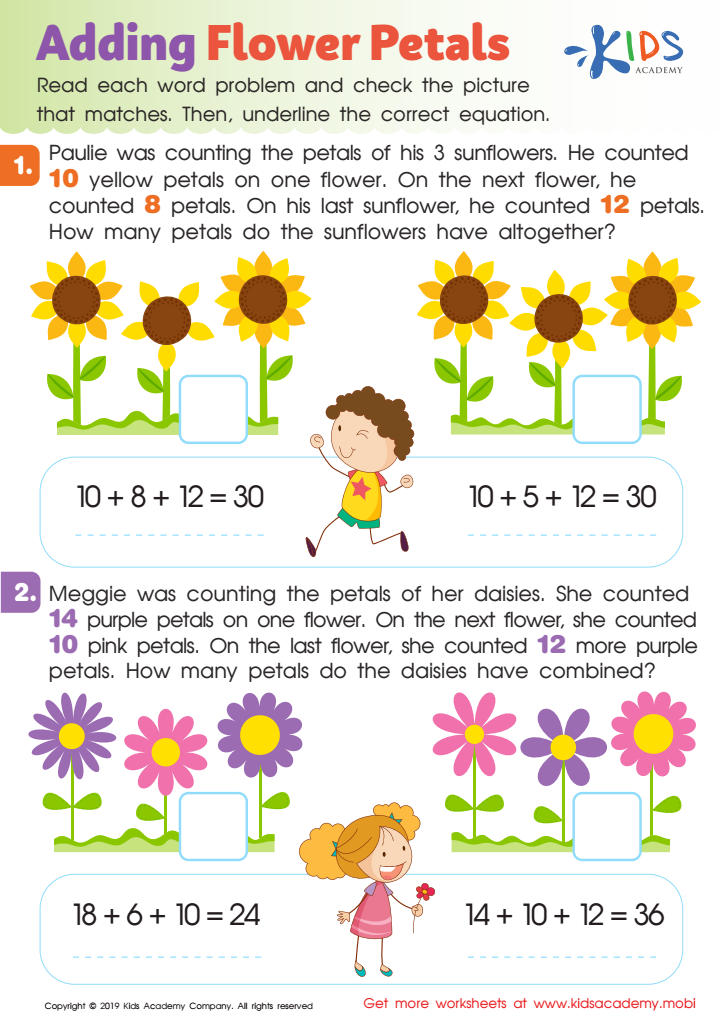
Adding Flower Petals Worksheet
 Assign to My Students
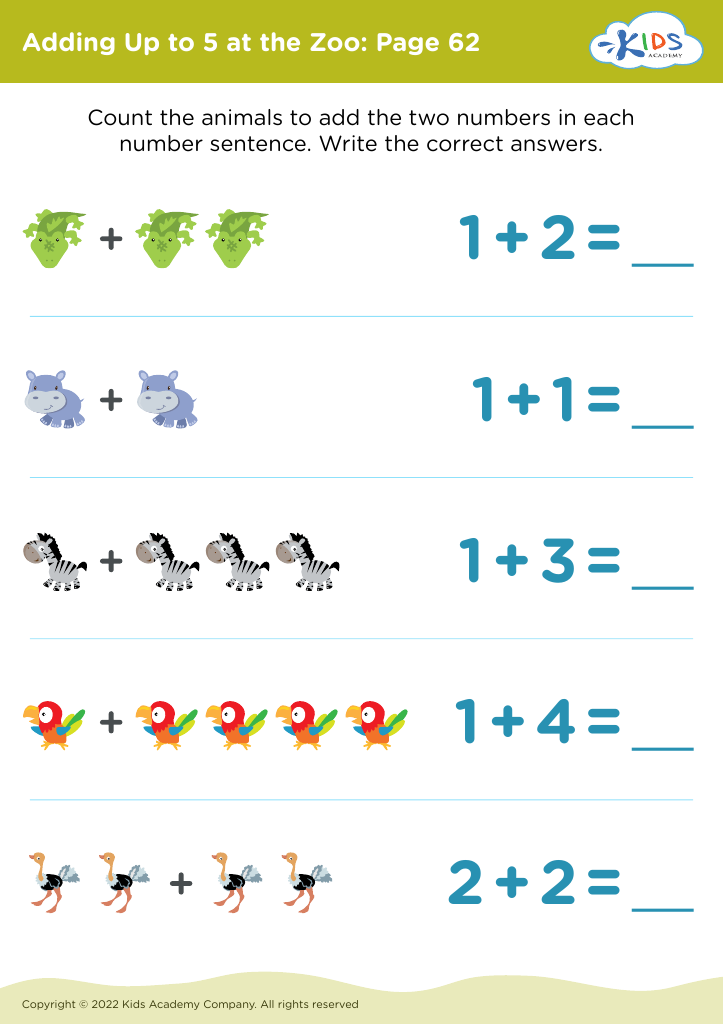
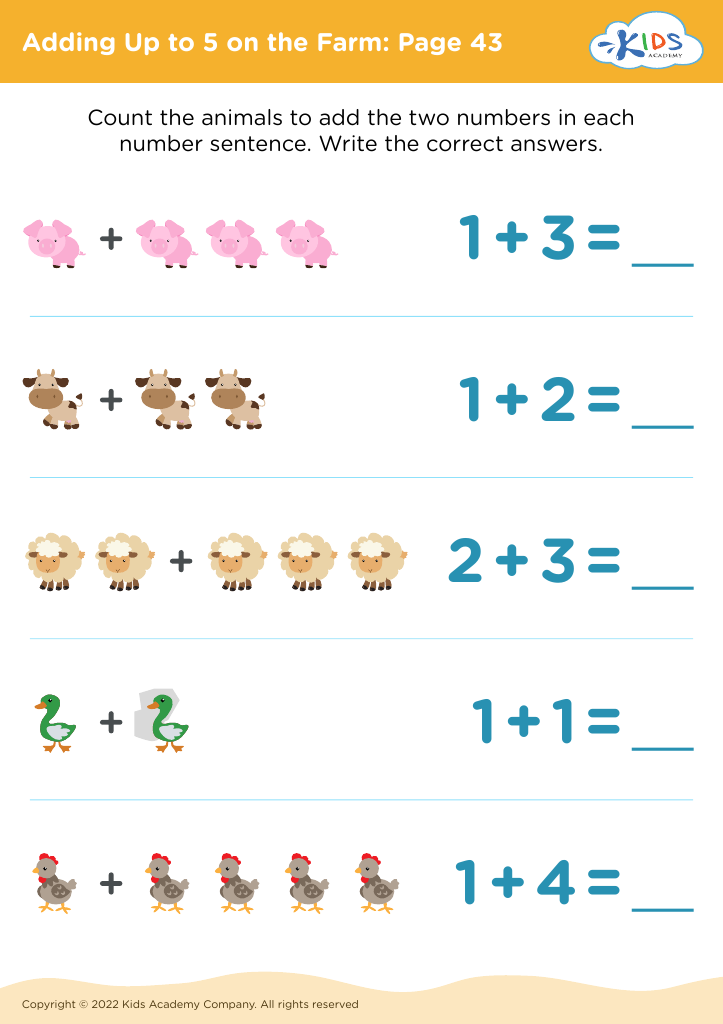








Numeracy development, particularly in addition for children aged 4-5, plays a crucial role in laying the foundation for lifelong mathematical understanding. At this age, children are naturally curious and eager to explore concepts, making it an ideal time to introduce basic addition. Engaging in addition helps children develop number sense, which is essential for understanding more complex mathematical concepts in the future.
Parents and teachers should care about this development because it enhances cognitive skills such as problem-solving, critical thinking, and spatial reasoning. Addition activities, like using physical objects or number games, promote hands-on learning, fostering engagement and retention. Moreover, when parents and teachers actively participate in numeracy development, they reinforce the importance of math in everyday life, helping children see its relevance beyond the classroom.
Strong numeracy skills lay the groundwork for reading comprehension, as many reading and writing tasks require basic mathematical understanding. Additionally, proficiency in addition aids children as they progress through their educational journey, leading to improved confidence and academic success. By prioritizing the development of these early math skills, caregivers can ensure that children are well-equipped for future challenges, thus promoting a love for learning.








