Visual Learning Addition Worksheets for Ages 4-5 - Page 3
87 filtered results
-
From - To
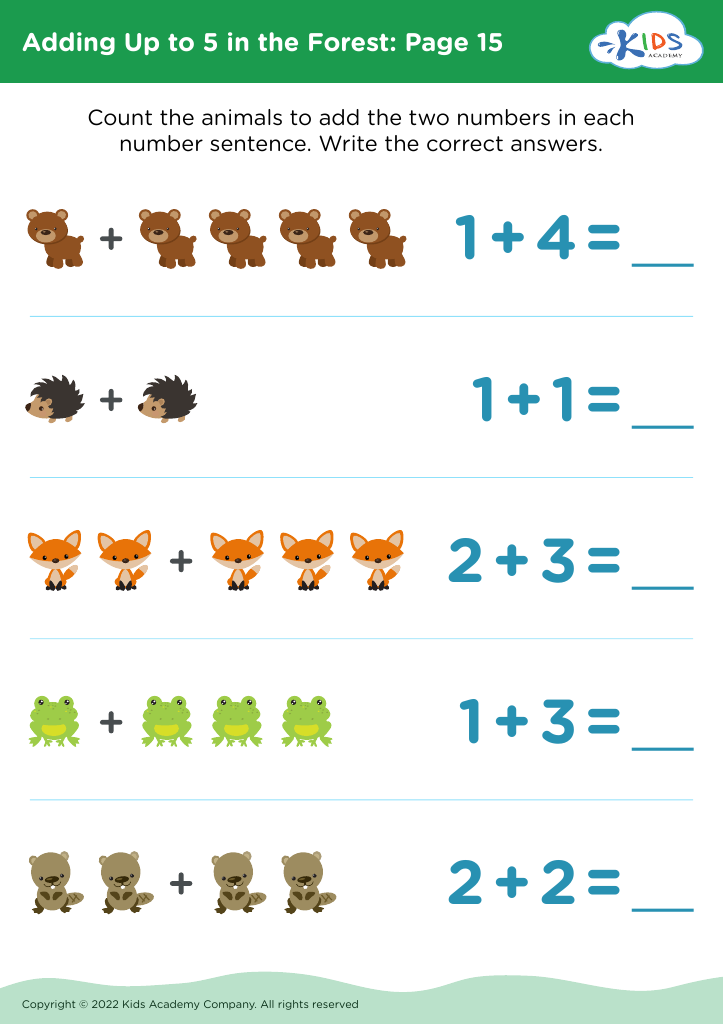
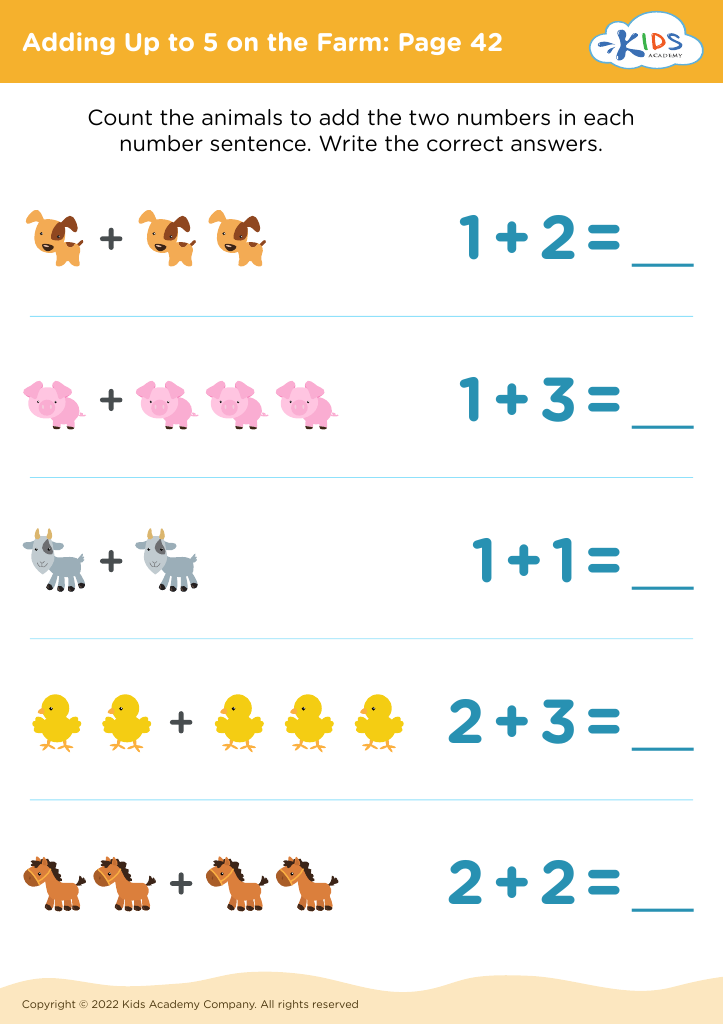
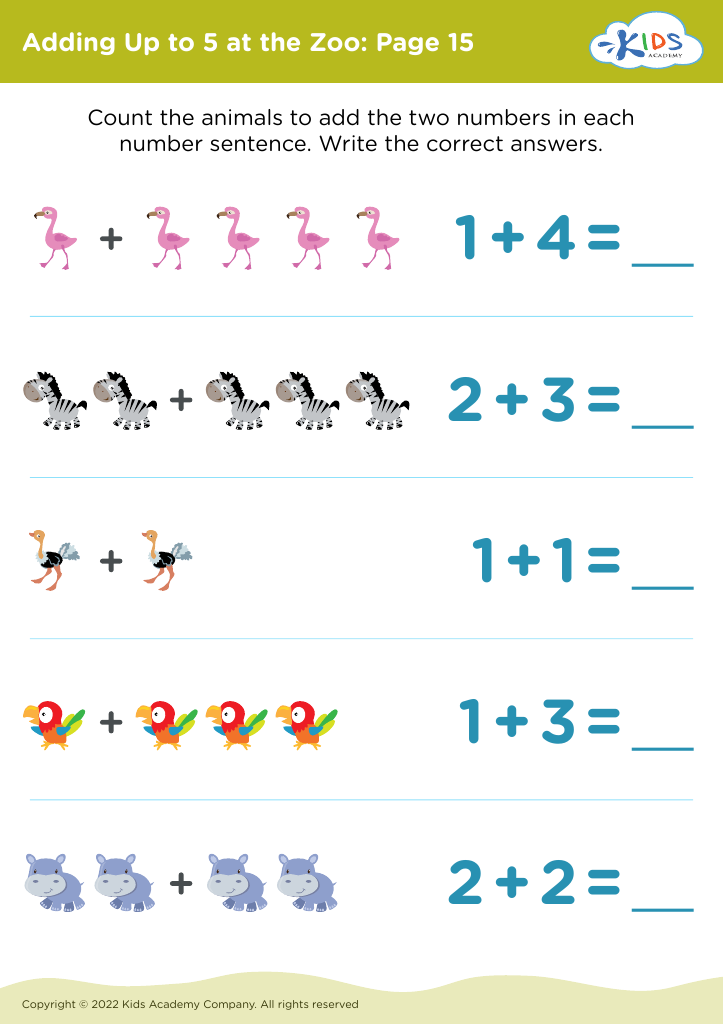
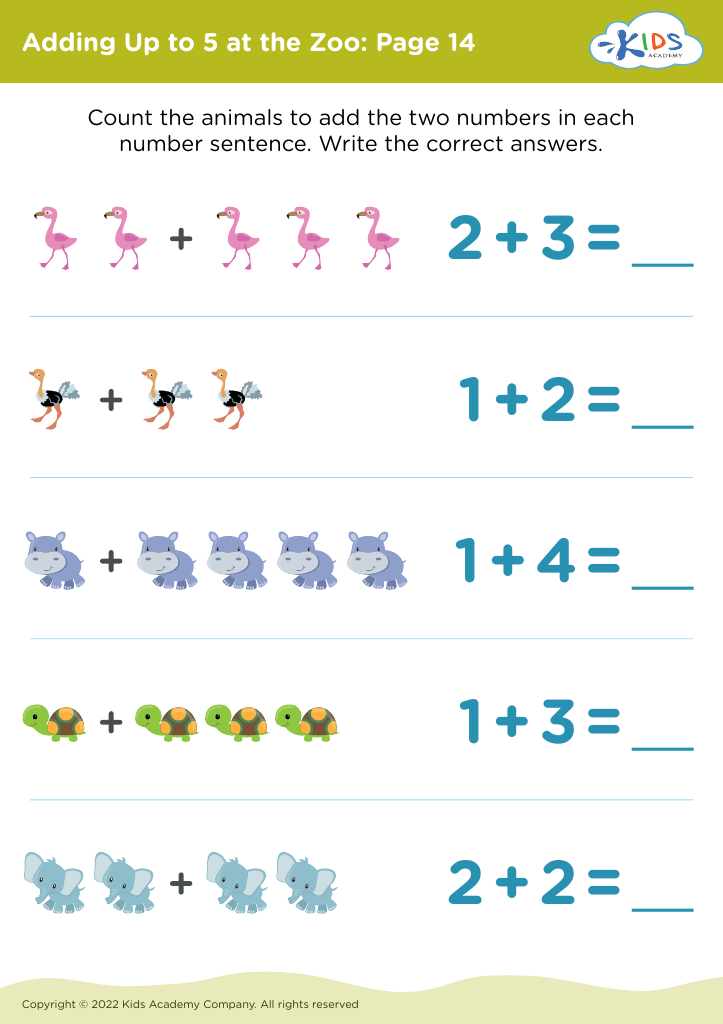
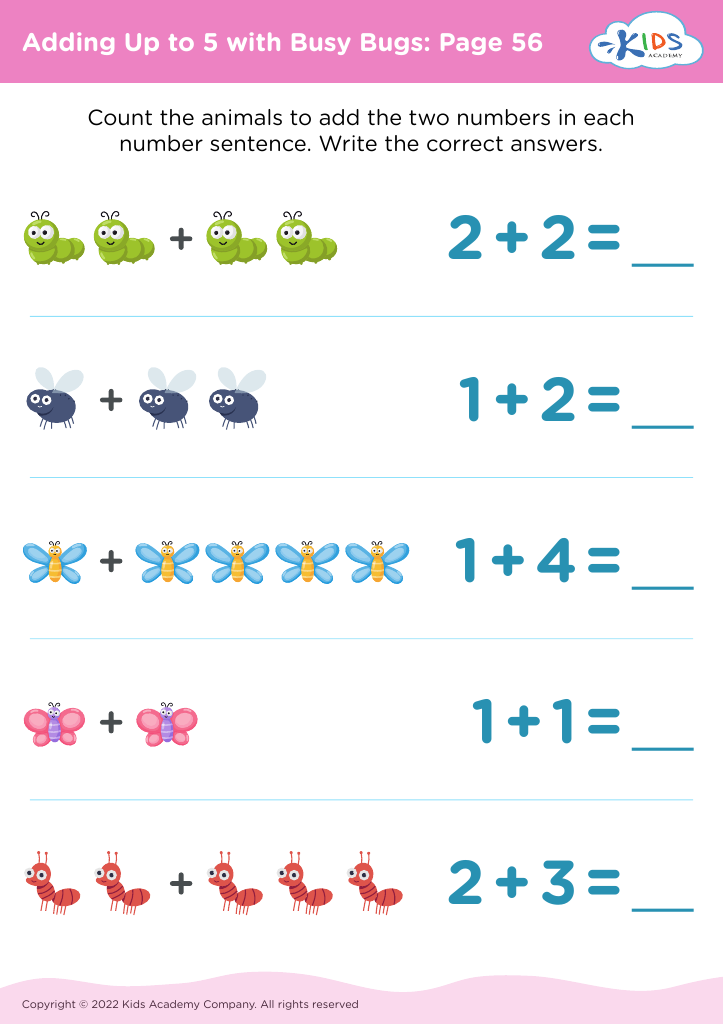
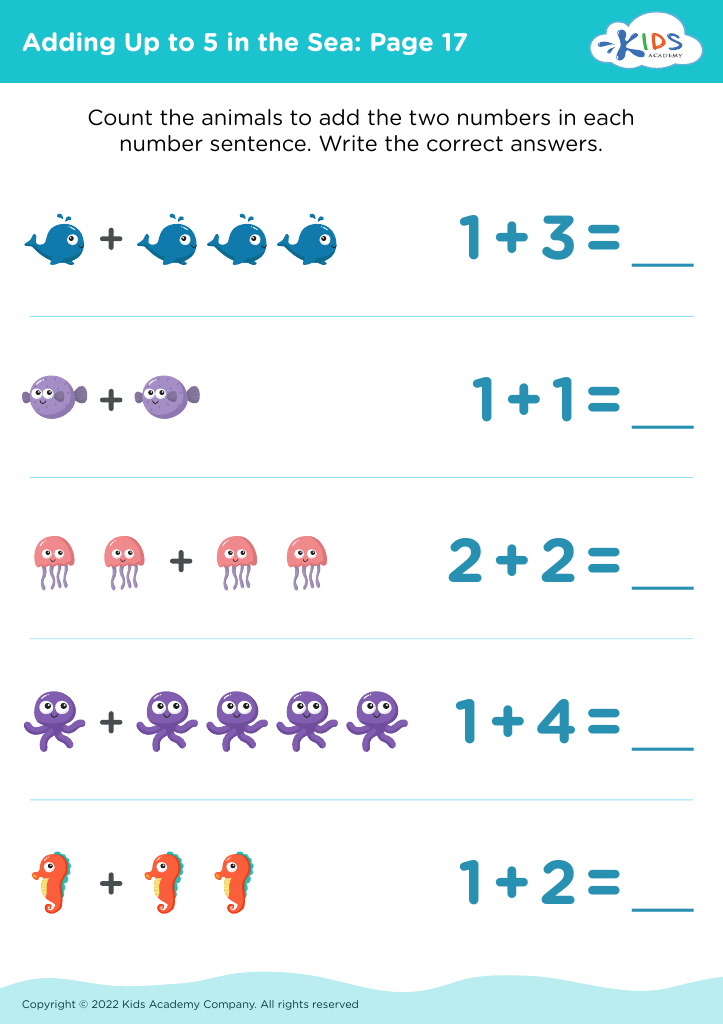
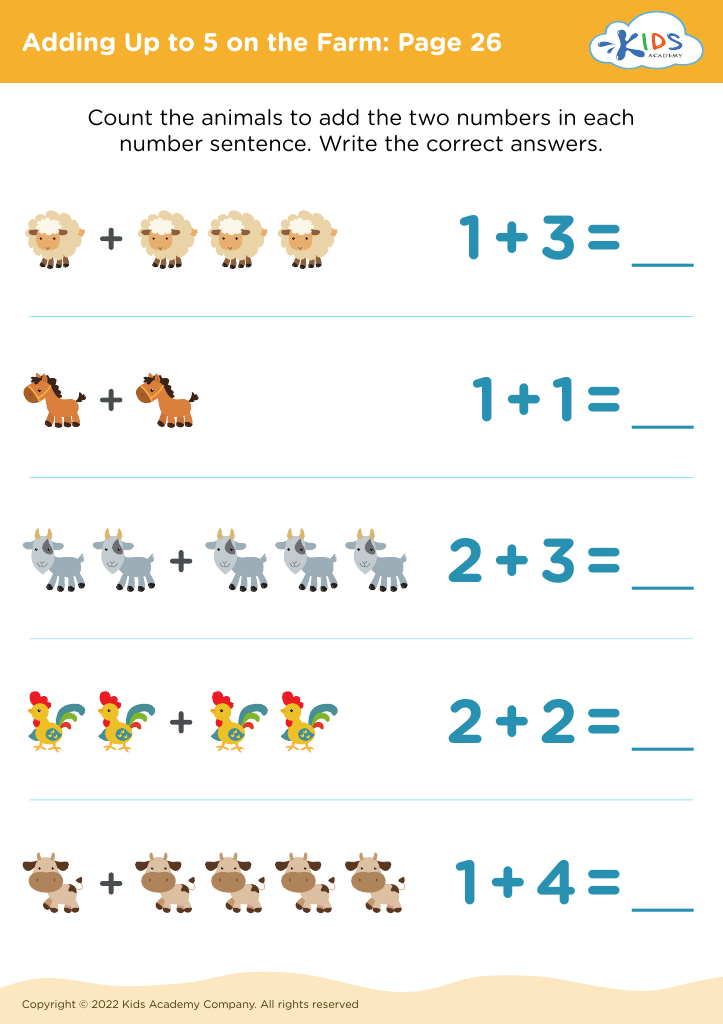
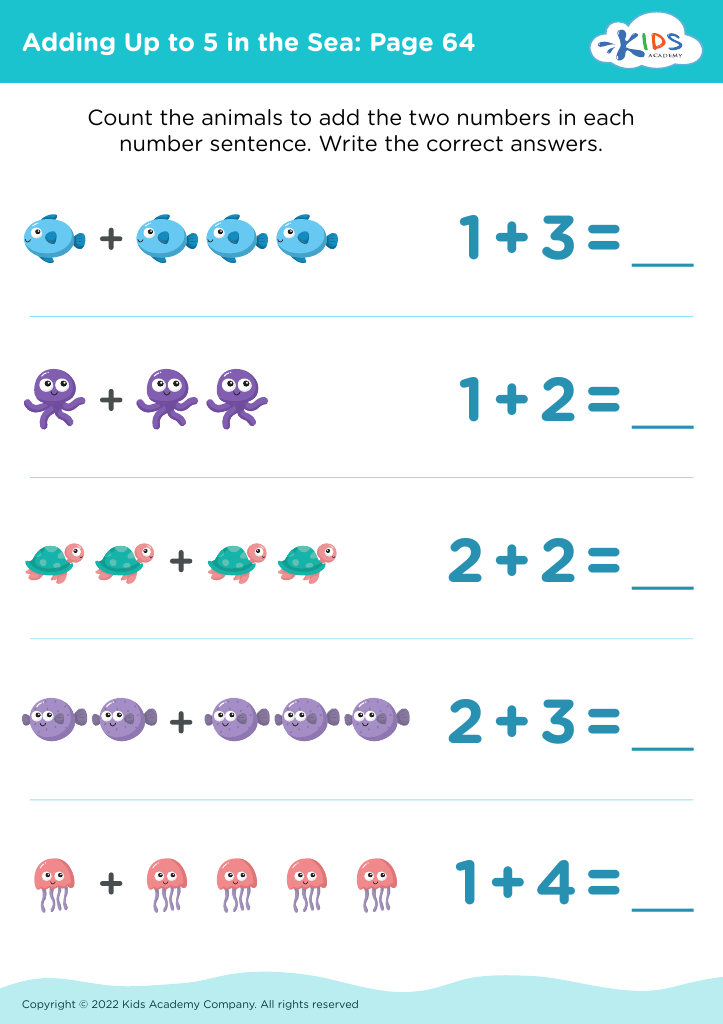
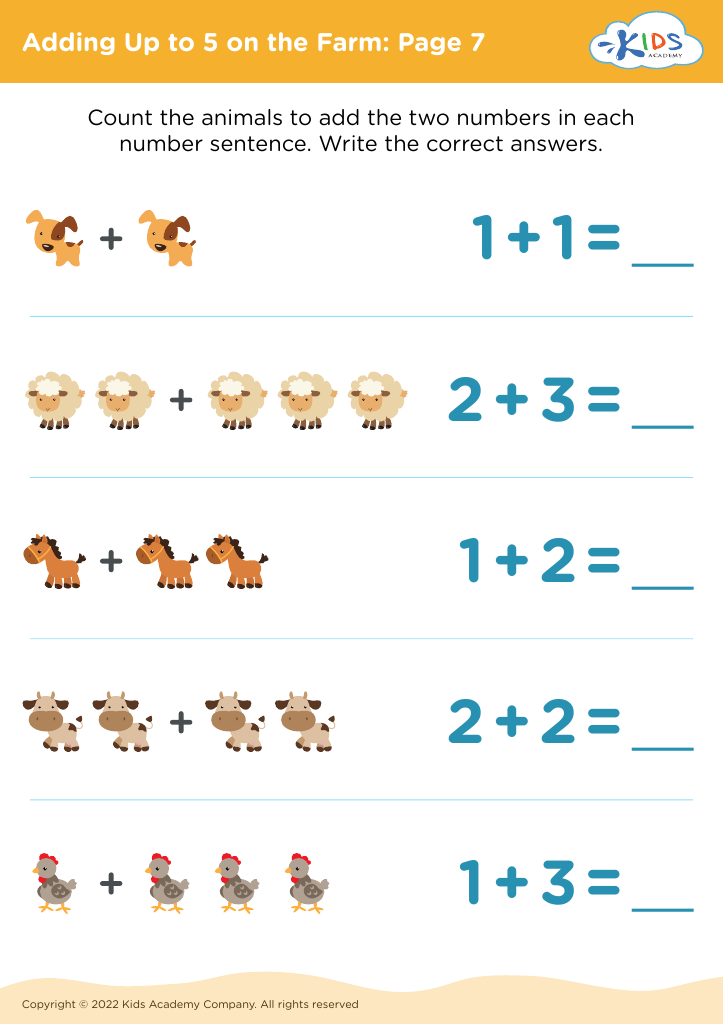
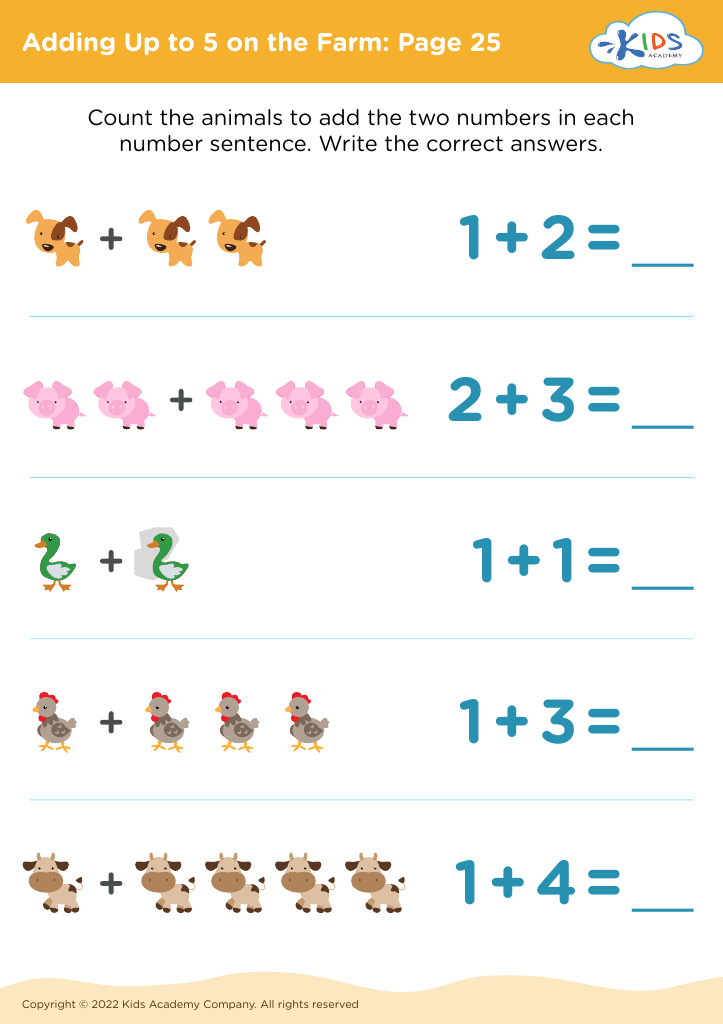
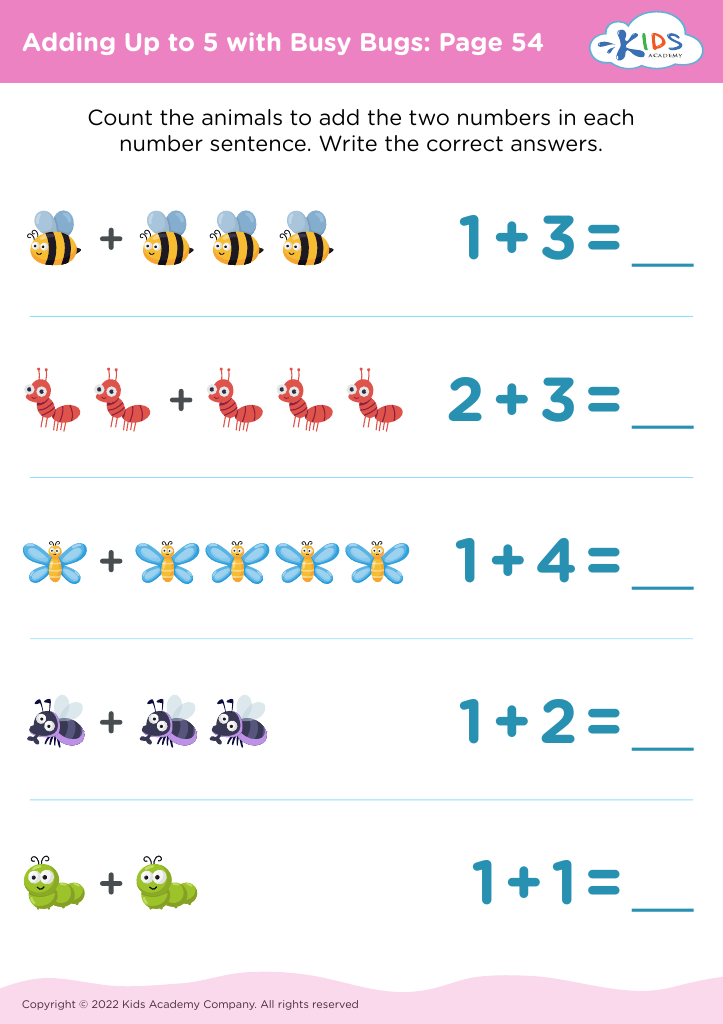
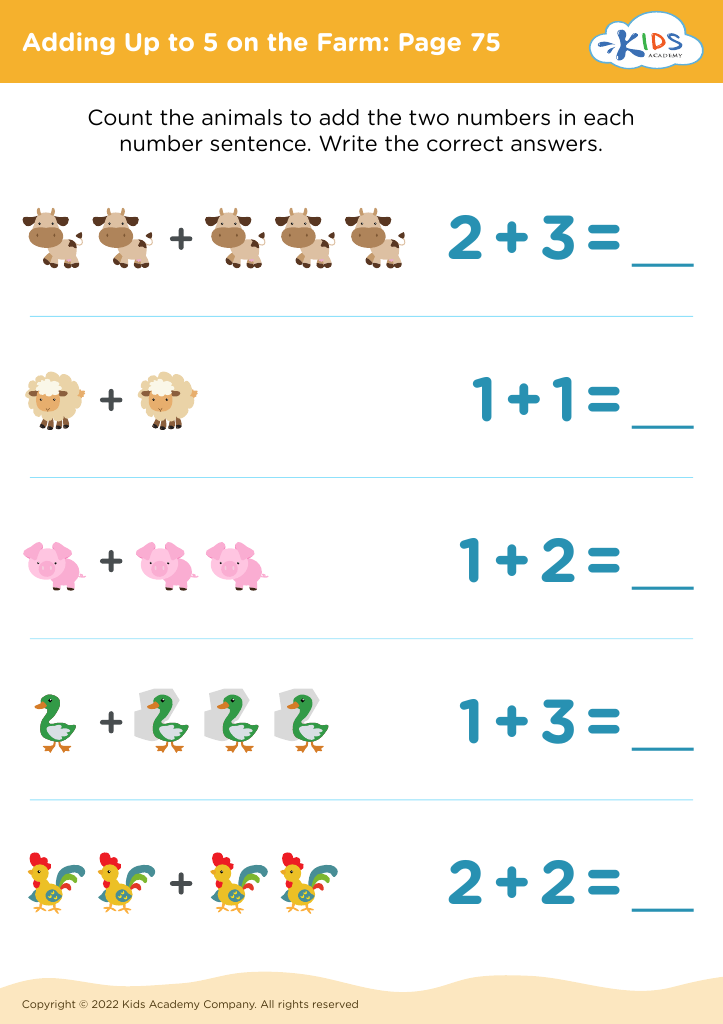
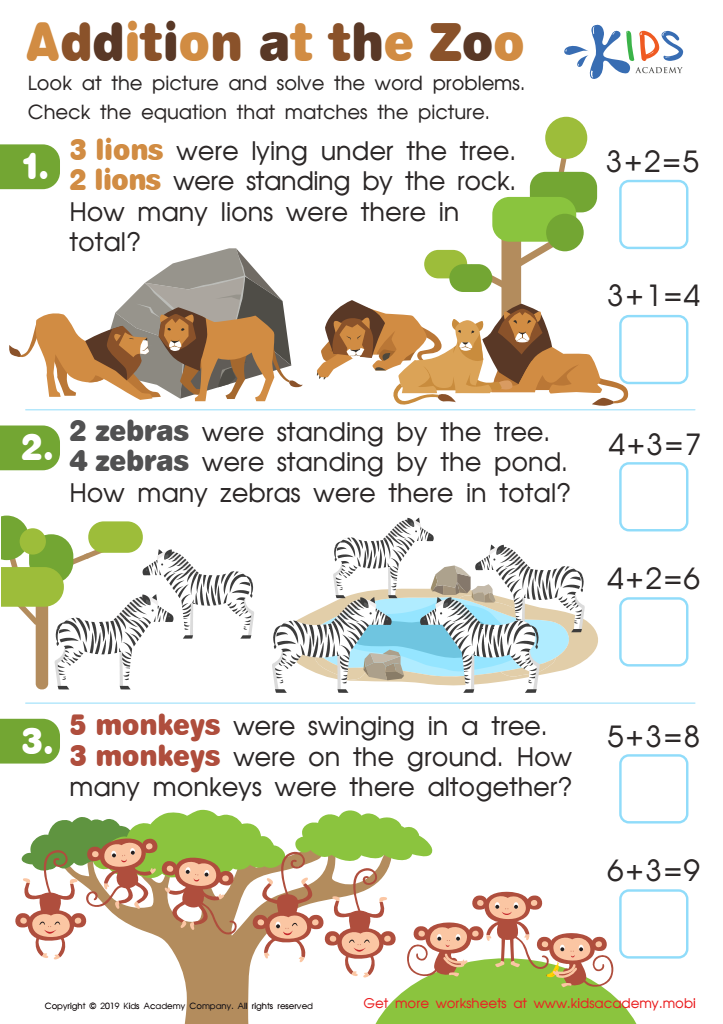
Addition at the Zoo Worksheet
 Assign to My Students


.jpg)





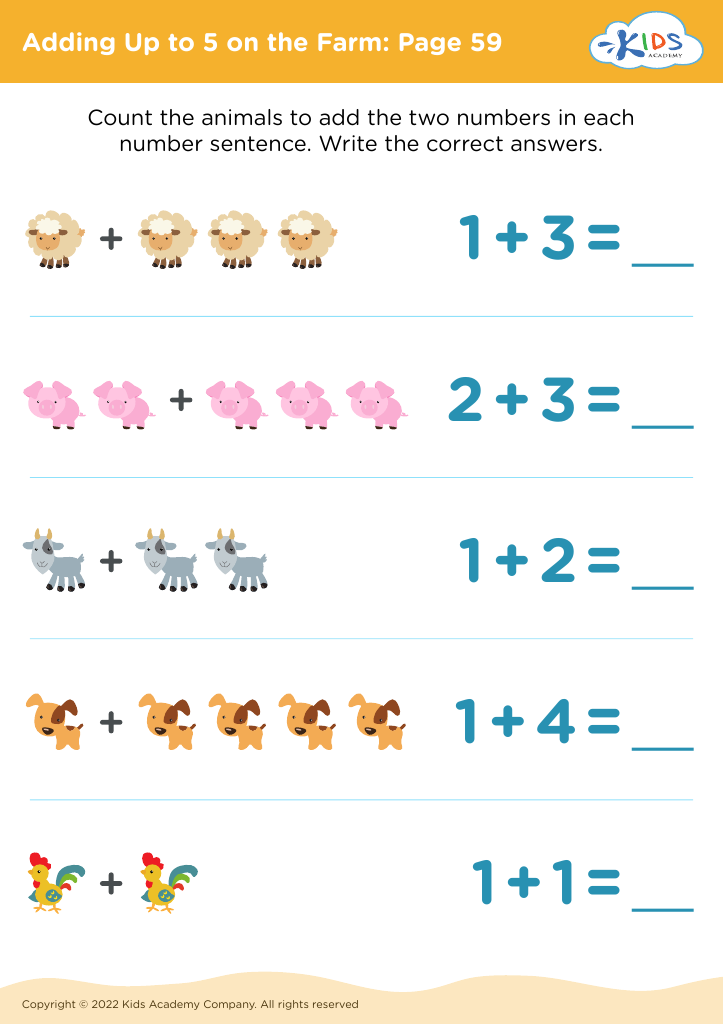
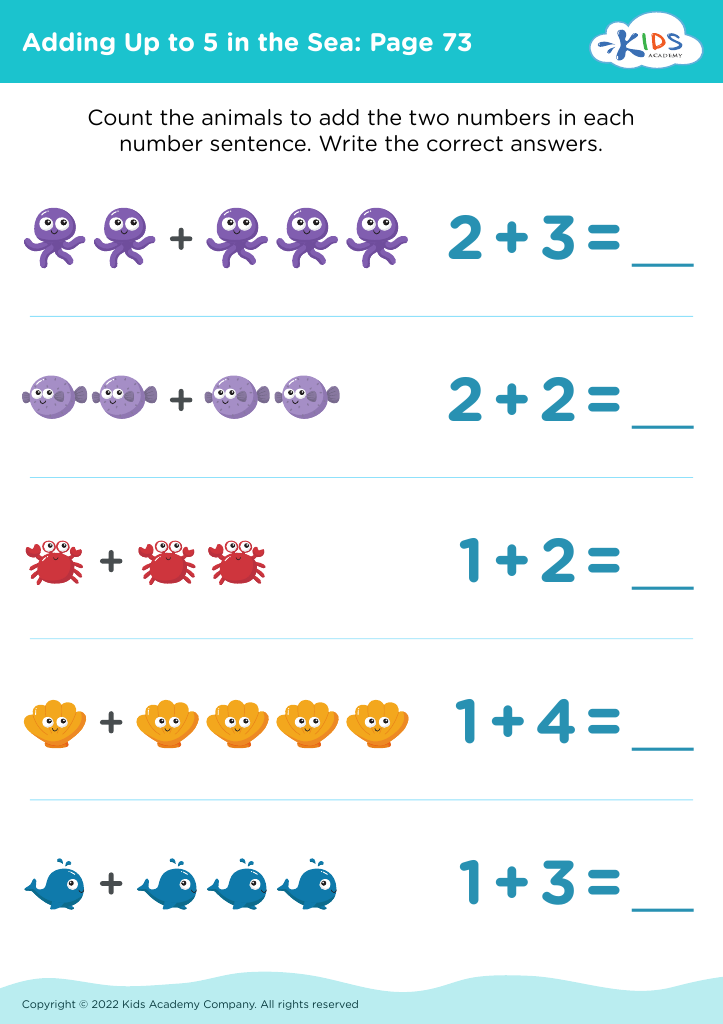
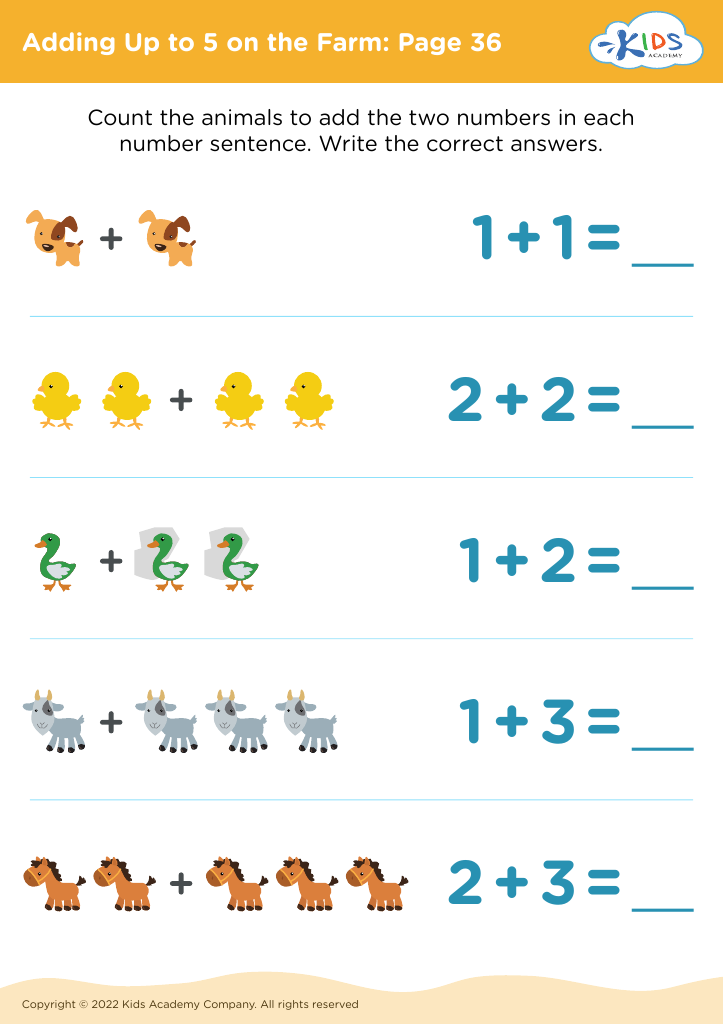
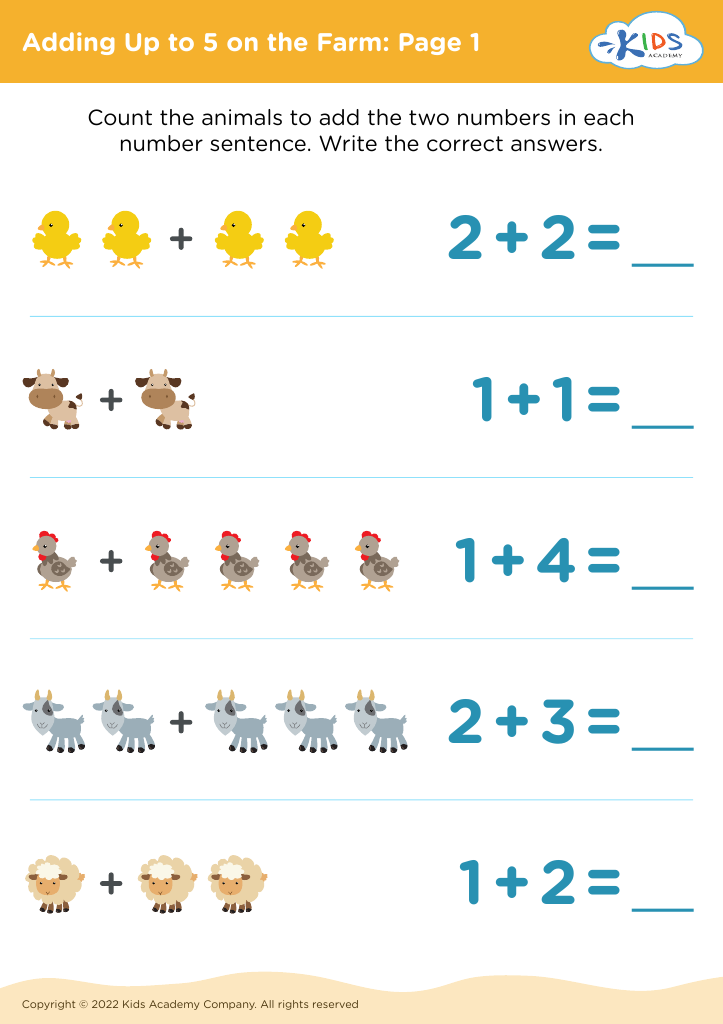
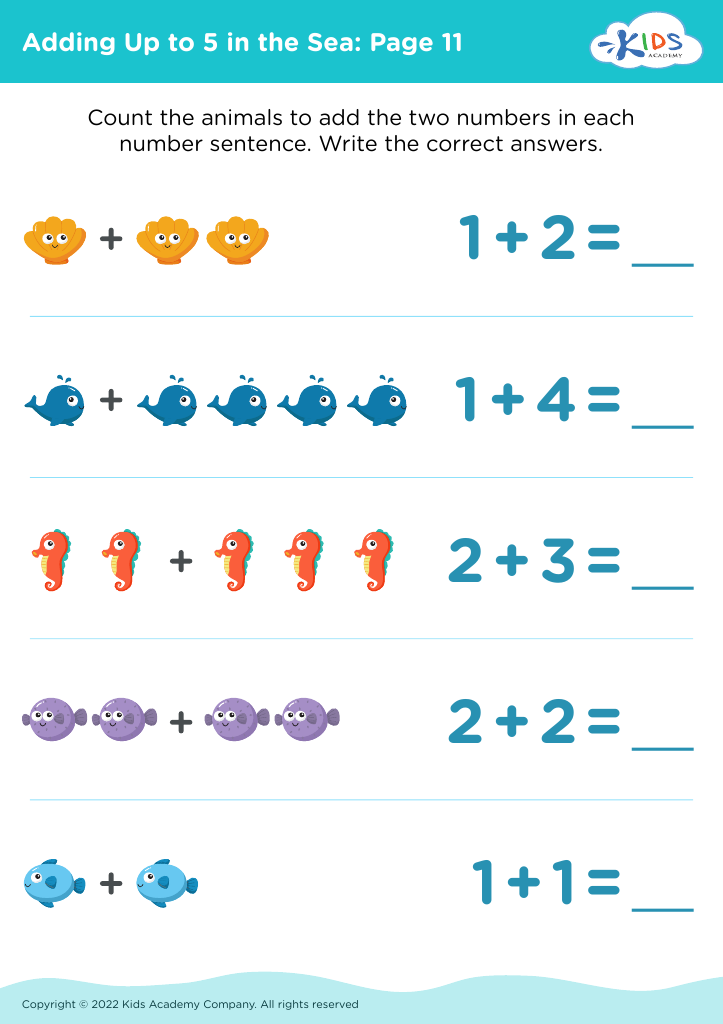
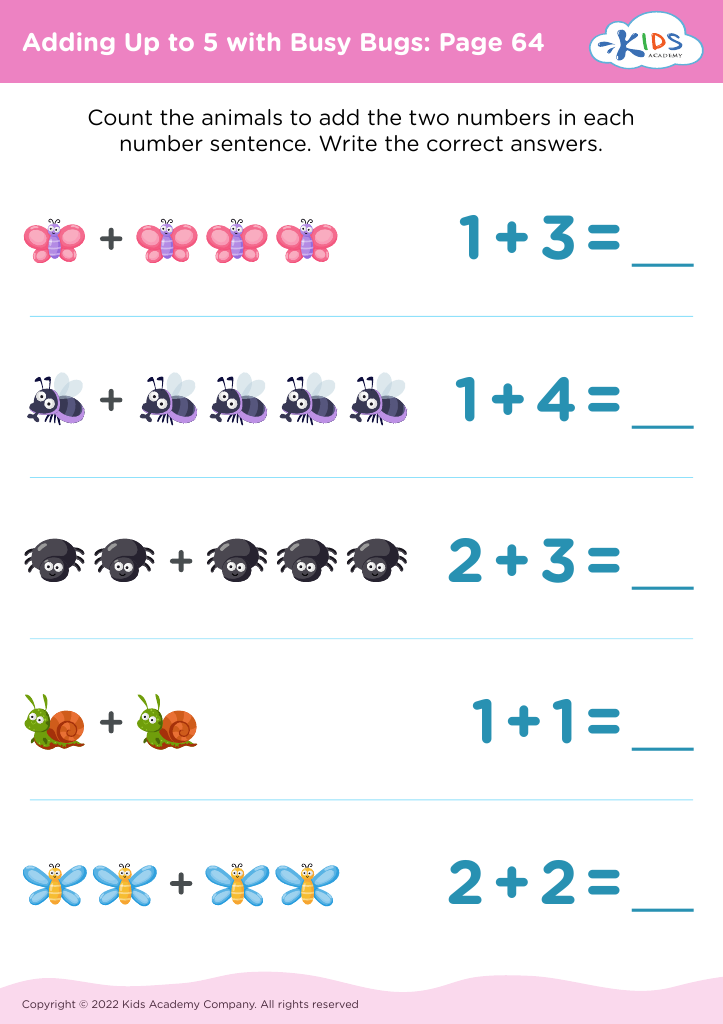
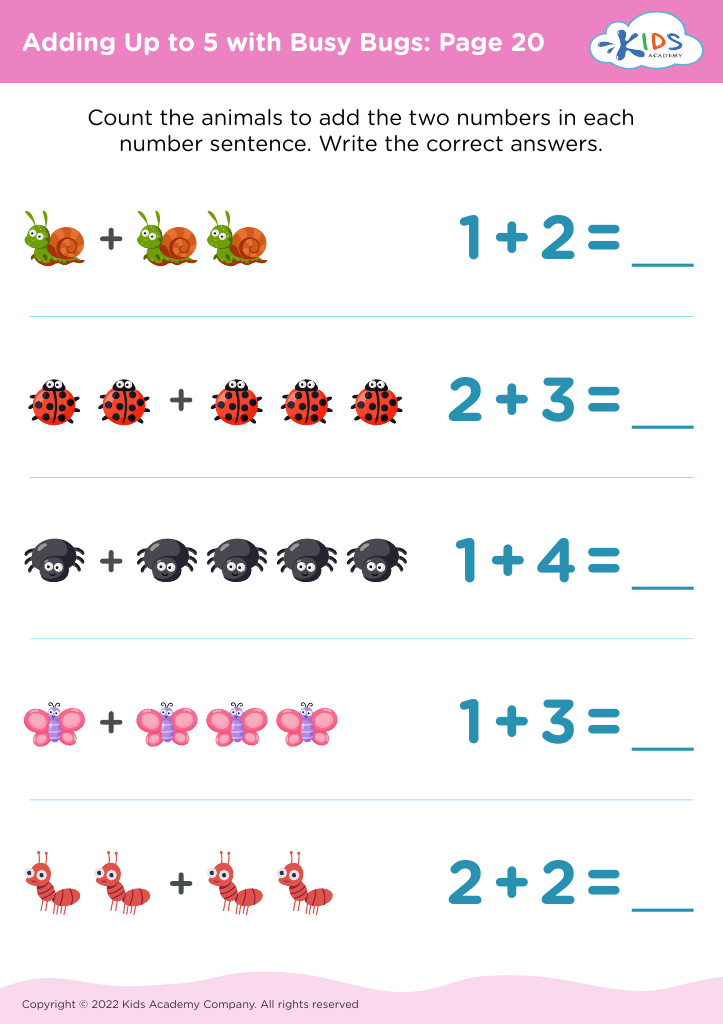
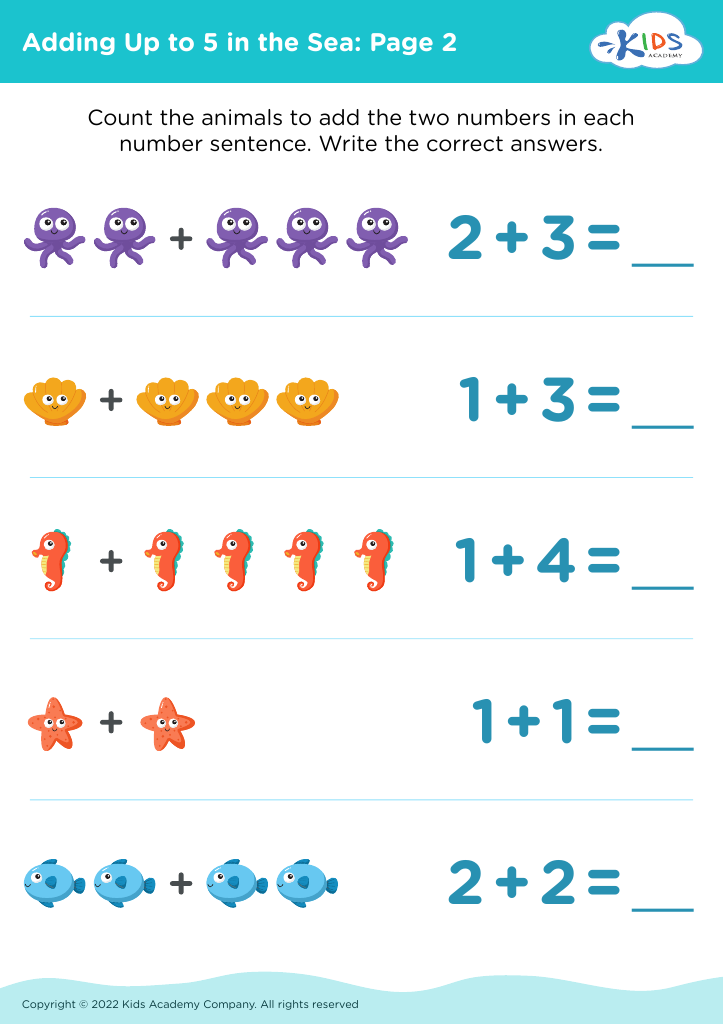
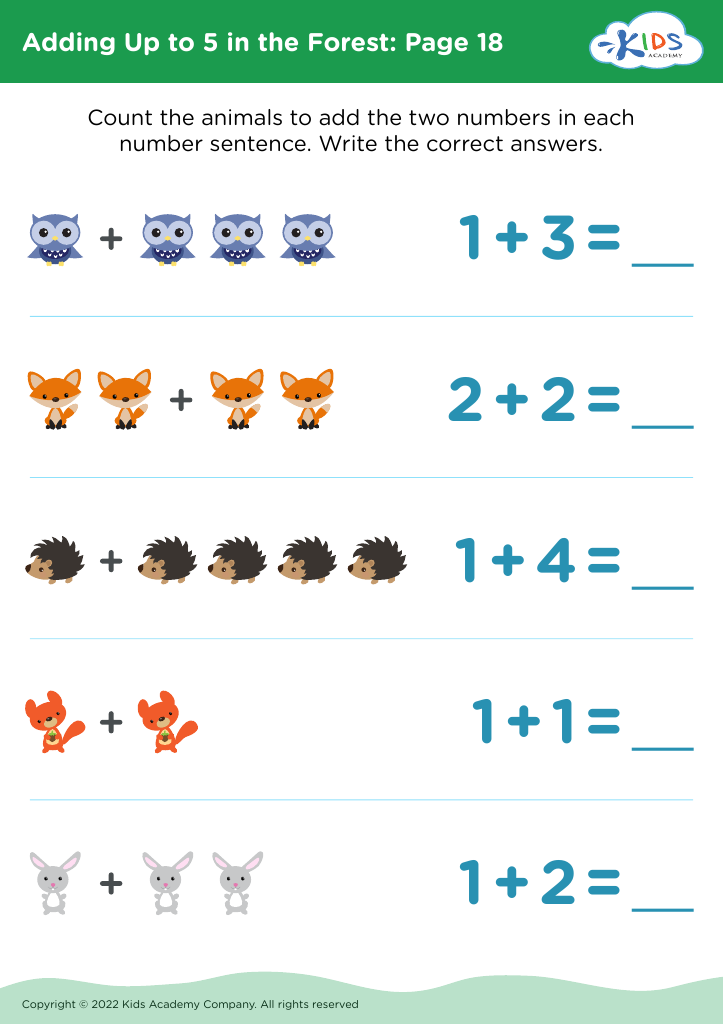
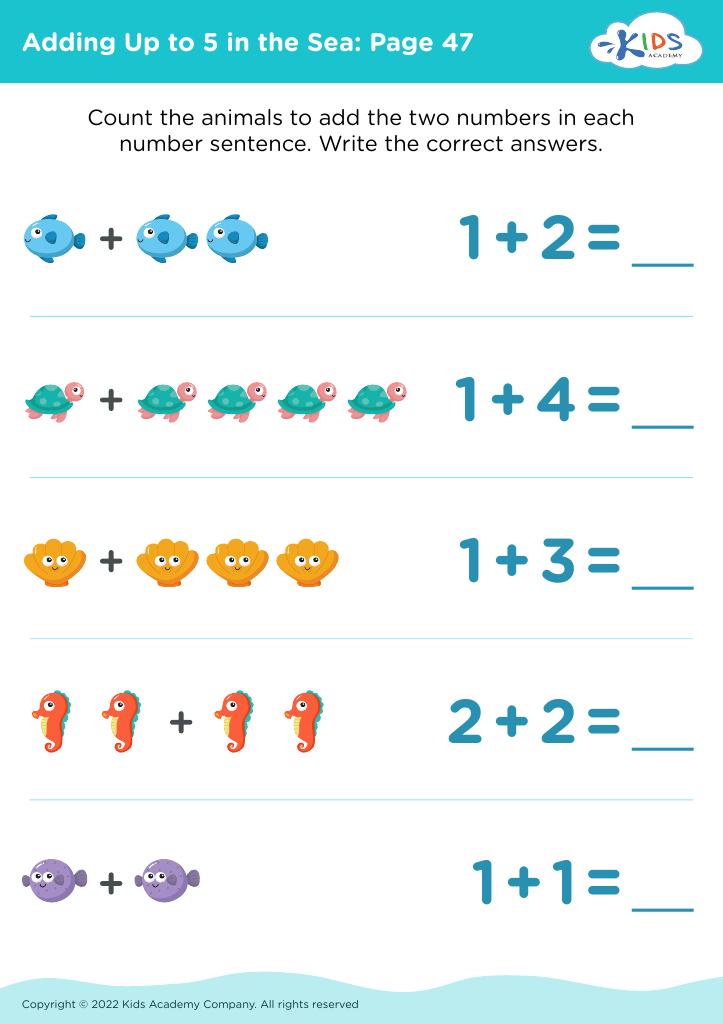
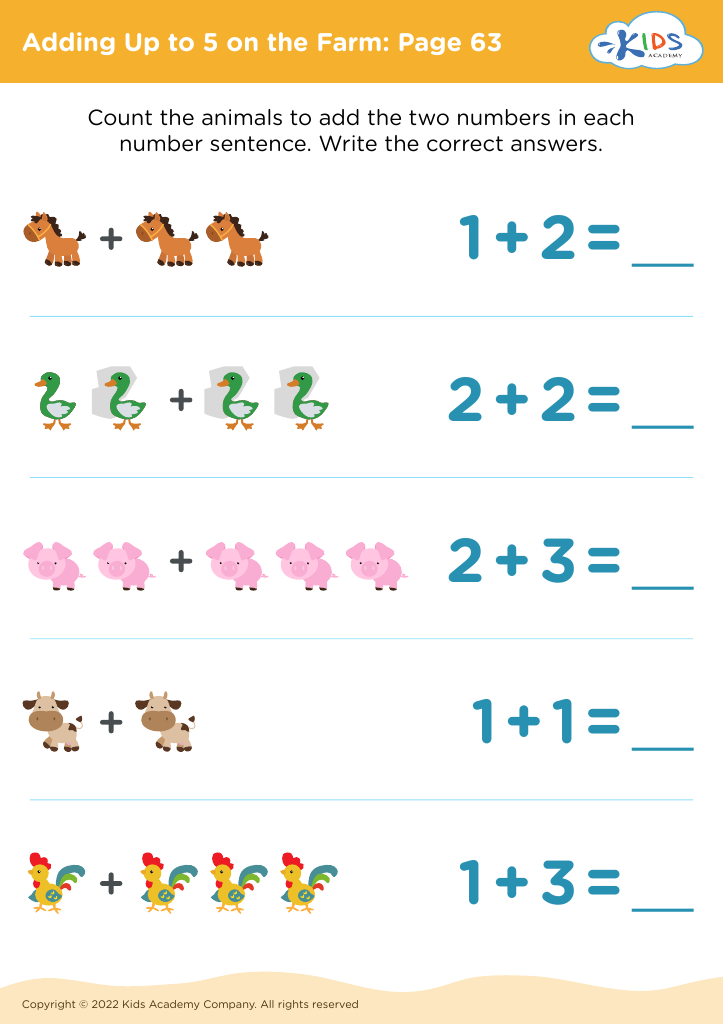
Visual learning methods are crucial for teaching addition to children aged 4-5, as they align with the developmental stage and cognitive abilities of young learners. At this age, children are primarily visual and kinesthetic learners who grasp concepts better through seeing and manipulating objects rather than through abstract thinking. By incorporating visual learning tools such as counters, number lines, and colorful illustrations, parents and teachers can make the concept of addition more concrete and engaging.
Visual aids help to simplify complex ideas by breaking them down into more manageable parts, thereby enhancing comprehension and retention. For instance, if a child sees a picture of three apples being added to two apples, they can physically count the total, making the process intuitive and less intimidating. This practical approach lays a solid foundation for mathematical understanding, promoting a positive attitude towards math from an early age.
Moreover, visual learning caters to diverse learning styles and helps in identifying individual student needs more efficiently. Children who struggle with traditional methods may find success through visual aids, boosting their confidence and motivation. Therefore, integrating visual learning in teaching addition not only fosters a love for math but also equips young learners with the essential skills needed for their future academic journey.








