Shape Recognition Comparison Worksheets for Ages 4-5
3 filtered results
-
From - To
Discover our Shape Recognition Comparison Worksheets for Ages 4-5, designed to build foundational math skills through fun and engaging activities. These printable worksheets help young learners identify and compare various shapes, enhancing their visual-spatial awareness and critical thinking. Each activity introduces basic geometric concepts through colorful and interactive exercises, fostering a love for learning. Perfect for use at home or in the classroom, our worksheets support early childhood development by encouraging hands-on practice and ensuring kids are well-prepared for future math challenges. Give your child a head start with our expertly crafted shape recognition worksheets!
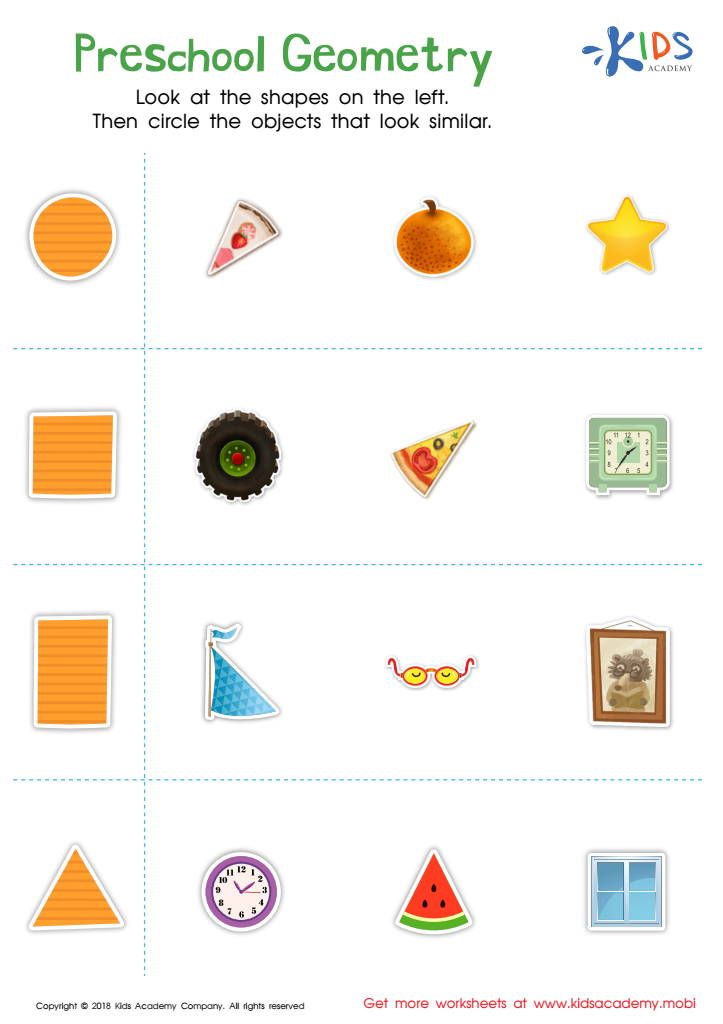
Preschool Geometry Worksheet
 Assign to My Students
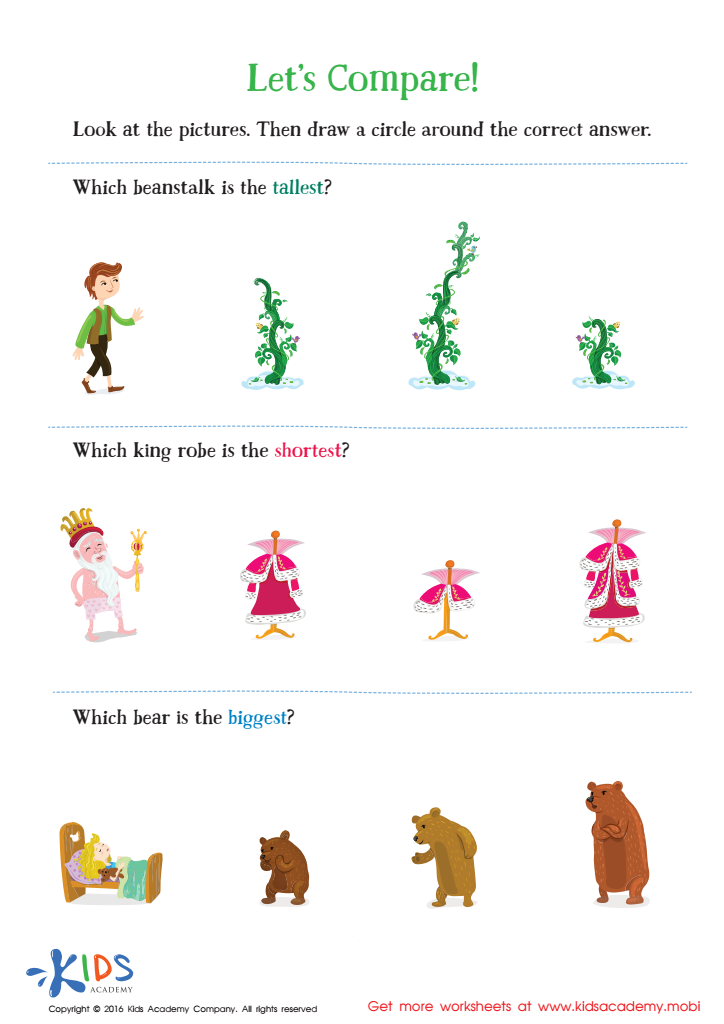
Fairy Tale Worksheet: Let's Compare
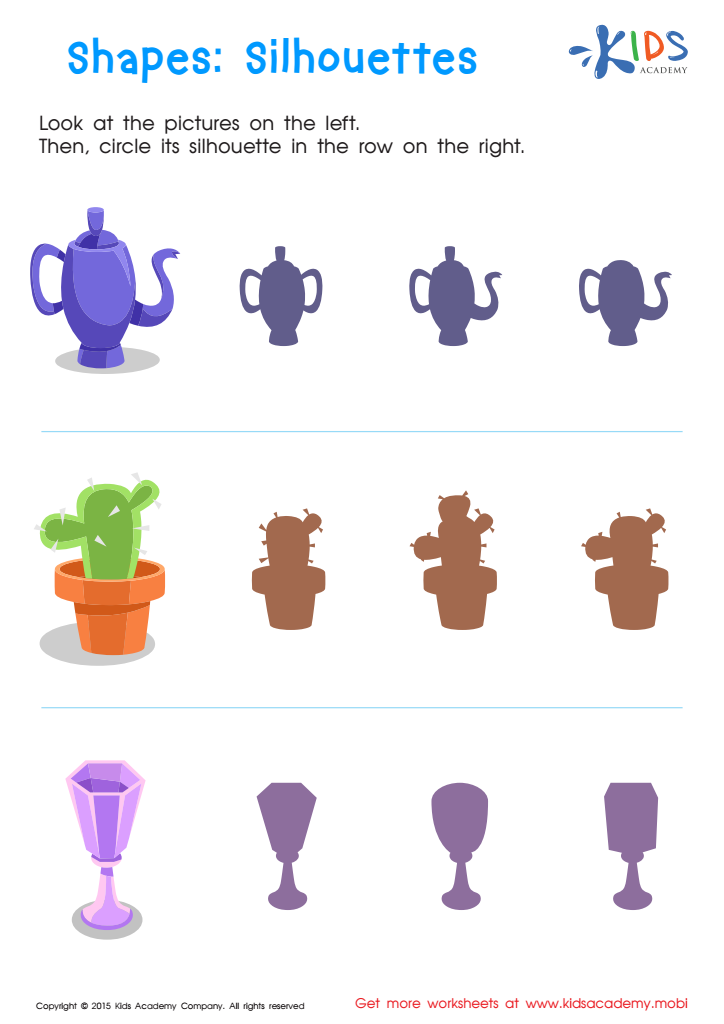
Silhouettes – Shapes Worksheet




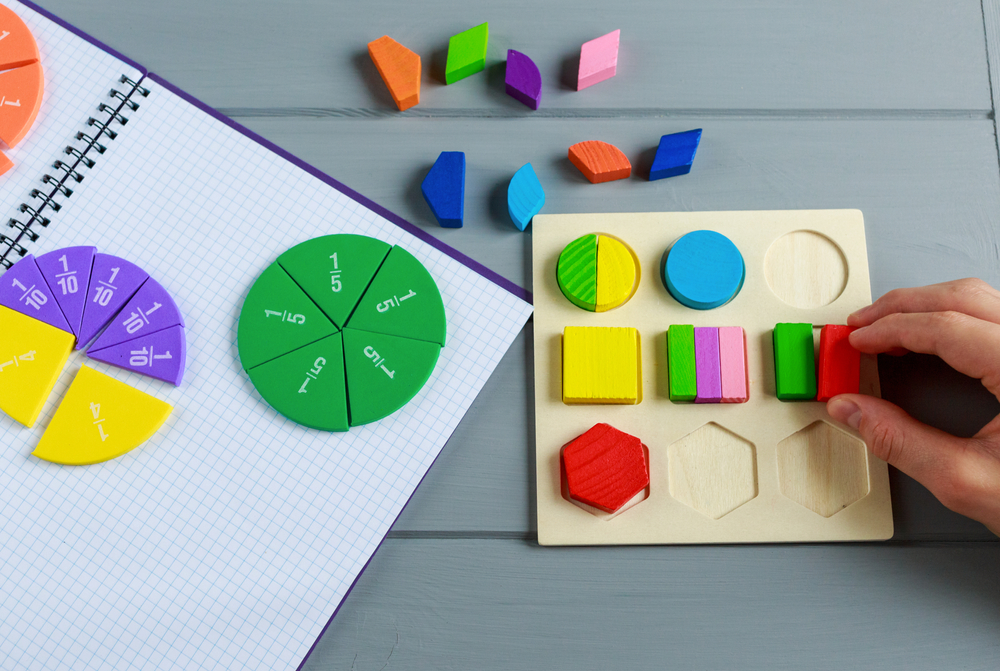

Shape recognition comparison is crucial for children ages 4-5 as it lays the groundwork for cognitive and mathematical development. At this age, children's brains are highly receptive to visual and spatial information. Understanding shapes enables them to recognize patterns, which is foundational for reading and math skills later on.
First, shape recognition builds essential pre-math skills, aiding in understanding geometry, which will be crucial as they progress in school. Shapes like circles, triangles, and squares help children grasp key concepts like sides, angles, and symmetry.
Second, it enhances critical thinking and problem-solving skills. Recognizing and differentiating between various shapes requires children to notice subtle differences, promoting attention to detail and analytical thinking.
Third, it's integral to everyday life. Recognizing shapes helps children with practical tasks like organizing objects, fitting puzzles together, and navigating their environment safely.
Fourth, language skills also benefit. When children learn words for different shapes, they're expanding their vocabulary and enhancing their descriptive language abilities.
Finally, engaging in shape recognition comparison through games and activities can be a fun bonding experience, promoting a child's positive attitude towards learning. Overall, this foundational skill paves the way for future academic success and everyday competency.








