Color Identification Geometry Worksheets for Ages 4-5
4 filtered results
-
From - To
Our Color Identification Geometry Worksheets for Ages 4-5 offer a fun and engaging way for young learners to combine geometry with color recognition. Designed with vibrant visuals, these worksheets help children identify different shapes and colors, enhancing their early math skills and creativity. Each activity encourages active learning through coloring, shape recognition, and simple problem-solving. Perfect for preschool and kindergarten students, these worksheets provide an excellent foundation for more advanced mathematical concepts. Download now to give your child a head start in a colorful and educational journey in geometry!
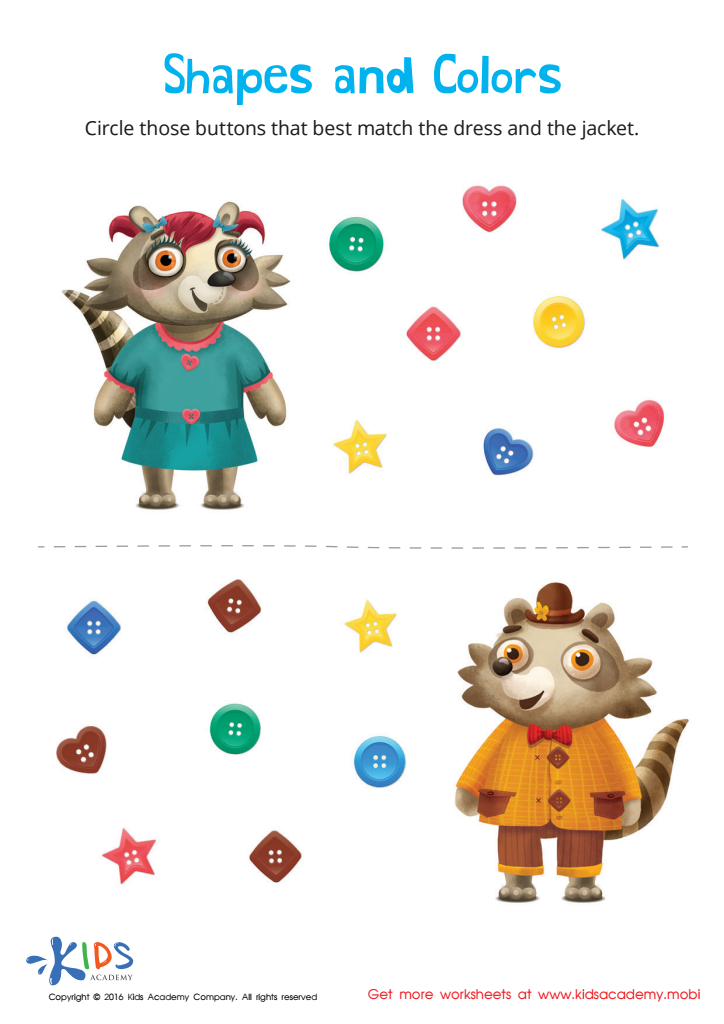
Matching: Shapes and Colors Worksheet











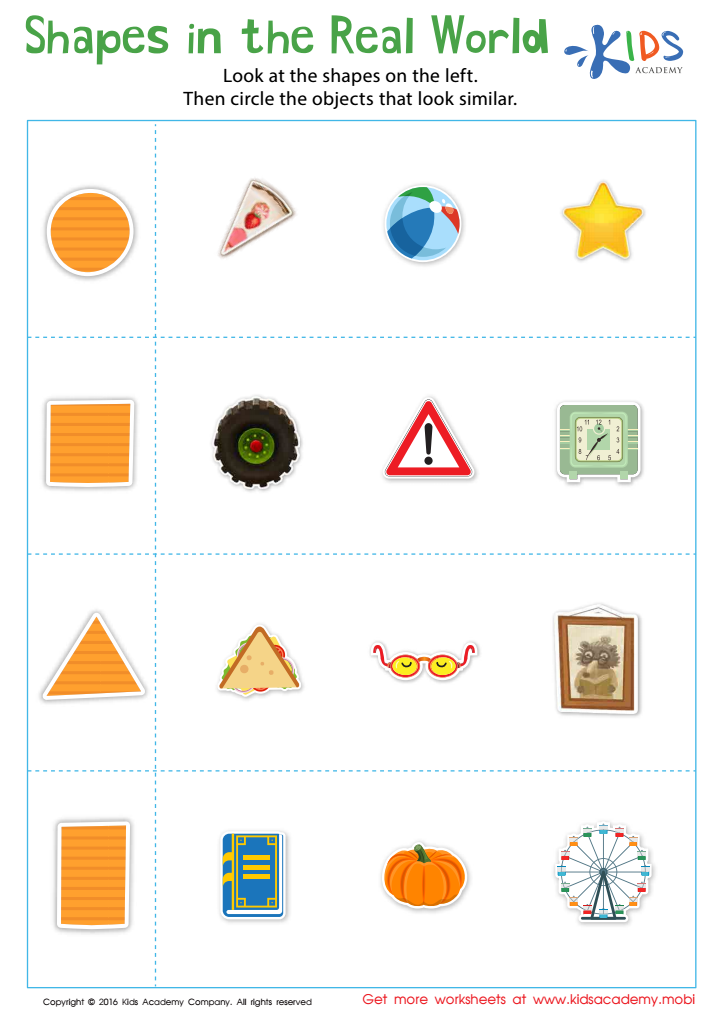
Shapes in the Real World Worksheet
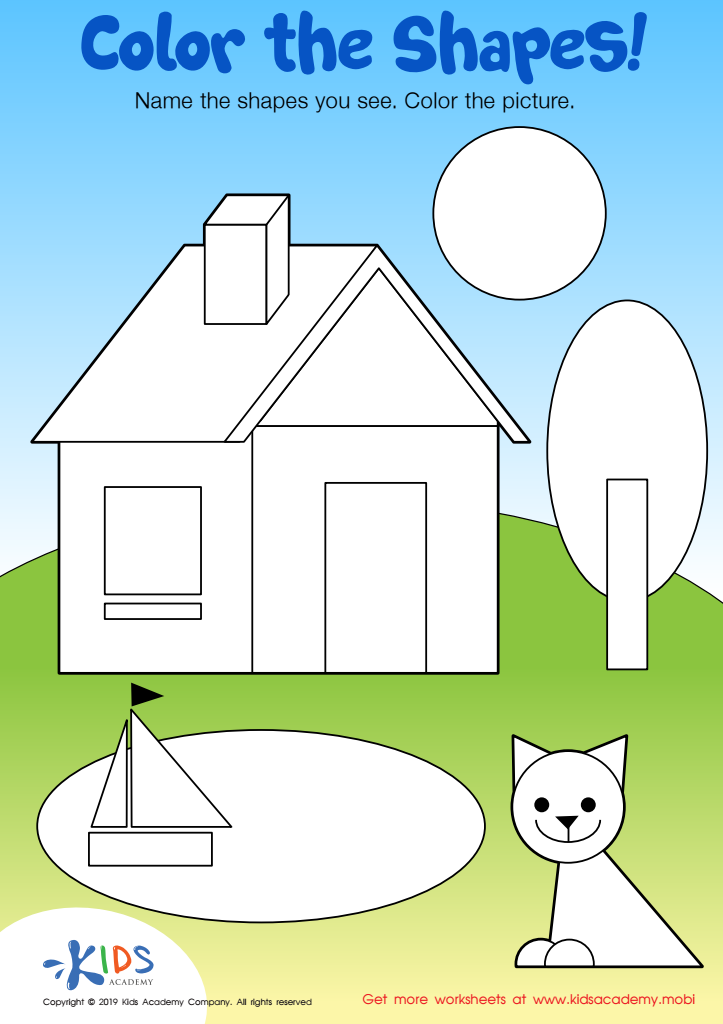
Color the Shapes Worksheet
 Assign to My Students
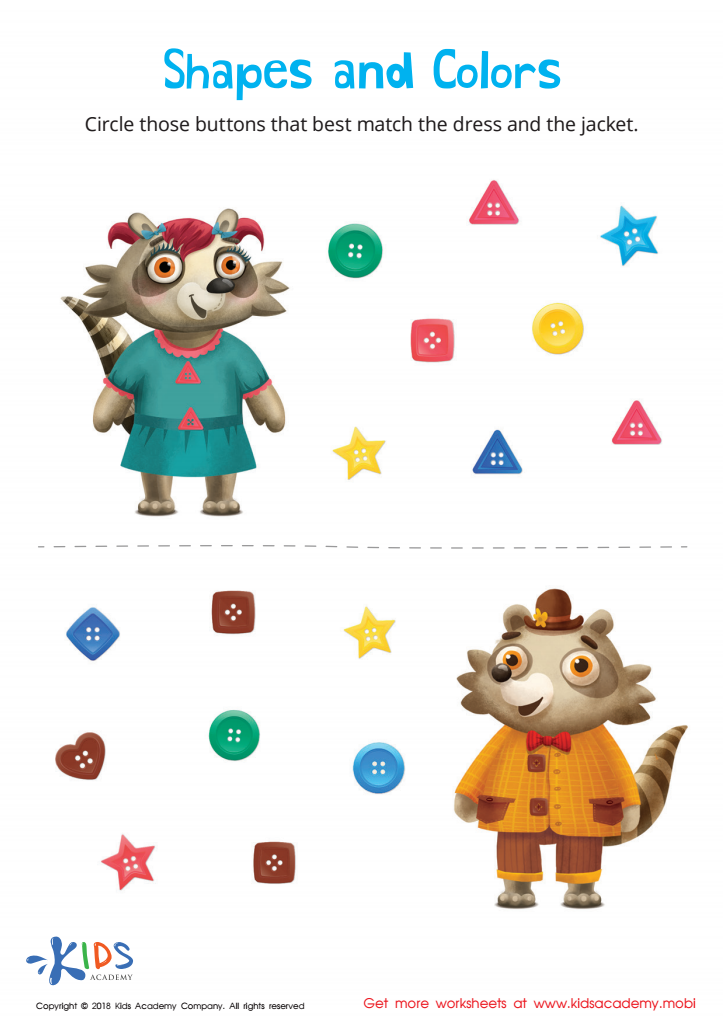
Shapes and Colors Worksheet








Color identification geometry is a fundamental educational tool for children aged 4-5, with substantial cognitive and developmental benefits. At this crucial stage, children's brains are rapidly developing, and engaging them with colors and shapes fosters cognitive, motor, and perceptual skills.
First and foremost, learning to identify colors enhances visual perception. Recognizing and naming different hues helps children differentiate objects and perceive their environment more distinctly. This ability is foundational for later learning, including reading and math skills.
Learning shapes introduces children to basic geometry concepts. Recognizing different shapes supports spatial reasoning, an essential skill in everyday tasks and problem-solving. As children identify squares, circles, triangles, and more, they also learn about similarities and differences, fostering critical thinking early on.
Moreover, color and shape recognition activities can improve fine motor skills as children often use their hands to match and draw shapes or sort colored objects. These actions enhance hand-eye coordination and prepare children for writing.
Emotional and social benefits are significant, too. As children collaborate in games and activities centered around colors and shapes, they develop communication and teamwork skills, bolstering their social development.
In essence, an early focus on color identification geometry doesn't just teach children new knowledge; it creates a strong developmental foundation for success in various academic and social areas.








