Counting skills Geometry Worksheets for Ages 4-5
8 filtered results
-
From - To
Discover our engaging Counting Skills Geometry Worksheets designed specifically for children aged 4-5! These worksheets blend essential counting skills with foundational geometry concepts, helping young learners explore shapes, patterns, and numbers in a fun and interactive way. Each worksheet is carefully crafted to enhance critical thinking and problem-solving abilities while fostering a solid early math foundation. From counting geometric shapes to recognizing their attributes, children will enjoy a variety of colorful, age-appropriate activities that make learning enjoyable. Perfect for classroom use or homeschooling, our resources aim to build confidence and a love for math in your little learners!
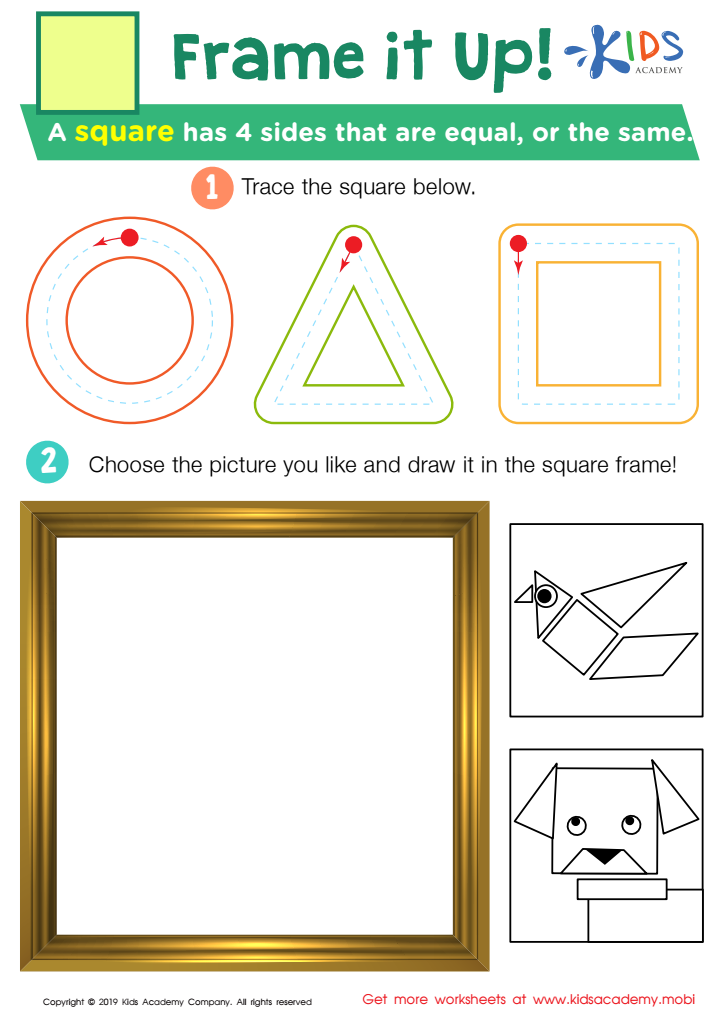
Frame it Up Worksheet
 Assign to My Students











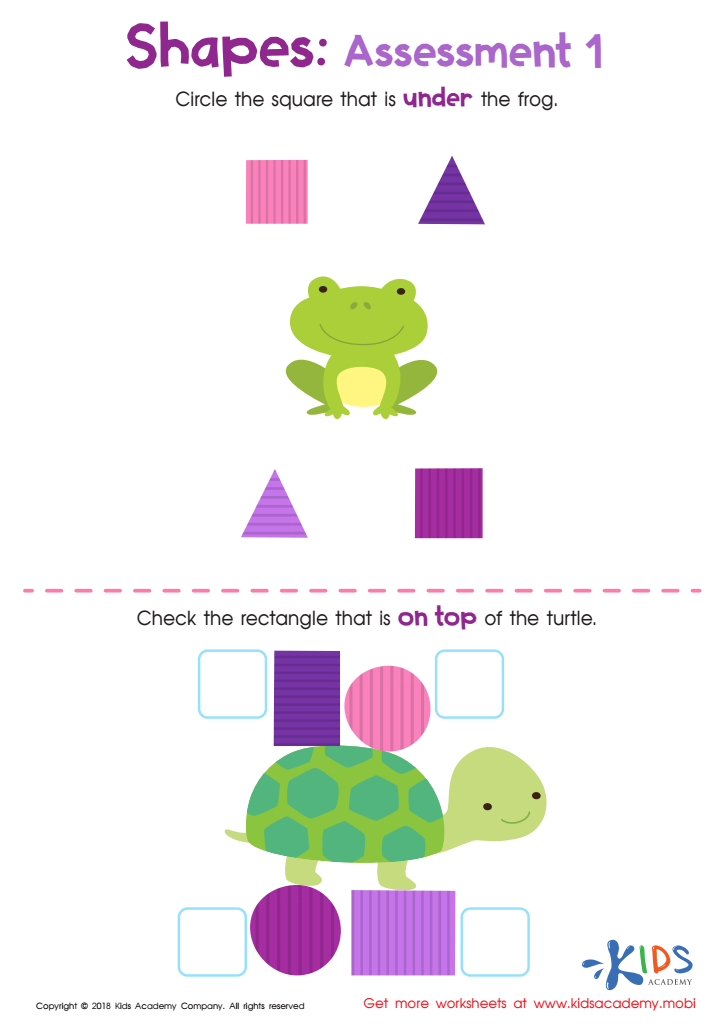
Geometry – Assessment 1 Worksheet
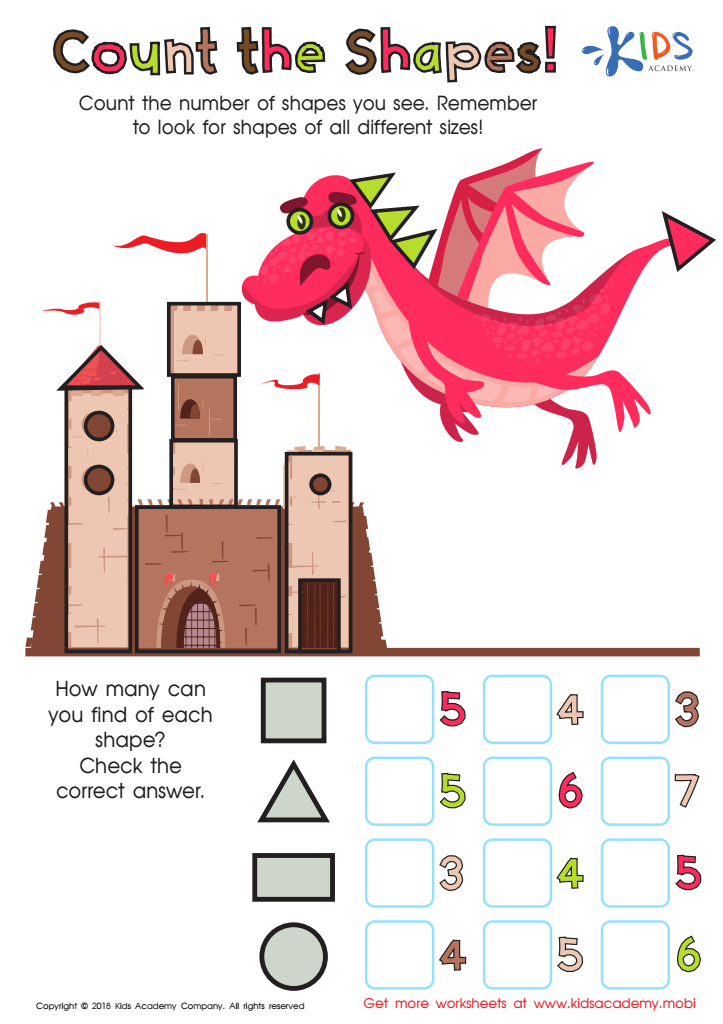
Count the Shapes Worksheet
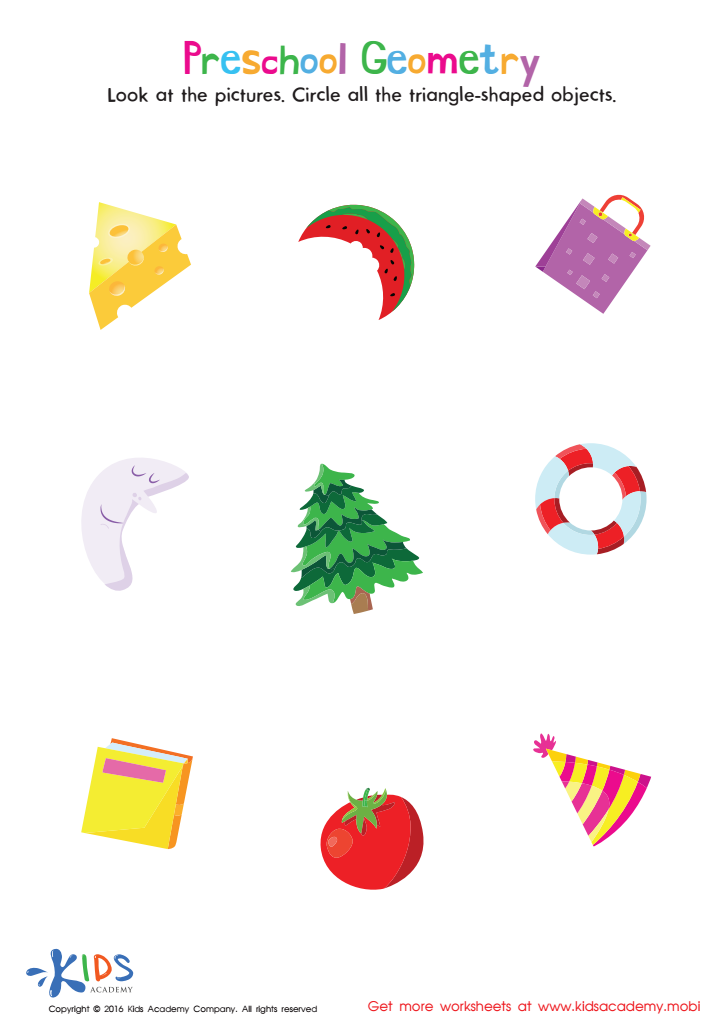
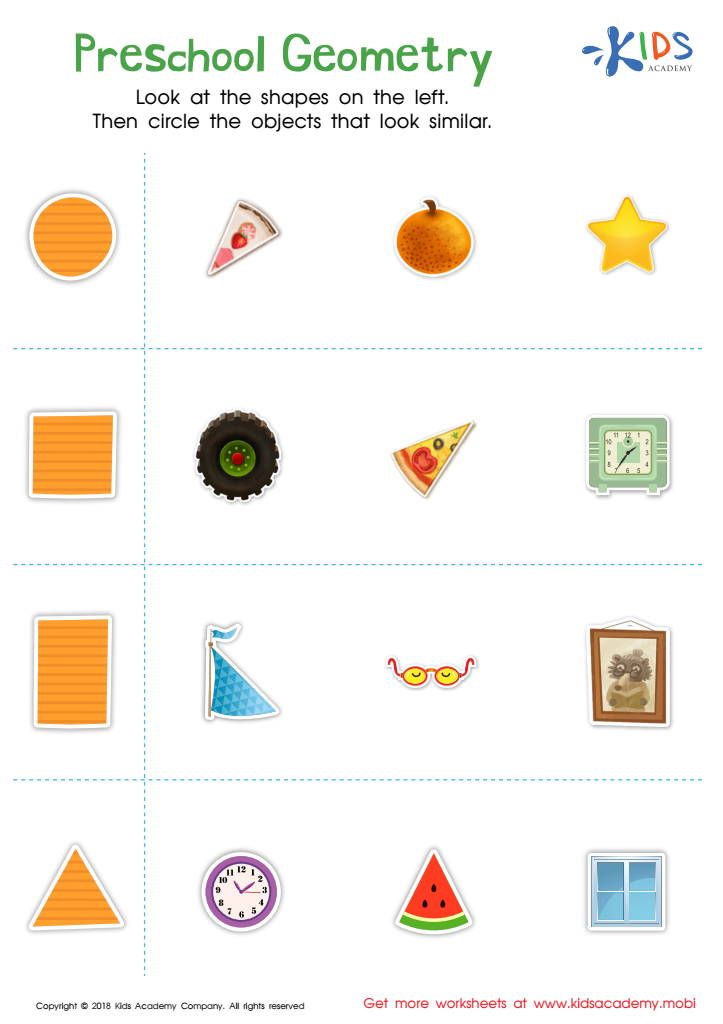
Preschool Geometry Worksheet
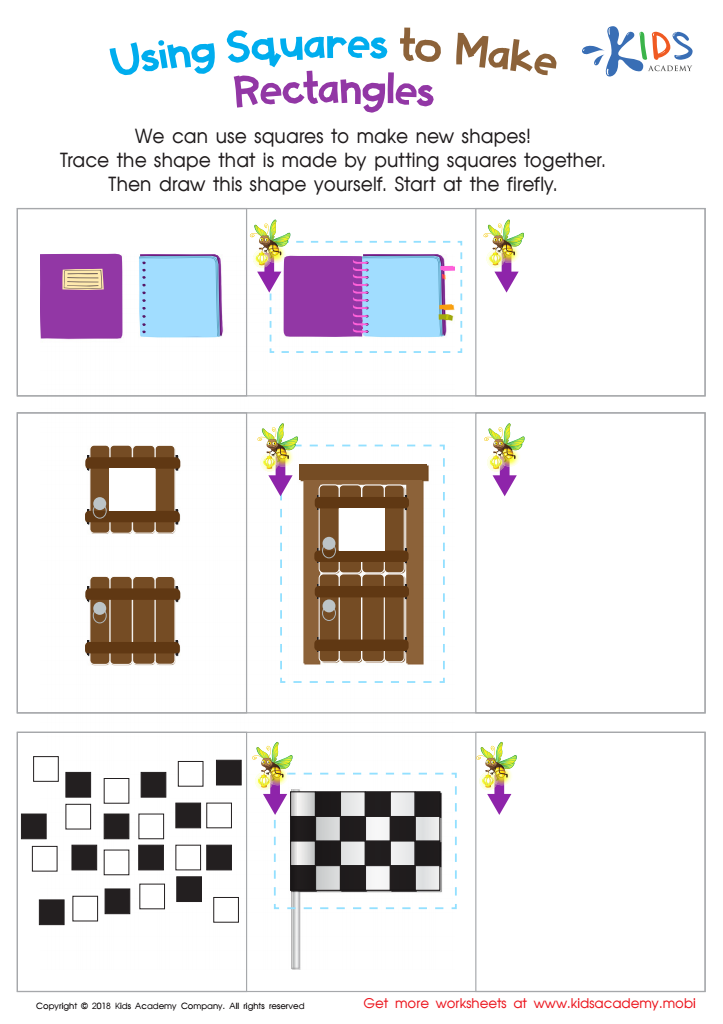
Using Squares to Make Rectangles Worksheet
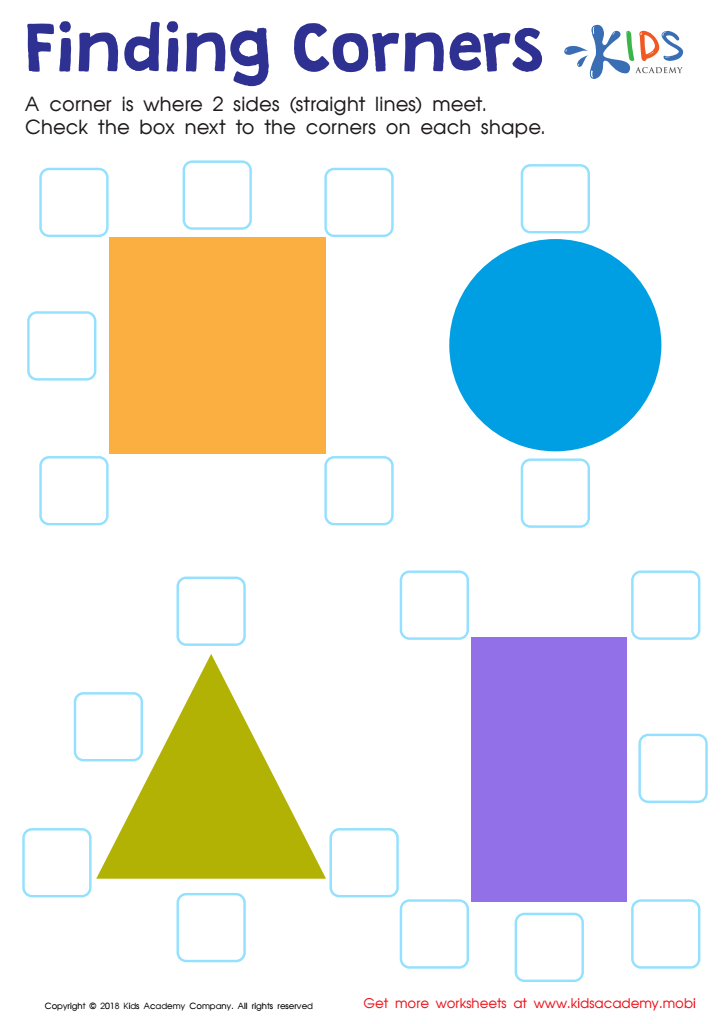
Finding Corners Worksheet
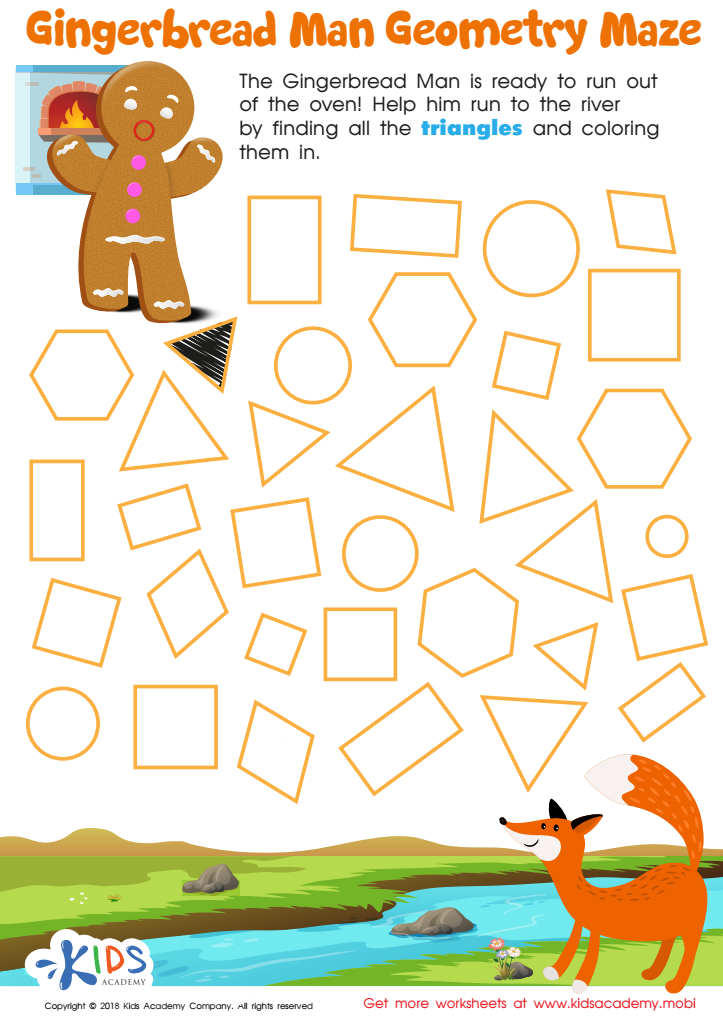
Gingerbread Man Geometry Maze Worksheet








Parents and teachers should prioritize counting skills and geometry for ages 4-5 because these foundational abilities serve as the building blocks for future mathematical understanding. At this age, children engage in hands-on exploration and rich interactions with their environment. Counting skills enhance their ability to quantify and make sense of the world around them, aiding in memory, problem-solving, and critical thinking. For instance, counting objects reinforces one-to-one correspondence, an essential skill for later arithmetic.
Geometry, on the other hand, cultivates spatial awareness and strengthens visual comprehension. Learning about shapes, sizes, and spatial relationships through play and everyday contexts helps young children develop the ability to recognize, describe, and categorize their environment. For example, identifying triangles, squares, and circles in nature fosters curiosity and inquiry, laying groundwork for more complex concepts like area and perimeter in future grades.
Furthermore, strong counting and geometry skills facilitate literacy development, encouraging children to draw connections between mathematical concepts and language. By nurturing these skills, parents and teachers support children's confidence and enjoyment of math, turning it into an engaging and dynamic aspect of their education. Ultimately, cultivating these foundational skills helps create proficient learners who will excel in mathematics throughout their educational journey.








