Critical Thinking Geometry Worksheets for Ages 4-5
5 filtered results
-
From - To
Unlock young minds with our "Critical Thinking Geometry Worksheets for Ages 4-5". Designed to foster early math skills, these engaging worksheets combine playful activities with critical thinking challenges, helping children explore shapes, patterns, and spatial awareness. Perfect for preschool and kindergarten learners, our worksheets encourage curiosity and problem-solving, laying a solid foundation for future mathematical understanding. With vibrant illustrations and interactive tasks, kids will enjoy every moment of learning. Discover a comprehensive collection of resources aimed at making geometry fun and educational, ensuring your little ones develop essential skills in an enjoyable and effective way.
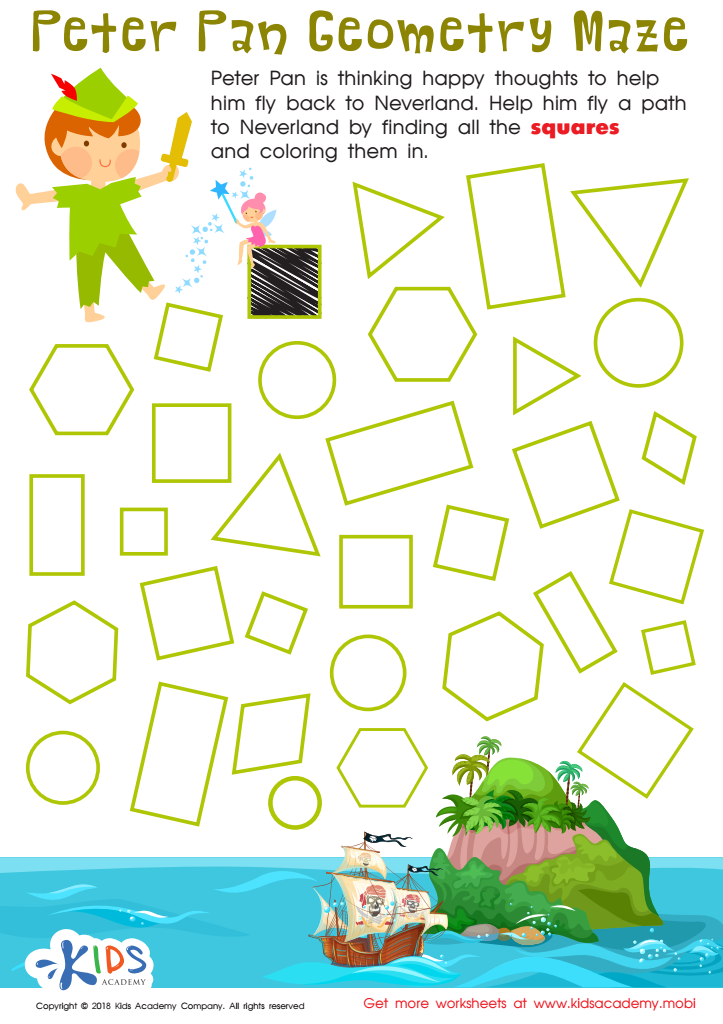
Peter Pan Worksheet
 Assign to My Students











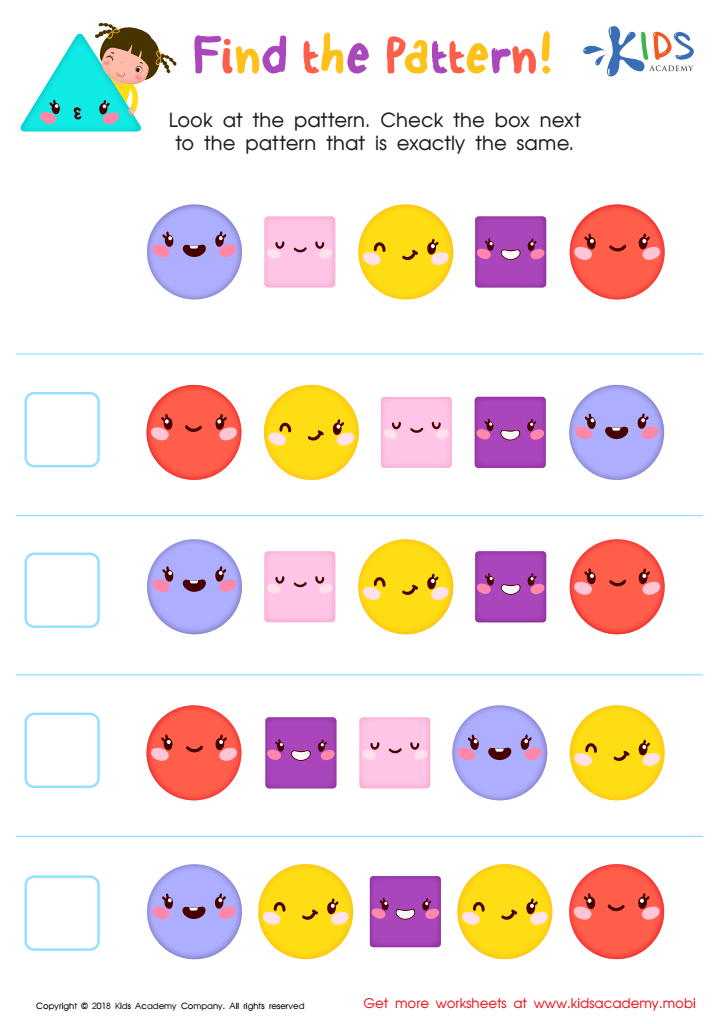
Find the Pattern Worksheet
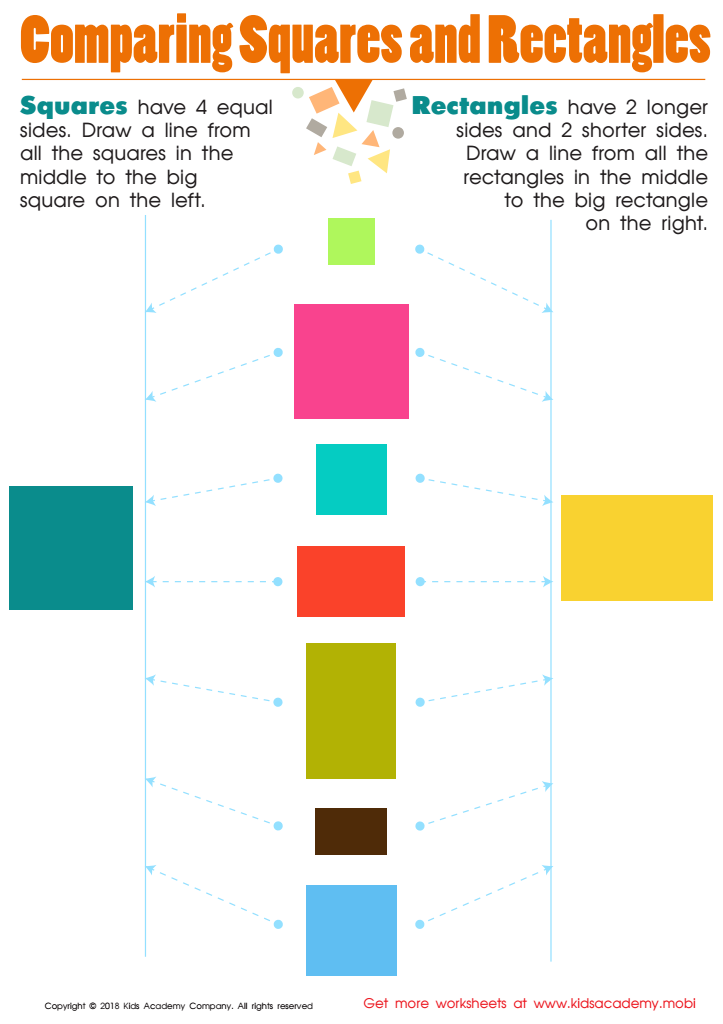
Comparing Squares Rectangles Worksheet
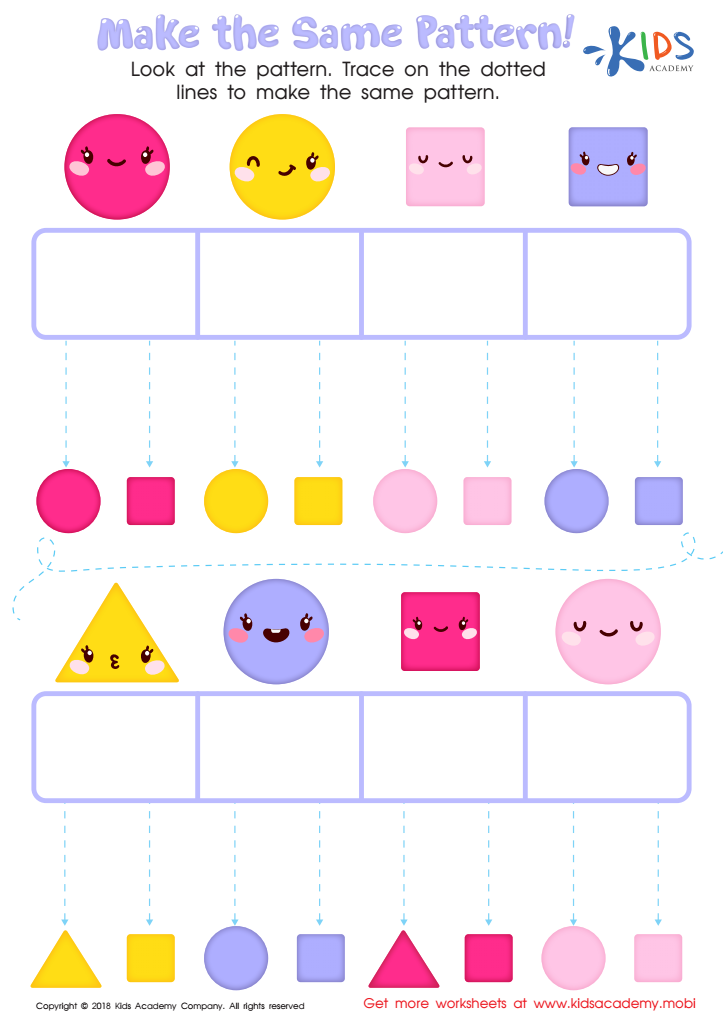
Make the Same Pattern Worksheet
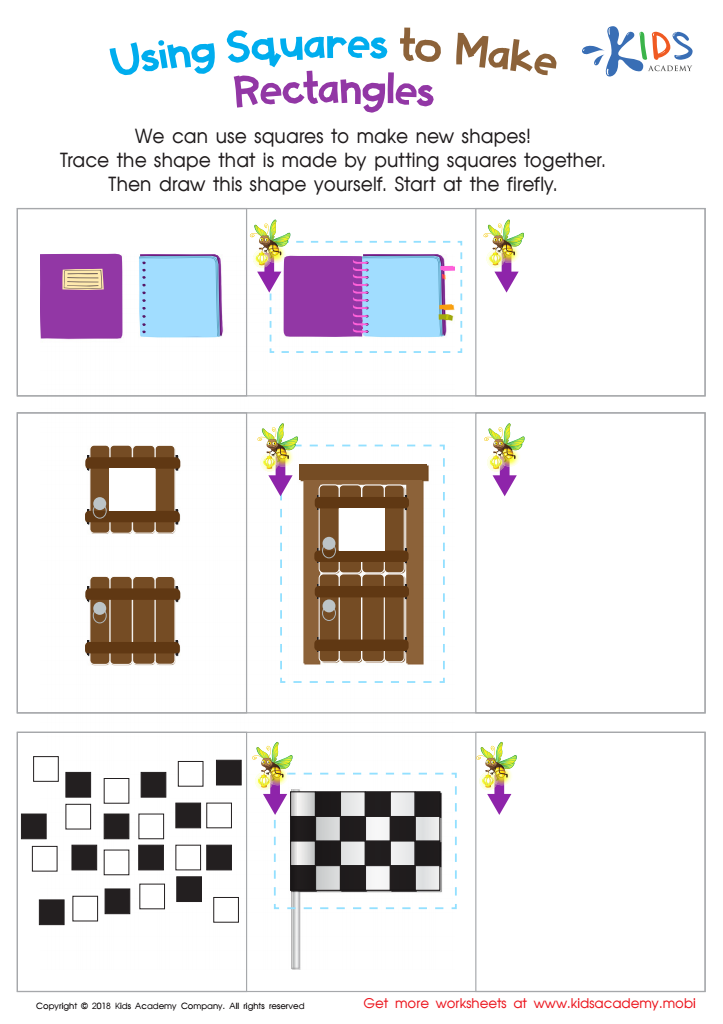
Using Squares to Make Rectangles Worksheet








Critical thinking in geometry for ages 4-5 is fundamental for young learners because it builds essential cognitive and problem-solving skills at a formative stage in their development. Engaging in geometry helps children recognize shapes, patterns, and spatial relationships, which are crucial for understanding the world around them. When kids explore geometric concepts through critical thinking, they learn to categorize objects, predict outcomes, and reason logically.
Introducing geometry in early childhood also supports the development of fine motor skills through activities like drawing and building, which reinforce hand-eye coordination. Young learners become more adept at visualizing and manipulating objects in their minds, benefits that extend to reading comprehension and mathematical abilities.
Moreover, critical thinking in geometry fosters creativity and curiosity. As children play with shapes and construct new forms, they are encouraged to ask questions, make observations, and come up with innovative solutions. This type of inquiry-based learning keeps their natural enthusiasm for discovery alive.
For parents and teachers, instilling these skills early offers long-term academic and life benefits. Children who develop strong critical thinking skills are better equipped to tackle complex problems, navigate social scenarios, and think independently. Therefore, investing time in teaching geometry is a meaningful way to lay a strong foundation for future learning and personal growth.








