Problem-solving abilities Geometry Worksheets for Ages 4-5
3 filtered results
-
From - To
Enhance your child's problem-solving abilities with our engaging Geometry Worksheets designed for ages 4-5. These interactive activities are crafted to make learning fun while introducing fundamental concepts of shapes, patterns, and spatial reasoning. Each worksheet encourages critical thinking, helping young learners develop essential math skills through hands-on exercise and playful challenges. Perfect for at-home practice or classroom use, our problem-solving geometry worksheets foster creativity and analytical skills essential for future math success. Discover a world of geometric exploration that not only cultivates knowledge but also builds confidence in young minds eager to learn! Download and start solving today!
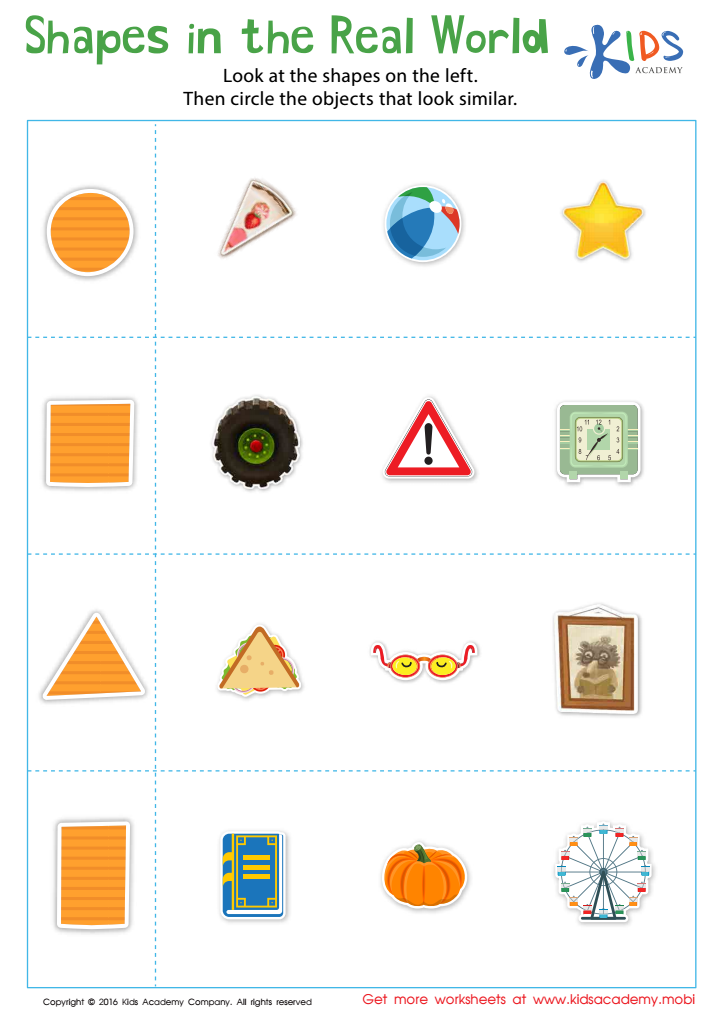
Shapes in the Real World Worksheet
 Assign to My Students











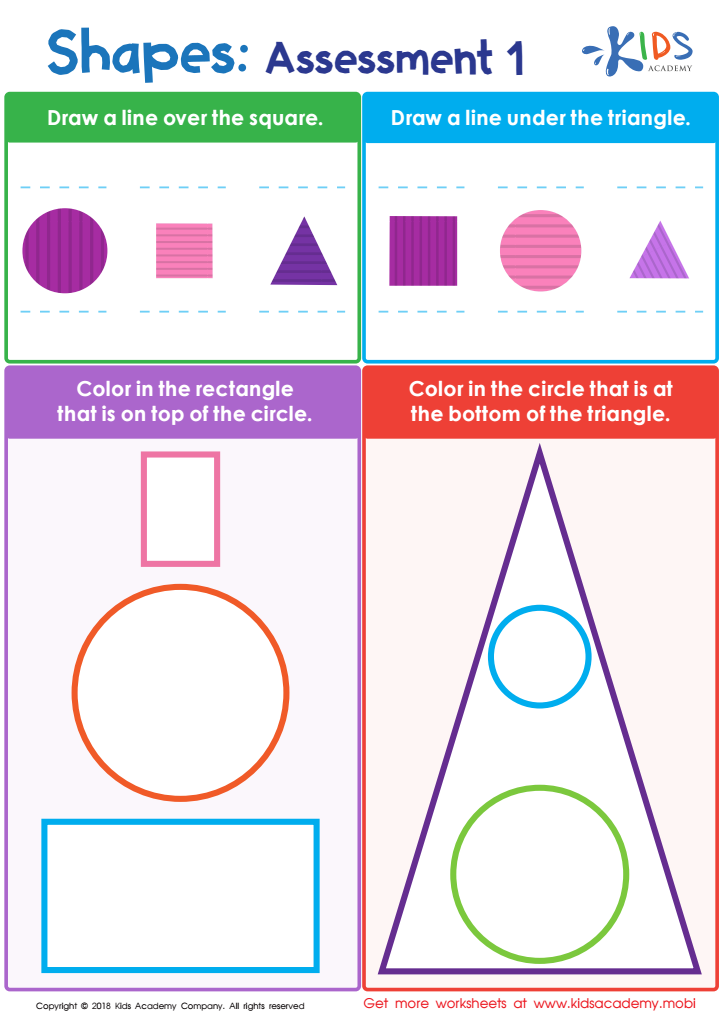
Shapes: Assessment 1 Worksheet
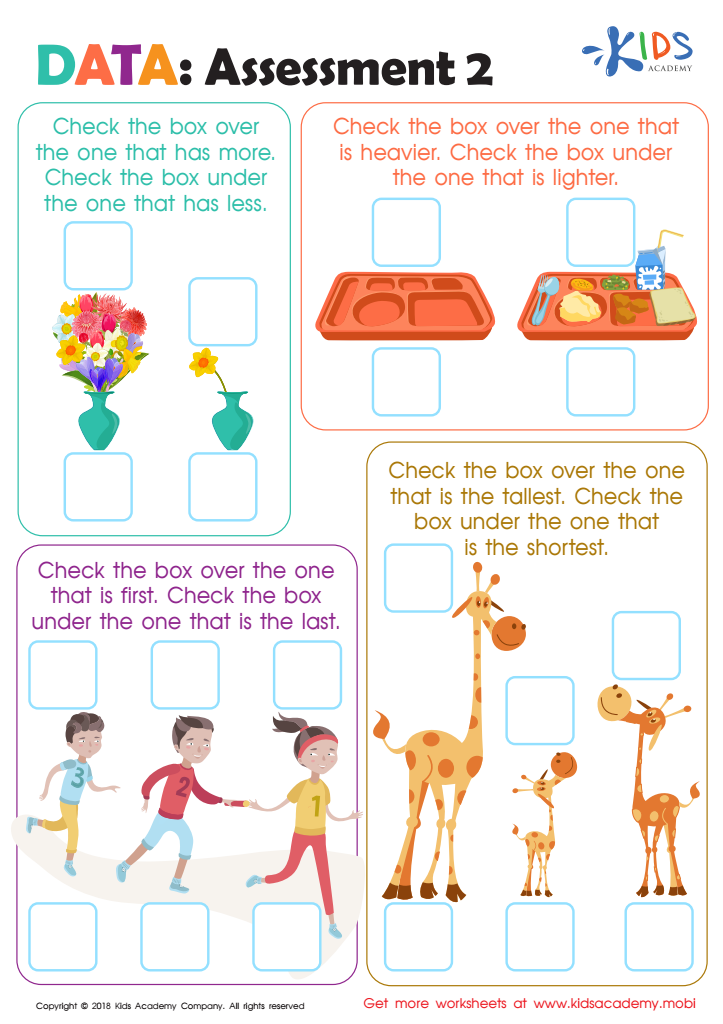
Data: Assessment 2 Worksheet








Parents and teachers should prioritize problem-solving abilities in geometry for children aged 4-5 because this foundational skill greatly shapes cognitive development and critical thinking. At this stage, children are naturally curious and engaged in exploration. Geometry nurtures that curiosity by introducing basic concepts such as shapes, spatial awareness, and the relationships between objects. When children tackle geometric problems, they learn to analyze situations, recognize patterns, and develop logical reasoning skills.
Moreover, engaging children in geometric problem-solving fosters creativity and innovation. As young learners manipulate shapes or solve visual puzzles, they begin to understand that there can be multiple solutions to a problem. This encourages a mindset of exploration and flexibility, crucial skills in today's rapidly changing world.
Additionally, fostering problem-solving skills at an early age builds a strong mathematical foundation. It preps children for more complex mathematical concepts in later years, ensuring they are equipped to tackle future challenges with confidence. Overall, emphasizing geometric problem-solving not only supports children's academic skills but also enhances their overall development, making it a vital area of focus for both parents and educators.








