Comparing objects Math Worksheets for Ages 4-5
6 filtered results
-
From - To
Discover the perfect way to introduce your preschooler to basic math concepts with our "Comparing Objects Math Worksheets for Ages 4-5." Designed to engage young learners, these beautifully illustrated worksheets help children develop crucial skills like observing and comparing objects by size, length, and height. Each activity encourages critical thinking while making learning fun and interactive. Ideal for home or classroom use, these worksheets provide a solid foundation for future math success. Equip your little ones with the tools they need to excel and watch their confidence grow as they master new concepts effortlessly. Start their math journey today!
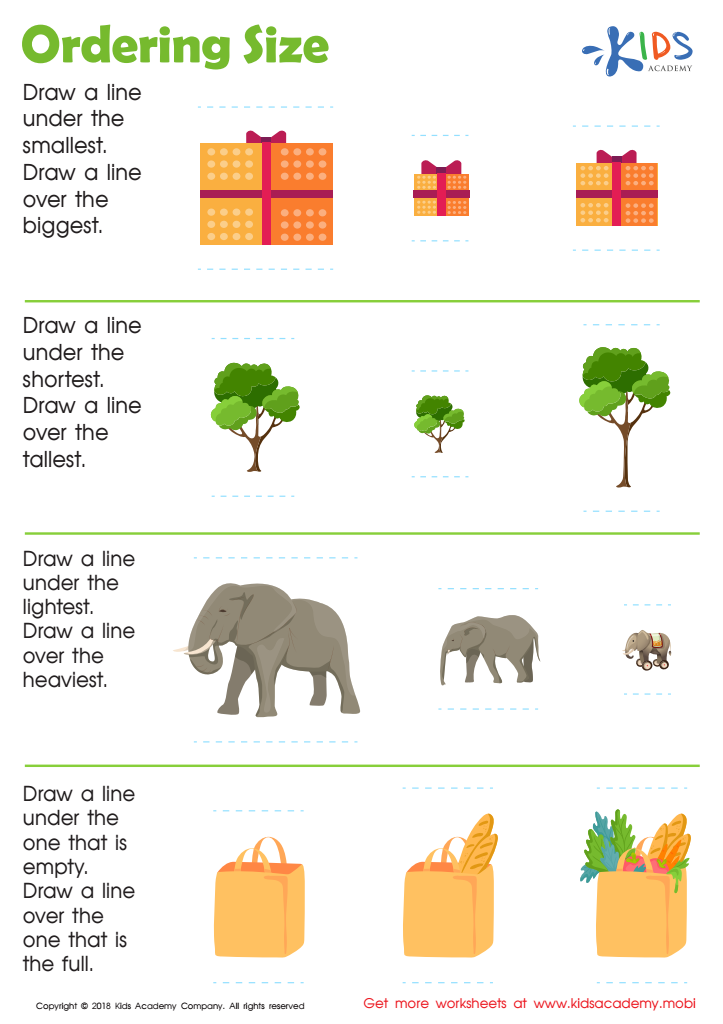
Ordering Size Worksheet
 Assign to My Students
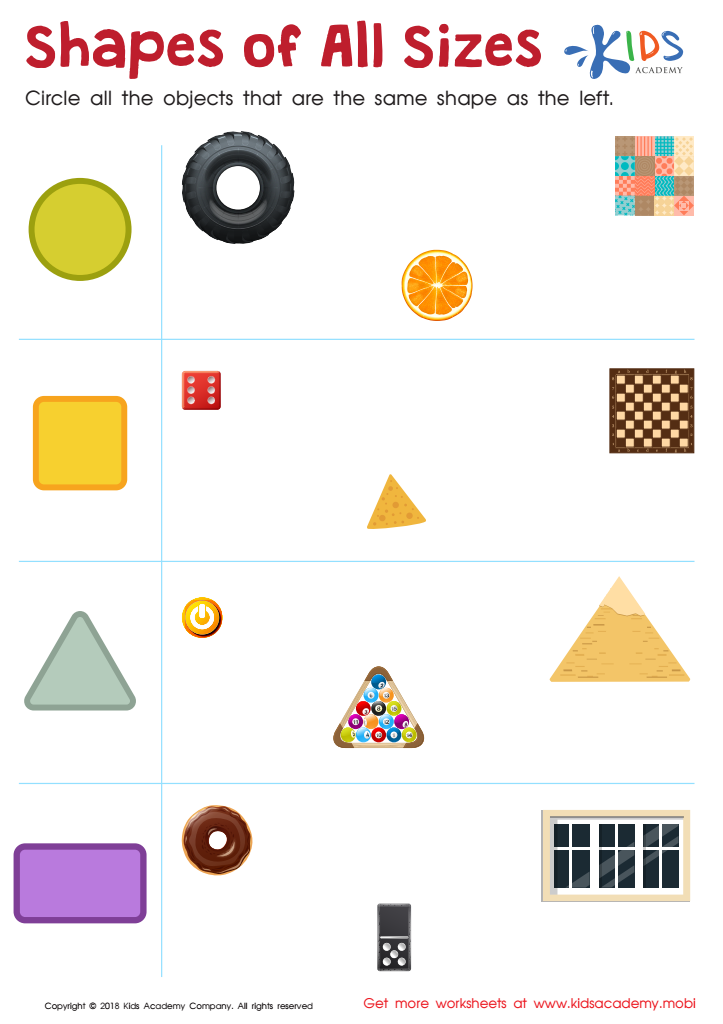
Shapes of All Sizes Worksheet
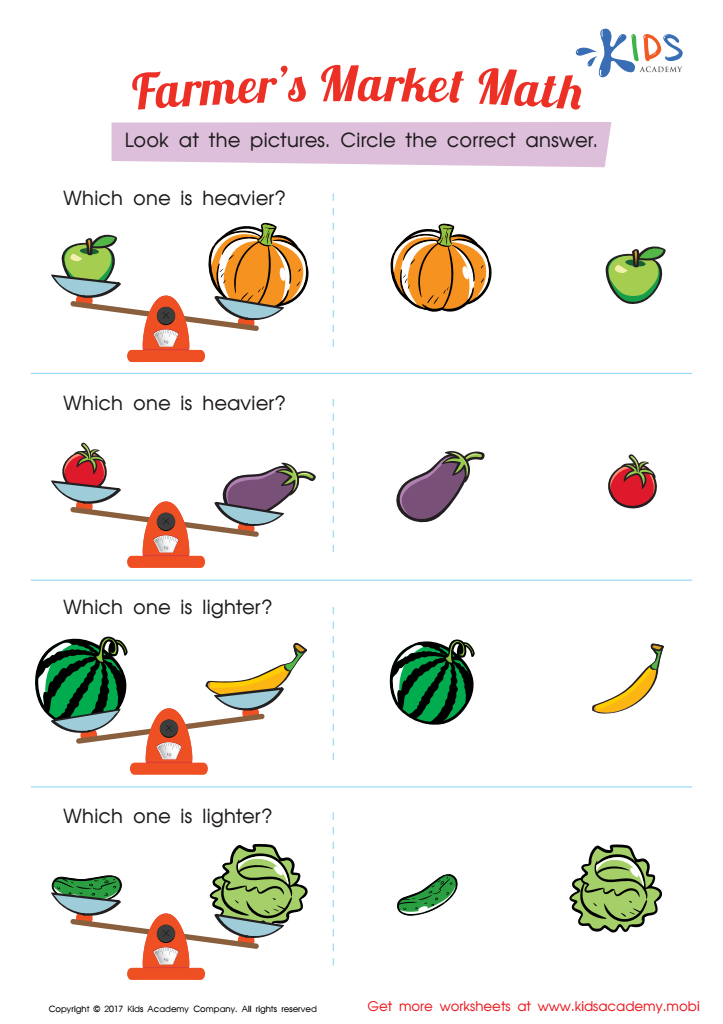
Which One Is Heavier Worksheet
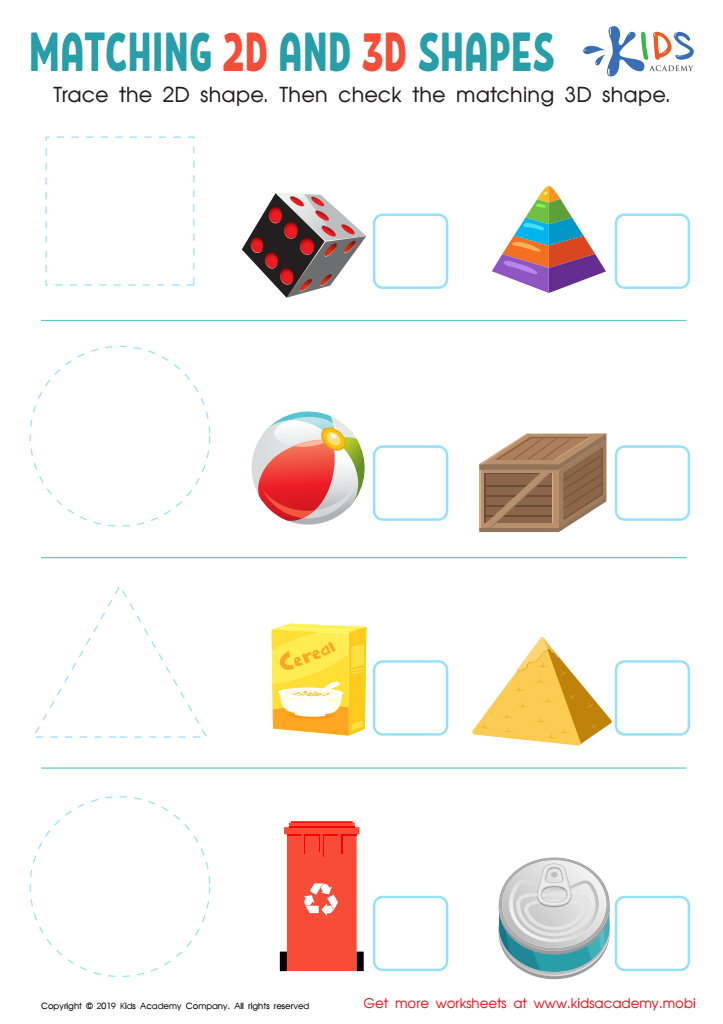
Matching 2D and 3D Shapes Worksheet
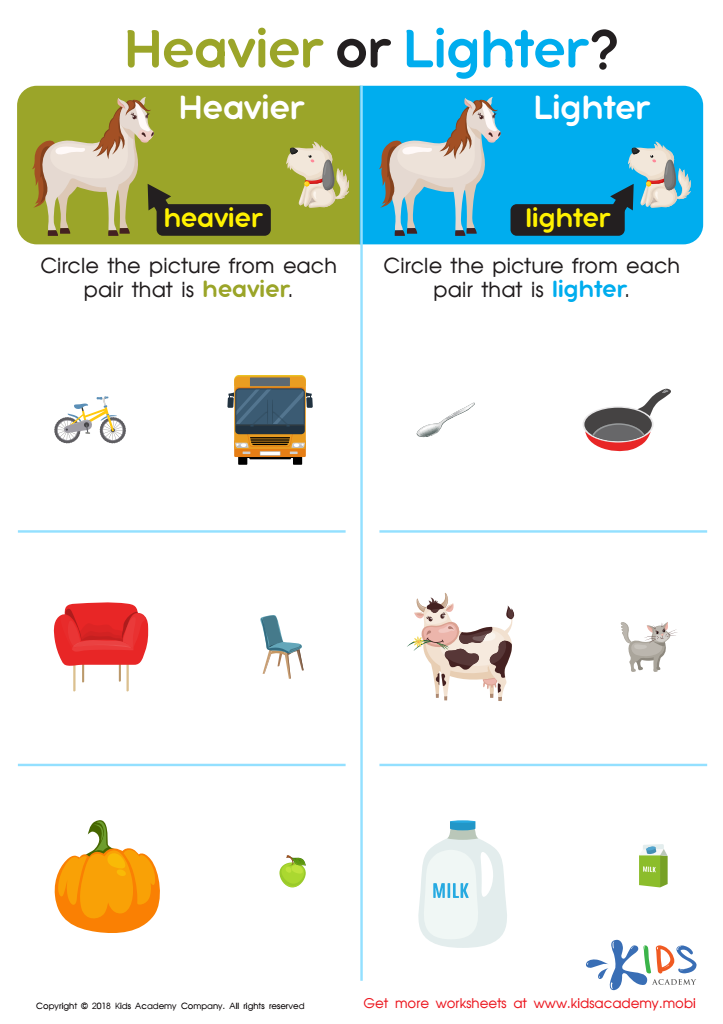
Heavier or Lighter? Worksheet
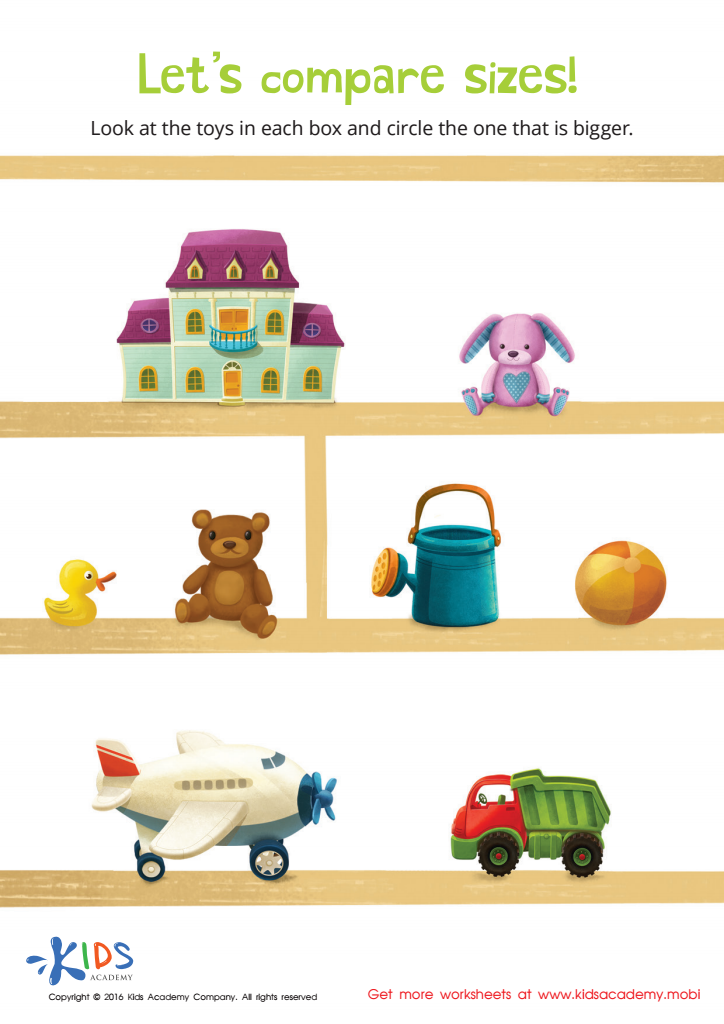
Classifying by Size Sorting Worksheet








Parents and teachers should care about teaching young children how to compare objects in math for several important reasons. Comparing objects—by attributes such as size, length, weight, or quantity—lays essential foundation stones for more complex mathematical learning and critical thinking skills.
First, comparing helps young learners grasp fundamental math concepts such as "more than," "less than," and "equal to," building blocks for future arithmetic operations and measurements. This early exposure prepares children to understand numbers and quantitative relationships.
Second, comparing nurtures observational skills and attention to detail. When children compare objects, they learn to notice similarities and differences, fostering cognitive skills like categorization and sorting, useful in various academic areas. For example, sorting by color or shape also supports the understanding of geometry and spatial awareness.
Third, these activities promote language development. Young learners enhance their vocabularies by using descriptive terms like "longer," "shorter," "heavier," and "lighter." This enriched vocabulary facilitates better communication skills, both in and out of the classroom.
Finally, these comparing activities make learning interactive and hands-on, keeping four- to five-year-olds engaged and motivated. Using tangible objects helps them connect abstract concepts to the real world, making the learning process enjoyable.
By emphasizing these skills early on, parents and teachers set the stage for a solid mathematical foundation and support overall mental development.








