Problem-solving practice Math Worksheets for Ages 4-5
4 filtered results
-
From - To
Boost your child's critical thinking skills with our fun and engaging Problem-Solving Practice Math Worksheets for ages 4-5. Designed to challenge young minds, these worksheets help children develop essential problem-solving techniques through a variety of math activities, including counting, pattern recognition, and basic addition and subtraction. Using vibrant illustrations and interactive tasks, our worksheets keep learning enjoyable while reinforcing key math concepts. Perfect for preschool and kindergarten learners, our problem-solving practice worksheets are a great way to enrich your child's early math education and build a strong foundation for future academic success.
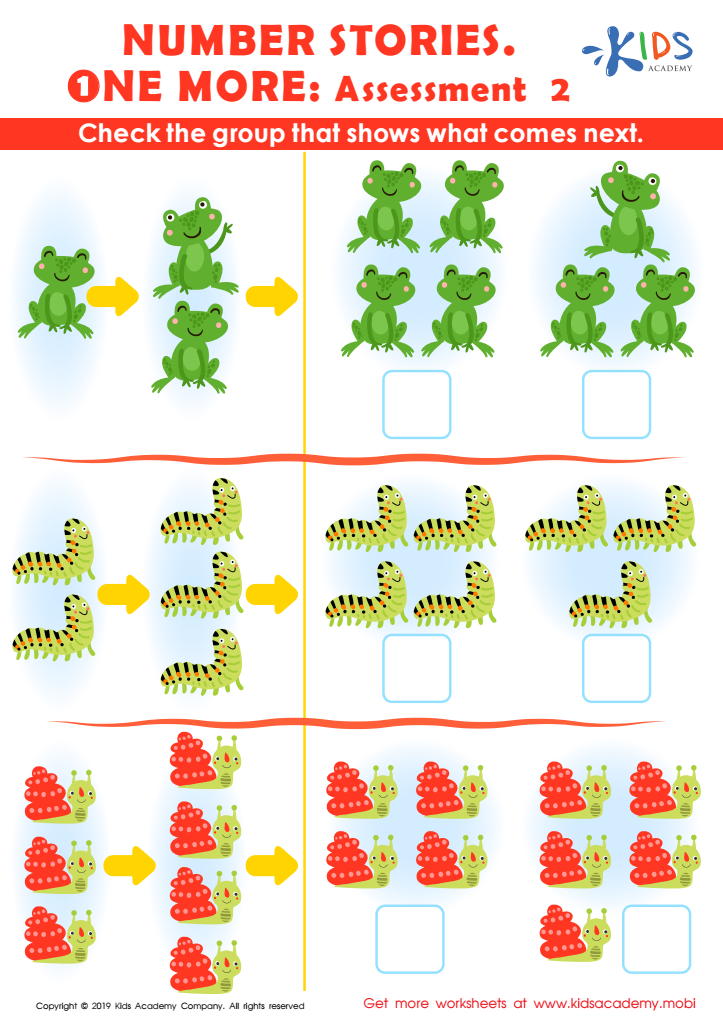
Number Stories One More – Assessment 2 Worksheet
 Assign to My Students
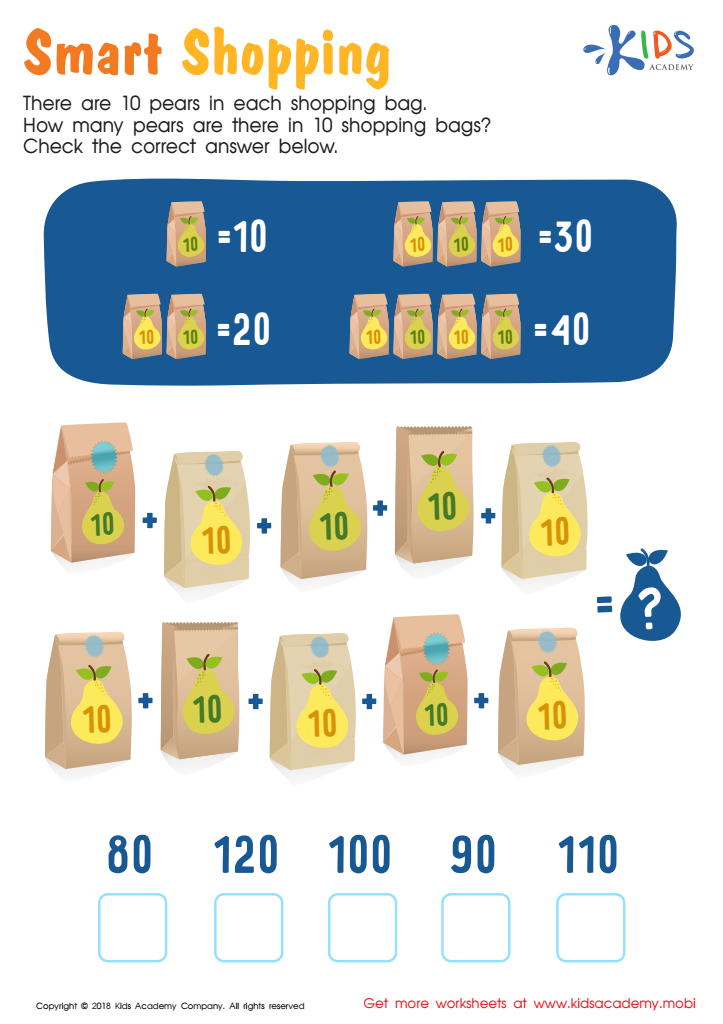
Smart Shopping: Trade Tens for a Hundred Worksheet




.jpg)



Parents and teachers should care about problem-solving practice in math for children aged 4-5 because it establishes foundational skills essential for their overall cognitive development. At this age, children's brains are rapidly growing and highly receptive to learning new concepts. Introducing problem-solving in math helps young learners develop critical thinking, logical reasoning, and the ability to analyze and resolve challenges. These skills are not only crucial for mathematical proficiency but also enhance everyday decision-making capabilities.
Engaging in problem-solving practice aids in expanding their curiosity and fostering a positive attitude towards learning. As children learn to approach and solve simple math problems, they build confidence in their abilities, encouraging them to tackle more complex tasks in the future. Furthermore, early problem-solving experiences can improve concentration, attention to detail, and perseverance.
Integrating problem-solving in the curriculum supports various developmental milestones. It promotes fine motor skills through activities like counting objects or connecting dots, while collaborative problem-solving exercises encourage social skills and teamwork. By making math meaningful and fun, parents and teachers can motivate young children to enjoy learning, laying a strong foundation for future academic and personal success. Hence, incorporating problem-solving in early math practice is instrumental in fostering well-rounded, capable, and confident individuals.








