Real-life application Math Worksheets for Ages 4-5
3 filtered results
-
From - To
Welcome to our Real-Life Application Math Worksheets for Ages 4-5! Designed to engage young learners, these worksheets help children explore and understand math concepts through everyday experiences. Featuring fun, interactive activities, they encourage kids to apply math skills in practical situations, such as counting objects, measuring items, and solving simple real-world problems. Our resources promote critical thinking and foster a love for learning by connecting math with daily life. Ideal for parents and educators alike, these worksheets provide a comprehensive approach to early math education, ensuring children build a strong foundation for future success. Dive in and make math exciting today!
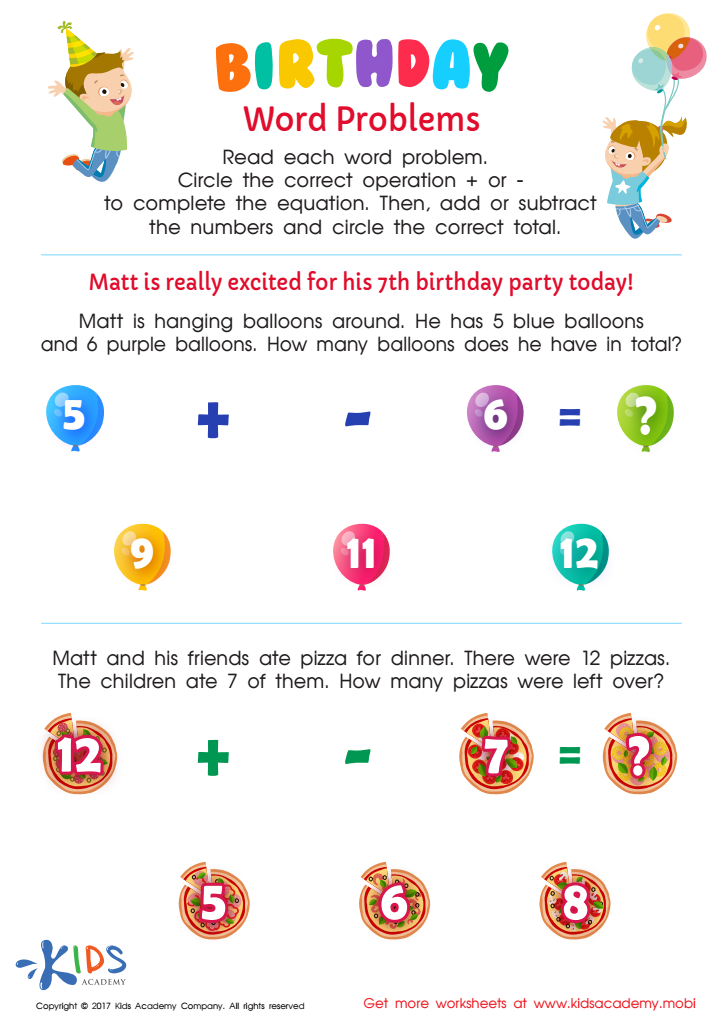
Birthday Word Problems Substraction Worksheet
 Assign to My Students
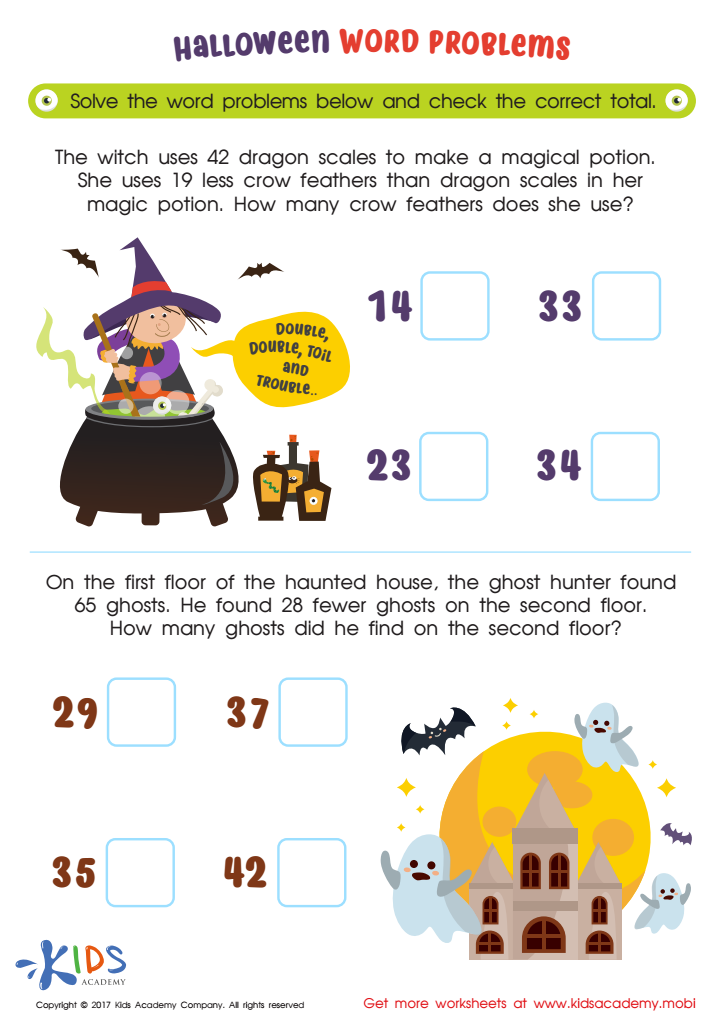
Halloween Word Problems Printable
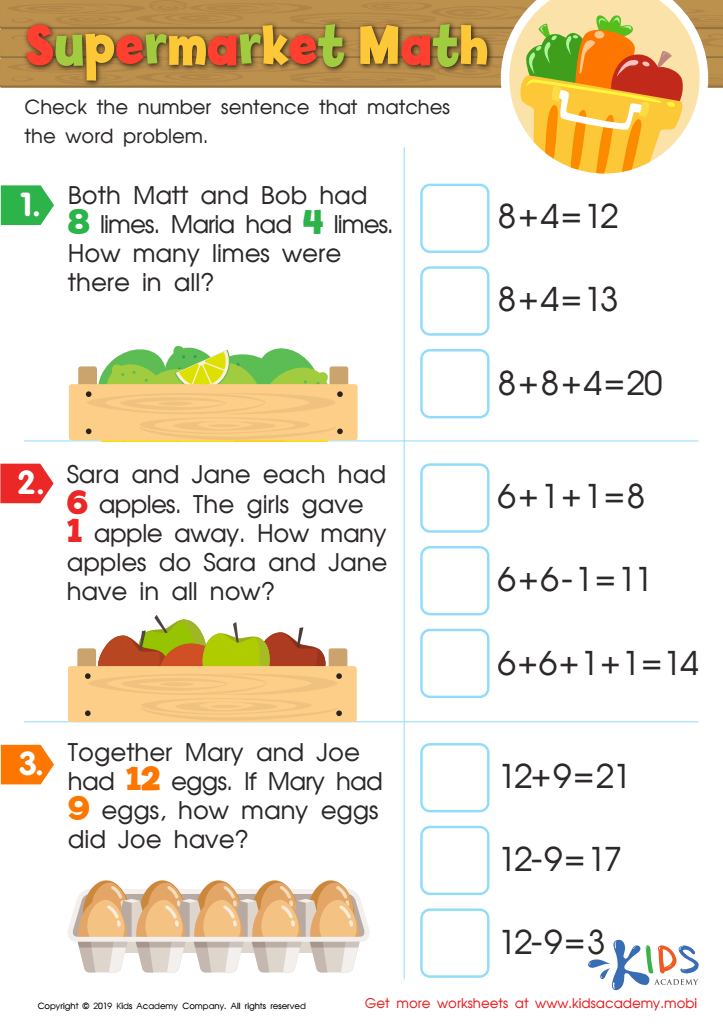
Supermarket Math Worksheet







Parents and teachers should prioritize real-life application of math for children aged 4-5 because it lays a critical foundation for mathematical understanding and cognitive development. At this early age, children are naturally curious and eager to learn about their surroundings. Integrating math into daily activities, such as counting fruits during grocery shopping or measuring ingredients for a simple recipe, enhances their engagement and comprehension.
Moreover, real-life math encourages problem-solving skills as kids encounter everyday situations that require counting, comparing, or categorizing. This contextual learning allows them to see math as a useful tool rather than an abstract concept, fostering a more positive attitude toward mathematics.
Additionally, early exposure to practical math helps children develop essential life skills like budgeting, time management, and spatial awareness. These experiences provide opportunities for social interaction and language development as children discuss their findings and share ideas with peers and adults.
Ultimately, when math is connected to real-life scenarios, children are more likely to retain knowledge, establish a strong math identity, and build confidence. This foundation is vital as they progress in their education, preparing them for more complex mathematical concepts in the future.








