Sea creatures identification Math Worksheets for Ages 4-5
3 filtered results
-
From - To
Discover the fascinating world of sea creatures with our engaging "Sea Creatures Identification Math Worksheets" designed specifically for children aged 4-5. These fun, colorful worksheets combine early math skills with ocean-themed learning, helping young learners identify various sea animals while practicing essential counting, sorting, and comparison skills. Each activity encourages cognitive development and enhances vocabulary related to marine life, promoting both mathematical proficiency and environmental appreciation. Perfect for classroom or home use, these worksheets provide an interactive way for kids to explore the wonders of the ocean while supporting their foundational math abilities. Dive into learning today!
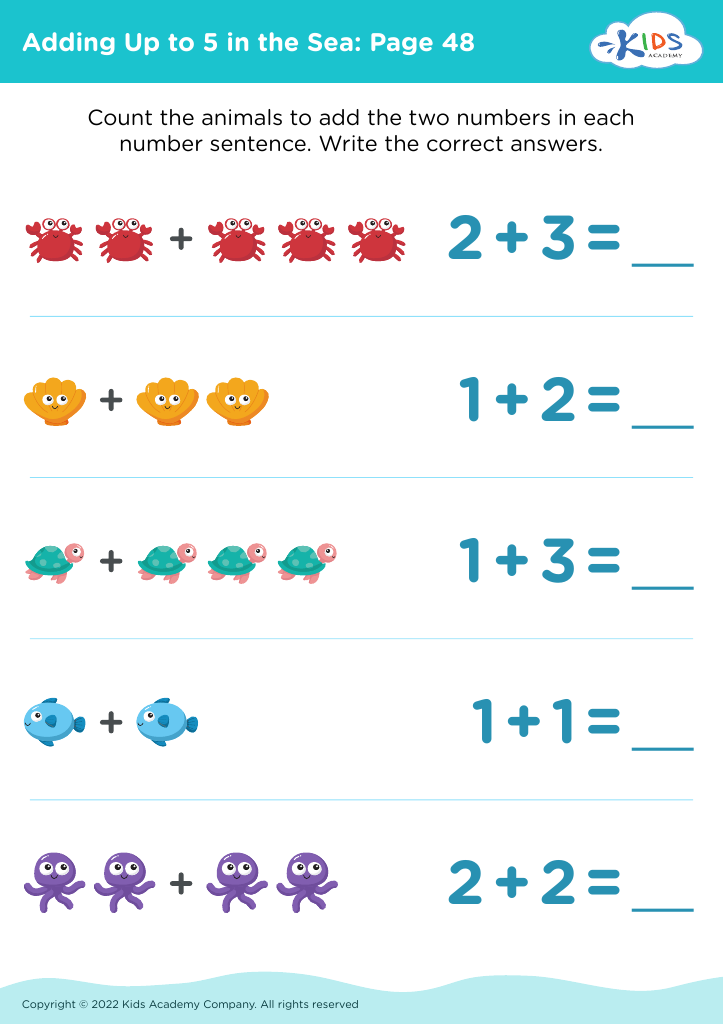
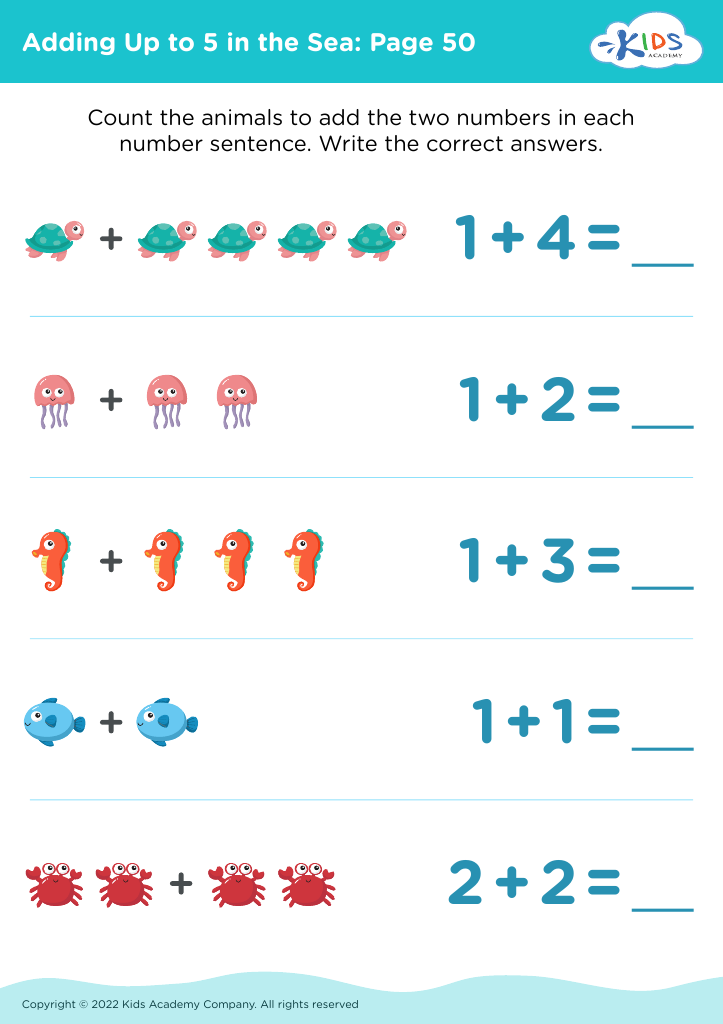
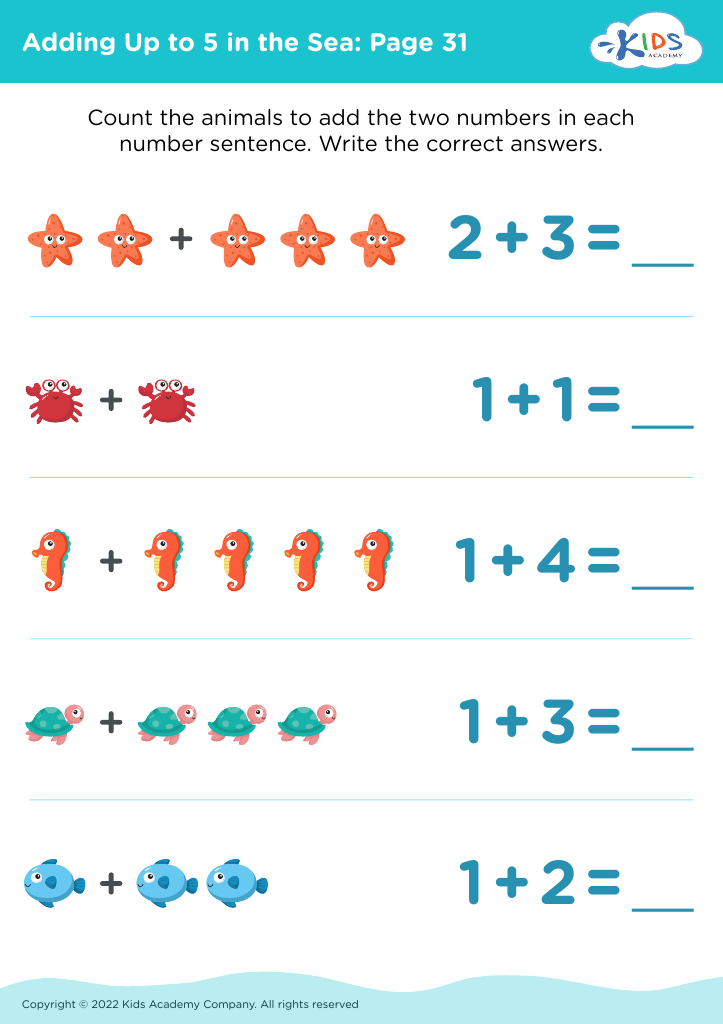






Parents and teachers should care about sea creature identification math for ages 4-5 because it intertwines foundational math skills with essential scientific knowledge, fostering a holistic learning experience. At this age, children are naturally curious and eager to explore the world around them. Incorporating sea creatures into math lessons enriches their understanding of both subjects in a fun, engaging way.
Identifying various sea creatures helps build vocabulary and promotes cognitive development, while simple math concepts like counting, sorting, and classifying become more relatable through real-world examples. For instance, counting fish or comparing sizes of different sea creatures makes math tangible and enjoyable for young learners.
Furthermore, the marine environment and its preservation are critical topics in today’s society. By teaching children about sea life and its ecosystems, educators cultivate awareness and responsibility towards environmental stewardship early on. This not only enhances critical thinking skills but also fosters a sense of connection to nature.
Ultimately, blending math with sea creature identification encourages creativity, stimulates curiosity, and deepens understanding, making it an essential focus for those involved in early childhood education. Creating meaningful connections improves retention and inspires lifelong learners.








