Comparing object weights Measurement Worksheets for Ages 4-5
3 filtered results
-
From - To
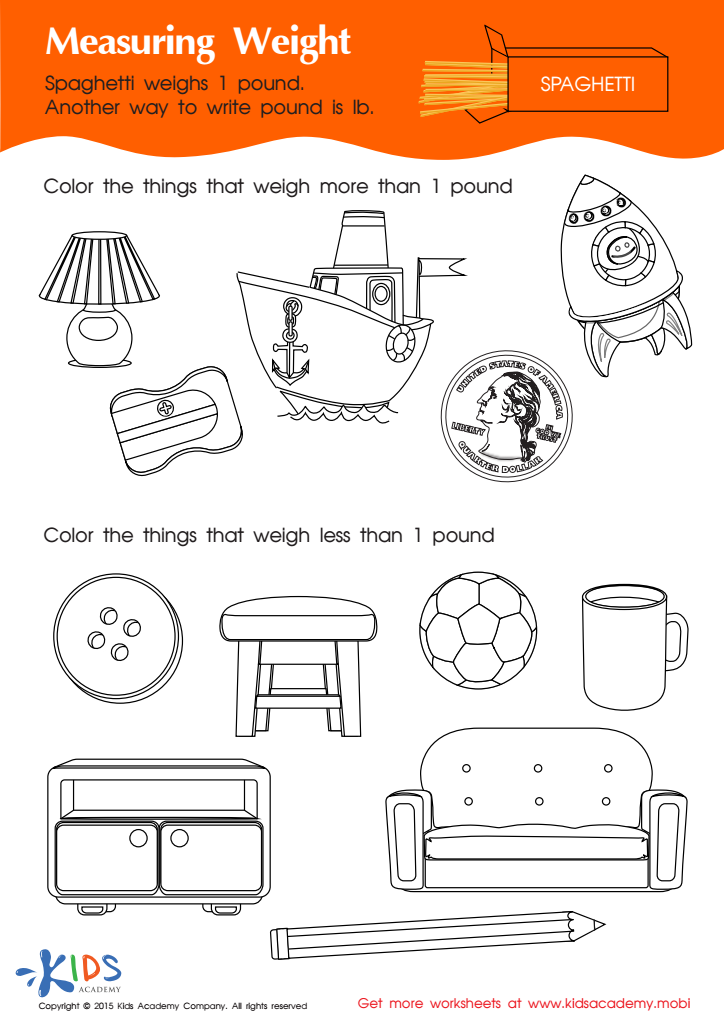
Introduce young learners to the concepts of weight and measurement with our "Comparing Object Weights Measurement Worksheets for Ages 4-5." Designed specifically for preschool and kindergarten-aged children, these fun and engaging worksheets help children identify and compare the weights of different objects. By using visual comparisons and hands-on activities, kids can develop critical thinking and early math skills in an enjoyable way. Perfect for both classroom and home use, these worksheets promote foundational understanding while nurturing a love for learning. Download and print now to support your child's educational journey in an exciting, interactive manner.
 Assign to My Students
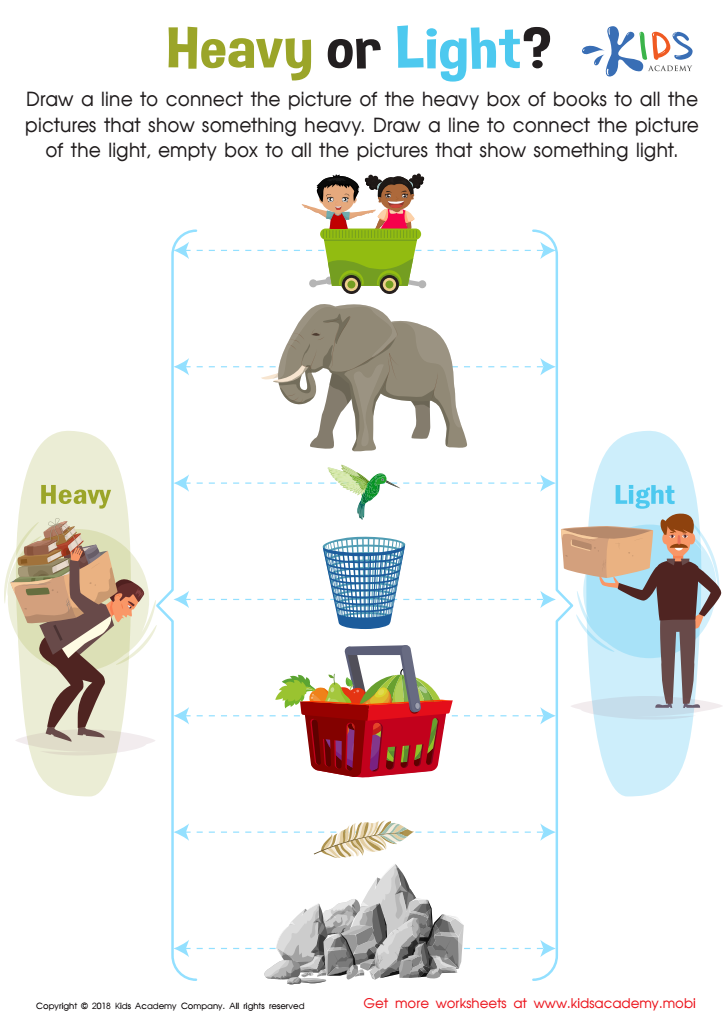
Heavy or Light? Worksheet
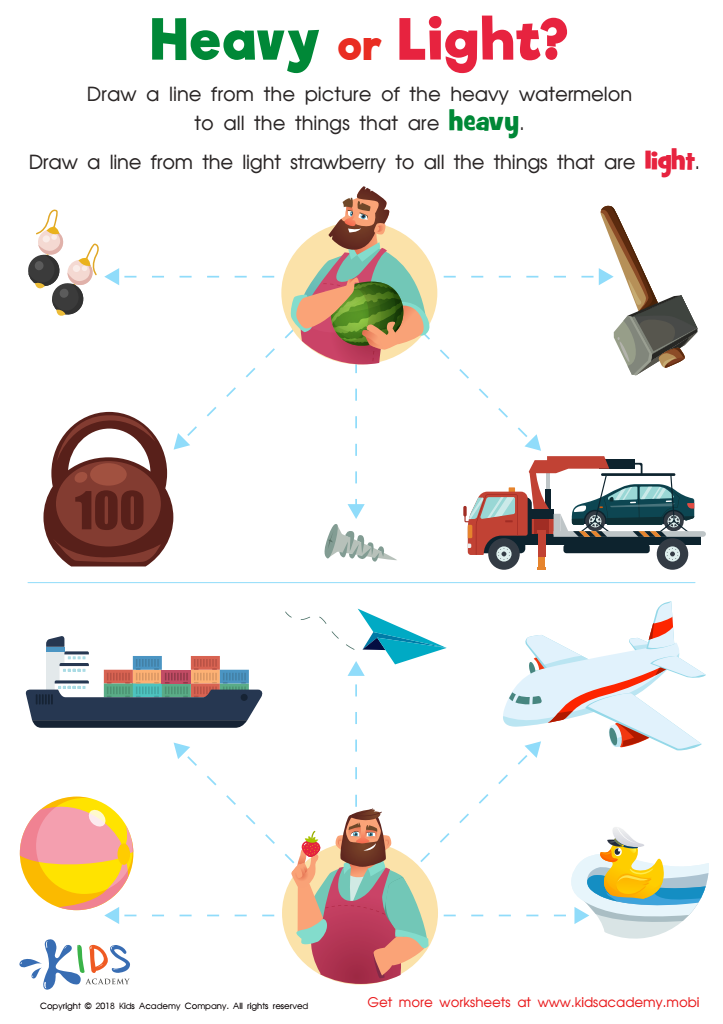
Heavy or Light? Worksheet








Comparing object weights is a crucial skill for young children aged 4-5 because it lays the foundation for their understanding of basic math and science concepts. At this developmental stage, children are naturally curious and eager to explore the world around them. Engaging them in comparing the weights of different objects helps to harness this curiosity into structured learning.
Firstly, understanding weight and measurement fosters critical thinking and problem-solving skills. When children engage in activities that involve comparing weights, they learn to observe details, make predictions, and draw conclusions. These cognitive skills are essential for later academic success.
Secondly, these activities introduce basic mathematical concepts, such as heavier and lighter, more or less, and equal to. By handling objects of varying weights, children develop a physical sense of these terms, making abstract concepts easier to grasp in the future.
Furthermore, these comparisons are essential in daily life, helping children understand balance and the concept of fair sharing. For example, recognizing that one fruit is heavier than another can translate into real-life scenarios such as fair distribution of snacks.
Lastly, such practical activities engage multiple senses. Touching, holding, and lifting objects enhance motor skills and coordination. Overall, incorporating weight comparison activities into the educational framework supports holistic development in young learners.








