Filters

10 filtered results

Clear all filters
Favorites
With answer key
Interactive

10 filtered results

Difficulty Level

Grade


Discover our comprehensive Cognitive Development Building Vocabulary Worksheets for ages 4-5, designed to enhance young learners' language skills effectively. These engaging worksheets focus on expanding vocabulary and promoting critical thinking through fun and interactive activities. Children will acquire new words, develop understanding and usage, and engage in exercises that improve cognitive abilities pivotal for future academic success. Perfect for both classroom use and at-home practice, these resources will keep young minds stimulated and eager to learn. Equip your preschoolers with the foundational skills necessary for reading and overall cognitive growth with our expertly crafted vocabulary-building materials.

Check out this FREE Trial Lesson on Building Vocabulary for age 4-5!

Demonstrate Understanding of Frequently Occurring Verbs and Adjectives by Relating Them to Their Opposites

Favorites
With answer key
Interactive
  • 4-5
  • Cognitive Development
  • Building Vocabulary
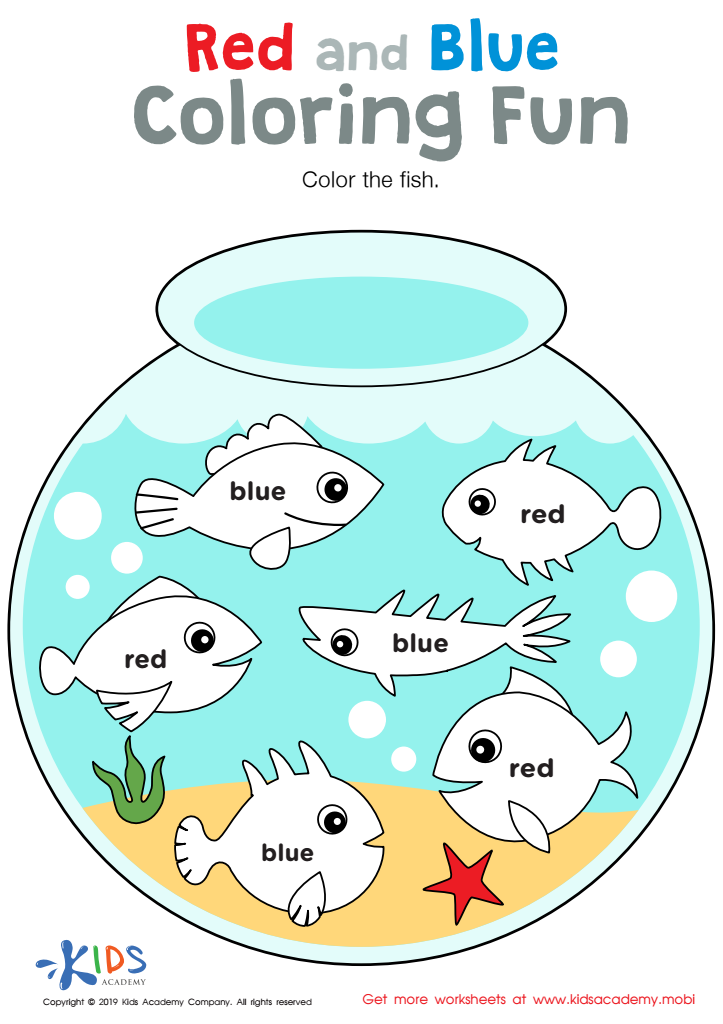
Red and Blue Coloring Fun Worksheet

Red and Blue Coloring Fun Worksheet

Kids know colors like red and blue. But can they read these words? Give them practice with this fun fish bowl coloring sheet. They'll look at the fish, then color them the corresponding hue. Home or classroom, they'll be sure to get a kick out of learning colors in this creative way!
Download (PDF)
Assign to My Students
Red and Blue Coloring Fun Worksheet
Worksheet
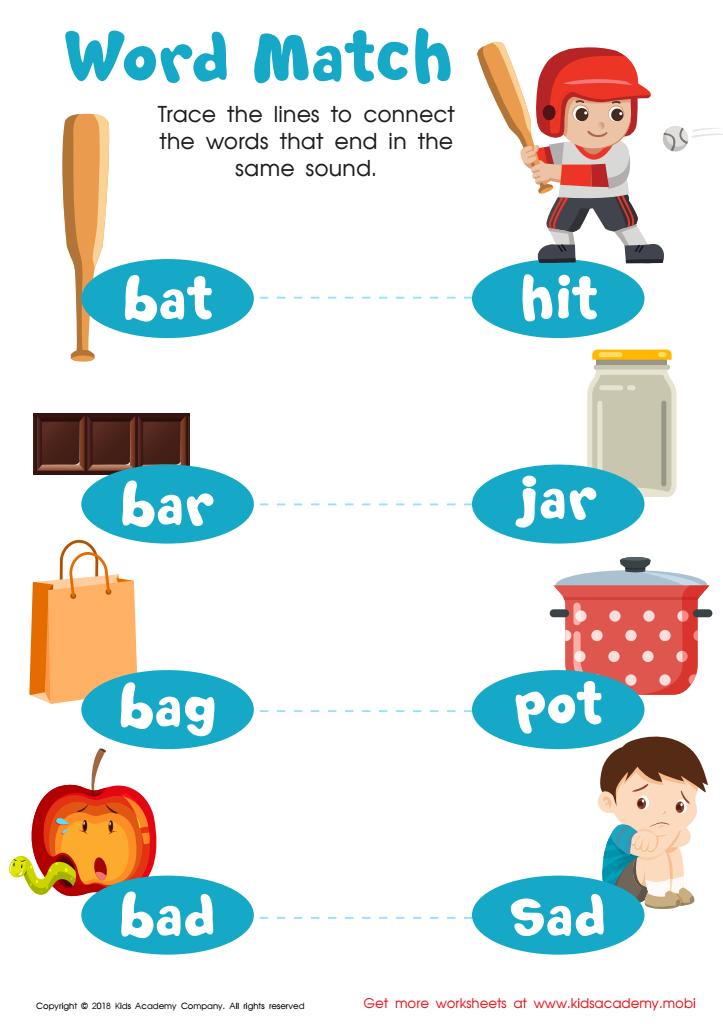
Word Match Reading Worksheet

Word Match Reading Worksheet

This printout helps children learn to read fluently by connecting words with the same sound. Colorful pictures aid understanding and context for kindergarten-level students. Tracing lines, they learn to identify the sounds made by letters of the alphabet and deepen their knowledge of phonics.
Word Match Reading Worksheet
Worksheet
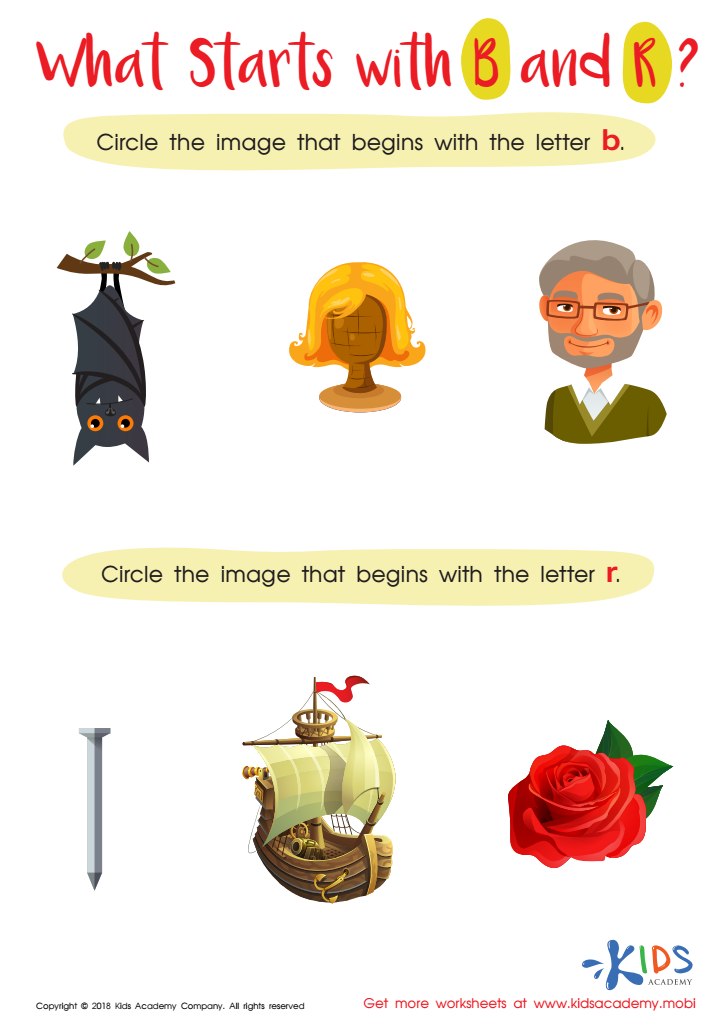
What Starts with B and R? Worksheet

What Starts with B and R? Worksheet

Download this worksheet to help young readers practice visual and motor skills! They'll enjoy matching pictures with "B" and "R" letters while tracing the images. Bright and colorful, this engaging activity will help kids differentiate between words and have fun doing it.
What Starts with B and R? Worksheet
Worksheet
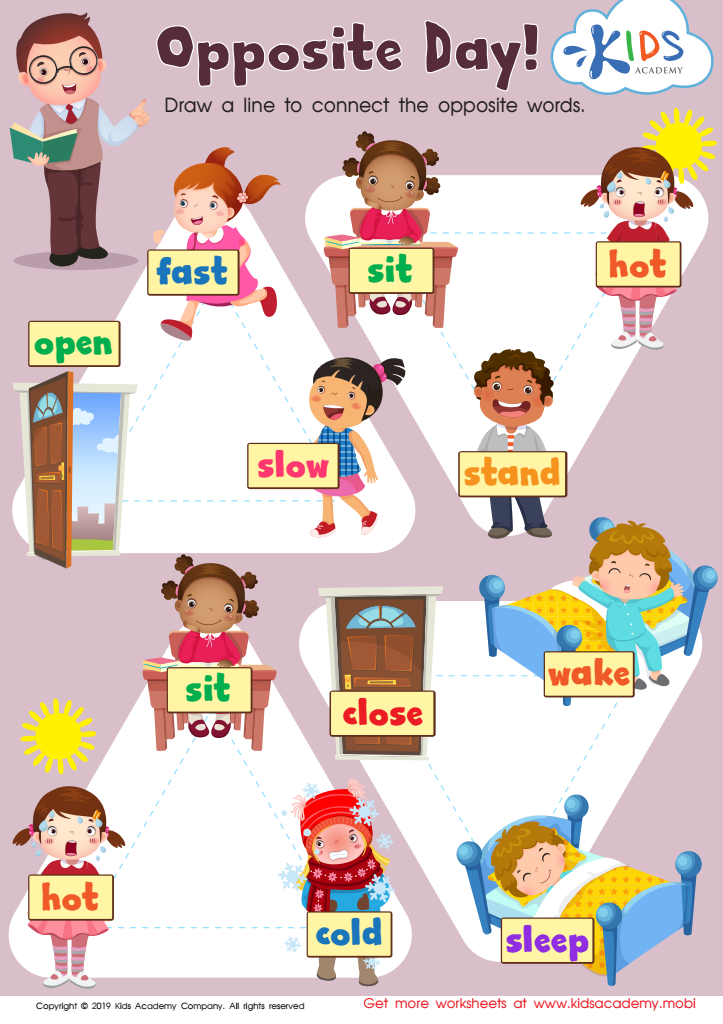
Opposite Day Worksheet

Opposite Day Worksheet

Early learners need to know about opposites to improve their higher-order thinking and critical thinking. This fun worksheet helps them understand the concept, practice opposite words, read high-frequency words and work on fine motor skills. Download the traceable PDF to get started.
Opposite Day Worksheet
Worksheet
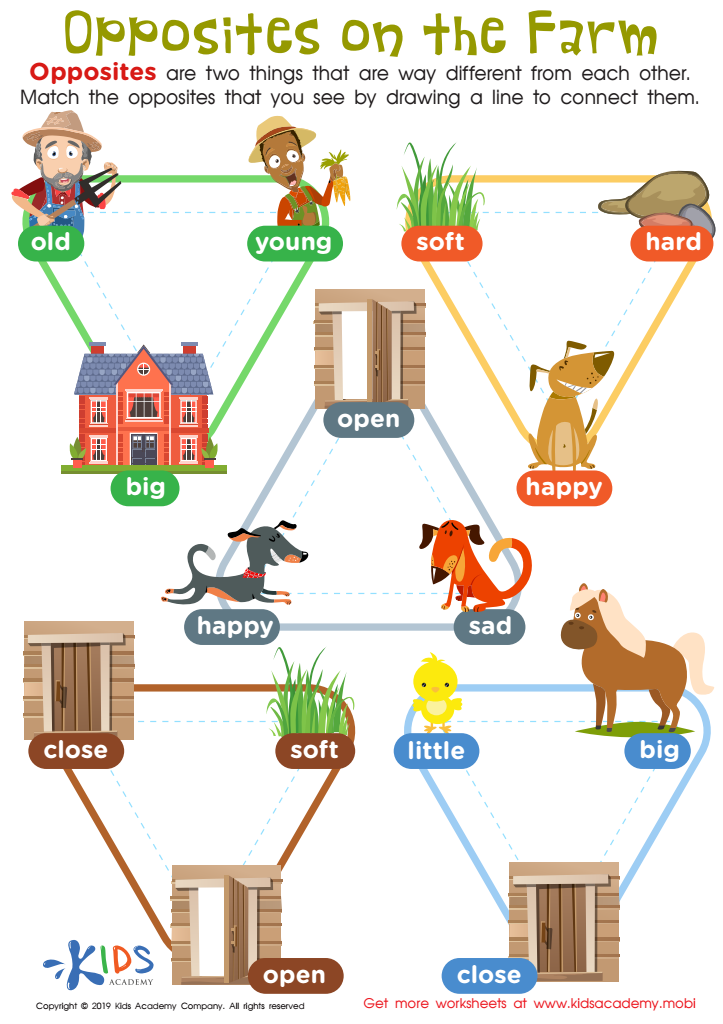
Opposites on the Farm Worksheet

Opposites on the Farm Worksheet

Teaching children the concept of opposites is important for their development. This worksheet offers a fun way to practice. Kids can use traceable lines to match farm imagery with pairs of opposites. It's a great way to help them compare and contrast, a key skill for reading, math, writing and more.
Opposites on the Farm Worksheet
Worksheet
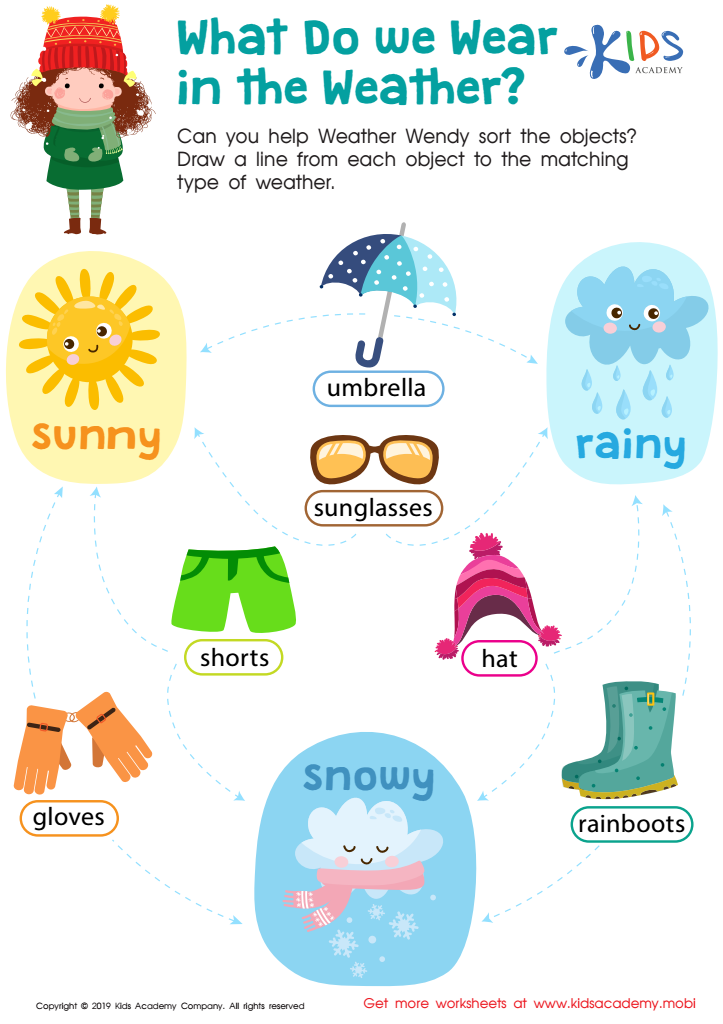
What Do We Wear in the Weather? Worksheet

What Do We Wear in the Weather? Worksheet

This worksheet boosts young learners' everyday vocab with fun high-frequency weather words. They'll see and match familiar pictures to the words they read. Plus, it helps them develop fine motor skills. Perfect for preschoolers.
What Do We Wear in the Weather? Worksheet
Worksheet
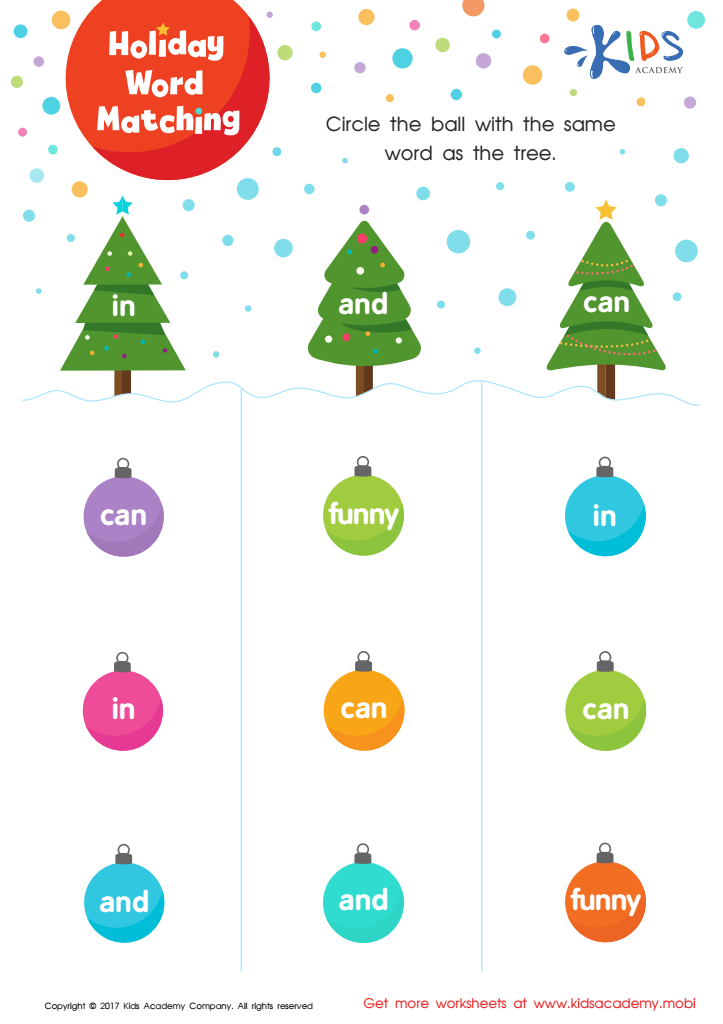
Holiday Word Matching Worksheet

Holiday Word Matching Worksheet

Decorate with Kids Academy this year! Keep kids learning this holiday season with this festive worksheet. Let them look for sight words on Christmas trees then circle the matching ornament to decorate. It's a fun and educational way to enjoy the holidays!
Holiday Word Matching Worksheet
Worksheet
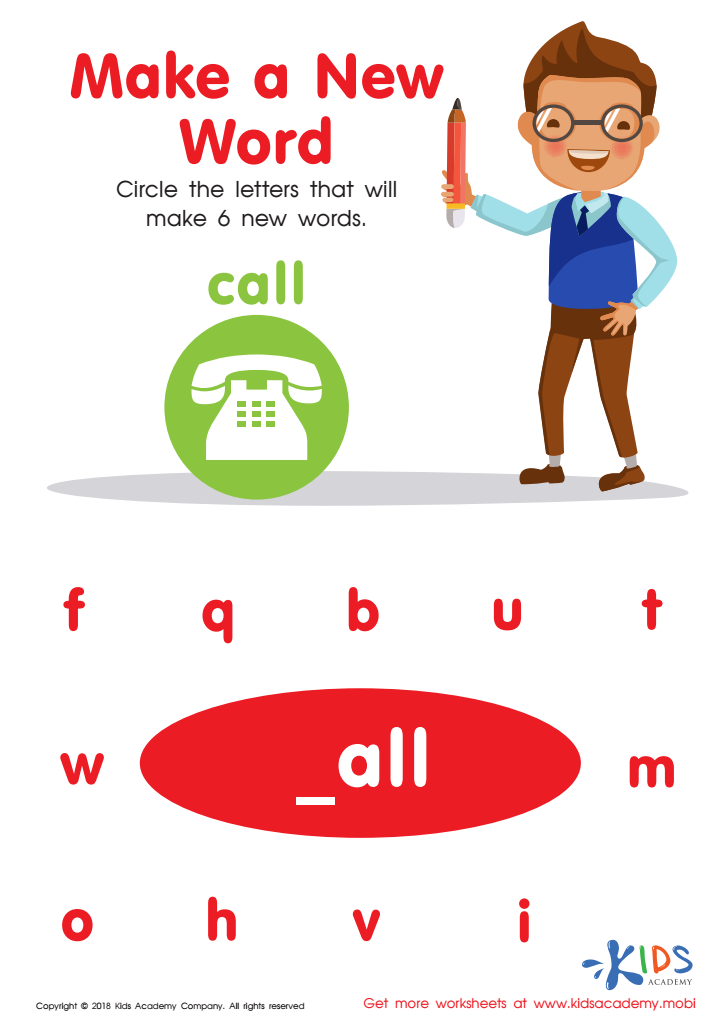
Make a New Word Worksheet

Make a New Word Worksheet

Young readers and writers can enhance their skills with this fun PDF worksheet. They'll trace letters to create new words and feel like super readers and writers after finding six words. They'll also practice building words with the "all" word family.
Make a New Word Worksheet
Worksheet
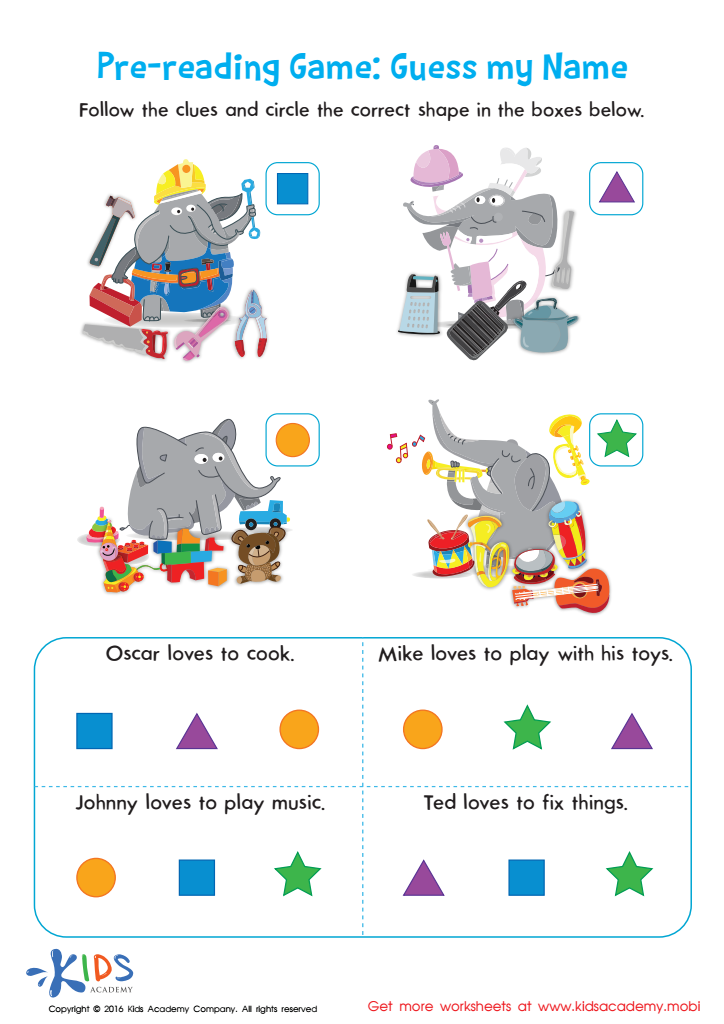
Pre reading worksheet guess my name

Pre Reading Worksheet Guess My Name

Guess My Name is a fun way to practice inference skills. Guess My Name is a fun pre-reading game to help your child practice drawing inferences from clues. With colorful illustrations, they'll use clues to match each elephant with its sentence and sharpen their inference skills.
Pre Reading Worksheet Guess My Name

Worksheet
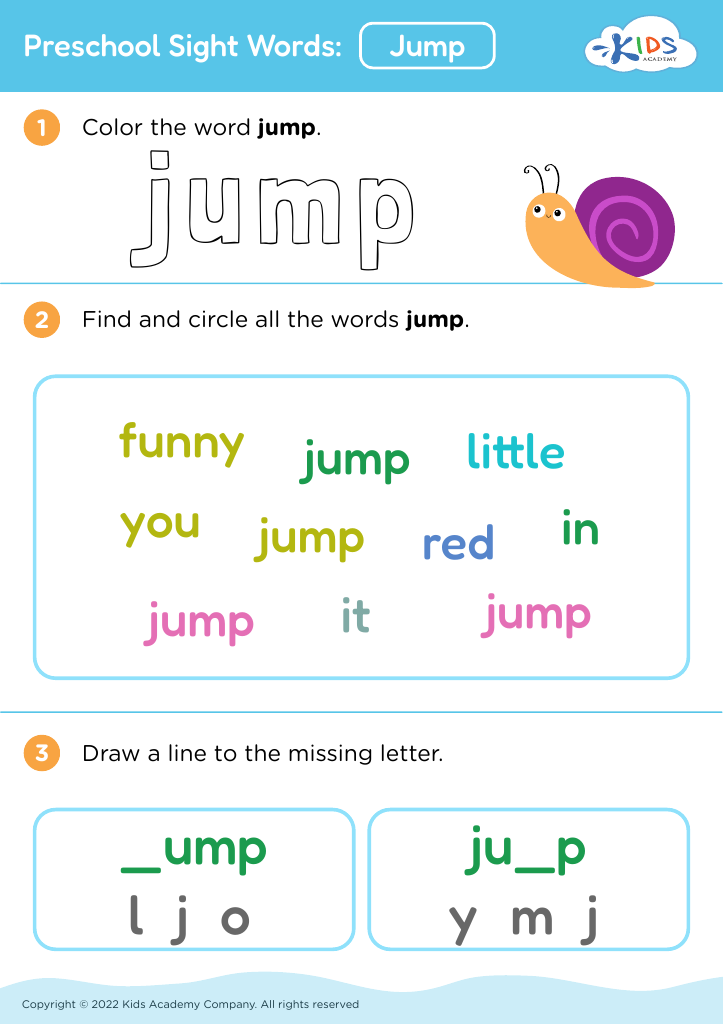
Preschool Sight Words: Jump

Preschool Sight Words: Jump

Preschool Sight Words: Jump
Worksheet


Parents and teachers play a crucial role in fostering cognitive development and building vocabulary in children ages 4-5, a period marked by rapid brain growth and language acquisition. During these formative years, a rich vocabulary forms the foundation for future learning, enabling children to express themselves more clearly, understand others, and grasp more complex concepts.

When adults actively engage in conversation, read aloud, and introduce new words, they help strengthen a child's cognitive abilities, enhancing memory, attention span, and critical thinking skills. This scaffolding of language provides children with the tools they need to decode new information and build stronger, more meaningful connections with the world around them.

A robust vocabulary is also crucial for academic success. It equips children for early literacy, allowing them to better understand instructions, stories, and subsequently, everything they read. Socially, a strong vocabulary boosts self-confidence and aids in relationship-building because children can articulate their feelings and thoughts more effectively.

Ultimately, the collaborative efforts of parents and teachers in vocabulary development not only set the groundwork for academic achievement but also promote a lifelong love for learning and intellectual curiosity. This investment in vocabulary and cognitive growth leads to resilient, independent thinkers prepared to navigate an increasingly complex world.