
Letter recognition Building Vocabulary Worksheets for Ages 4-5
5 filtered results
Difficulty Level
Grade
Age
-
From - To
Subject
Activity
Standards
Introduce your 4-5 year old to the world of letters with our Letter Recognition Building Vocabulary Worksheets! Specially designed for early learners, these engaging worksheets make learning letters enjoyable and effective. Our colorful and interactive exercises help children recognize, trace, and name letters while building foundational vocabulary skills. Perfect for both classroom and home use, these worksheets encourage young minds to connect with language through fun activities. Boost your child's early literacy and set the stage for reading success. Visit Kids Academy to download your printable worksheets and watch your little one’s confidence in letter recognition soar!
Favorites
With answer key
Interactive
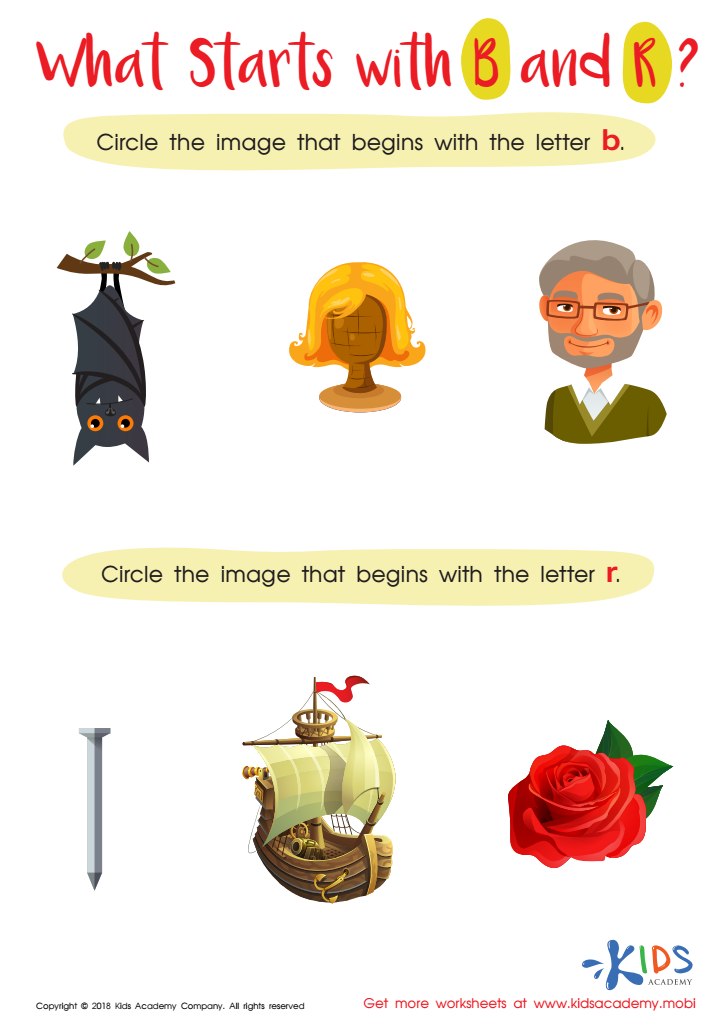
What Starts with B and R? Worksheet
Download this worksheet to help young readers practice visual and motor skills! They'll enjoy matching pictures with "B" and "R" letters while tracing the images. Bright and colorful, this engaging activity will help kids differentiate between words and have fun doing it.
 Assign to My Students
What Starts with B and R? Worksheet
Worksheet











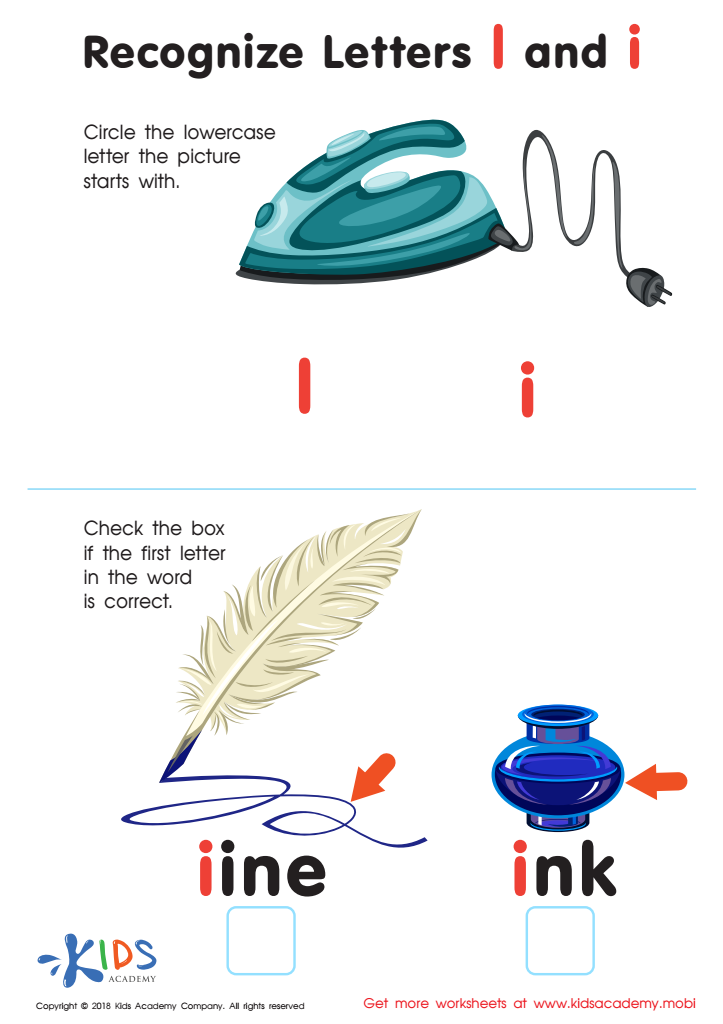
Recognize Letters l and i Worksheet
Help your child become familiar with uppercase and lowercase letters. Have them look at the pictures in the worksheet and circle the lowercase letter the picture starts with. For example: which one is the lowercase "i", the capital "I" or the small "i"?
Recognize Letters l and i Worksheet
Worksheet
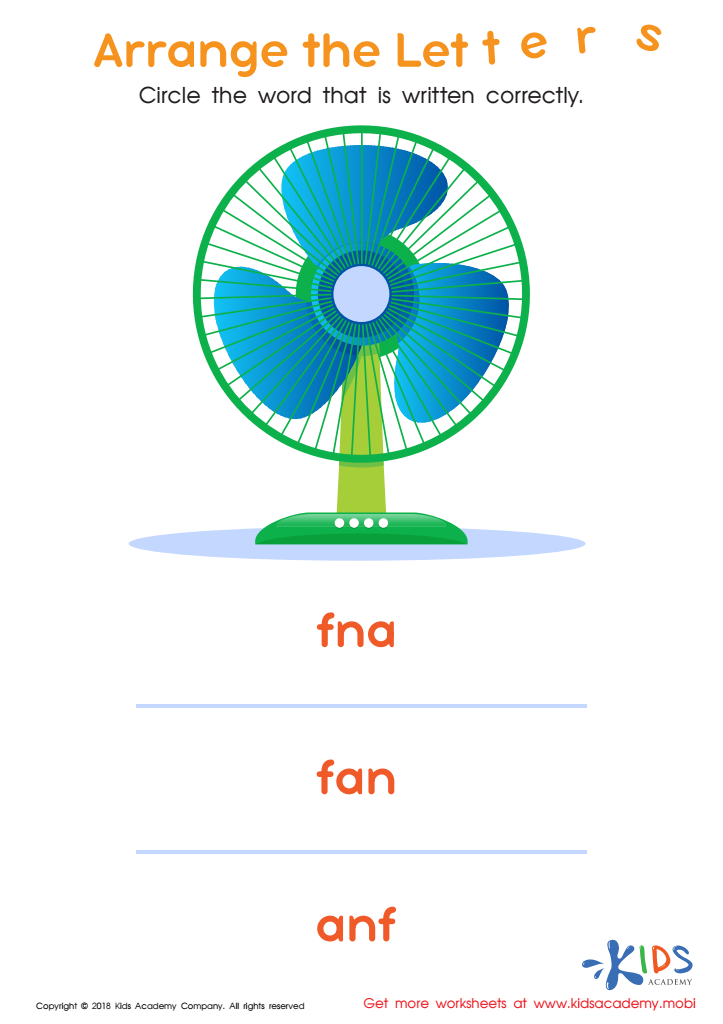
Arrange the Letters Worksheet
Test your kids' spelling skills with this worksheet! Show them the picture and ask what it stands for. Then, have them choose the correct spelling from the options given. Check their answer by circling the right one.
Arrange the Letters Worksheet
Worksheet
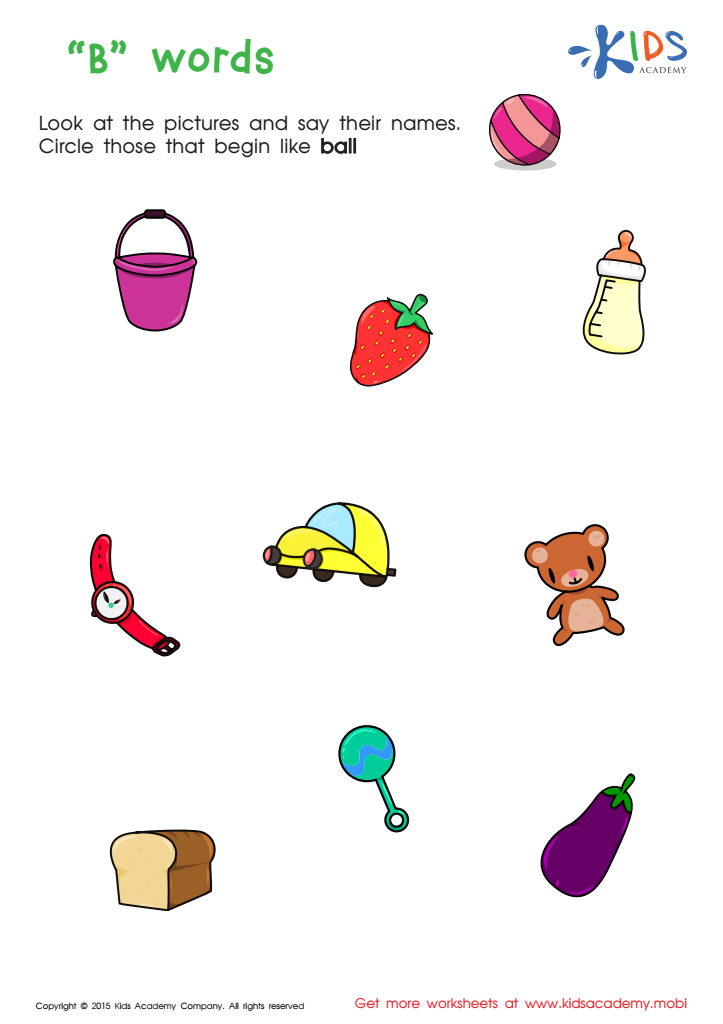
First Words Worksheet
Want to help your preschooler learn to read and write? Start with this 'B' words printable worksheet. It will help your child match pictures to the letters they know, sound out words, and build literacy. Once they understand the concept, they can start sounding out words and building reading skills.
First Words Worksheet
Worksheet
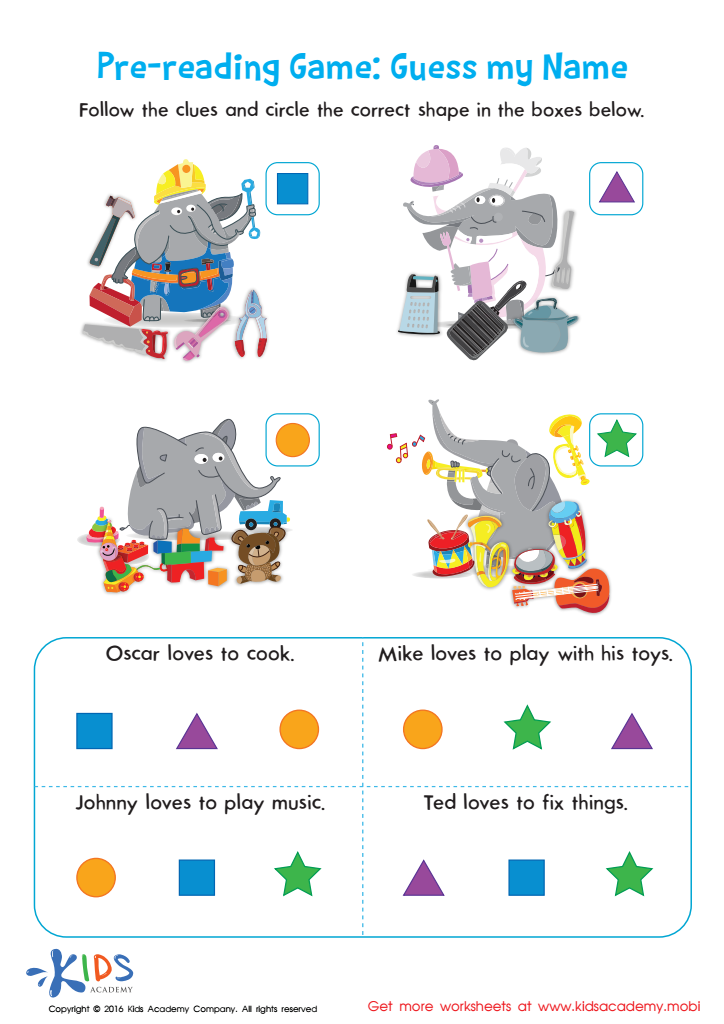
Pre Reading Worksheet Guess My Name
Guess My Name is a fun way to practice inference skills.
Guess My Name is a fun pre-reading game to help your child practice drawing inferences from clues. With colorful illustrations, they'll use clues to match each elephant with its sentence and sharpen their inference skills.
Pre Reading Worksheet Guess My Name
Worksheet
Join Kids Academy for Free
Who is primarily going to use this learning content?








Letter recognition and building vocabulary are crucial foundations for children aged 4-5, and it's vital for parents and teachers to prioritize these skills.
Letter recognition is the ability to identify and name the letters of the alphabet. This skill is a cornerstone of early literacy as it directly influences a child's ability to learn phonics, which is essential for reading and writing. When children can recognize letters and attach them to specific sounds, they develop the ability to decode words. This decoding skill is integral to reading fluency and comprehension, leading to academic success.
Building vocabulary is equally important. A rich vocabulary equips children with the language they need to express themselves, understand others, and engage with the world around them. Early vocabulary development is linked to later school achievement because a strong vocabulary enhances listening, speaking, reading, and writing abilities. The process of acquiring new words also stimulates cognitive development and encourages a love for learning.
Together, letter recognition and vocabulary building lay a solid groundwork for reading proficiency. When parents and teachers focus on these areas, they not only support immediate language acquisition but also foster long-term educational success, confidence, and critical thinking skills in young learners.








