
Observation skills Reading Worksheets for Ages 4-5
3 filtered results
Difficulty Level
Grade
Age
-
From - To
Subject
Activity
Standards
Enhance your child's reading abilities with our Observation Skills Reading Worksheets, specifically designed for ages 4-5. These engaging worksheets promote critical observation skills, helping young learners notice details, identify similarities and differences, and cultivate curiosity. Each activity fosters a playful yet educational approach to reading, allowing children to interact with illustrations and text meaningfully. With varied exercises ranging from character comparisons to picture analysis, your little ones will develop essential cognitive skills while building their confidence in language development. Perfect for home or classroom use, our worksheets make learning fun and effective, laying a strong foundation for future literacy success.
Favorites
With answer key
Interactive
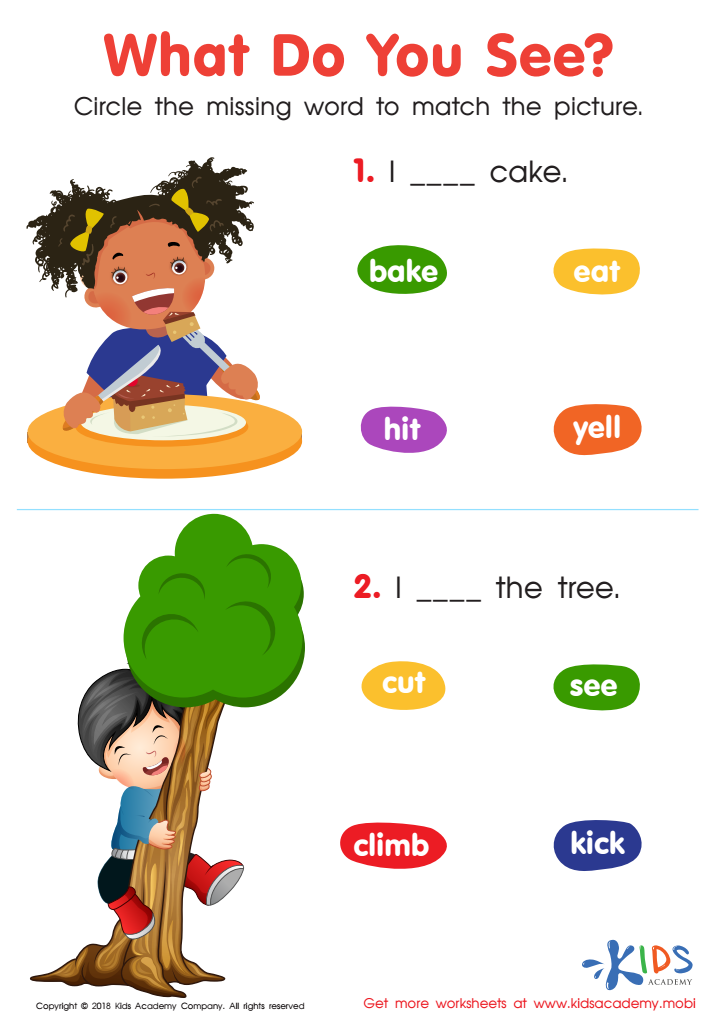
What Do You See? Reading Worksheet
New readers can use the attractive pictures and high-frequency words on this worksheet to practice expressive language skills and decode as they fill in the blanks. As they circle the correct words, they'll feel like reading superstars!
 Assign to My Students
What Do You See? Reading Worksheet
Worksheet
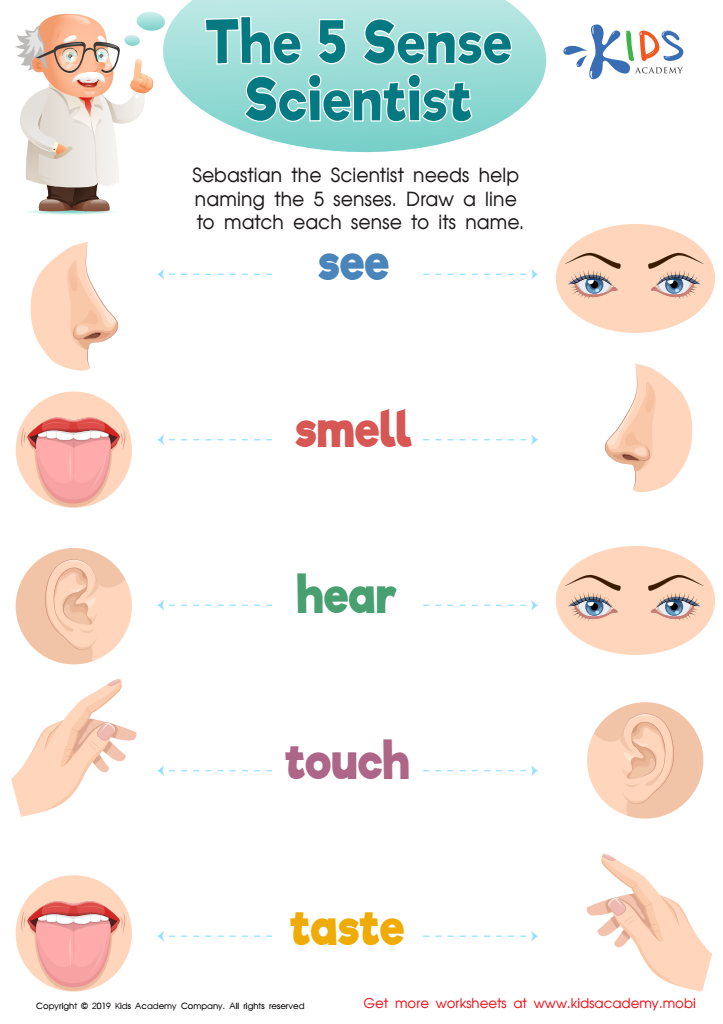
The 5 Sense Scientist Worksheet
Our young children will have fun learning about their five senses with this free Sense Scientist worksheet. Helping Sebastian the Scientist, they'll name the five senses and use traceable lines to connect each picture with its correct sense. Colorful words and pictures will create a memorable picture representation.
The 5 Sense Scientist Worksheet
Worksheet
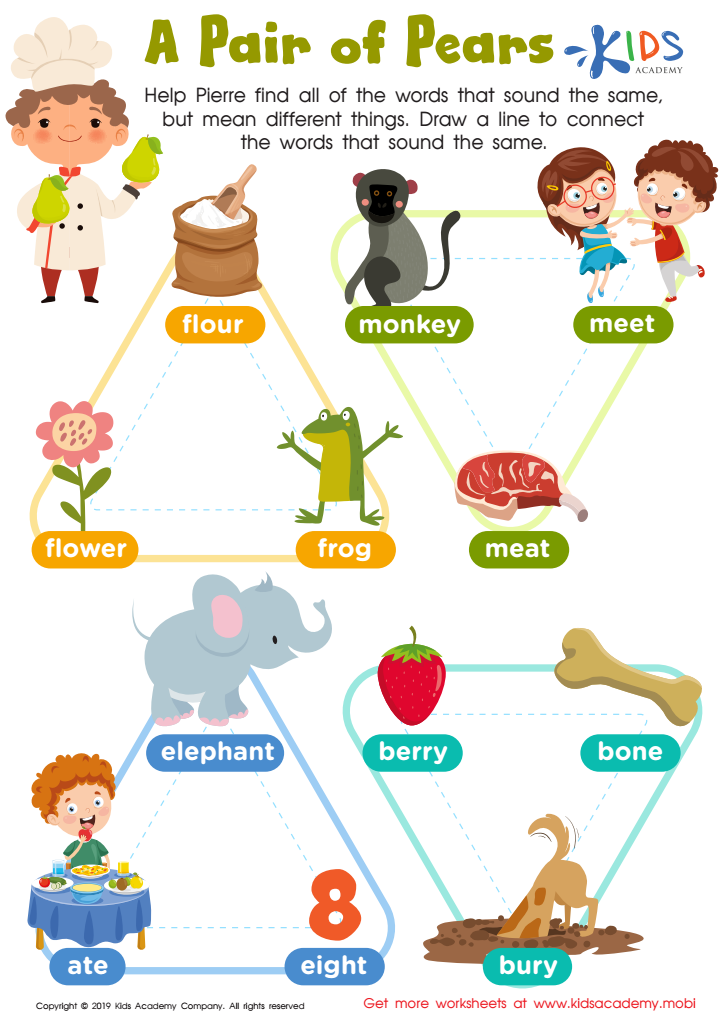
Pair Pears Worksheet
Young readers can have difficulty knowing when to use the right homophone. This free worksheet helps them use familiar imagery to understand better by connecting words that sound similar but are spelled and mean different things. Students will trace the lines to form a picture and have a reference image to differentiate between the different homophones.
Pair Pears Worksheet
Worksheet
Join Kids Academy for Free
Who is primarily going to use this learning content?








Observation skills are crucial in reading development for children aged 4-5 because they form the foundation for early literacy and comprehension. At this age, children are developing their ability to notice and interpret visual cues, such as pictures, words, and their relationships within texts. By honing their observation skills, they learn to extract meaning from stories and identify key elements, which enhances their overall understanding.
Parents and teachers play a vital role in fostering these skills. Engaging children in discussions about stories, encouraging them to describe illustrations, and prompting them to predict what happens next not only nurtures their curiosity but also builds critical thinking abilities. Additionally, these interactions turn reading into a collaborative and enjoyable experience, instilling a sense of excitement about literacy.
Moreover, strong observation skills can lead to increased vocabulary and a greater understanding of language structure, enabling children to progress to more complex reading material with ease. By prioritizing observation in reading activities, parents and teachers can create a supportive environment that empowers young learners, setting them on a path toward academic success and a lifelong love for reading. Engaging with children’s observation skills today lays the groundwork for effective learning in the future.








