
Rhyming skills development Reading Worksheets for Ages 4-5
3 filtered results
Difficulty Level
Grade
Age
-
From - To
Subject
Activity
Standards
Unlock the joy of rhyming for your little ones with our engaging Rhyming Skills Development Reading Worksheets for Ages 4-5! Designed by educational experts, these fun and colorful worksheets help young children enhance their phonemic awareness by identifying and generating rhyming words. Perfectly tailored for early readers, our activities foster a love for language and lay a strong foundation for future reading success. Kids will giggle with delight while matching pictures, completing rhymes, and enjoying interactive exercises. Ideal for both classroom and home use, watch as your child’s confidence and rhyming skills blossom naturally!
Favorites
With answer key
Interactive
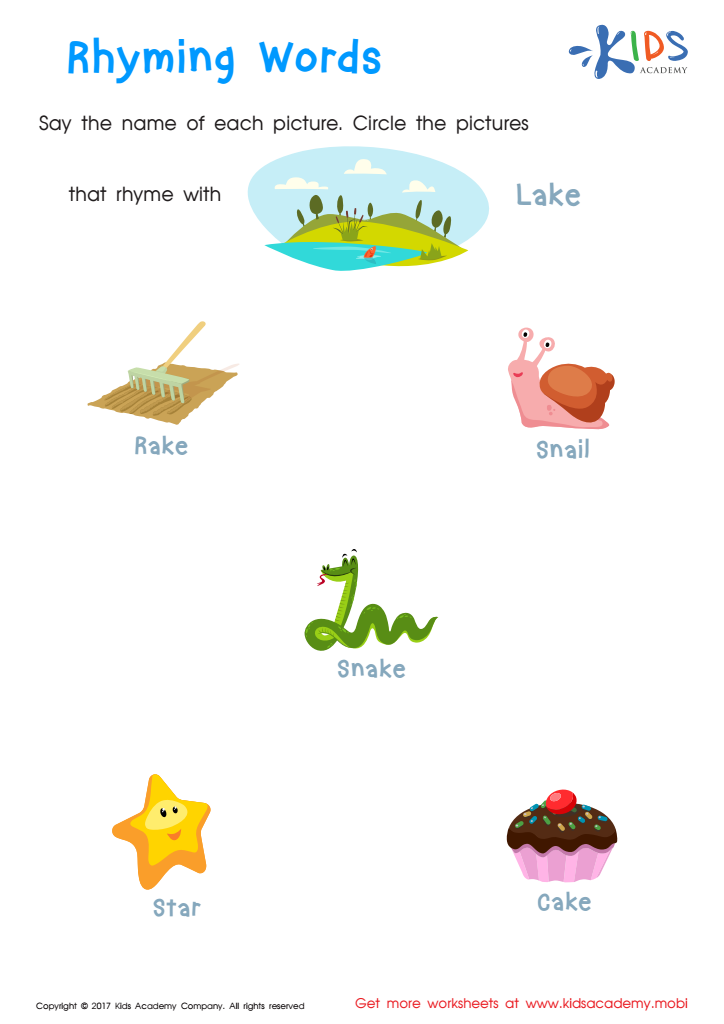
Rhyming Words Rhyming Worksheet
This worksheet is great for honing pre-reading skills. It helps kids make connections between pictures and written words, use problem-solving, and recognize sounds and words that rhyme. Have fun exploring rhyming words with your child, and they'll be rhyming in no time!
 Assign to My Students
Rhyming Words Rhyming Worksheet
Worksheet
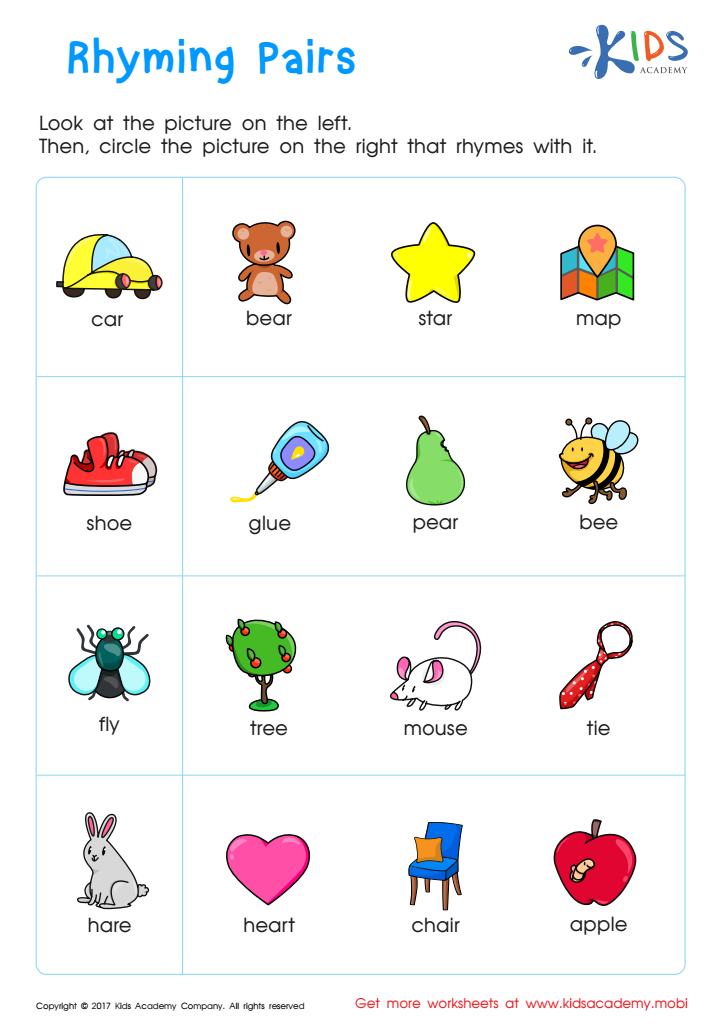
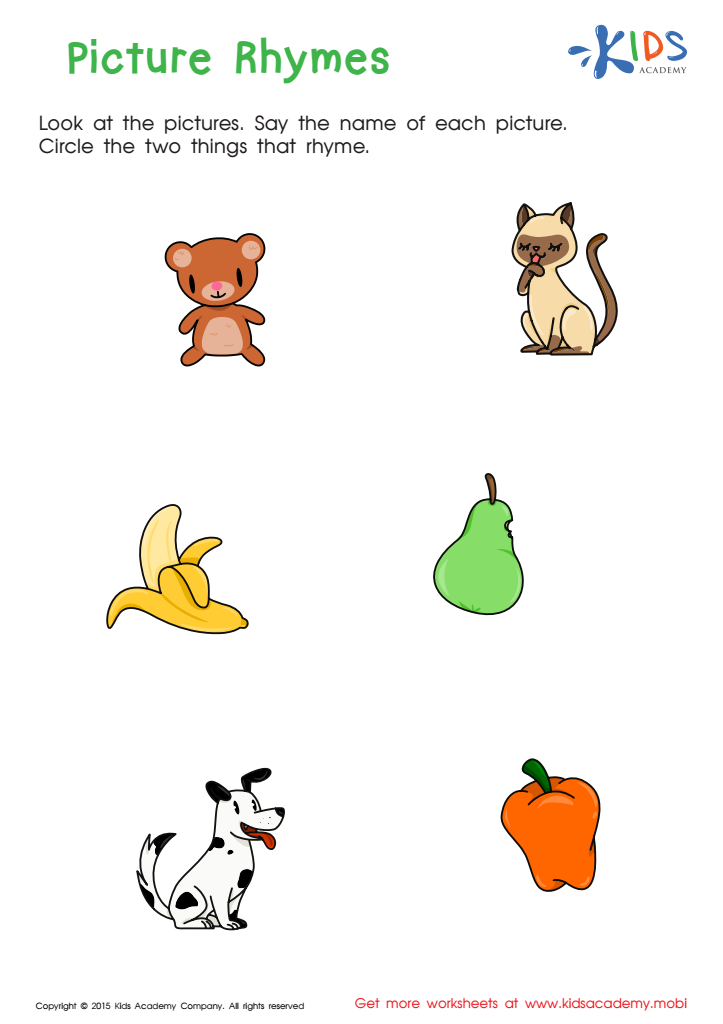
First Words: Picture Rhymes Worksheet
Rhyming helps kids understand language, read and write better. This printable worksheet boosts problem-solving and cognitive skills with vibrant pictures. It teaches kids to identify words, recognize rhymes, complete mental tasks and write words. An extra activity: show them how rhyming words share some of the same letters.
First Words: Picture Rhymes Worksheet
Worksheet
Join Kids Academy for Free
Who is primarily going to use this learning content?








Rhyming skills development is crucial for young children, especially those aged 4-5, as it forms the foundation for their reading and language abilities. Rhyming aids in phonemic awareness, which is the ability to hear, identify, and manipulate individual sounds in words. This skill is a critical precursor to learning to read. When children recognize that "cat" and "hat" share common sounds, they start to understand patterns in words, making it easier to decode new words later on.
Moreover, engaging in rhyming activities enriches children's vocabulary. As they are exposed to various rhyming words, they naturally expand their lexicon, gaining an understanding of word meanings and contexts. This boosts not only their reading proficiency but also their speaking and listening skills.
Rhyming also makes learning fun and interactive. Singing nursery rhymes, reciting poems, and playing rhyming games create a joyful learning environment that encourages children to participate actively. This positive early experience with language fosters a love for reading that can last a lifetime.
For teachers and parents, fostering rhyming skills at this age means setting children up for academic success. It primes them for formal reading instruction and helps them become confident, capable readers. Therefore, emphasizing rhyming in early literacy programs is an investment in children's future educational achievements.








