Story analysis Reading Worksheets for Ages 4-5
5 filtered results
-
From - To
Discover our engaging Story Analysis Reading Worksheets designed specifically for children aged 4-5! These beautifully crafted resources help young learners delve into the basics of storytelling, promoting critical thinking and comprehension skills. Our worksheets encourage kids to explore story elements such as characters, setting, and plot while enhancing their vocabulary and listening abilities. With age-appropriate activities, children will be excited to analyze their favorite tales and express their thoughts creatively. Perfect for home or classroom use, our Story Analysis worksheets aim to cultivate a love for reading through fun, interactive, and educational experiences. Help your child become a confident storyteller today!
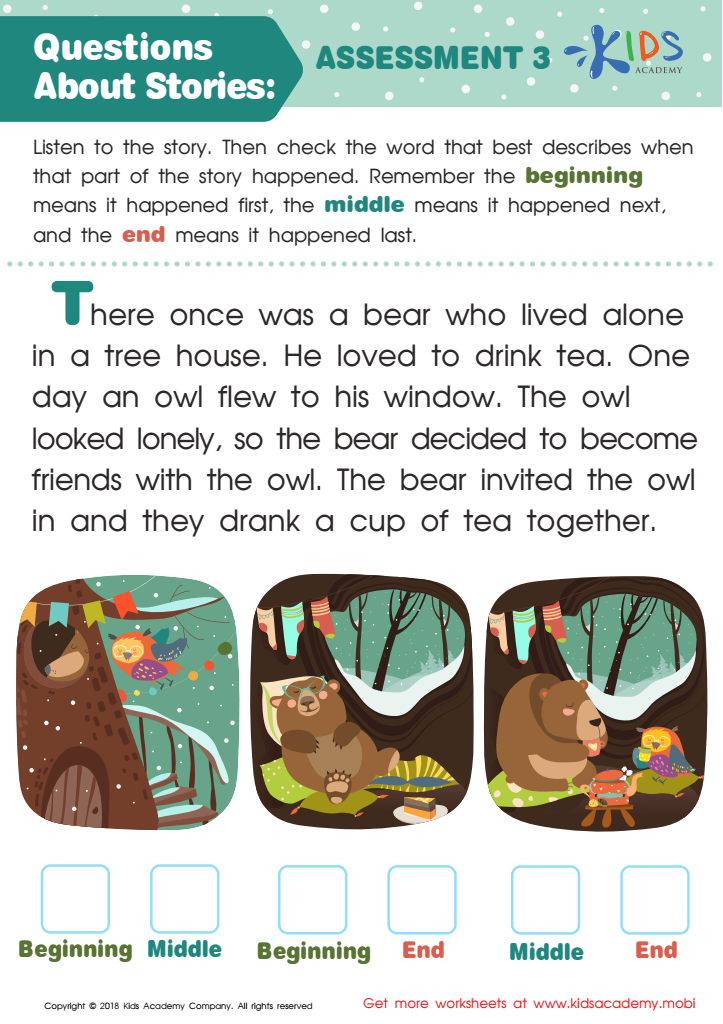
Questions About Stories: Assessment 3 Worksheet
 Assign to My Students
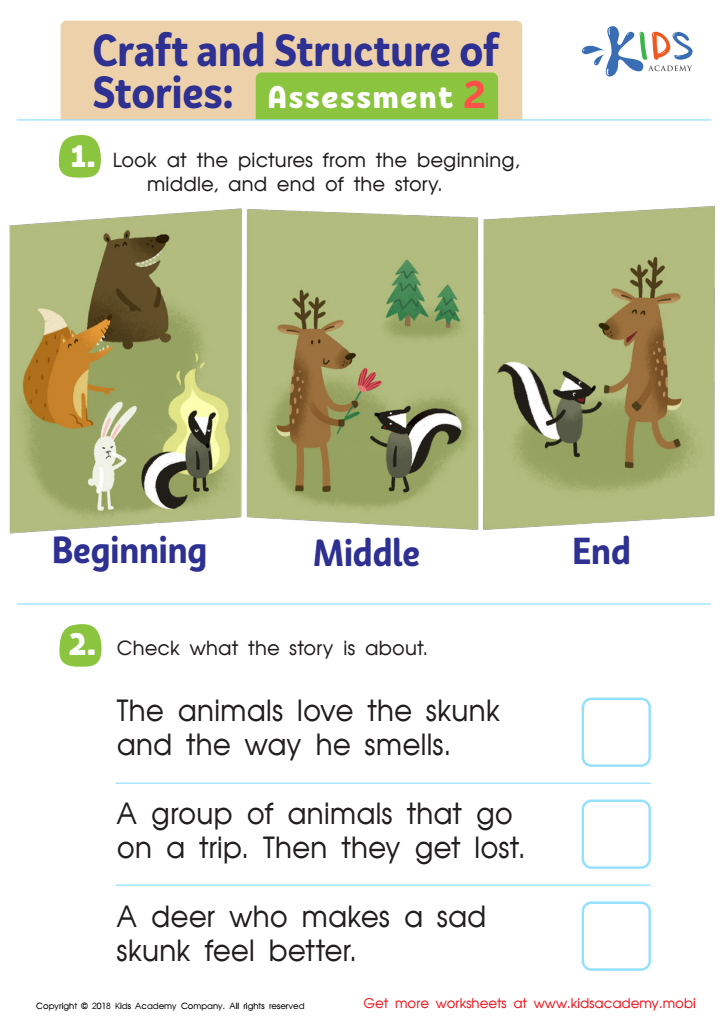
Craft and Structure of Stories: Assessment 2 Worksheet
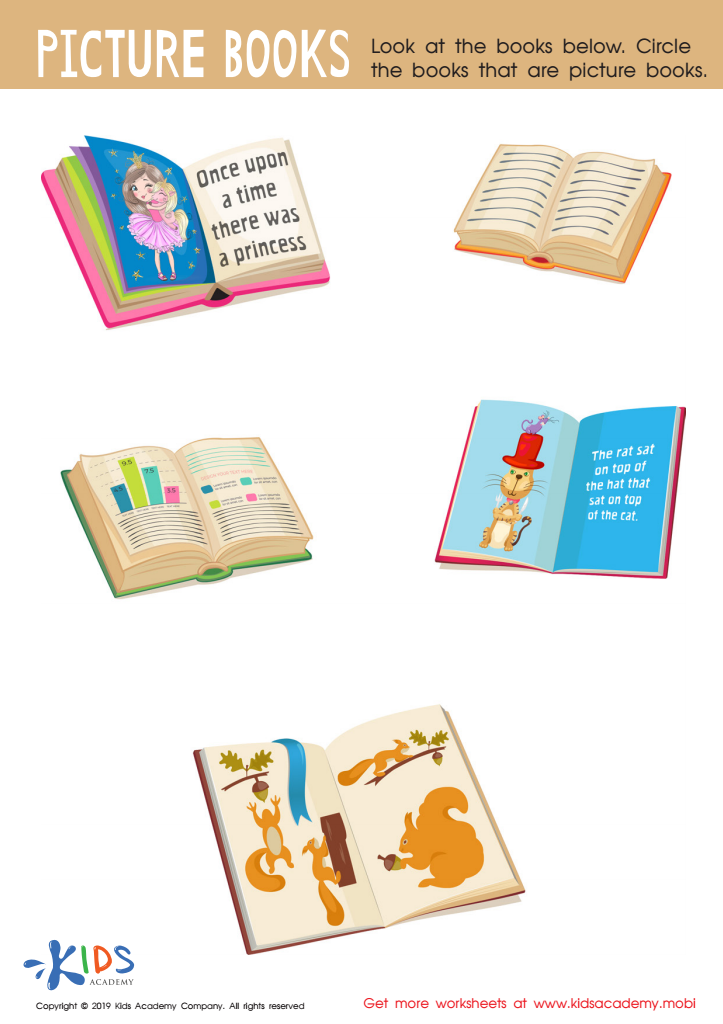
Picture Books Worksheet
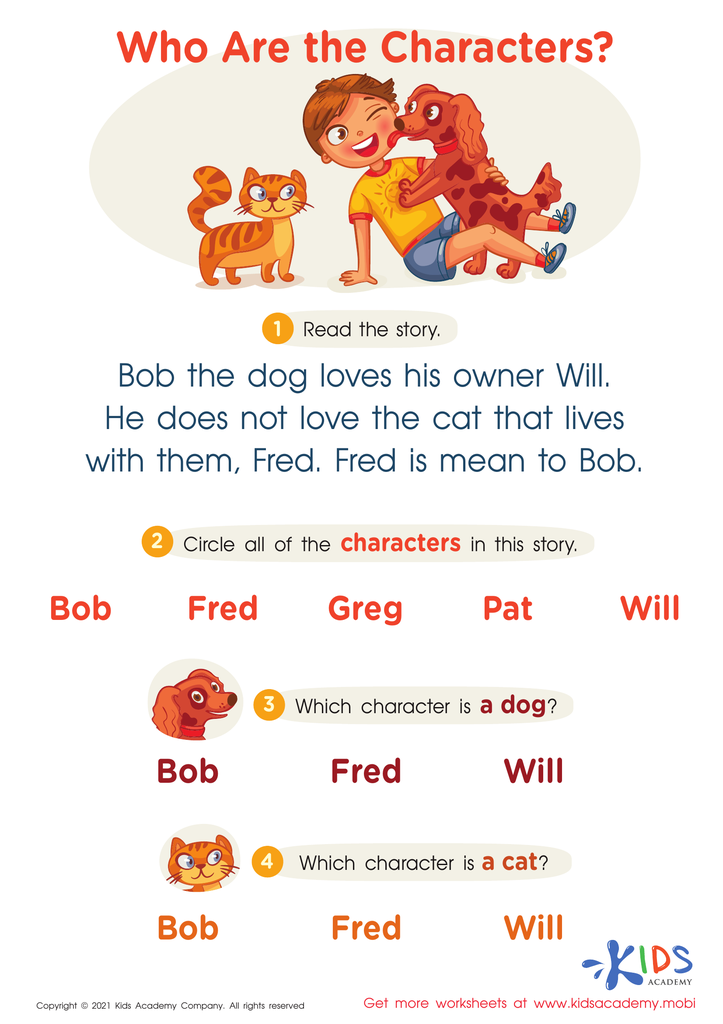
Who Are the Characters? Worksheet
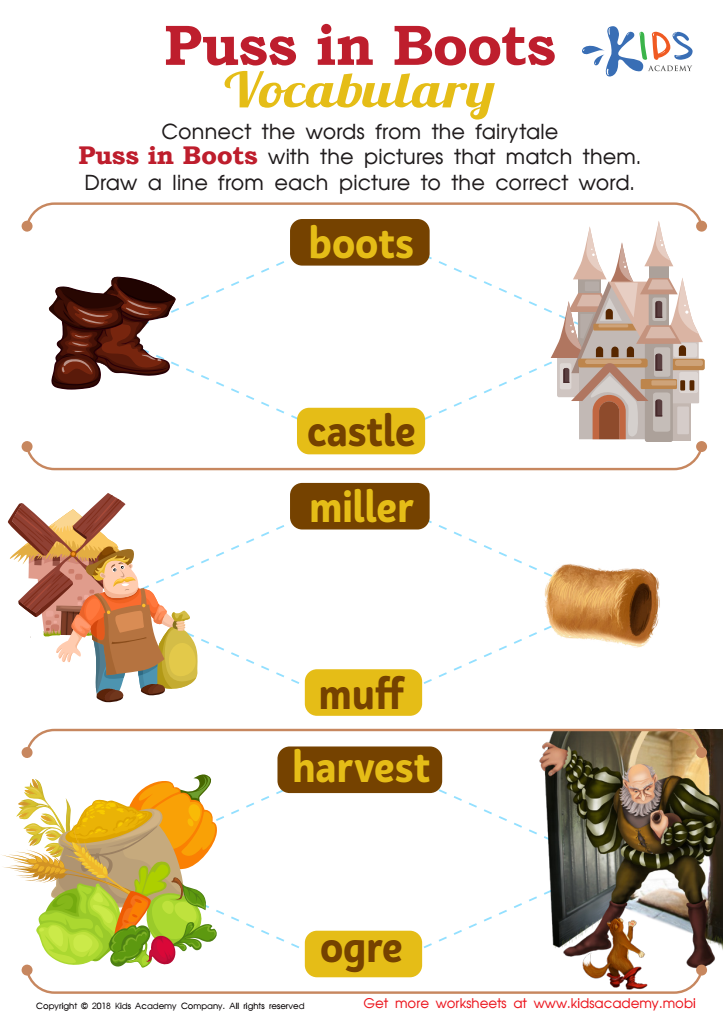
Puss in Boots Vocabulary Worksheet







Story analysis reading is a vital educational tool for children aged 4-5, as it fosters critical thinking and enhances comprehension skills. At this age, children are developing their ability to understand and interpret stories, and engaging in story analysis helps them to delve deeper into the narrative. By discussing characters, plot, and settings, they learn to make connections between the story and their own experiences, boosting their social-emotional development.
Moreover, story analysis encourages language development, laying the foundation for vocabulary expansion and effective communication. As teachers or parents prompt children to express their thoughts about a story, they cultivate confidence and creative expression.
Additionally, story analysis nurtures a love for reading. By making reading interactive and enjoyable, it helps children associate stories with positive experiences, increasing the likelihood of them becoming lifelong readers. Also, through early exposure to diverse stories, children learn empathy and cultural appreciation.
In summary, investing time in story analysis reading for young children not only enhances their cognitive and emotional skills but also builds a strong foundation for literacy, creativity, and critical thinking—essentials for their academic journey ahead.








