Vocabulary expansion Reading Worksheets for Ages 4-5 - Page 2
26 filtered results
-
From - To
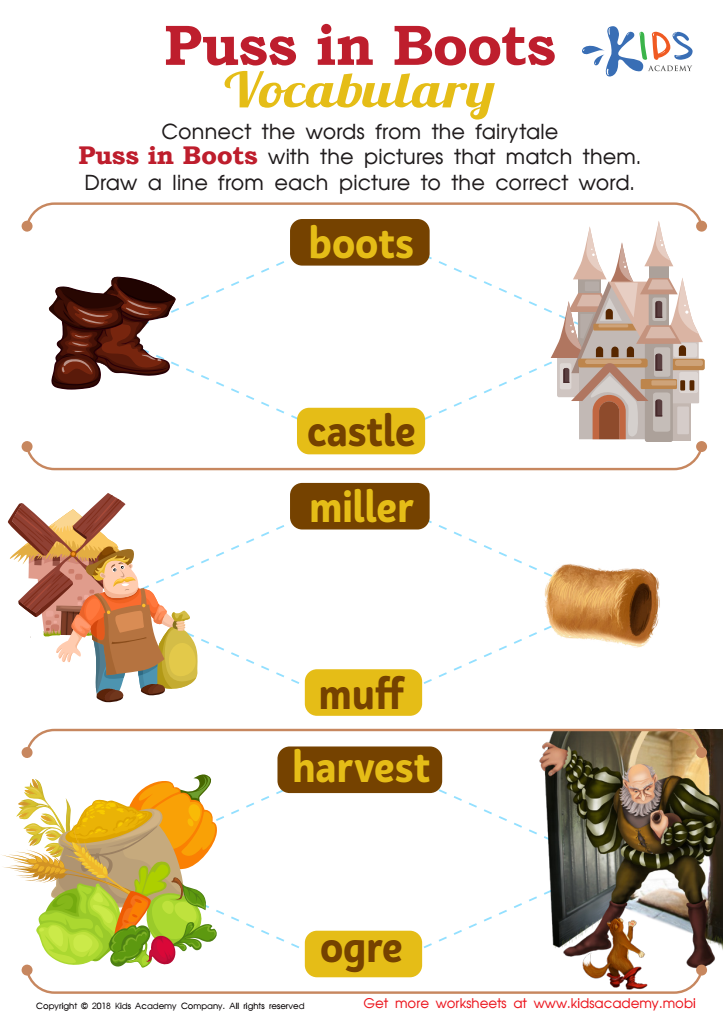
Puss in Boots Vocabulary Worksheet
 Assign to My Students
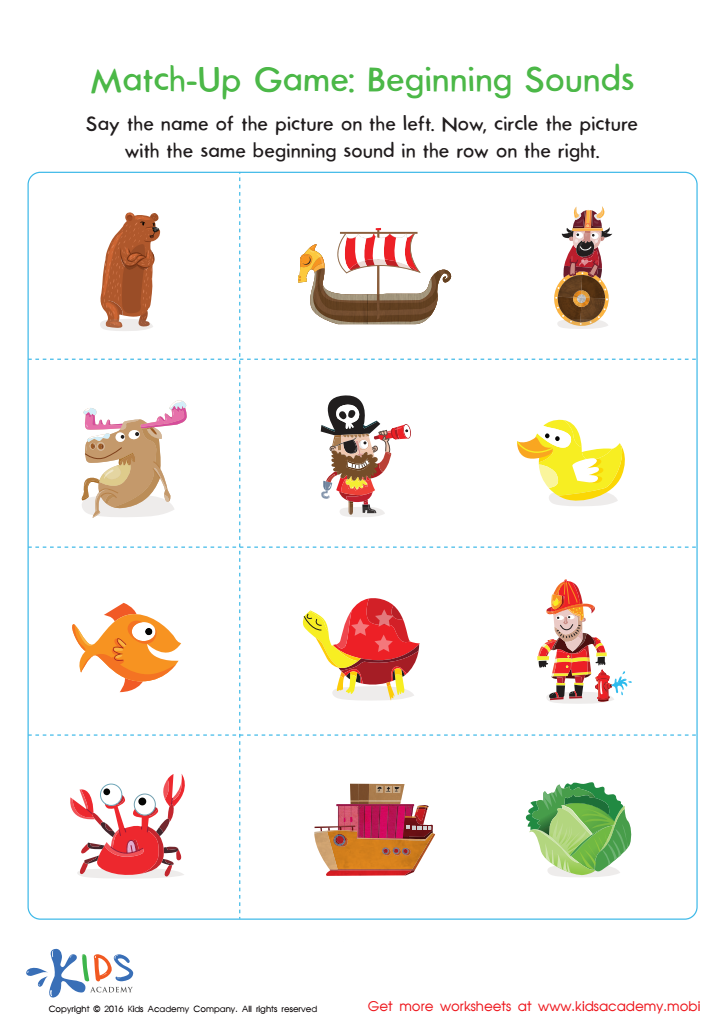
Match–Up Game: Beginning Sounds Worksheet








Vocabulary expansion is crucial for children aged 4-5 as this stage lays the foundational skills for effective communication and literacy. During these formative years, children are rapidly acquiring language, and exposure to a rich vocabulary significantly influences their ability to express thoughts, understand others, and engage in conversations. By introducing a diverse range of words through reading, parents and teachers play an essential role in enhancing children's comprehension and critical thinking skills.
Exploring new vocabulary not only encourages verbal skills but also makes learning enjoyable and interactive. When children encounter unfamiliar words in stories, they develop curiosity and a love for language, fostering a lifelong interest in reading. This exposure aids them in making connections between words and their meanings, essential for future academic success.
Moreover, a robust vocabulary can enhance children's confidence in social settings. They are better equipped to ask questions and articulate their feelings, which cultivates their emotional intelligence. Ultimately, vocabulary development through reading is indispensable for fostering a well-rounded and intellectually curious child, ensuring they are prepared for the challenges of school and beyond. Thus, prioritizing vocabulary expansion during this critical age can yield long-term benefits for children's educational journeys.








