Enhance your child's analytical skills with our Reading Comprehension Worksheets designed specifically for ages 4-5. These engaging worksheets help young learners develop crucial thinking abilities while enjoying stories tailored to their age group. Each activity encourages children to predict outcomes, identify main ideas, and make connections, promoting deeper understanding. Perfect for at-home or classroom use, these printable resources foster concentration and communication skills in a fun, interactive way. Strengthen your little one's love for reading while building a solid foundation in analytical thinking. Explore our diverse range of worksheets today and watch your child's confidence soar!

Check out this FREE Trial Lesson on Reading Comprehension for age 4-5!

Describe Connection Between Two Events/ Pieces of Information in a Text

Favorites
With answer key
Interactive
  • 4-5
  • Analytical skills
  • Reading Comprehension
Finding the Details and Connections: Assessment 2 Worksheet

Finding the Details and Connections: Assessment 2 Worksheet

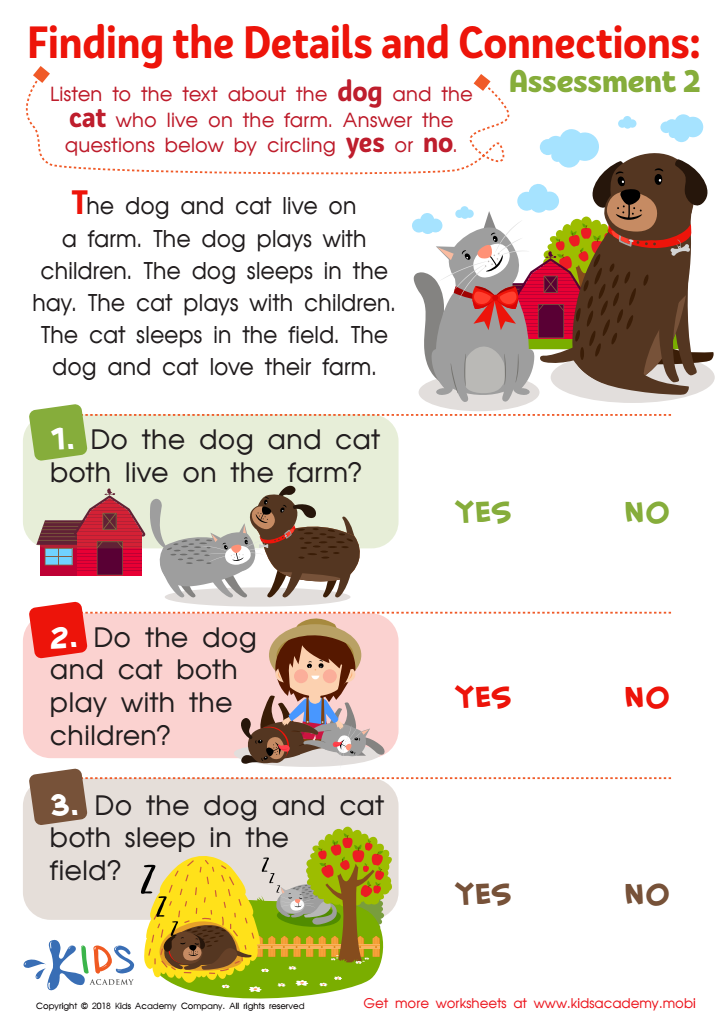
Does your child love animals? If you have pets, they'll relate to the text in this worksheet. Read it aloud to them and help them answer the simple questions by circling yes or no. The story is about a dog and cat living on a farm. Let your child read it aloud to you if they can.
Finding the Details and Connections: Assessment 2 Worksheet
Worksheet
Walk In the Woods: Finding Connections Worksheet

Walk In the Woods: Finding Connections Worksheet

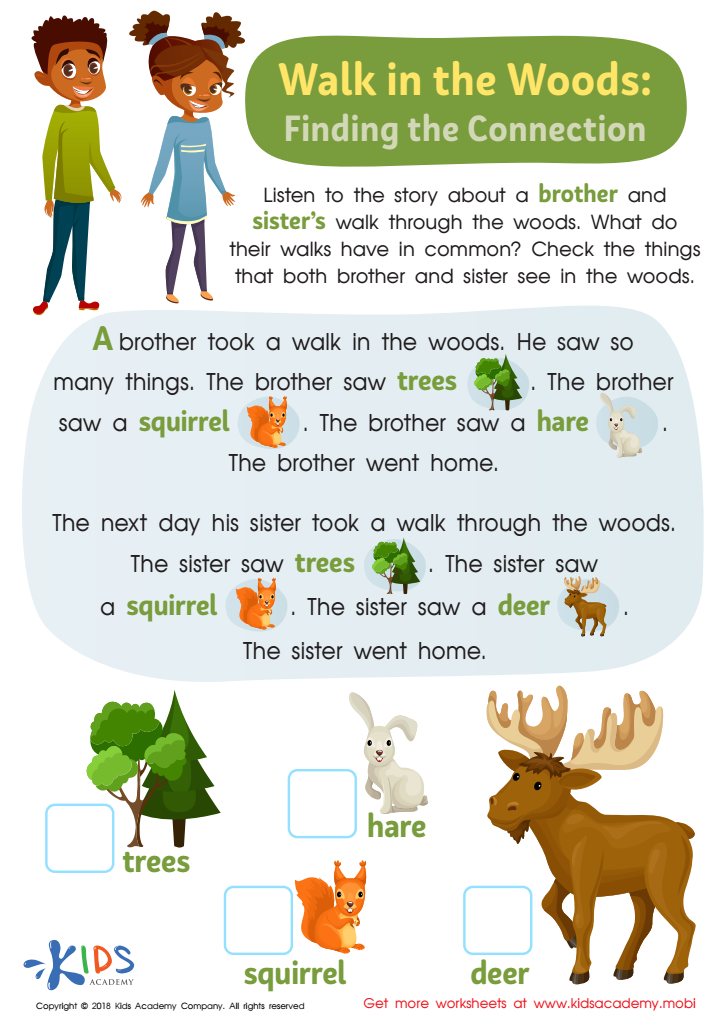
Brother and sister took a walk in the woods to connect with nature and get some exercise. As they went, they noted different things like birds and plants, which they share in this story. Read it to your little ones, and help them check off the items the two saw. It's a great way to learn about nature and enjoy the outdoors.
Walk In the Woods: Finding Connections Worksheet
Worksheet
Questions About Stories: Assessment 2 Worksheet

Questions About Stories: Assessment 2 Worksheet

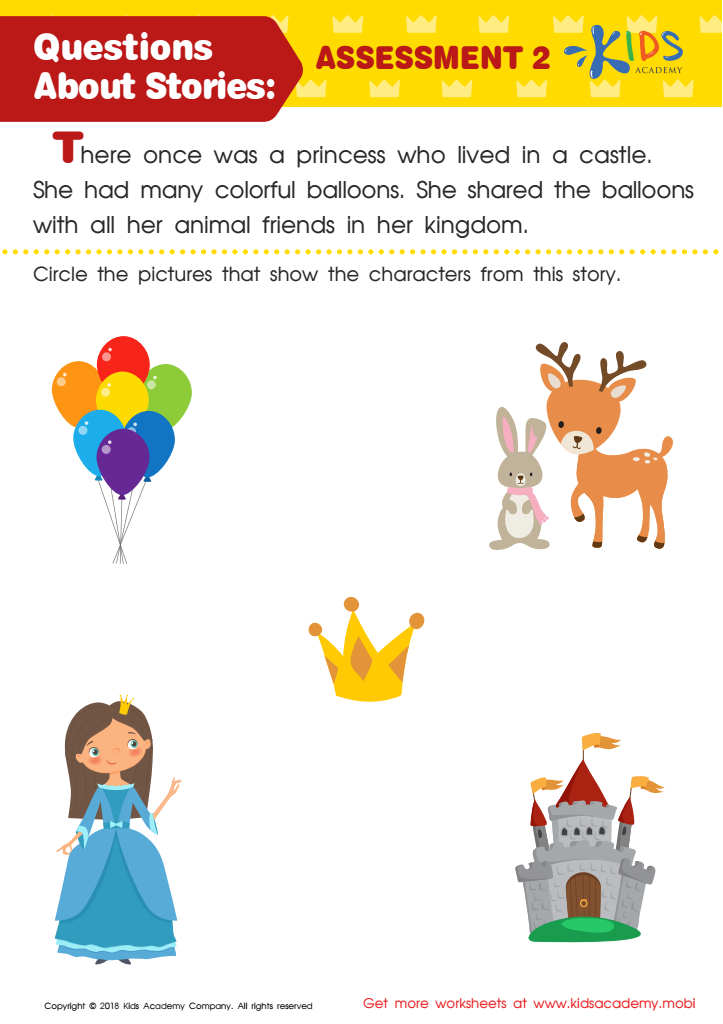
Talk to your child about what a princess is and what activities they associate with that word. Then, read the story to them and help them identify characters in the pictures. Look out for details and ask them questions to ensure they understand.
Questions About Stories: Assessment 2 Worksheet
Worksheet
Finding the Details and Connections: Assessment 1 Worksheet

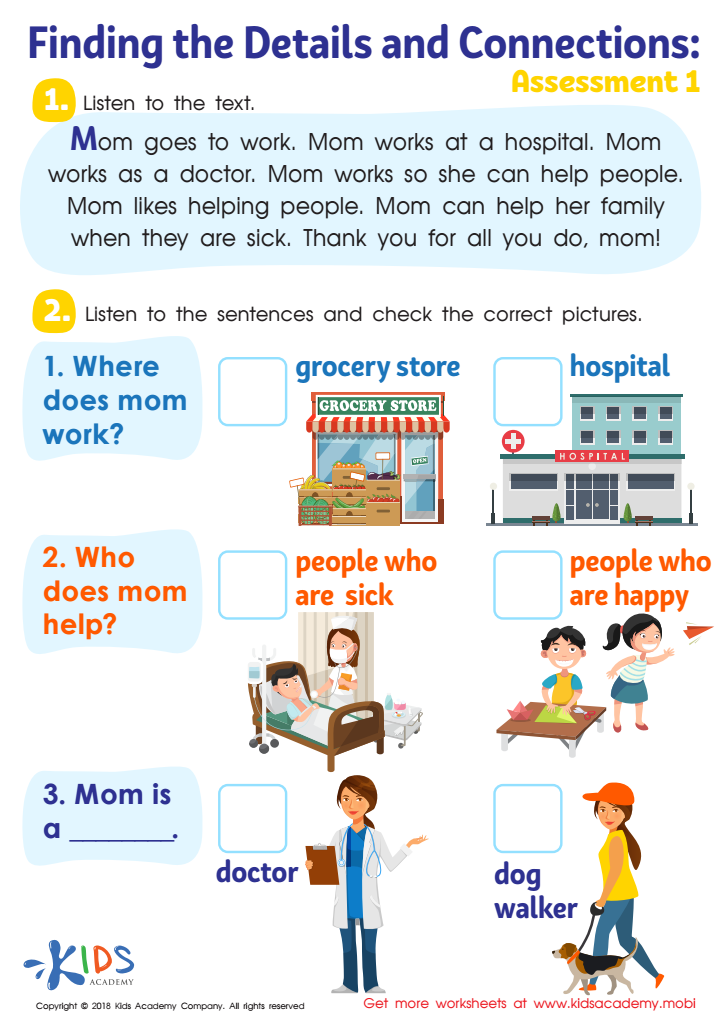
Finding the Details and Connections: Assessment 1 Worksheet

Ask your students what their parents do for a job. Do they know what profession their mom is in and where she works? Professionals have places they go to do their job. In this task, Mom goes to a hospital and is a doctor. Read the text and help them check the right pictures.
Finding the Details and Connections: Assessment 1 Worksheet
Worksheet
Questions About Stories: Assessment 1 Worksheet

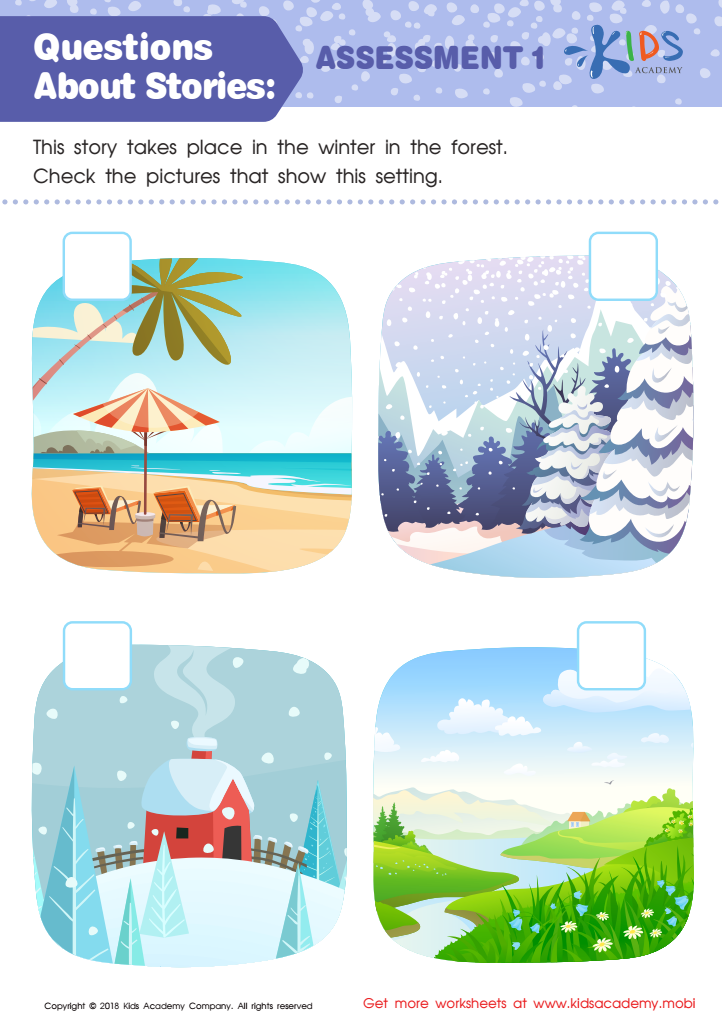
Questions About Stories: Assessment 1 Worksheet

Winter brings snow, cold, short days, and darkness. Schools can even close due to heavy snow. Ask your child what their favourite winter activities are and what color they associate with 'winter'. This worksheet takes place in a winter forest. Look at the 4 pictures with your child, and help them identify which one shows the correct setting.
Questions About Stories: Assessment 1 Worksheet
Worksheet
Rapunzel Characters Worksheet


Rapunzel Characters Worksheet

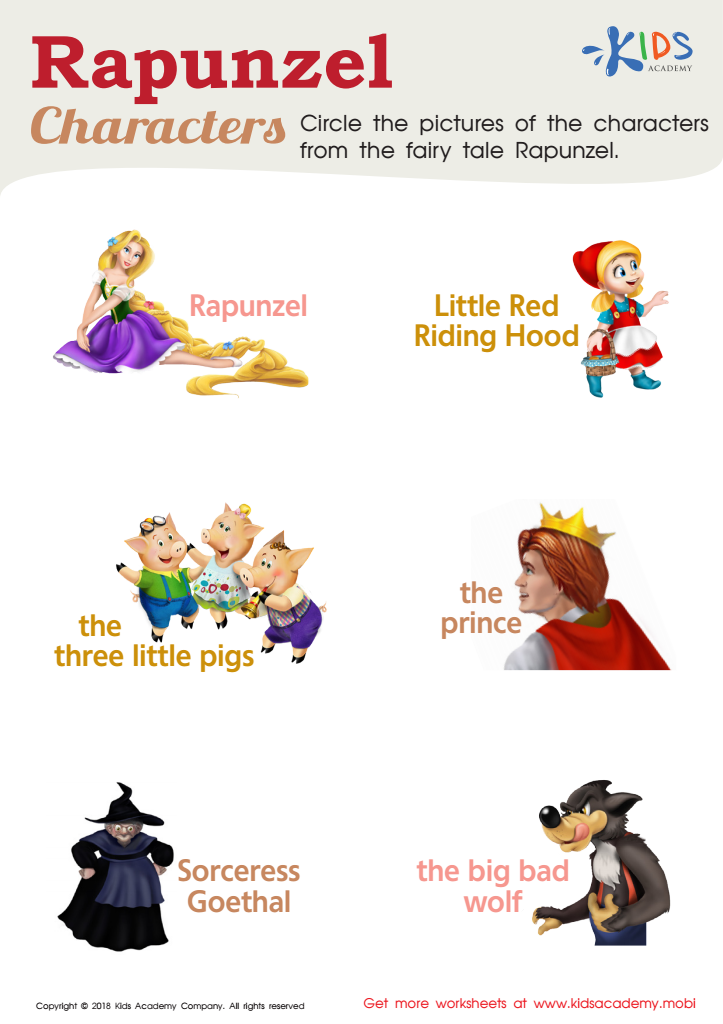
This fun and colourful worksheet is perfect to see what your kids have learned from story time. Test their knowledge with a Rapunzel-themed exercise! Ask them to circle the pictures of the characters from the fairy tale. Helping them to remember the lessons taught in the stories you have read.
Rapunzel Characters Worksheet
Worksheet


Analytical skills in reading comprehension are crucial for children aged 4-5 as they lay the foundation for lifelong learning. During this developmental stage, children start making connections between words, ideas, and experiences. Fostering analytical reading skills helps young learners identify main ideas, draw inferences, and make predictions, which are vital for understanding text.

Parents and teachers play a pivotal role in nurturing these skills. Engaging children in discussions about stories encourages them to think critically about characters' motivations, plot developments, and underlying messages. This not only enhances comprehension but also boosts vocabulary and improves expressive language skills.

Developing analytical skills early on also supports problem-solving abilities across different contexts, empowering children to approach challenges with a thoughtful mindset. By encouraging questions and curiosity during reading, adults guide children in exploring diverse perspectives and developing empathy.

Incorporating playful and interactive reading activities reinforces these skills in a fun and engaging way, ultimately fostering a love for reading. When parents and teachers prioritize analytical reading comprehension in young children, they equip them with essential tools for academic success, emotional intelligence, and social interaction as they grow. The early years are critical, making this focus invaluable for holistic development.