
Logical thinking Reading Comprehension Worksheets for Ages 4-5
3 filtered results
Difficulty Level
Grade
Age
-
From - To
Subject
Activity
Standards
Nurture your child's cognitive skills with our "Logical Thinking Reading Comprehension Worksheets for Ages 4-5." These engaging worksheets help young learners develop critical thinking and boost their reading comprehension. Featuring playful exercises that intertwine stories and logical questions, each sheet encourages kids to understand and interpret text while sharpening their problem-solving abilities. Perfect for preschoolers and kindergarteners, these resources lay a strong foundation for future academic success by combining fun with essential learning. Boost your child's confidence and skills today with our expertly designed worksheets that make learning enjoyable and effective. Visit our page to explore more!
Favorites
With answer key
Interactive
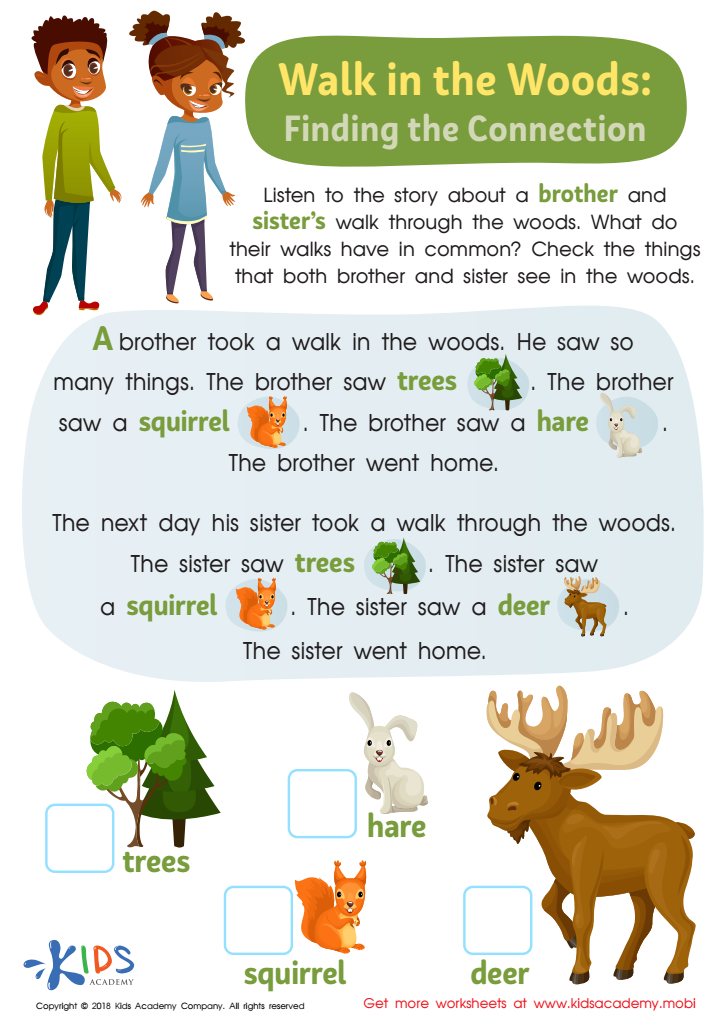
Walk In the Woods: Finding Connections Worksheet
Brother and sister took a walk in the woods to connect with nature and get some exercise. As they went, they noted different things like birds and plants, which they share in this story. Read it to your little ones, and help them check off the items the two saw. It's a great way to learn about nature and enjoy the outdoors.
 Assign to My Students
Walk In the Woods: Finding Connections Worksheet
Worksheet
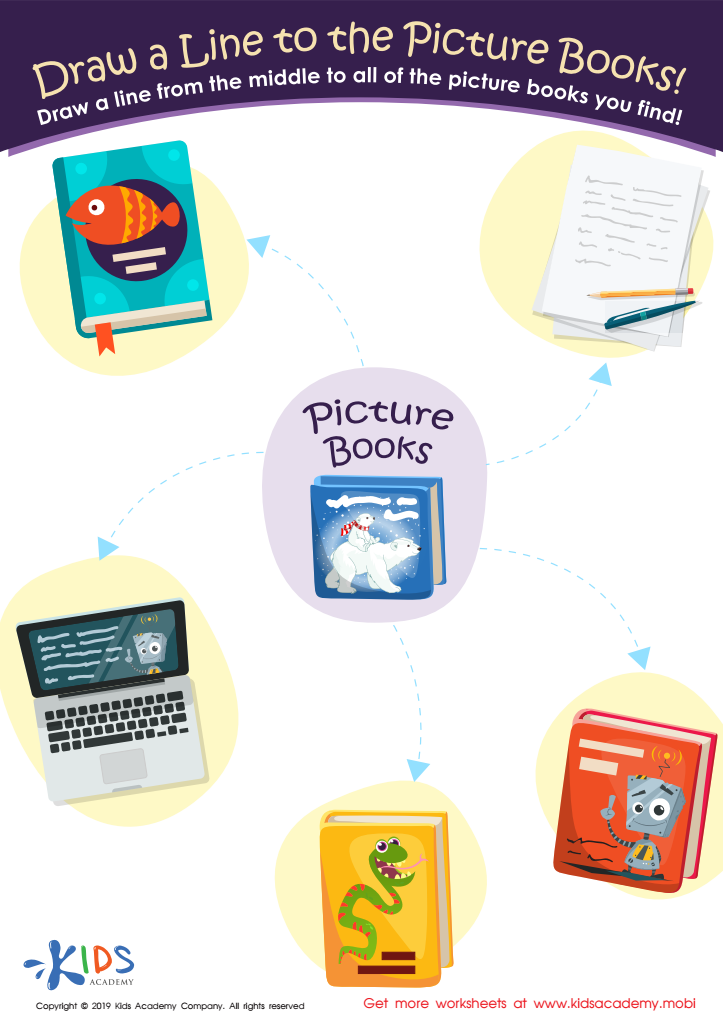
Draw a Line to the Picture Books Worksheet
Encourage your students to read and explore with this fun exercise! They'll draw a line from the word 'picture books' to the five objects. Picture books are exciting, with stories and colorful images. Make story time even more enjoyable with this worksheet!
Draw a Line to the Picture Books Worksheet
Worksheet
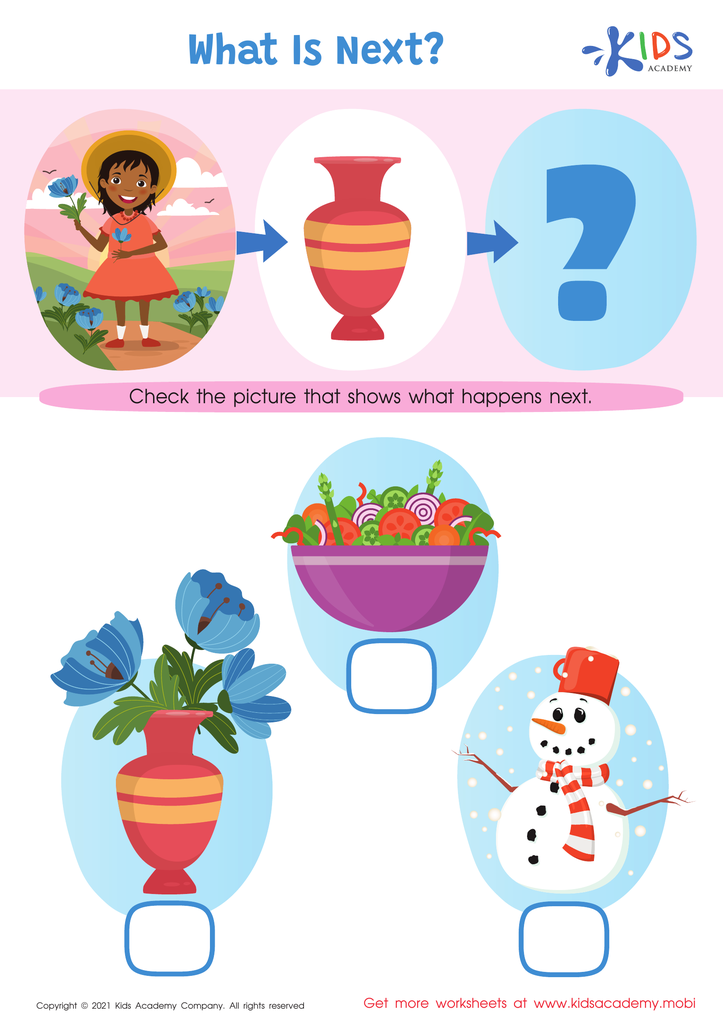
What is Next? Worksheet
The purpose of our company is to provide customers with the highest quality products and the best customer service experience in the industry.
We're committed to providing customers with excellent products and customer service. Our goal is to be the best in the industry.
What is Next? Worksheet
Worksheet
Join Kids Academy for Free
Who is primarily going to use this learning content?







.jpg)
Logical thinking and reading comprehension are crucial developmental skills for children aged 4-5, and their importance cannot be overstated for both parents and teachers. At this formative age, children's brains are rapidly developing, and instilling these skills can have lasting benefits for their cognitive abilities and academic success.
Logical thinking enables children to understand and navigate the world around them. It helps them make sense of patterns, classify objects, and engage in problem-solving activities. This foundational skill also encourages curiosity and independent thinking, which are essential for lifelong learning.
Reading comprehension, on the other hand, is vital for learning across all subjects. Early mastery of this skill helps children understand stories, follow instructions, and build their vocabulary. When children comprehend what they read or hear, they can engage more deeply with the material, fostering a love for reading and learning.
Moreover, merging logical thinking with reading comprehension enhances critical thinking. For instance, understanding the sequence of events in a story or predicting what might happen next requires kids to use both skills in tandem. In turn, this dual engagement strengthens their ability to process information and draw reasoned conclusions.
By prioritizing these skills, parents and teachers are laying a solid foundation for children's future academic success and overall intellectual growth, making them better equipped to face more complex challenges in later years.








