Analytical skills Reading Fiction Worksheets for Ages 4-5
6 filtered results
-
From - To
Boost your child's analytical skills with our engaging Reading Fiction Worksheets designed for ages 4-5! Our worksheets offer a fun and interactive way for young learners to explore and analyze stories, fostering critical thinking and comprehension. Through imaginative narratives and captivating illustrations, children develop essential skills such as identifying characters, understanding plot structures, and making predictions. These resources encourage creativity while enhancing language abilities, setting a strong foundation for future reading success. Perfect for parents and teachers alike, our worksheets provide an enjoyable learning experience that promotes cognitive growth. Discover the power of storytelling and help your child thrive with our analytical skills resources!
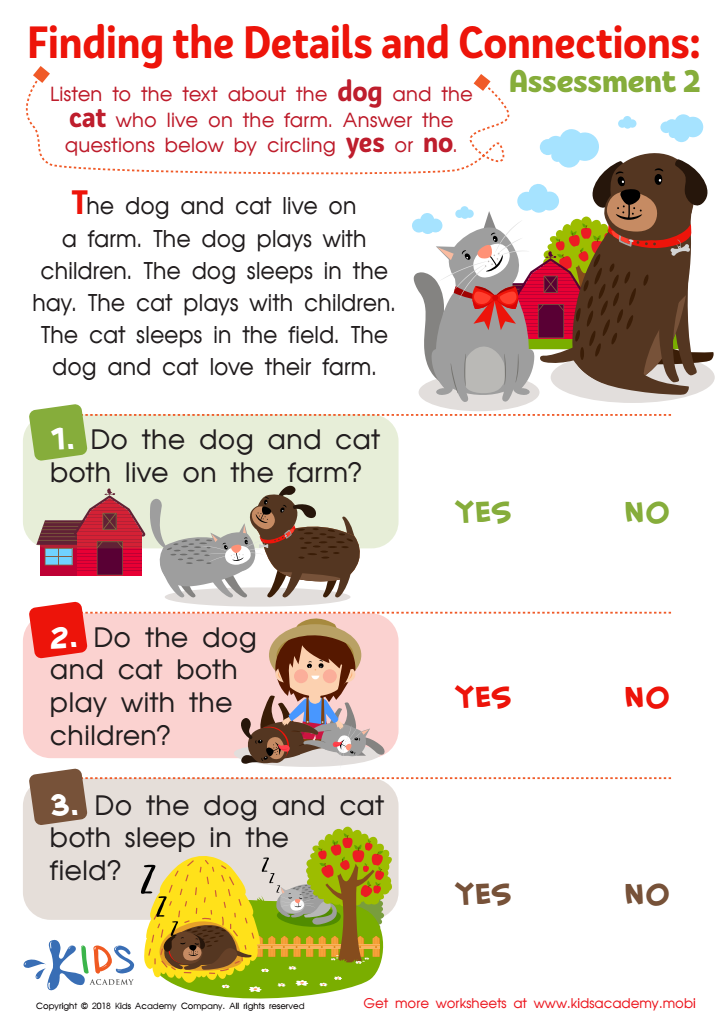
Finding the Details and Connections: Assessment 2 Worksheet
 Assign to My Students
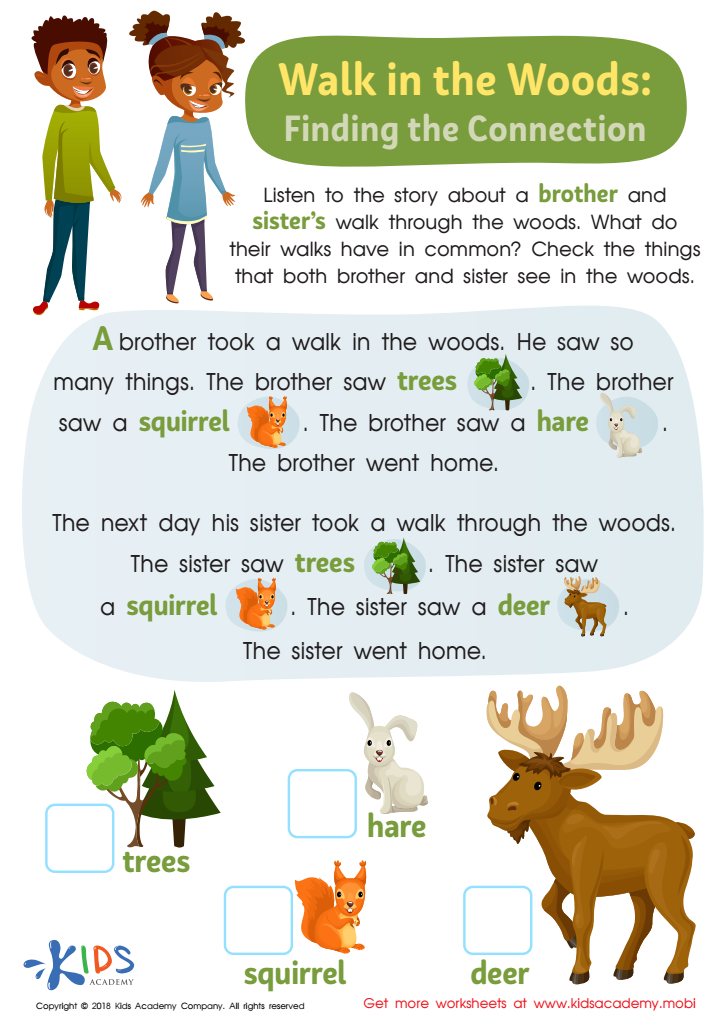
Walk In the Woods: Finding Connections Worksheet
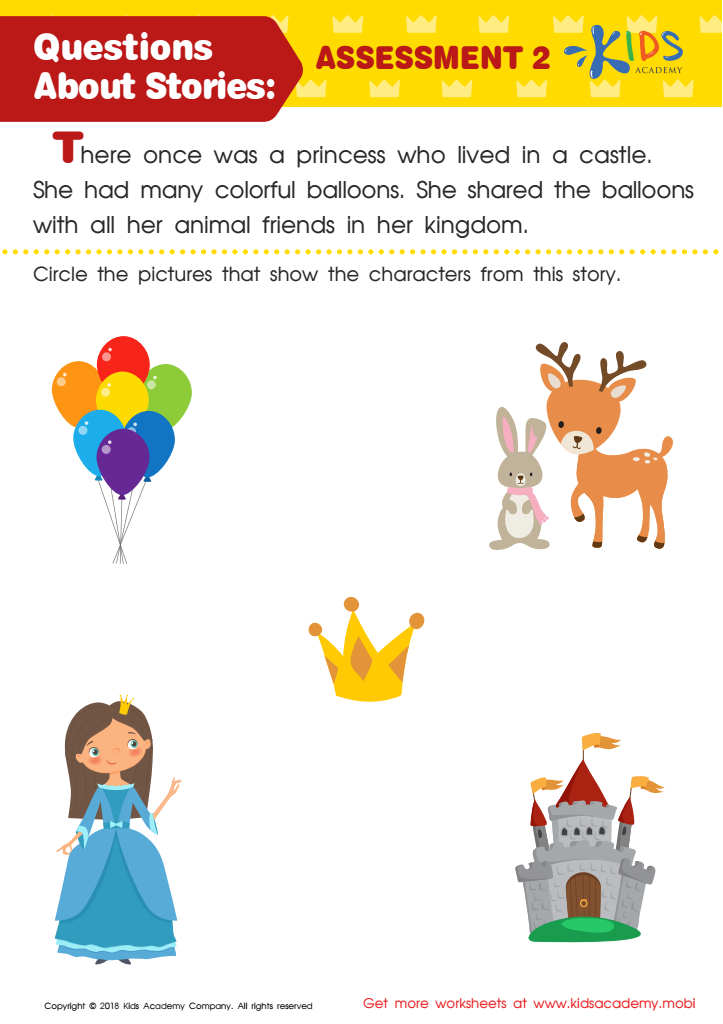
Questions About Stories: Assessment 2 Worksheet
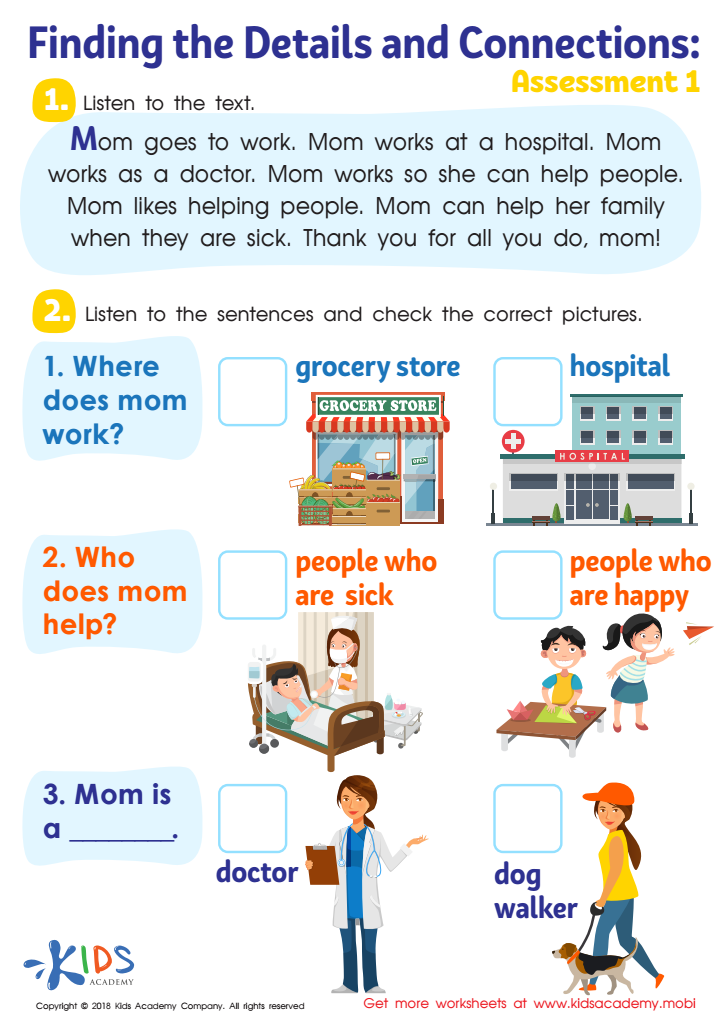
Finding the Details and Connections: Assessment 1 Worksheet

Questions About Stories: Assessment 1 Worksheet
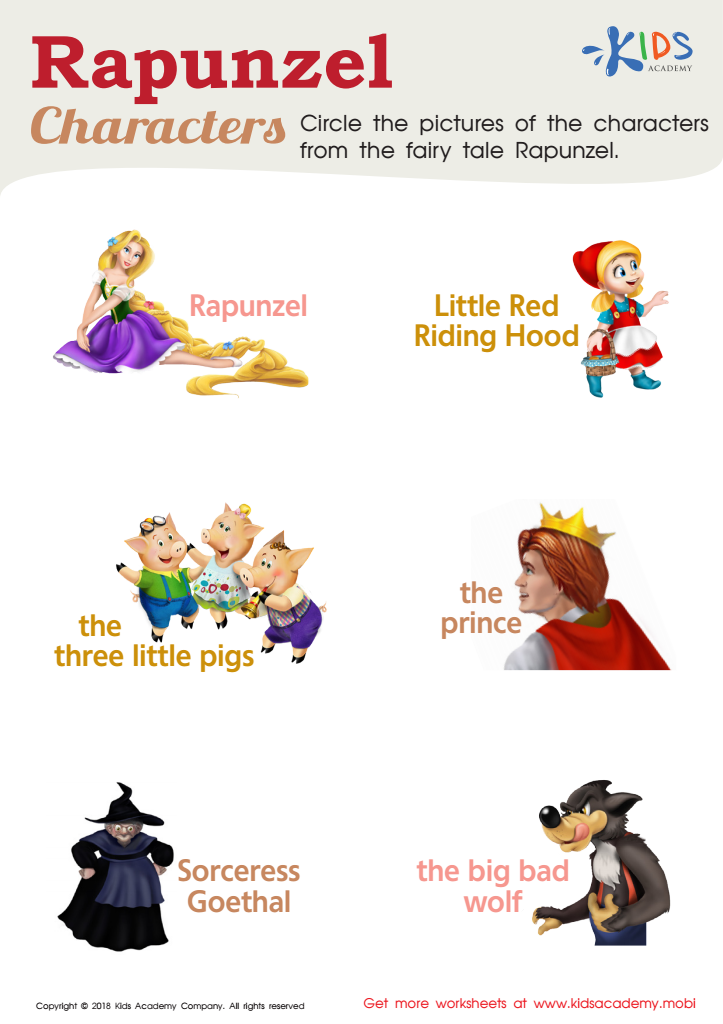
Rapunzel Characters Worksheet








Parents and teachers should prioritize analytical skills when reading fiction for ages 4-5 because these skills lay a foundational understanding for critical thinking, problem-solving, and comprehension. At this early stage, children are naturally curious and absorb information readily, making it a prime time to cultivate their ability to analyze texts and stories.
Engaging children in discussions about characters, plot, and emotions fosters deeper comprehension and encourages them to make connections to their own experiences. For example, asking open-ended questions like “Why do you think the character did that?” or “What would you do in this situation?” not only enhances their understanding of the story but also develops reasoning abilities.
Fiction exposes children to diverse perspectives and scenarios, promoting empathy and cultural awareness. By evaluating choices made by characters, children learn to weigh alternatives and predict outcomes, skills that are essential in everyday problem-solving.
Moreover, these skills promote active listening and vocabulary development, as children learn to articulate their thoughts and feelings. Overall, nurturing analytical skills through reading fiction not only enriches kids' linguistic abilities but also empowers them to become thoughtful, engaged learners as they progress through their education.








