Enhancing observation skills Science Worksheets for Ages 4-5
6 filtered results
-
From - To
Unlock the wonders of science with our "Enhancing Observation Skills" worksheets designed specifically for ages 4-5. These engaging and informative printables foster curiosity while developing essential observation skills. Each worksheet encourages young learners to closely examine their surroundings, notice details, and ask questions about the world around them. Through interactive activities and playful themes, your child will practice critical thinking and enhance their understanding of nature. Ideal for homeschool activities or supplemental practice, our worksheets make learning enjoyable and effective. Help your child become a keen observer and ignite their passion for science early on! Explore the joy of discovery today!
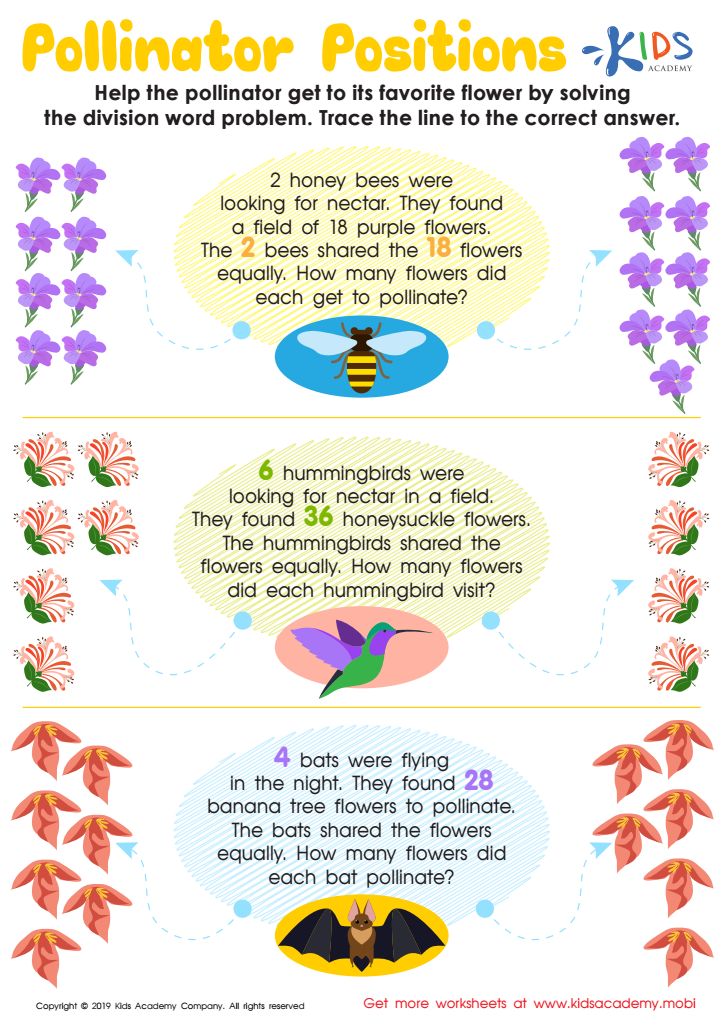
Pollinator Positions Worksheet
 Assign to My Students
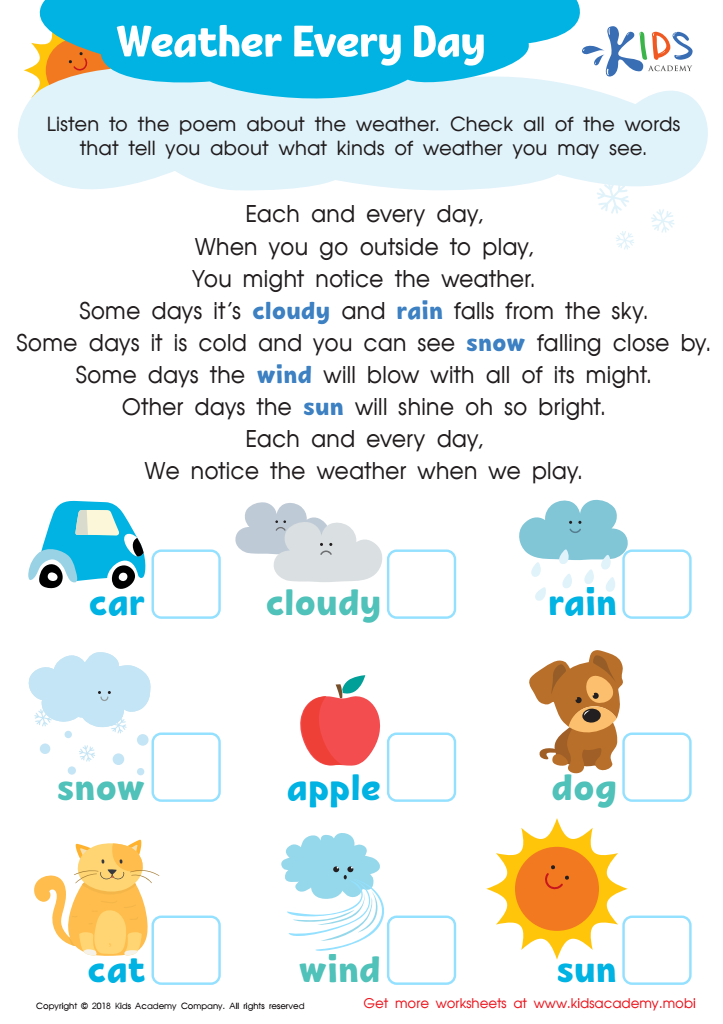
Weather Every Day Worksheet
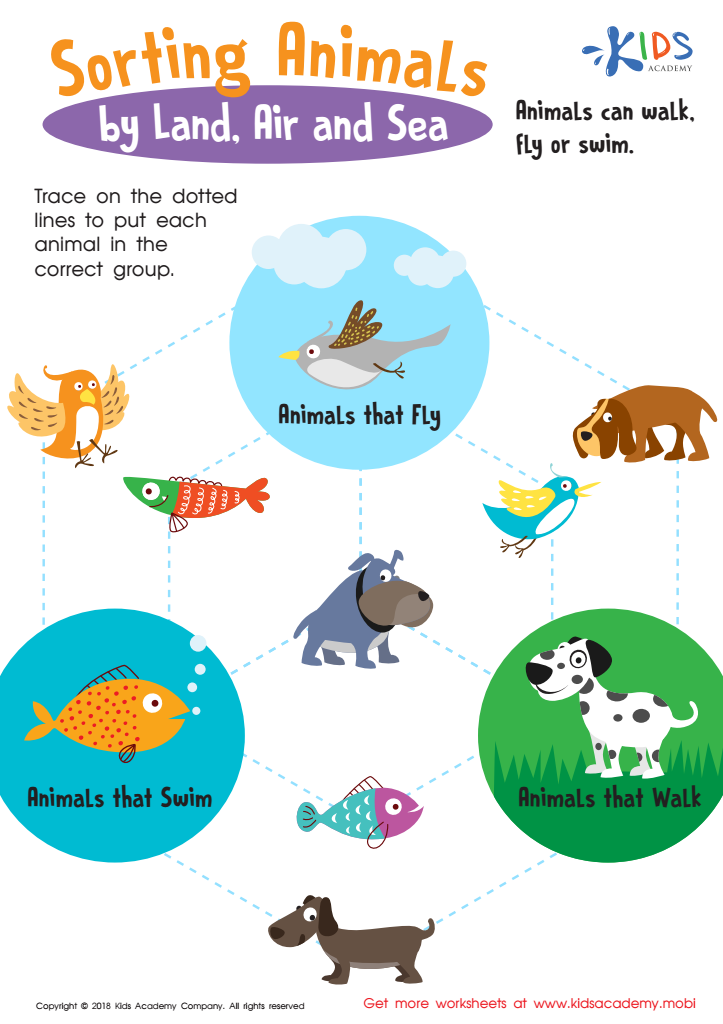
Sorting Animals by Land, Air and Sea Worksheet
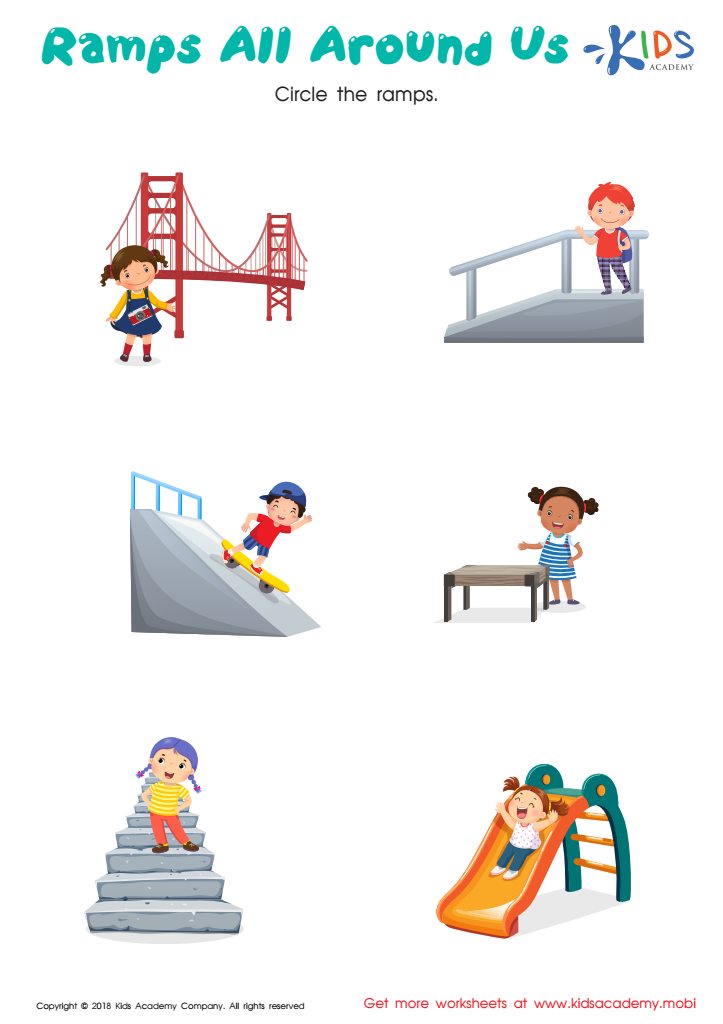
Ramps All Around us Worksheet
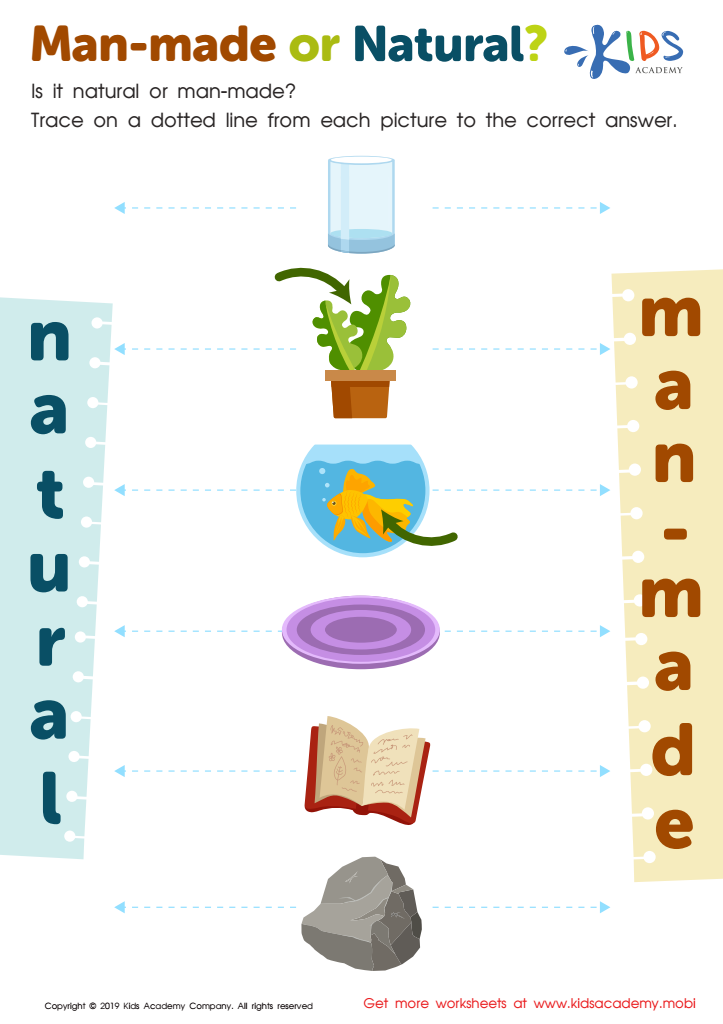
Man-Made or Natural? Worksheet
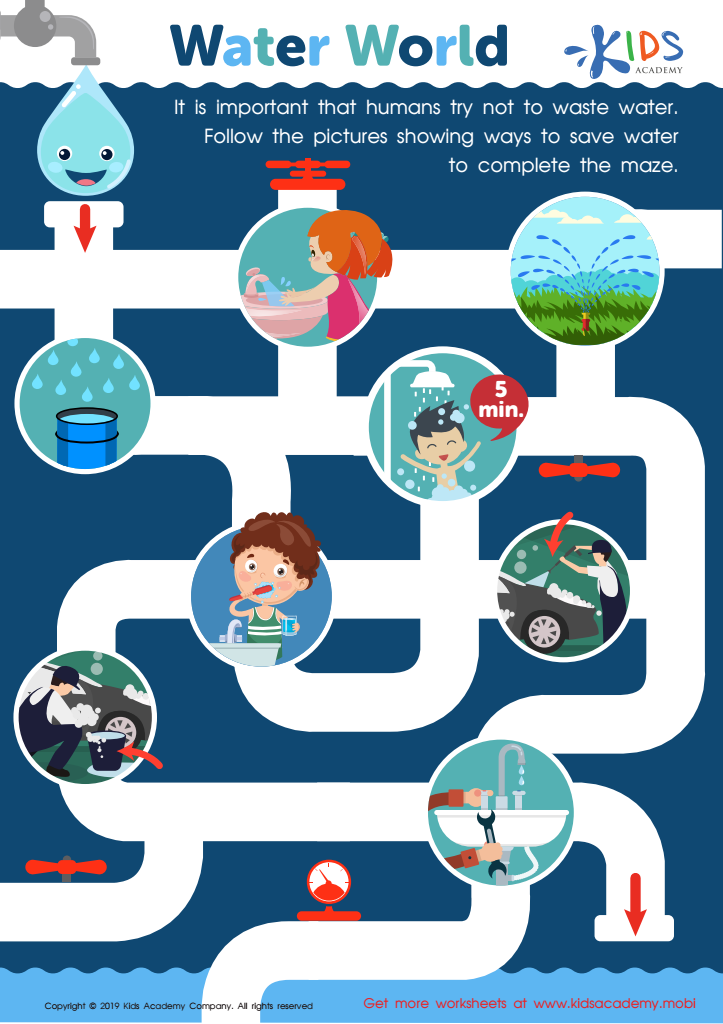
Water World Worksheet







Enhancing observation skills in young children, particularly in the context of science, is crucial for their overall cognitive development and understanding of the world. For parents and teachers, fostering these skills can open doors to a universe of discovery and learning.
At ages 4 to 5, children's natural curiosity is at its peak. By sharpening observation skills, educators and caregivers can help children engage with their environment more meaningfully. This connects them with scientific concepts such as nature, ecosystems, and basic physical principles.
Strong observation skills facilitate critical thinking and problem-solving abilities. Kids learn to notice details, make comparisons, and draw conclusions based on their observations. This foundational inquiry not only enhances scientific literacy but also empowers children to ask questions and seek answers.
Moreover, observational activities can promote language development as children describe what they see, fostering communication skills. Engaging in group discussions or sharing their findings with others encourages collaboration and social skills.
Ultimately, enhancing observation skills in young learners lays the groundwork for lifelong learning, enabling them to become inquisitive adults who seek to understand the intricacies of their surroundings. Supporting this development is essential for nurturing thoughtful, engaged future citizens.







