Spatial awareness Physical Science Worksheets for Ages 4-5
3 filtered results
-
From - To
Explore our engaging Spatial Awareness Physical Science Worksheets designed specifically for children ages 4-5. These interactive resources foster essential skills like understanding positions, directions, and distances, laying the foundation for scientific learning. Our worksheets incorporate fun activities that encourage children to identify shapes, navigate spaces, and develop critical thinking through hands-on exploration. Perfect for early educators and parents, these activities make learning enjoyable while enhancing spatial reasoning. Download our free worksheets today to inspire curiosity and build a strong base in physical science as your little ones discover the world around them! Fun and educational, it’s a great way to promote early STEM learning!
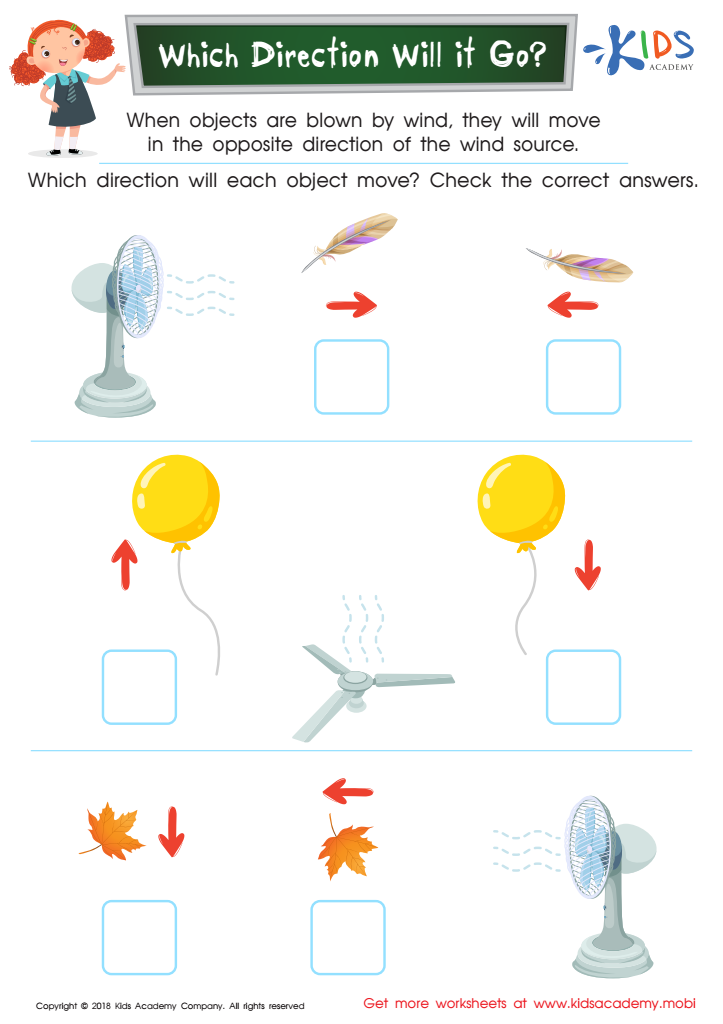
Which Direction Will it Go? Worksheet
 Assign to My Students
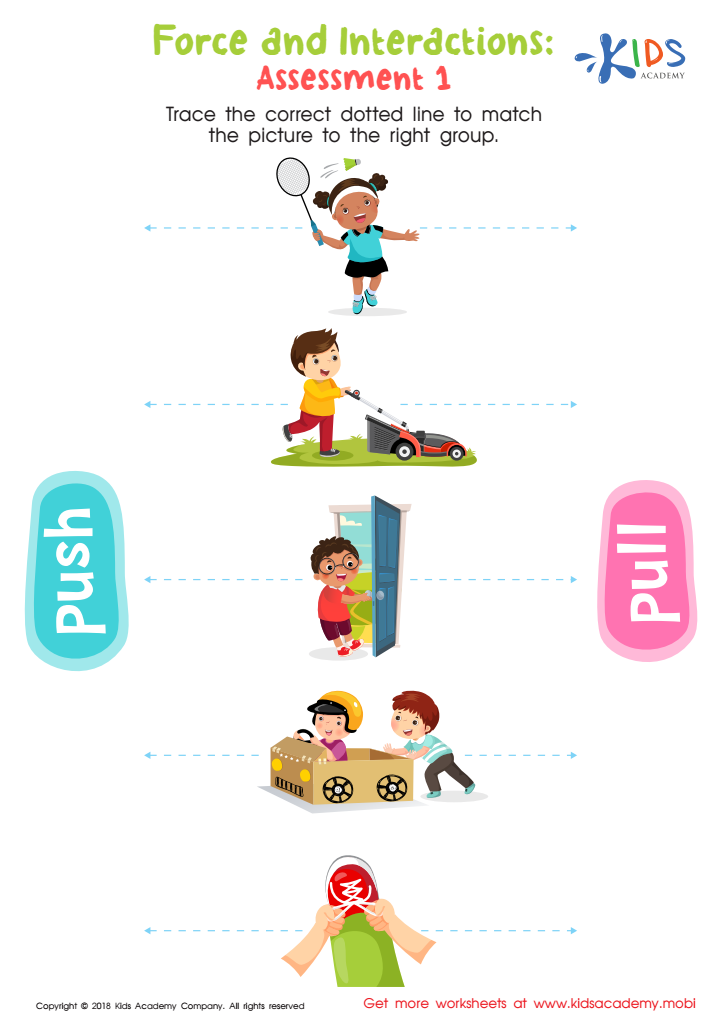
Force and Interactions: Assessment 2 Worksheet
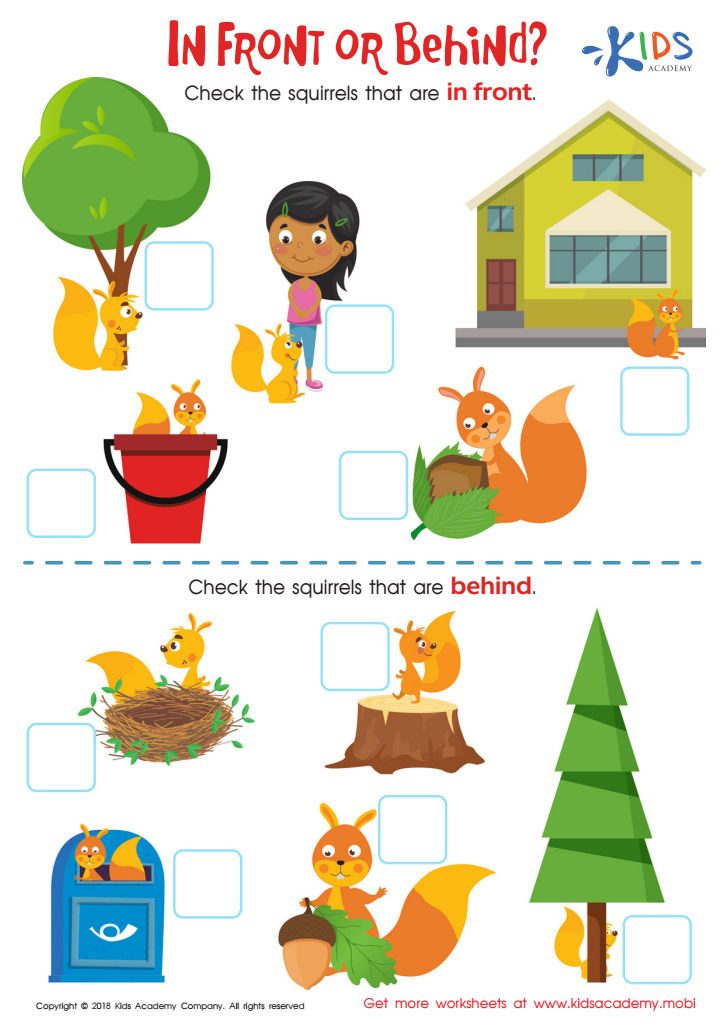
In Front or Behind: Part 2 Worksheet








Spatial awareness is a crucial aspect of early childhood development, particularly in the context of physical science education for ages 4-5. At this young age, children are naturally curious about their environment, and fostering spatial awareness can enhance their understanding of the world around them.
Parents and teachers should care about spatial awareness because it lays the foundation for critical cognitive skills, such as problem-solving and logical reasoning. Activities that promote spatial awareness, like building with blocks, solving puzzles, or engaging in simple geometry, help children understand shapes, sizes, and how objects relate to one another. This knowledge is essential not only in everyday life but also in future academic disciplines, including mathematics, science, and even art.
Moreover, spatial awareness is closely linked to physical development. As children explore their surroundings, they hone their fine and gross motor skills, contributing to overall physical health. By nurturing spatial awareness, parents and teachers empower children to navigate their environment confidently and creatively, fostering independence.
Encouraging spatial awareness is an investment in children's cognitive and physical growth, setting them up for success in various areas as they transition to formal schooling and beyond.







