Reading comprehension Punctuation Worksheets for Ages 4-5
4 filtered results
-
From - To
Enhance your child's early reading skills with our carefully designed Reading Comprehension Punctuation Worksheets for ages 4-5. These engaging worksheets make learning punctuation fun and interactive, helping young minds grasp the fundamentals of reading comprehension. Featuring age-appropriate exercises that incorporate intuitive visuals and simple sentences, our worksheets foster a love for reading while building essential literacy skills. Perfect for use at home or in a classroom, our resources support your child's journey to becoming a confident reader who understands the importance of punctuation marks. Start now to give your child a strong foundation for future reading success!
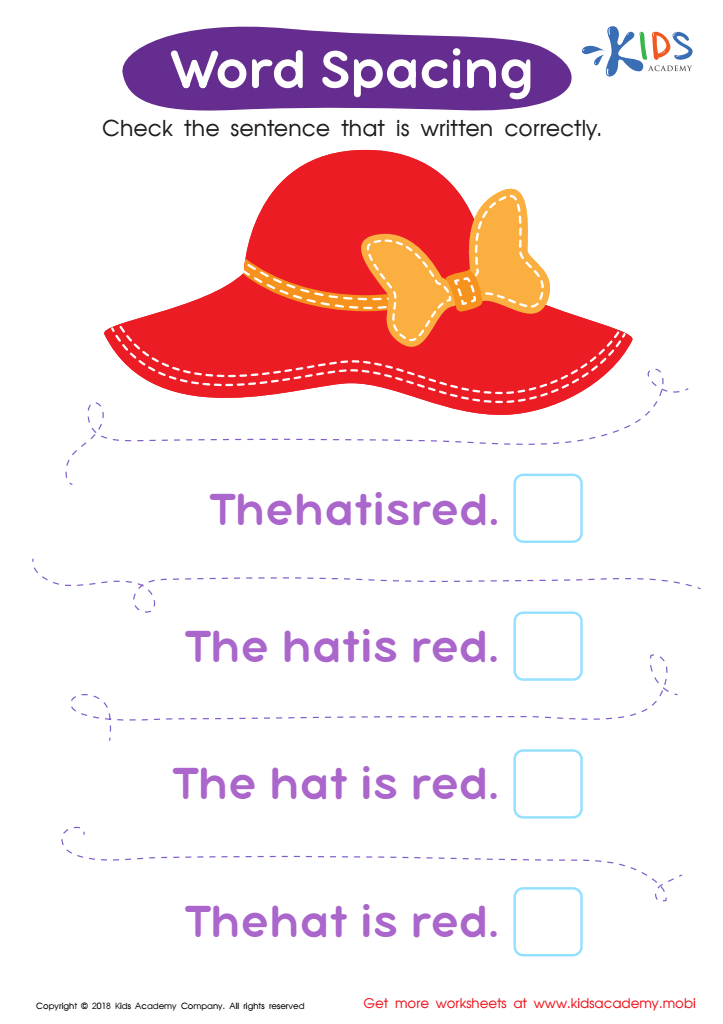
Word Spacing Worksheet
 Assign to My Students
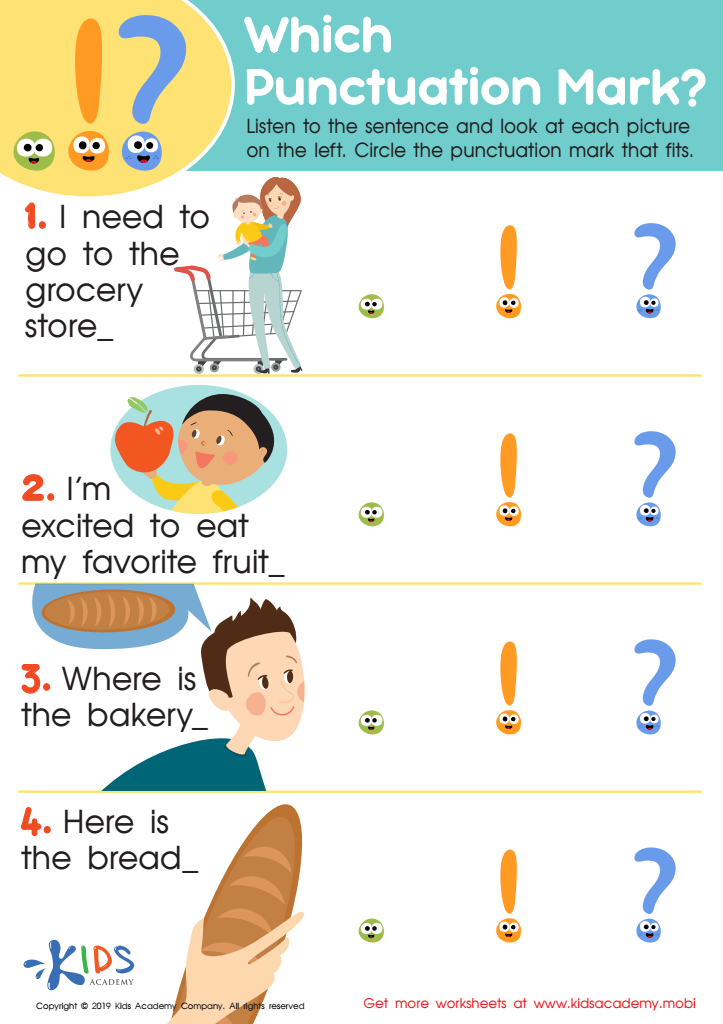
Which Punctuation Mark Worksheet
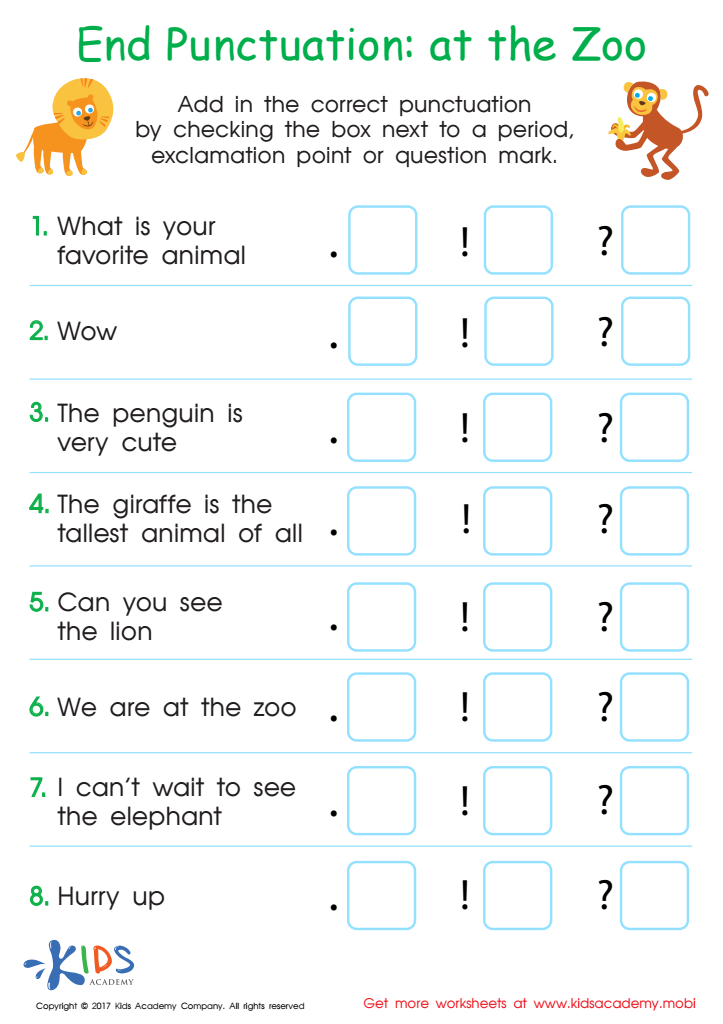
End Punctuation: At the Zoo Worksheet
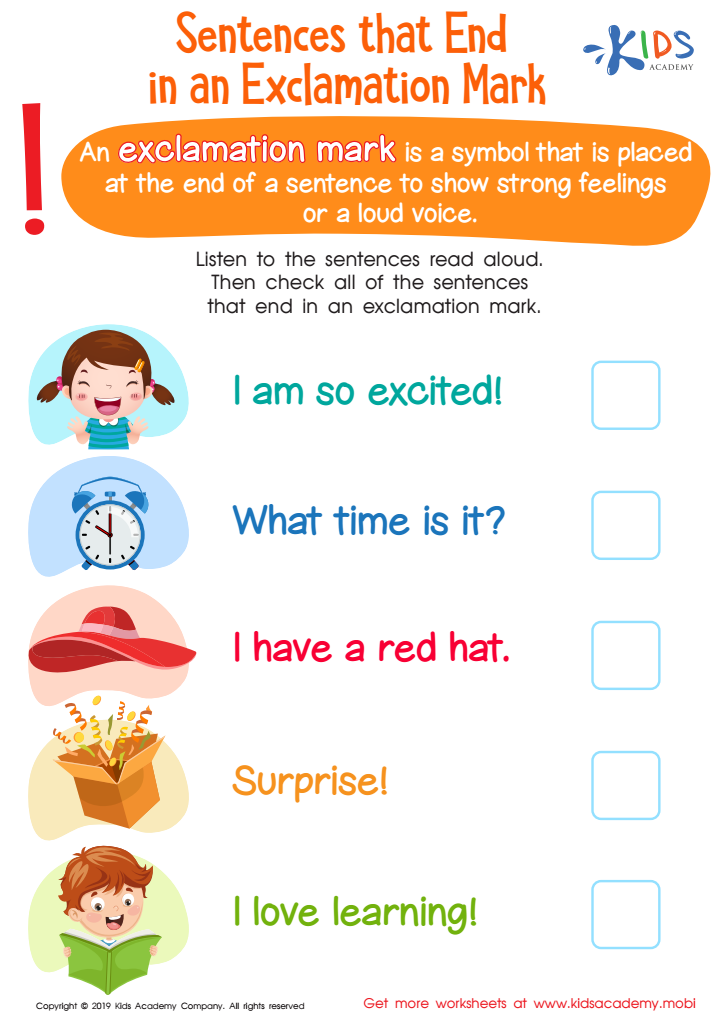
Sentences That End in an Exclamation Mark Worksheet


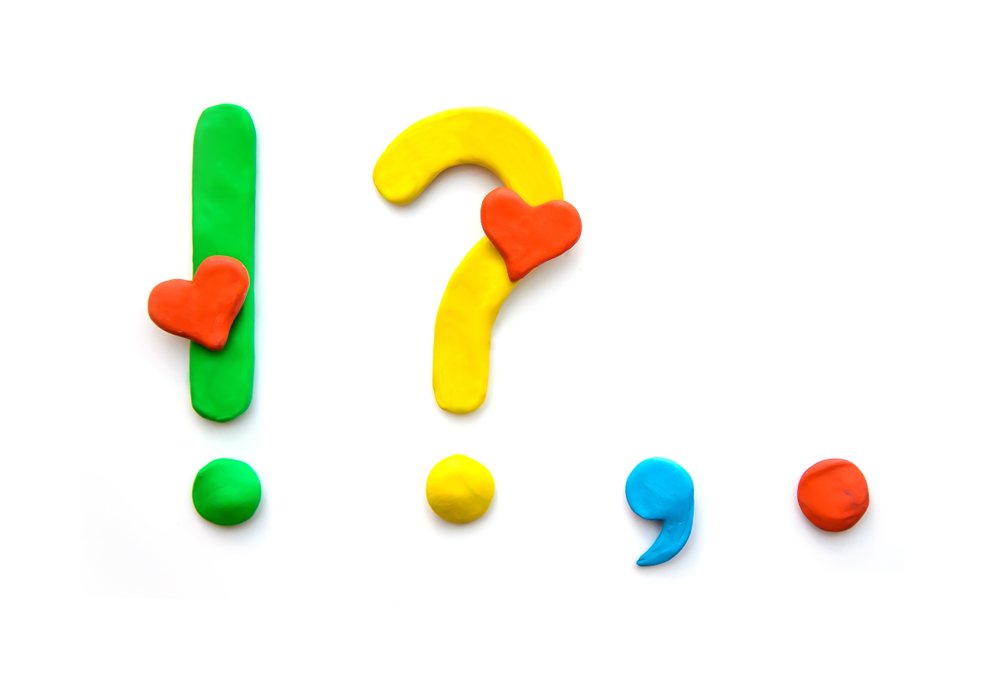


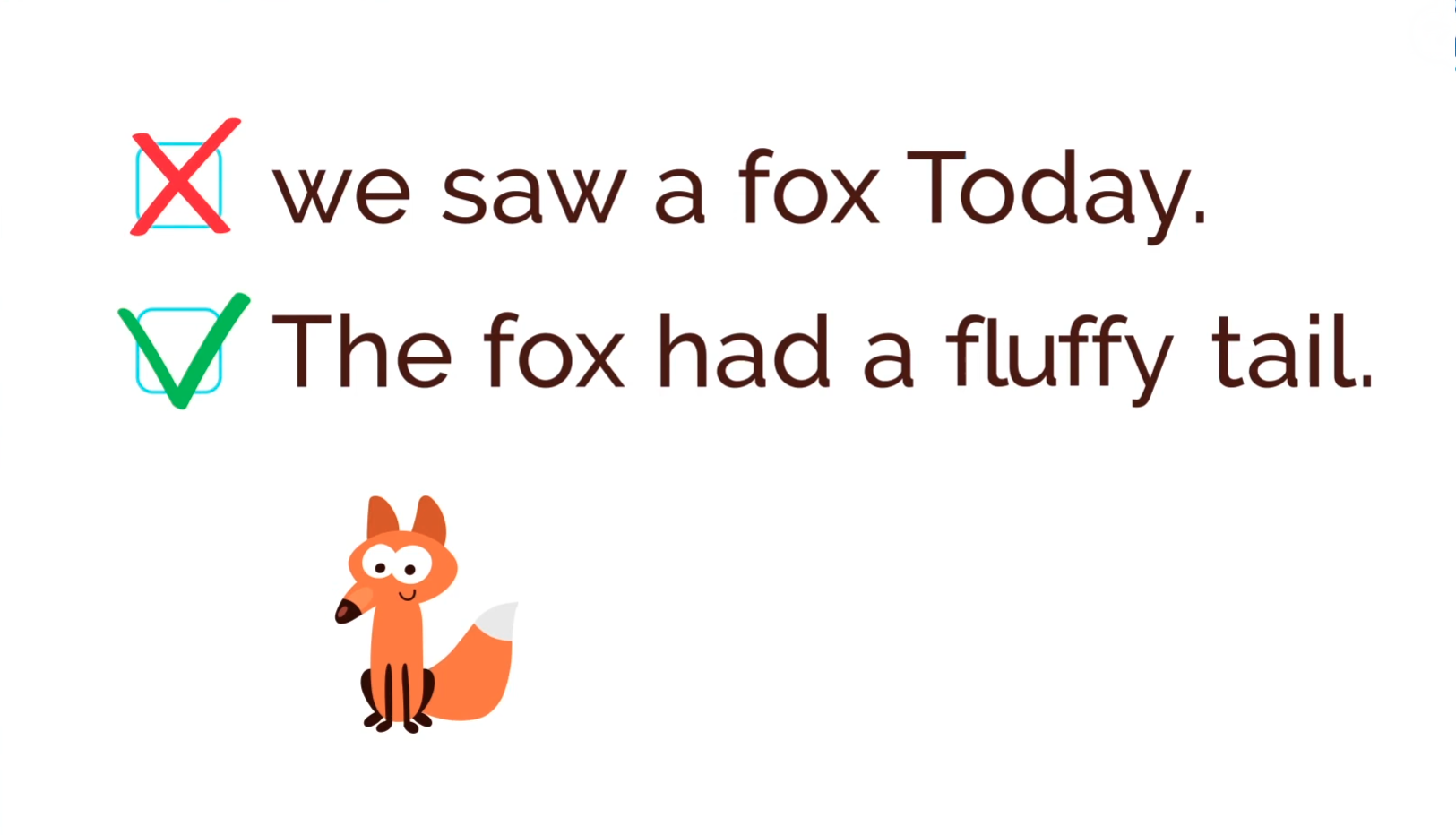


Reading comprehension and punctuation are foundational skills crucial for young children, ages 4-5, and parents and teachers play an essential role in nurturing these abilities. At this tender age, children's brains are highly receptive to learning language patterns, making it an ideal period to instill good reading habits and an understanding of punctuation.
Reading comprehension enhances a child's ability to understand, remember, and communicate information effectively. It fosters empathy, by allowing children to immerse themselves in different scenarios and perspectives. Importantly, kindling a love for stories and books early on can lead to a lifelong passion for reading, an activity associated with countless cognitive benefits.
Punctuation, though subtle, is equally vital. It helps guide the reader's understanding of text, teaching children how sentences are structured to convey clear meaning. Knowing where a sentence pauses or ends (periods, commas, question marks) can significantly aid children in developing proper reading fluency and expression. This fluency is key in maintaining comprehension skills.
Together, reading comprehension and punctuation equip children with the tools to decode and make sense of written language, laying a solid foundation for their future academic success. By prioritizing these skills, parents and teachers help create confident, curious, and effective young readers.








