
Sentence completion Punctuation Worksheets for Ages 4-5
3 filtered results
Difficulty Level
Grade
Age
-
From - To
Subject
Activity
Standards
Discover our engaging sentence completion punctuation worksheets designed specifically for children aged 4-5! These interactive resources help young learners practice their writing skills while understanding the importance of correct punctuation. Through fun activities, kids will complete sentences, enhancing their vocabulary and grammar skills in a playful manner. Our worksheets encourage creativity as children fill in the blanks and express their thoughts clearly. Ideal for both classroom settings and home learning, these resources make learning punctuation enjoyable and effective. Foster a love for writing from an early age with our vibrant, easy-to-use worksheets that promote confidence and literacy development!
Favorites
With answer key
Interactive
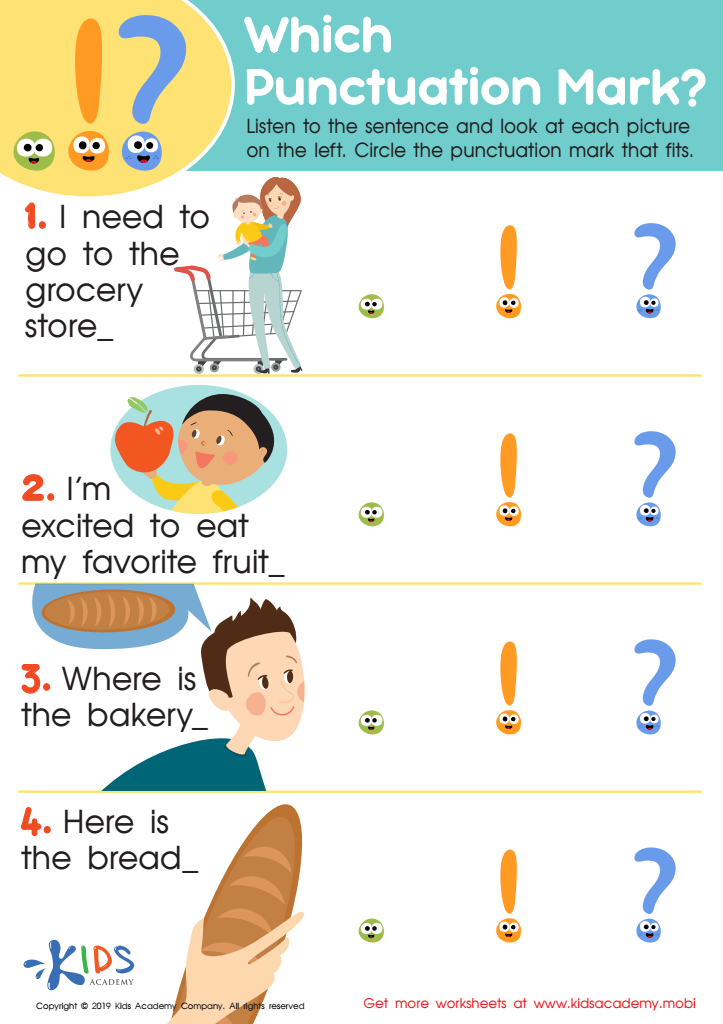
Which Punctuation Mark Worksheet
Punctuation marks are essential for expressing what we say. This worksheet asks your kindergarten student to circle the correct punctuation mark for each sentence. Read each sentence aloud and help them identify the expression needed. A picture accompanies each sentence. Enjoy! (79 words)
 Assign to My Students
Which Punctuation Mark Worksheet
Worksheet
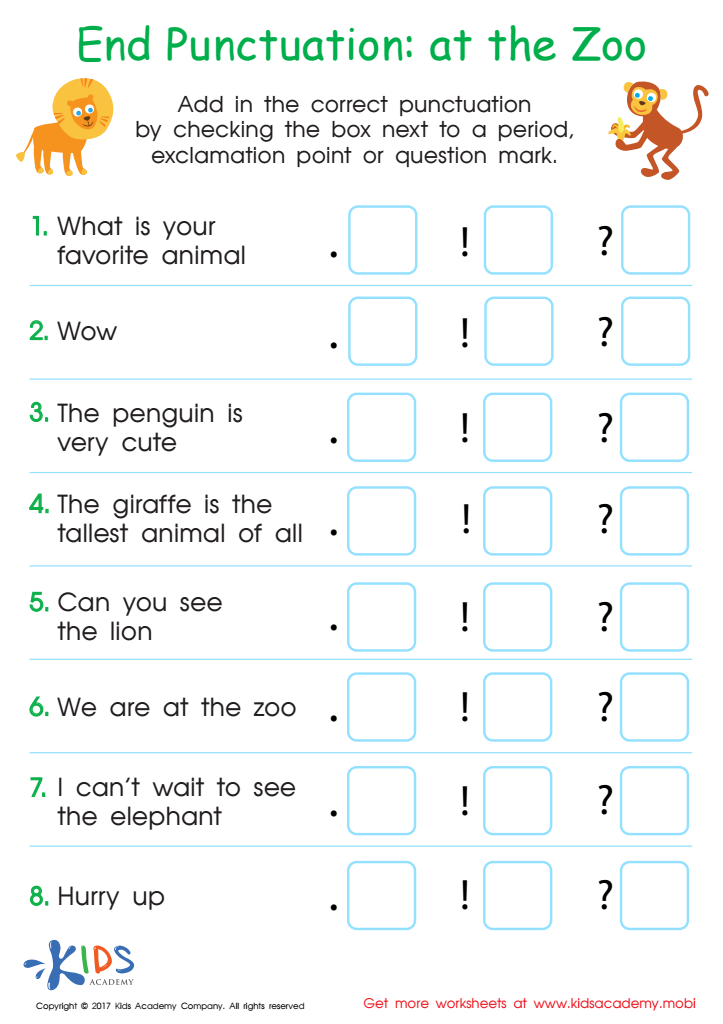
End Punctuation: At the Zoo Worksheet
Let your kid hone their sentence and punctuation skills with this cute At the Zoo worksheet. Read it out loud to provide guidance if needed, and help your child find the right punctuation mark for each sentence.
End Punctuation: At the Zoo Worksheet
Worksheet
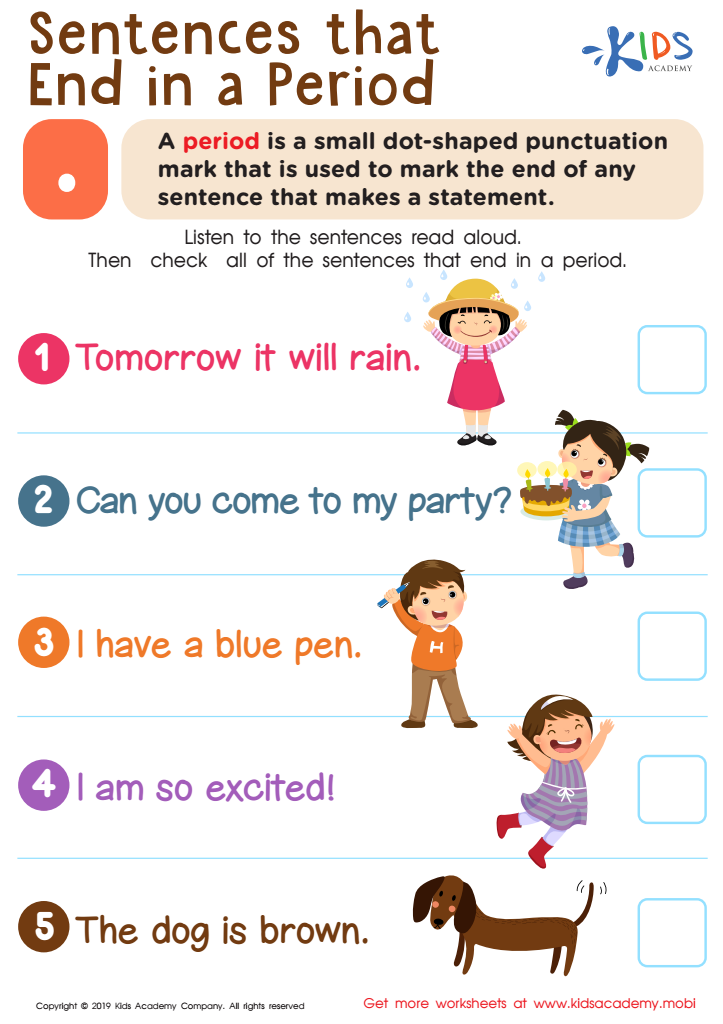
Sentences That End in a Period Worksheet
Before beginning, ask your kids if they know what punctuation marks are and can name a few. Common examples are the period (a small dot-shaped mark at the end of sentences), comma, question mark, and exclamation mark. Help practice their use with questions in the worksheet.
Sentences That End in a Period Worksheet
Worksheet
Join Kids Academy for Free
Who is primarily going to use this learning content?



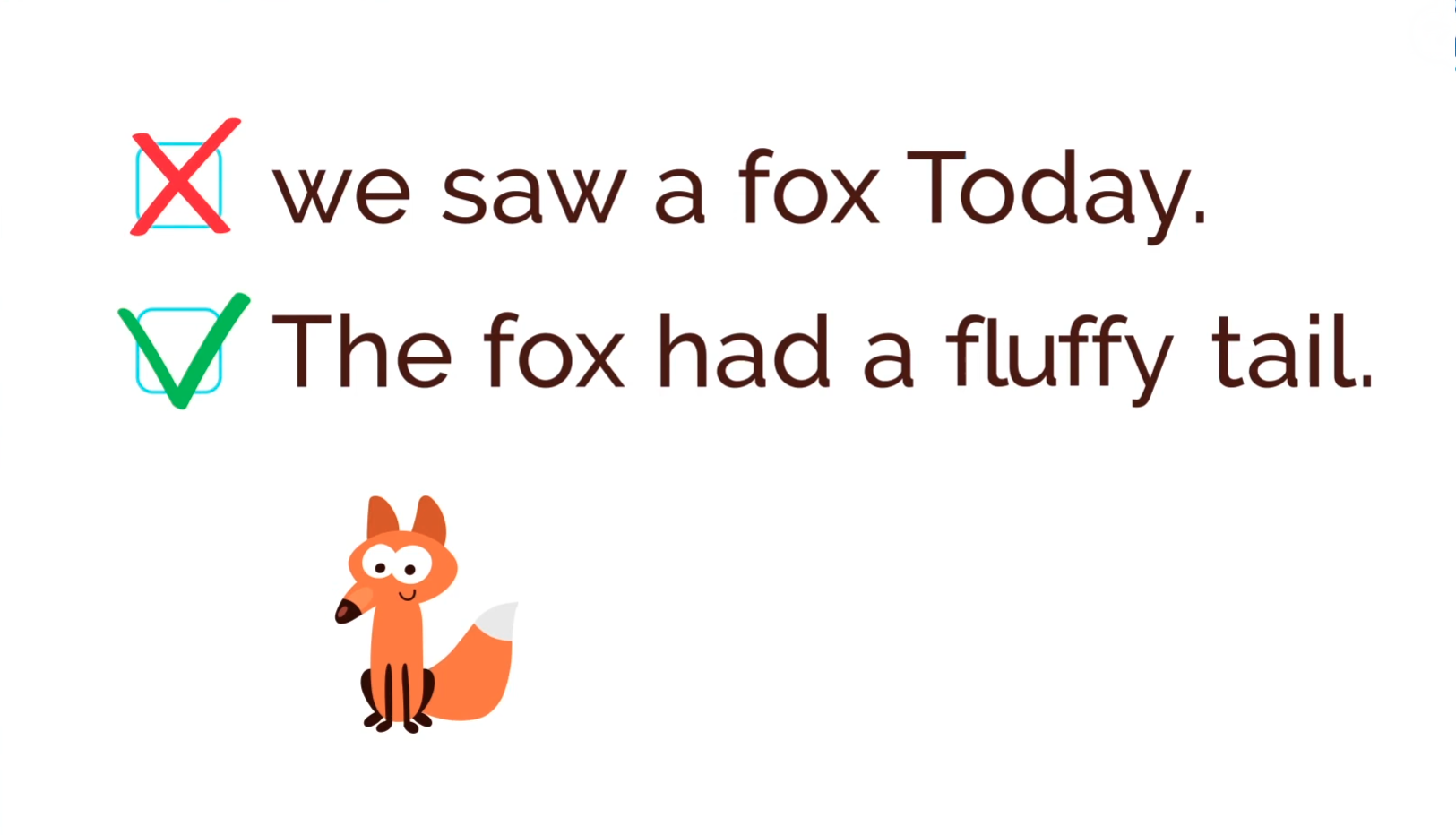

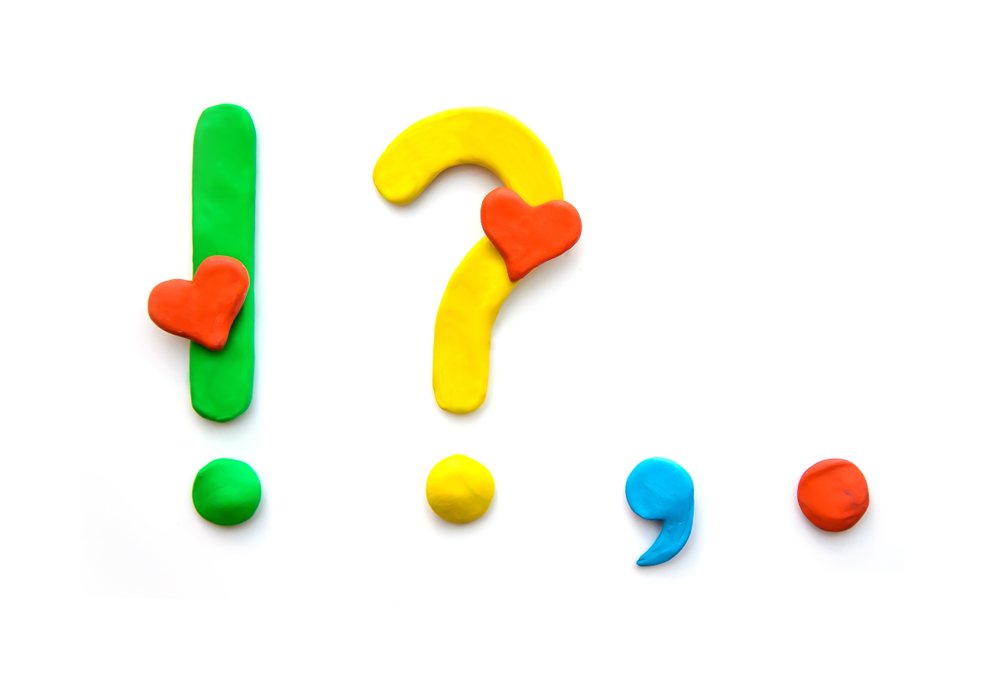

Parents and teachers play a crucial role in laying the foundation for literacy skills in young children aged 4-5. Understanding sentence completion punctuation is essential in helping children develop clear communication skills. At this age, children are beginning to express their thoughts and ideas more coherently, and learning punctuation marks, such as periods, question marks, and exclamation points, helps them understand the structure of written language.
Punctuation acts as a guide for readers, indicating pauses, questions, and emotions within sentences. When children learn to use punctuation correctly, they not only improve their writing but also enhance their ability to comprehend others' texts. As they engage in sentence completion activities, children practice organizing their thoughts, which fosters cognitive skills and boosts their confidence in expressing themselves.
Moreover, integrating punctuation learning into fun activities can encourage a positive attitude toward reading and writing. Engaging children in playful and interactive sentence-building exercises helps reinforce their understanding and creates lasting literacy habits. Ultimately, parents and teachers who prioritize sentence completion punctuation empower young learners to become effective communicators, setting the stage for their future academic success and lifelong learning.








