Discover engaging Visual Learning Worksheets designed specifically for children aged 4-6! These worksheets promote essential skills through vibrant visuals and interactive activities, making learning fun and effective. With a focus on enhancing visual perception, memory, and critical thinking, our resources help young learners recognize patterns, shapes, and colors while boosting their confidence. Each printable worksheet is crafted to align with developmental milestones, ensuring that your child enjoys a wholesome educational experience. Perfect for homeschooling or classroom use, these visual learning resources will inspire creativity and curiosity in your little ones. Download today to support your child's learning journey!
Check out this FREE "Visual Learning" Trial Lesson for age 4-6!

Cut Rectangles: Halves and Wholes

Favorites
With answer key
Interactive
  • 4-6
  • Visual Learning
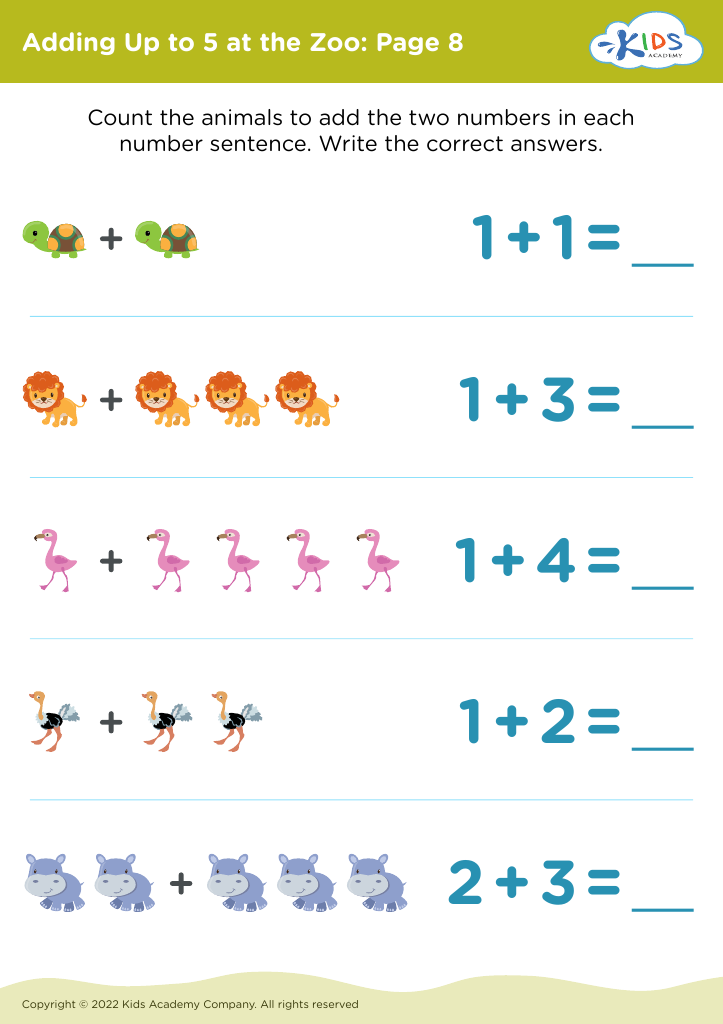
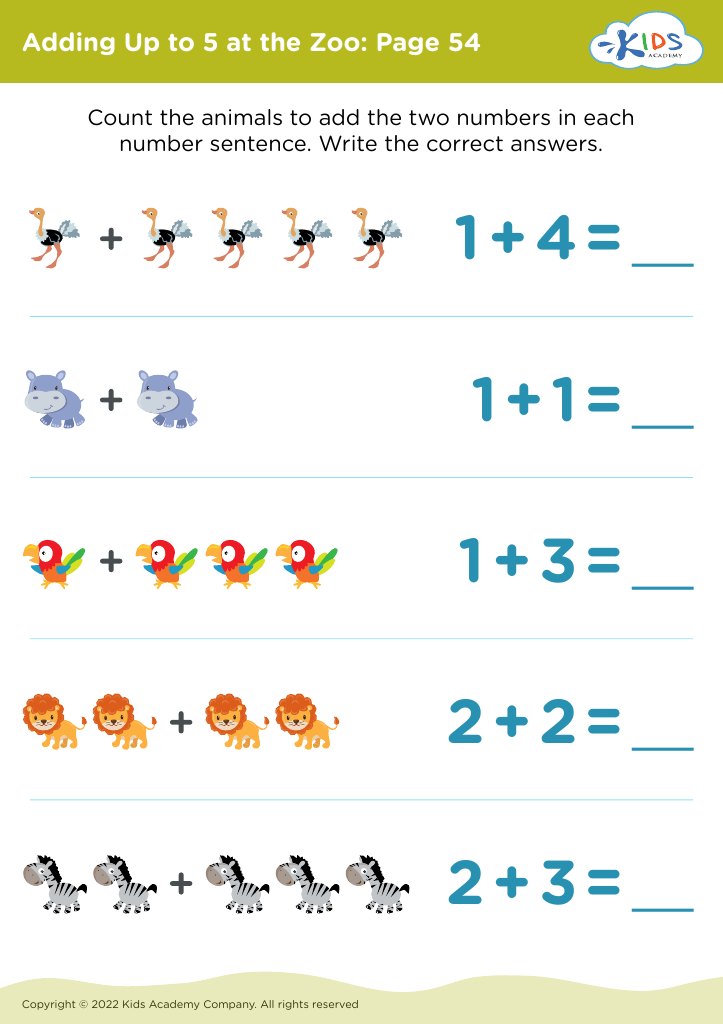
Adding Up to 5 at the Zoo: Page 54
Worksheet
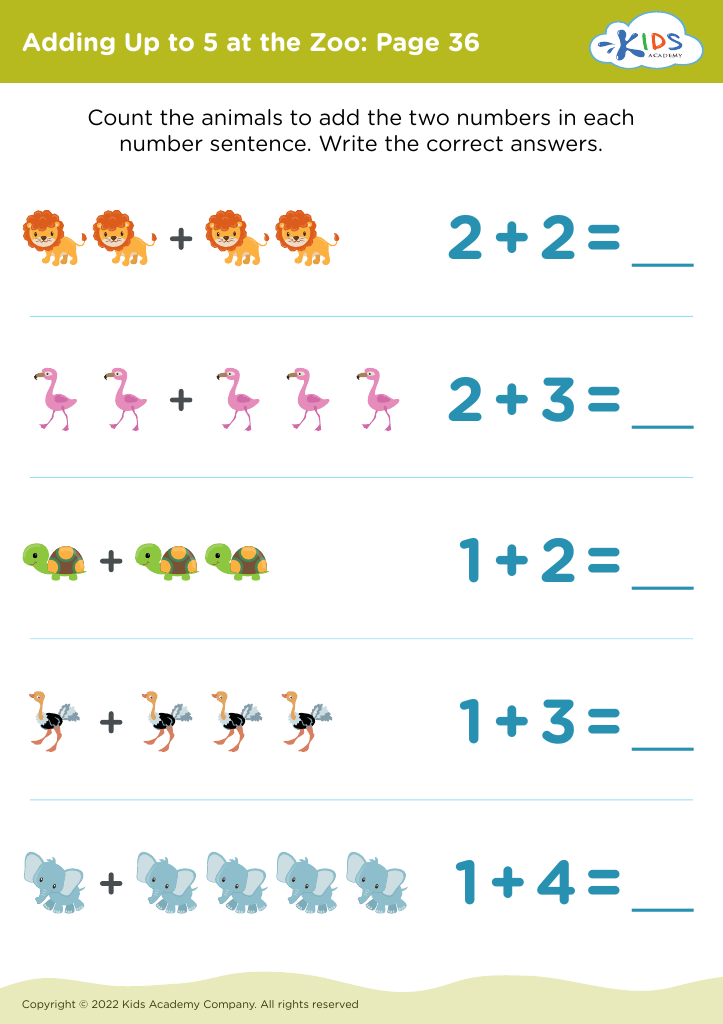
Adding Up to 5 at the Zoo: Page 36
Worksheet
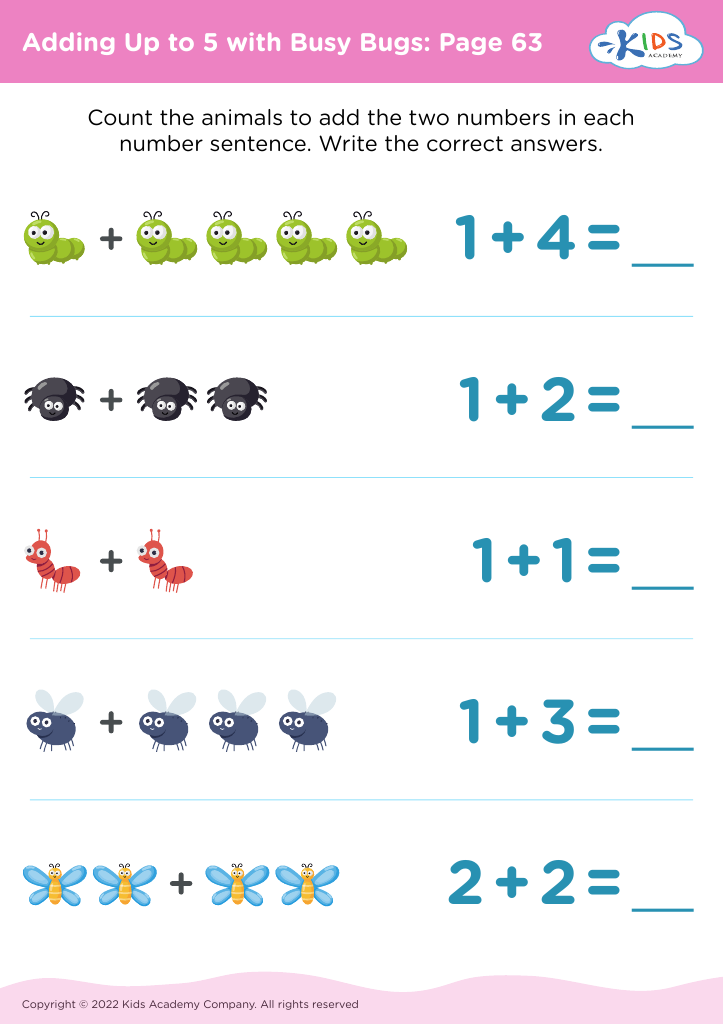
Adding Up to 5 with Busy Bugs: Page 63
Worksheet
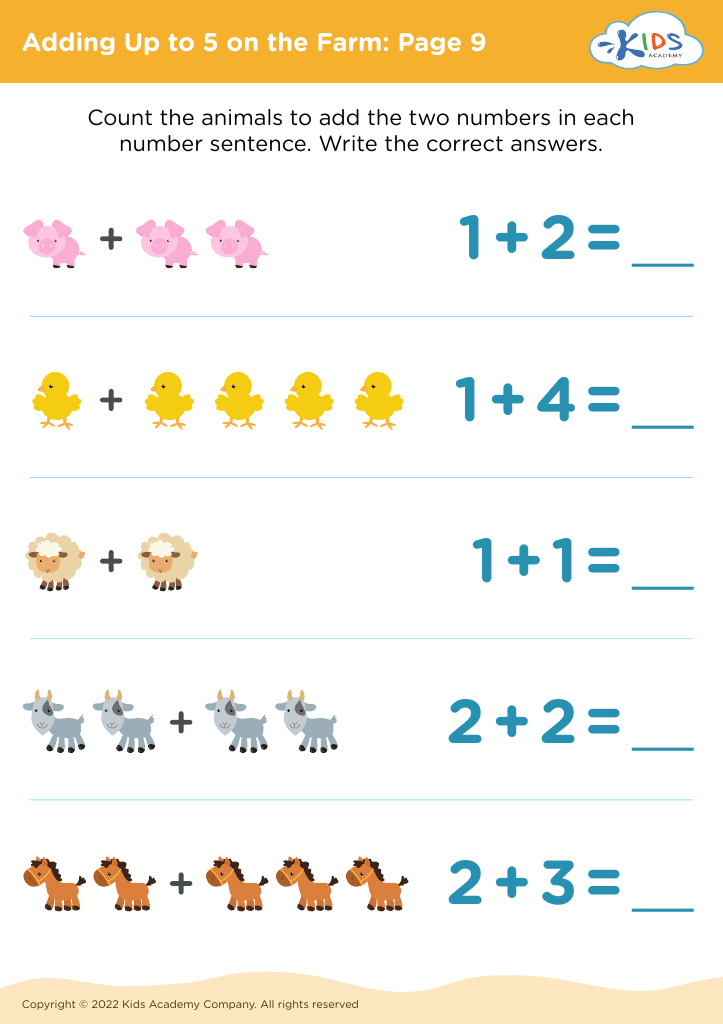
Adding Up to 5 on the Farm: Page 9
Worksheet
Wholes and Halves Worksheet

Wholes and Halves Worksheet

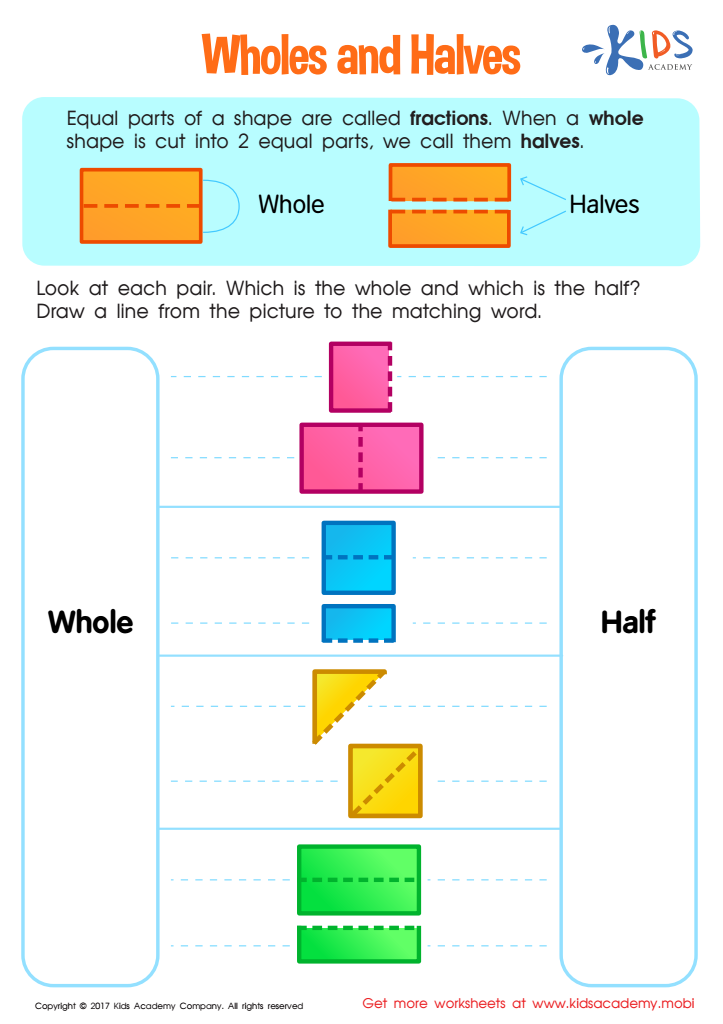
Students can feel overwhelmed with fractions. Help take the stress off by using a colorful worksheet to explain whole shapes and how to find halves. Ask them to identify the whole and point to the matching word for the half. A free printout can help guide them.
Wholes and Halves Worksheet
Worksheet
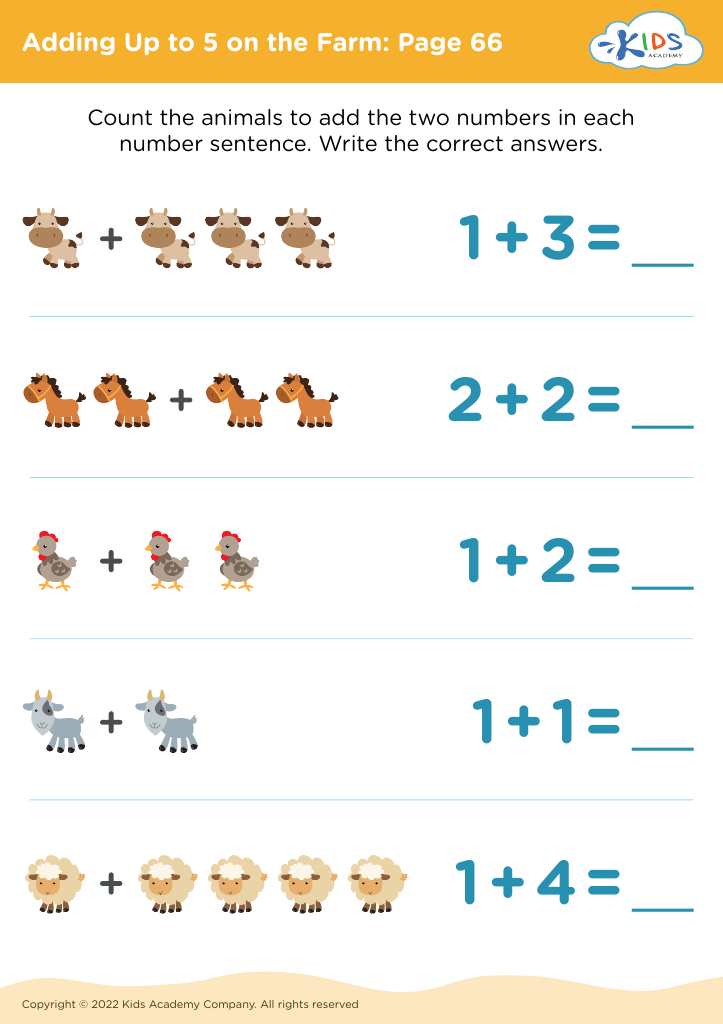
Adding Up to 5 on the Farm: Page 66
Worksheet
Math: Two And Three Addition PDF Worksheet

Two And Three Addition Worksheet

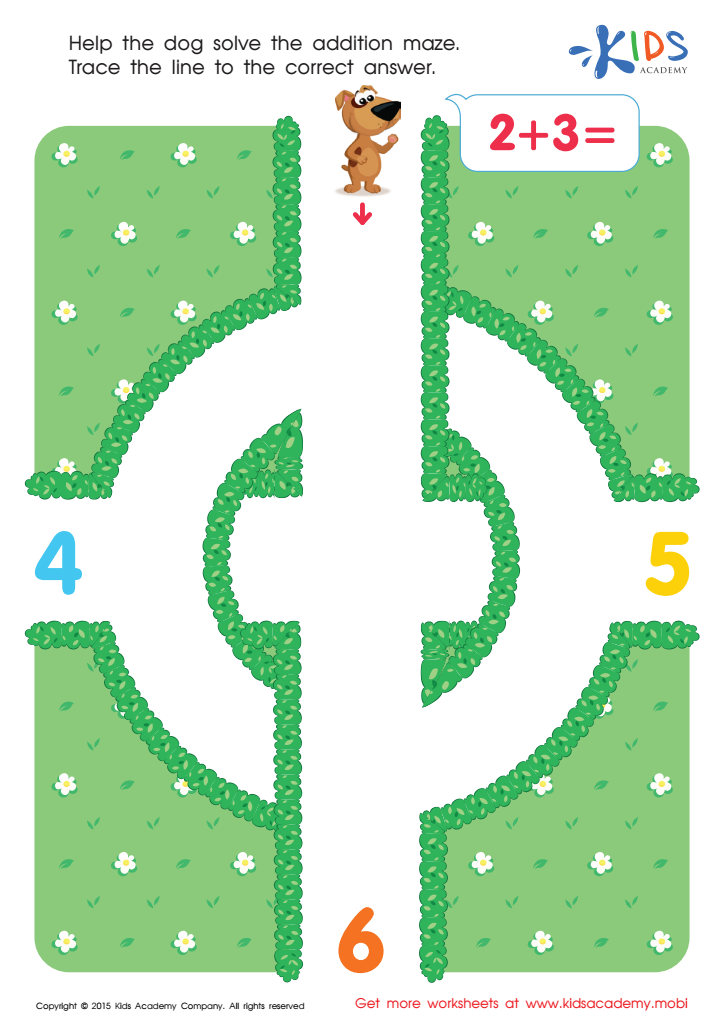
Give your children the task and let them find the path to the right answer while they make their way through the maze, and don't forget to let them trace the path.
Two And Three Addition Worksheet
Worksheet
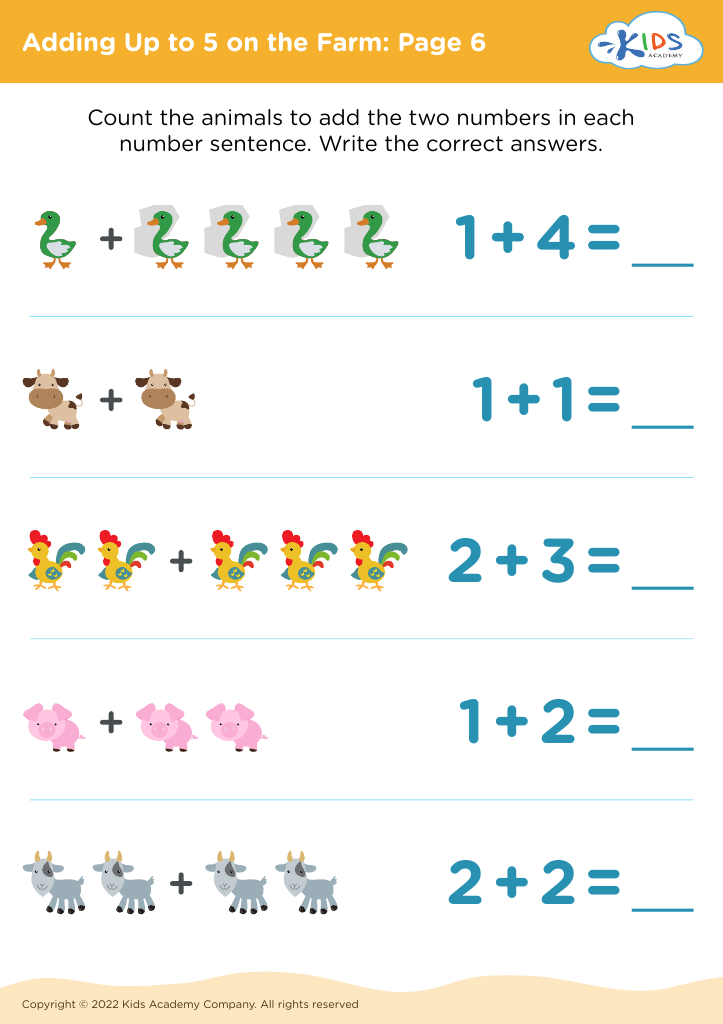
Adding Up to 5 on the Farm: Page 6
Worksheet
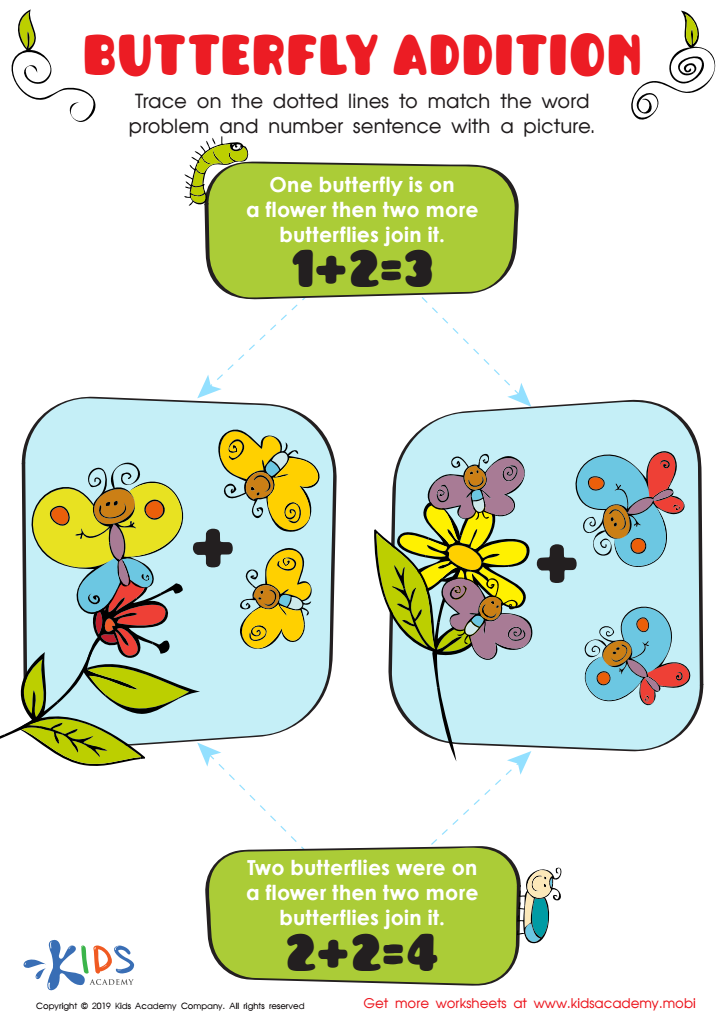
Butterfly Addition Worksheet

Butterfly Addition Worksheet

This tracing sheet is great for kids to work on math skills and have fun too. Read the word problems to them, then help them trace the dotted lines to match the problem and number sentence to a picture. Not only is it educational, it's beautiful too - your kids will love learning about butterflies!
Butterfly Addition Worksheet
Worksheet
Subtracting Socks Worksheet
Subtracting Socks Worksheet
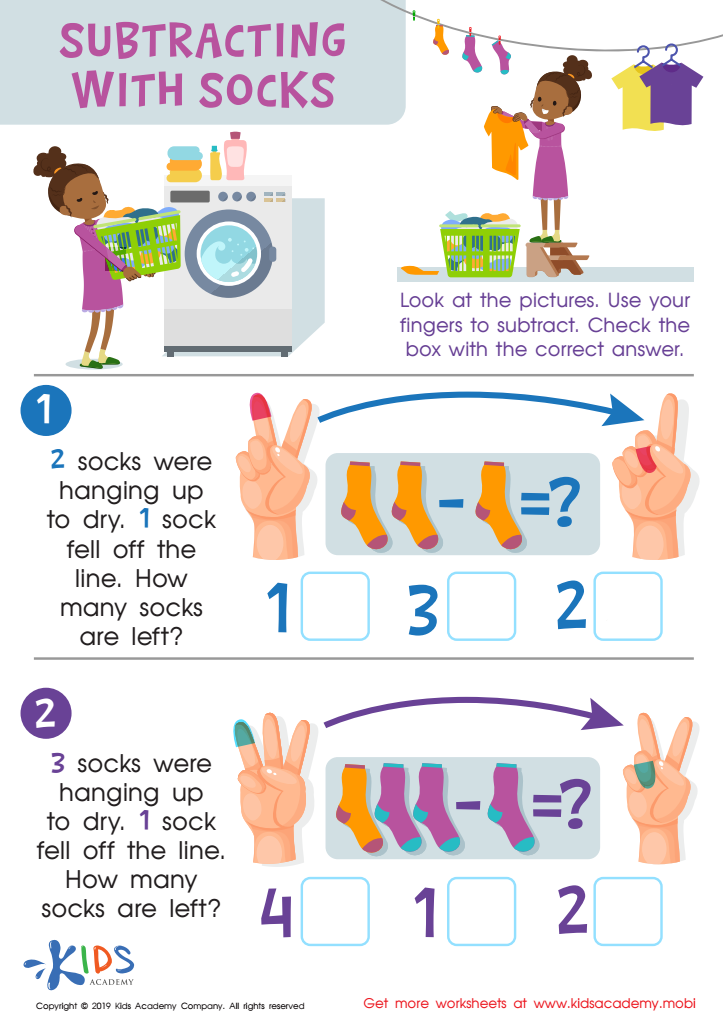
Before beginning this exercise with your children, warm them up with a counting game. If math is not their favorite subject, use this worksheet. Help them read the two word problems, then use their fingers to count and subtract. Ask them to select the correct answer and check the box.
Subtracting Socks Worksheet
Worksheet
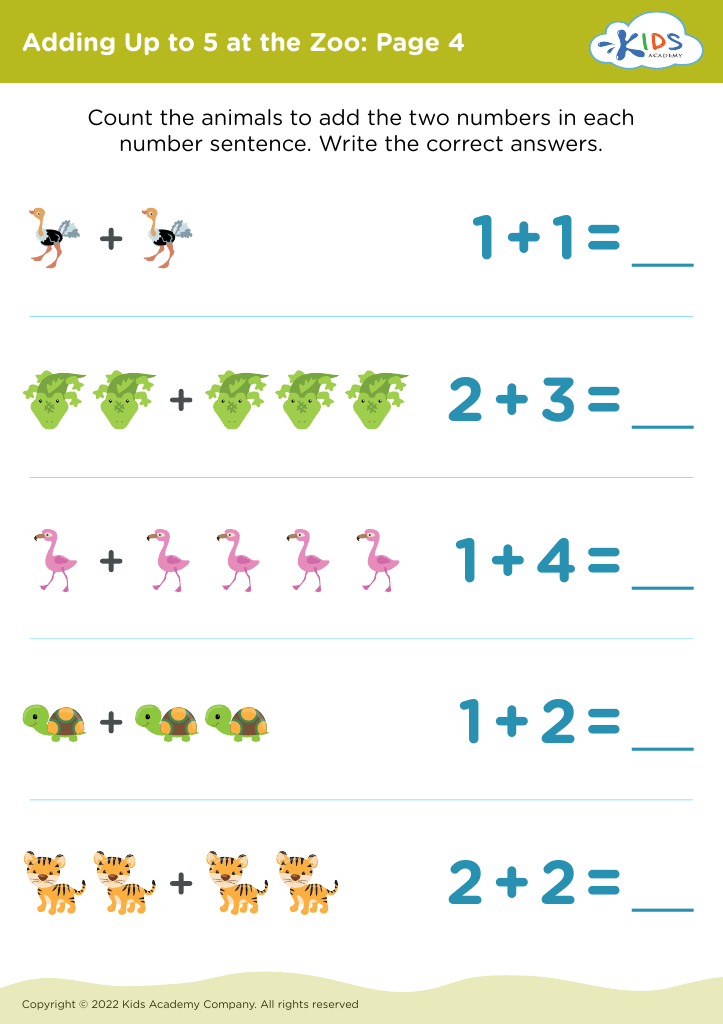
Adding Up to 5 at the Zoo: Page 4

Adding Up to 5 at the Zoo: Page 4

Adding Up to 5 at the Zoo: Page 4
Worksheet
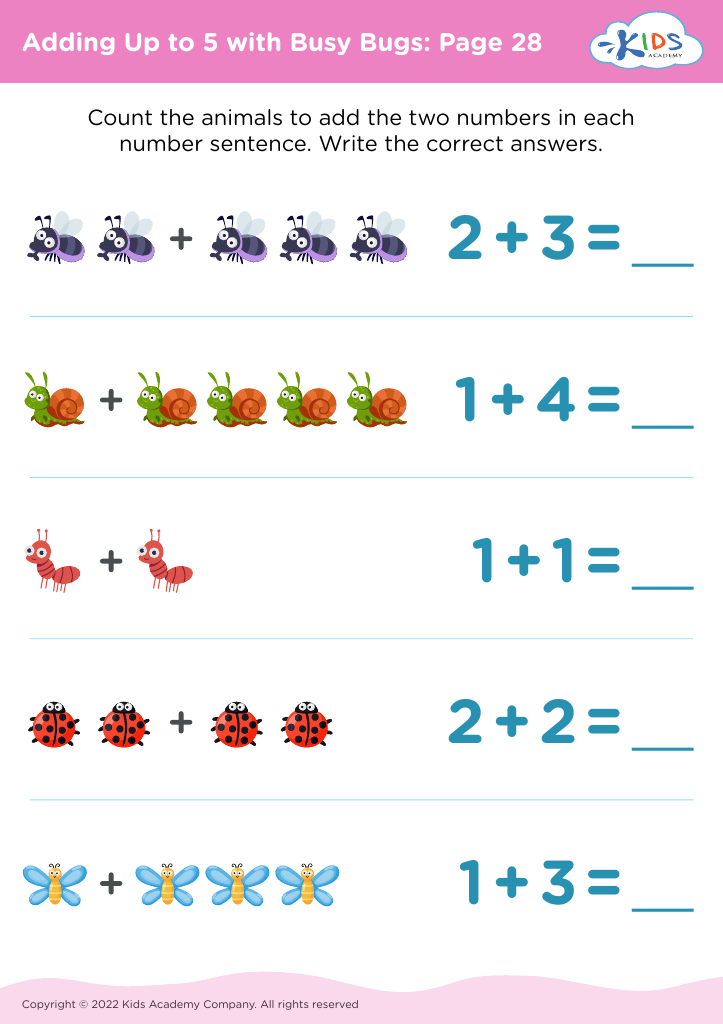
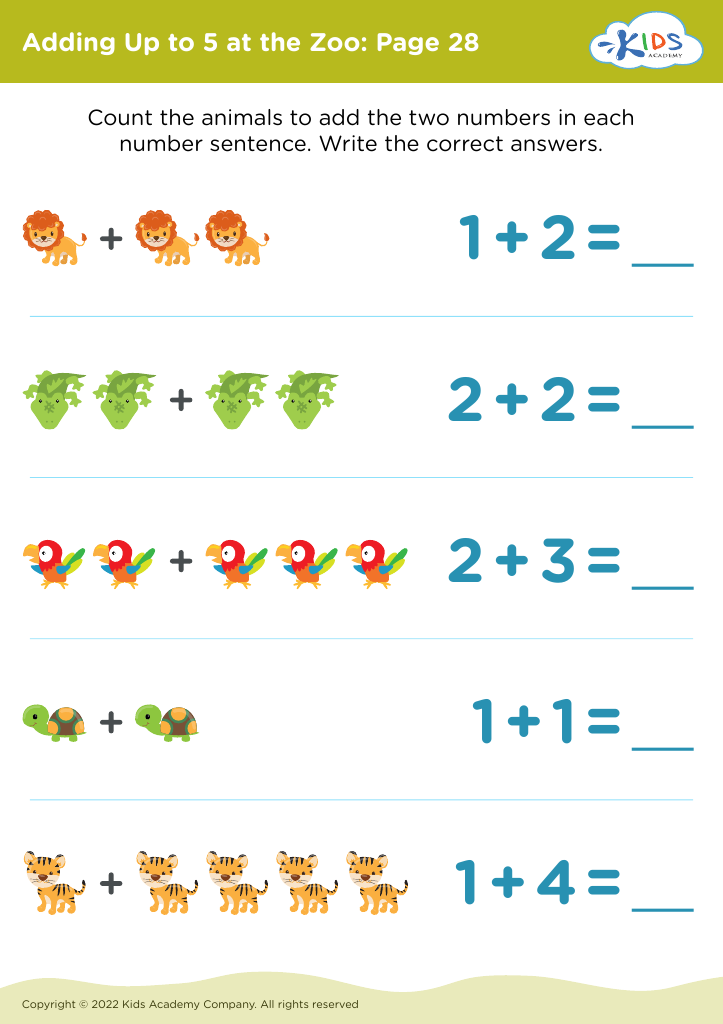
Adding Up to 5 at the Zoo: Page 28
Worksheet
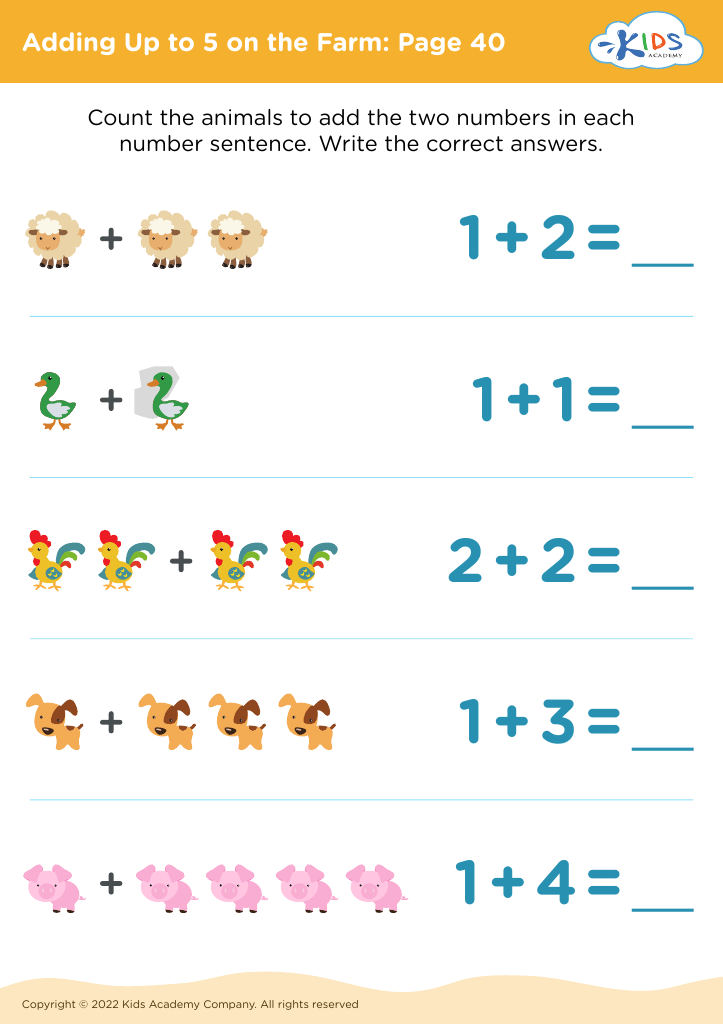
Adding Up to 5 on the Farm: Page 40
Worksheet
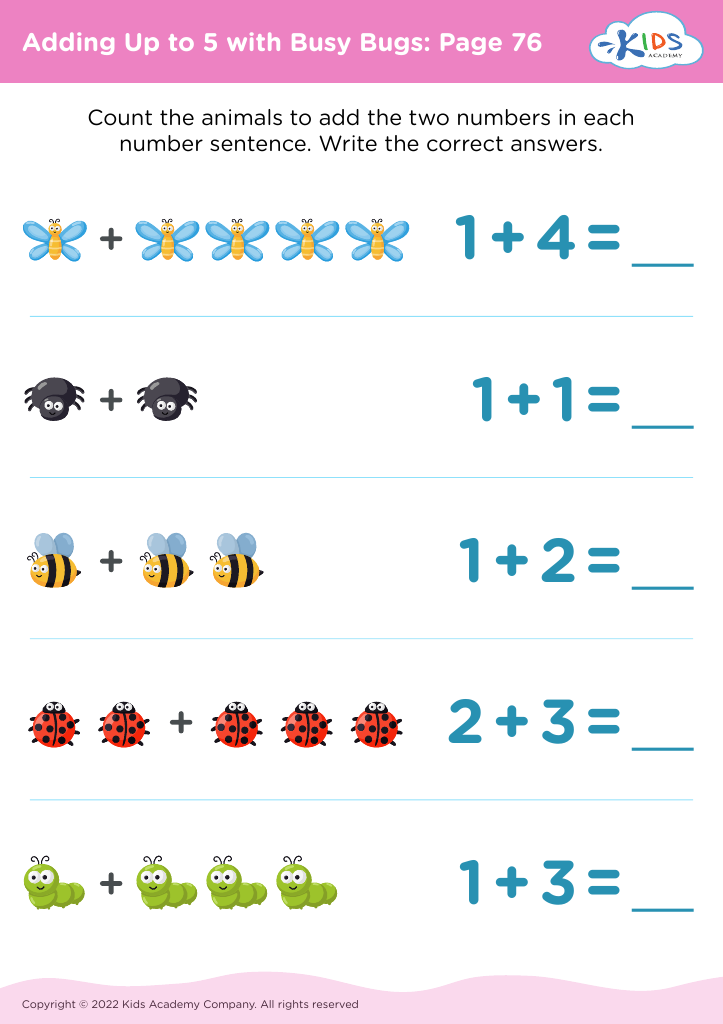
Adding Up to 5 with Busy Bugs: Page 76
Worksheet
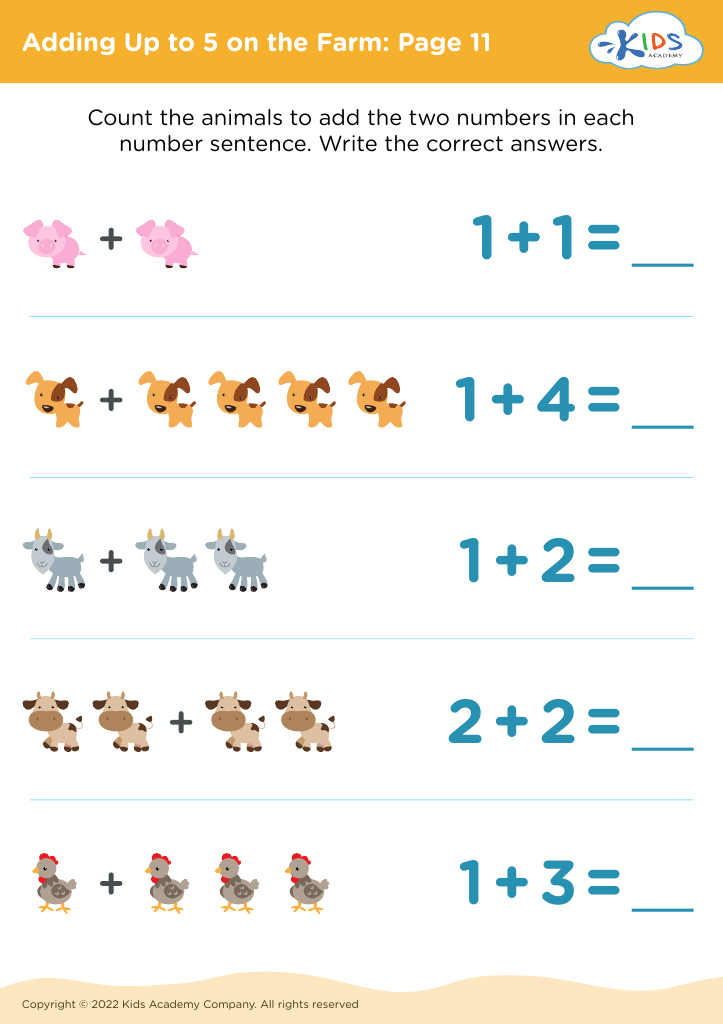
Adding Up to 5 on the Farm: Page 11
Worksheet
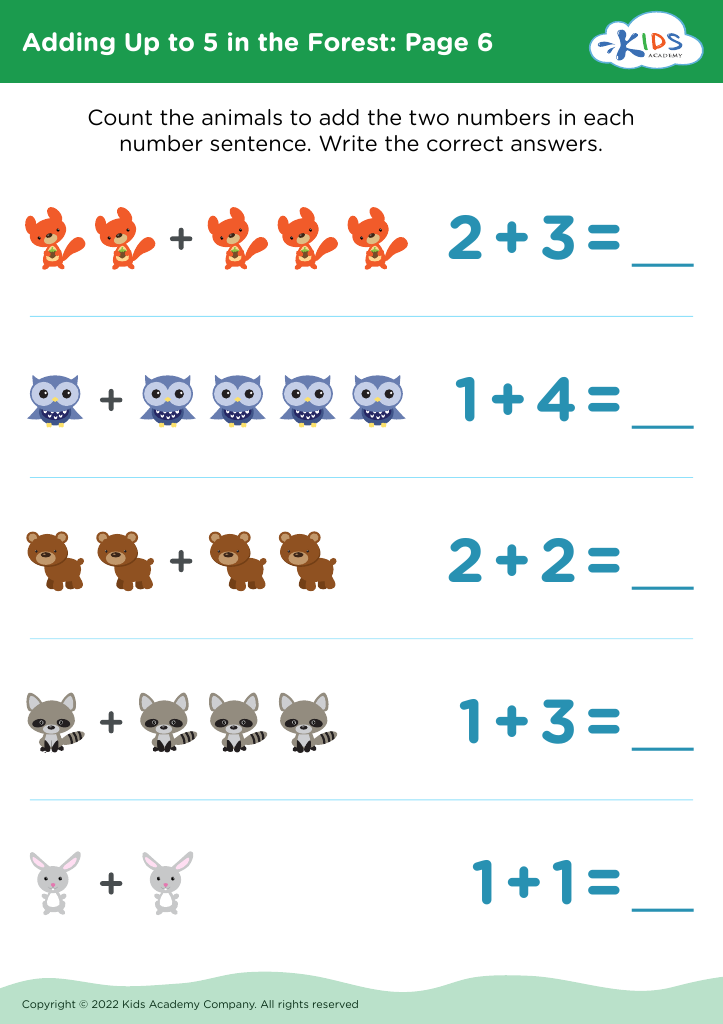
Adding Up to 5 in the Forest: Page 6
Worksheet
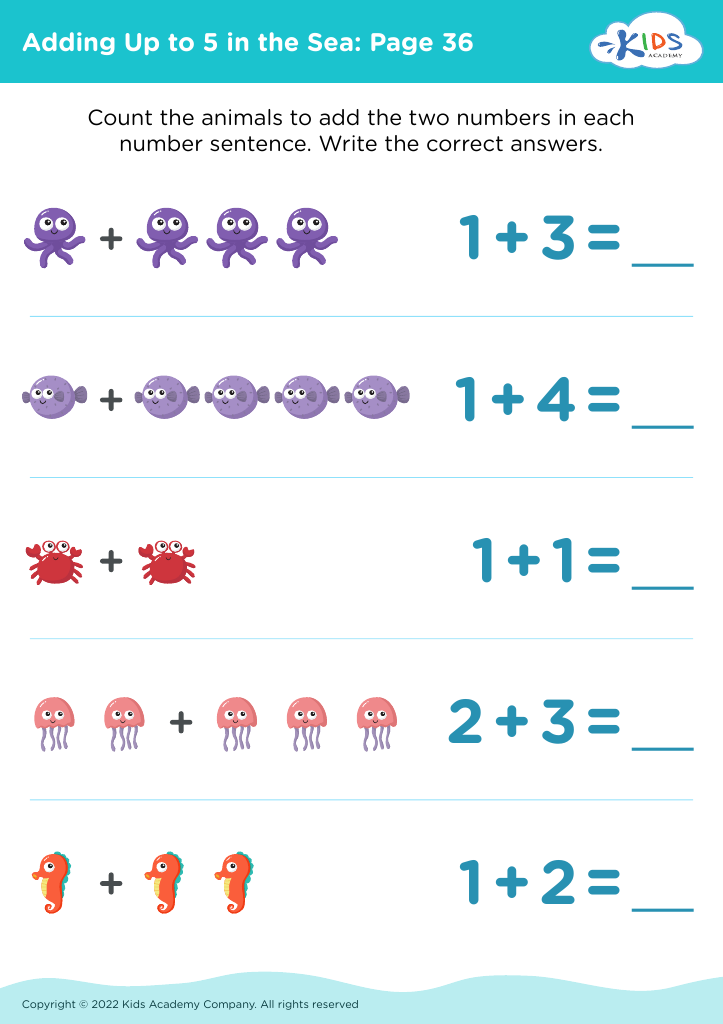
Adding Up to 5 in the Sea: Page 36
Worksheet
Find Quarters Worksheet
Find Quarters Worksheet
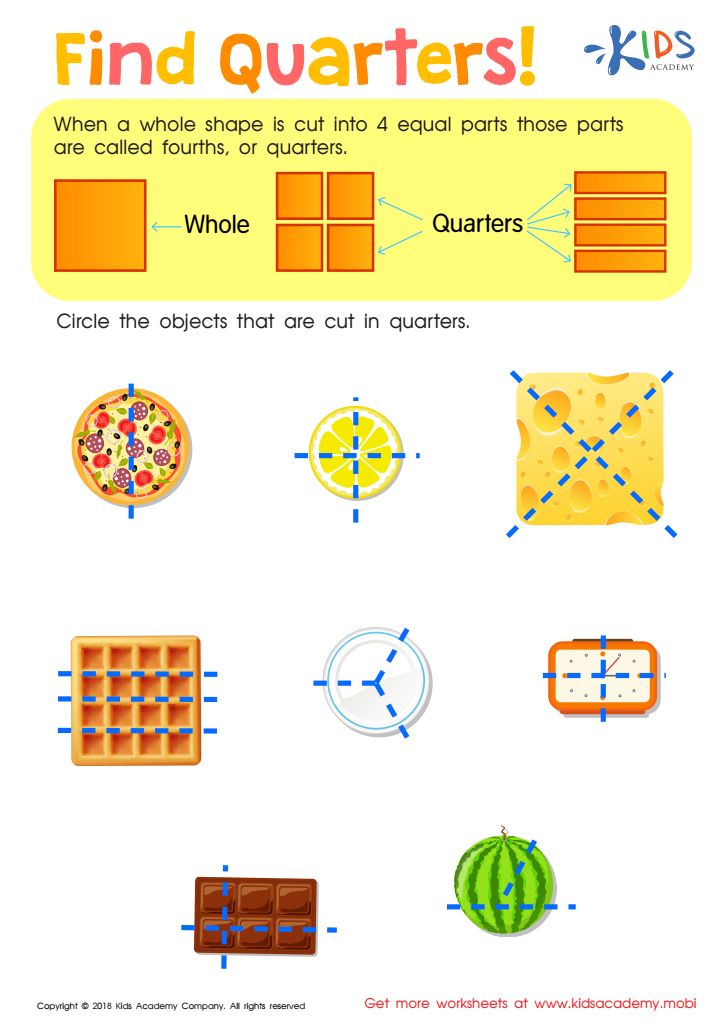
Ask your child if they know what it is called when a shape is cut into two equal parts. If yes, introduce them to quarters. Tell them that when a shape is cut into 4 equal parts, each part is called a quarter. Have them do this exercise by finding and circling objects split into quarters.
Find Quarters Worksheet

Worksheet
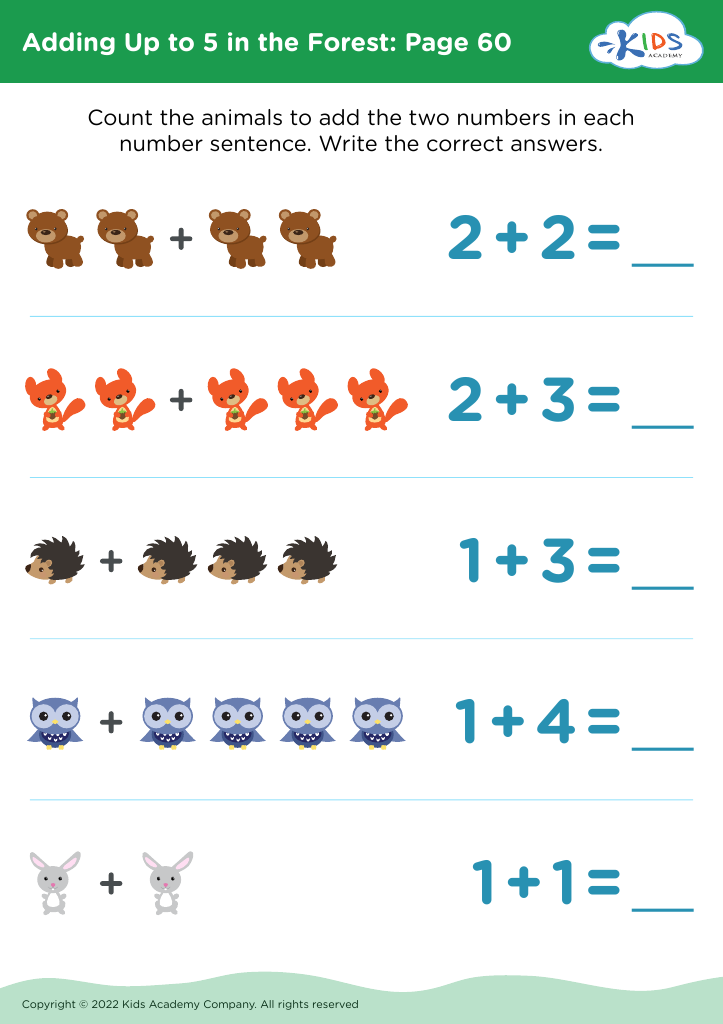
Adding Up to 5 in the Forest: Page 60
Worksheet
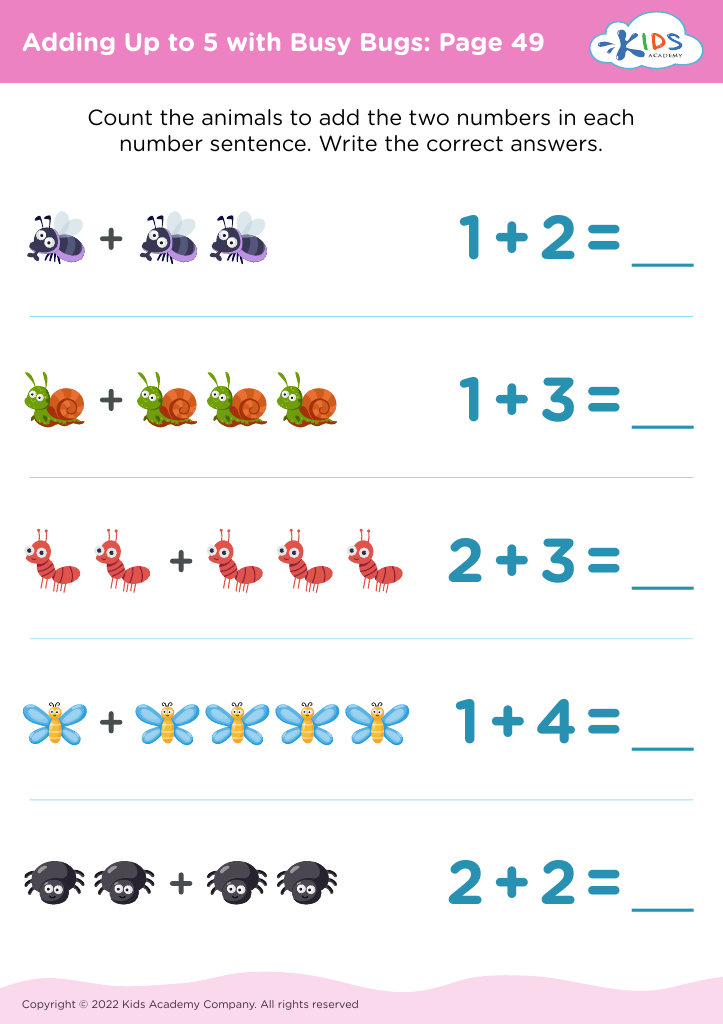
Adding Up to 5 with Busy Bugs: Page 49
Worksheet
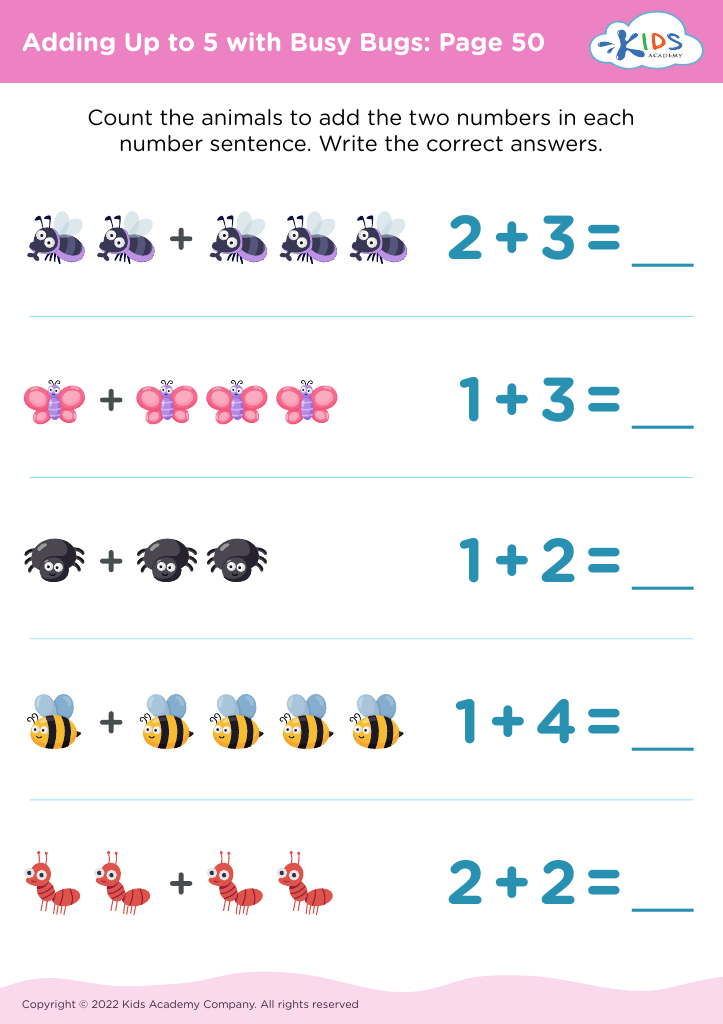
Adding Up to 5 with Busy Bugs: Page 50
Worksheet
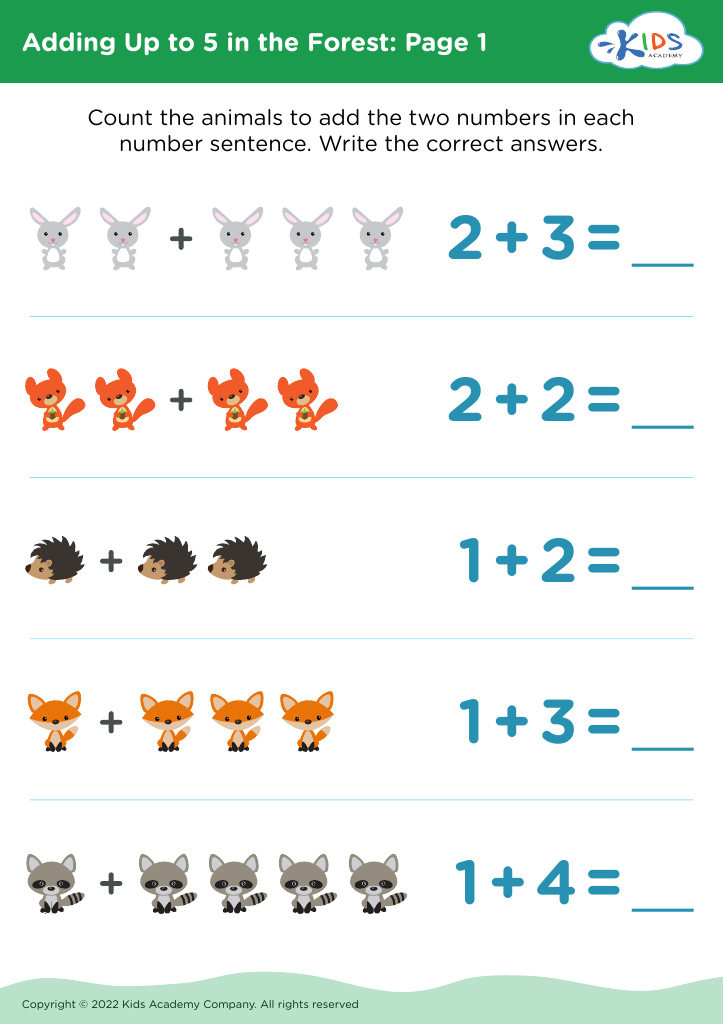
Adding Up to 5 in the Forest: Page 1
Worksheet
Adding Up to 5 at the Zoo: Page 8

Adding Up to 5 at the Zoo: Page 8

Adding Up to 5 at the Zoo: Page 8
Worksheet
Adding Up to 5 with Busy Bugs: Page 28
Worksheet


Visual learning is crucial for children aged 4-6 as it aligns perfectly with their developmental stages and natural learning preferences. At this age, children are highly receptive to visual stimuli; their cognitive functions are beginning to develop, and they rely significantly on images, colors, and objects to make sense of the world around them. Engagement through visual learning aids, such as pictures, diagrams, and hands-on activities, not only facilitates better comprehension but also helps retain information longer.

Parents and teachers should care about visual learning because it encourages creativity and exploration. Visual methods of teaching can make complex concepts more accessible and relatable, fostering a sense of curiosity in young learners. This approach supports diverse learning styles, including those of visual-spatial learners who thrive when ideas are presented visually.

Moreover, a focus on visual learning builds foundational skills such as critical thinking, problem-solving, and communication. By incorporating such strategies, educators and caregivers lay the groundwork for lifelong learning. Ultimately, supporting visual learning in early education environments can enhance overall cognitive development, promote confidence, and strengthen the parent-teacher collaboration crucial to a child’s success.