Cognitive Development 2D Shapes Worksheets for Ages 4-6
10 filtered results
-
From - To
Enhance your child's cognitive development with our engaging 2D shapes worksheets designed specifically for ages 4-6. These worksheets offer a fun and interactive way for young learners to explore basic geometric shapes, build critical thinking skills, and improve problem-solving abilities. Featuring colorful illustrations and age-appropriate activities, children will enjoy identifying, sorting, and comparing different shapes. By integrating learning with play, our resources help familiarize kids with important math concepts while fostering creativity and visual perception. Perfect for home or classroom use, these worksheets are a valuable tool to lay a strong foundation for your child's mathematical journey. Download now and watch your child's skills flourish!
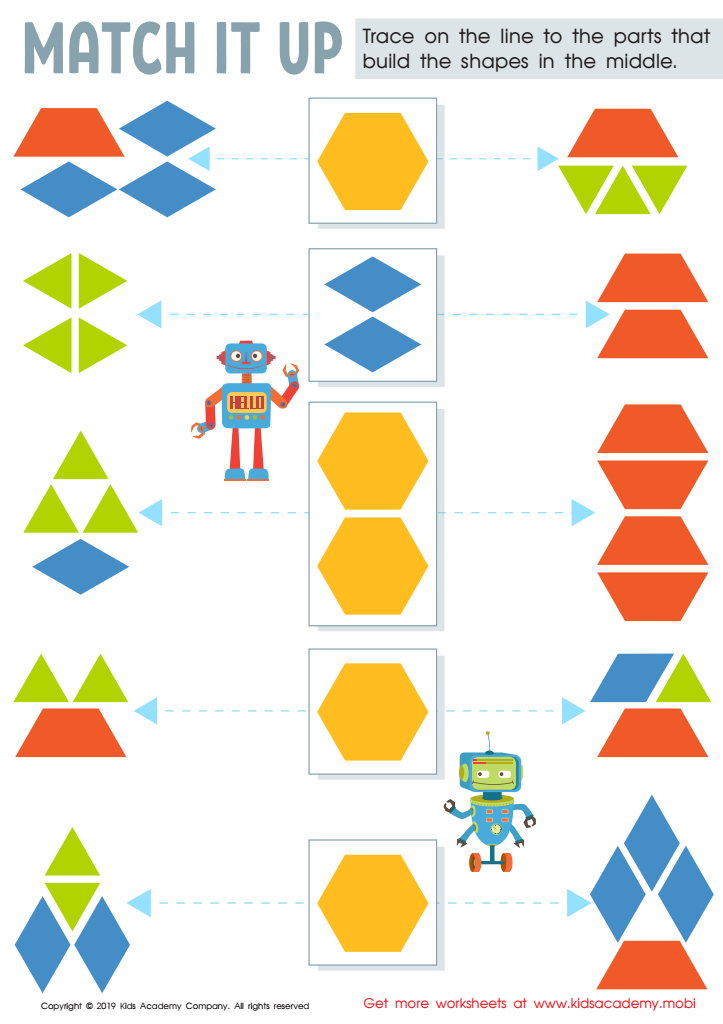
Match It up Worksheet
 Assign to My Students



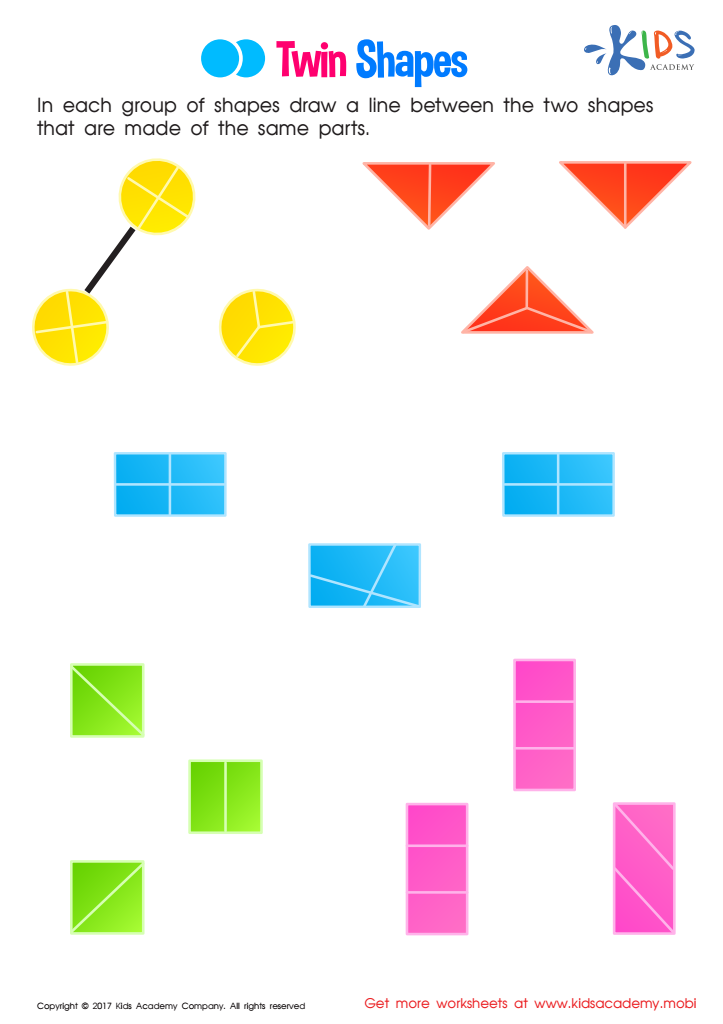
Twin Shapes Worksheet
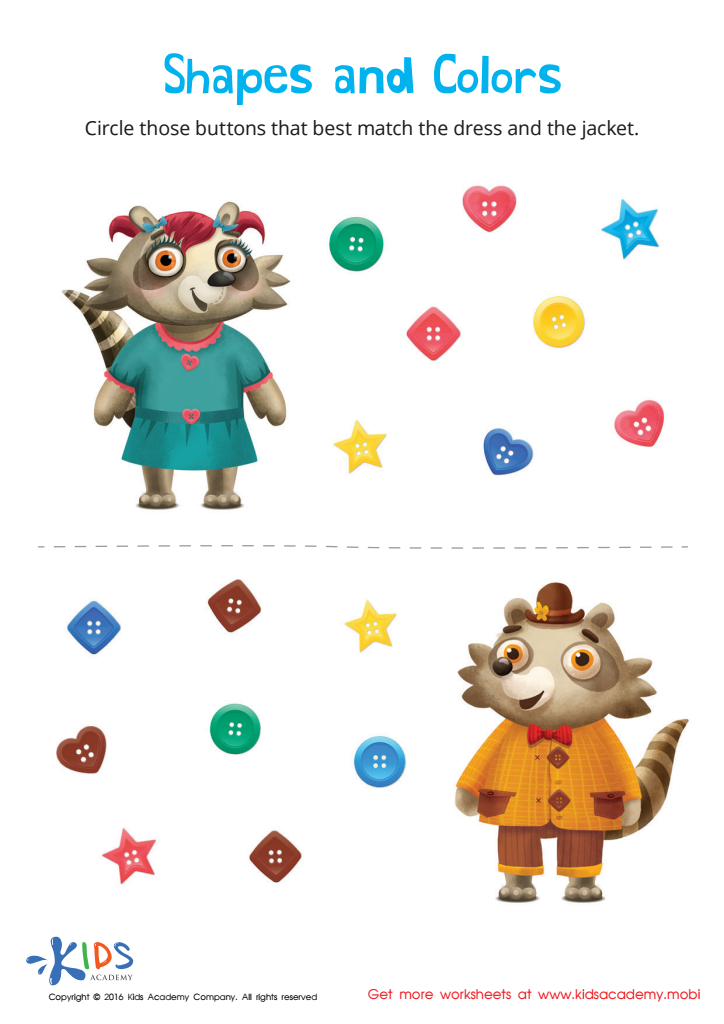
Matching: Shapes and Colors Worksheet
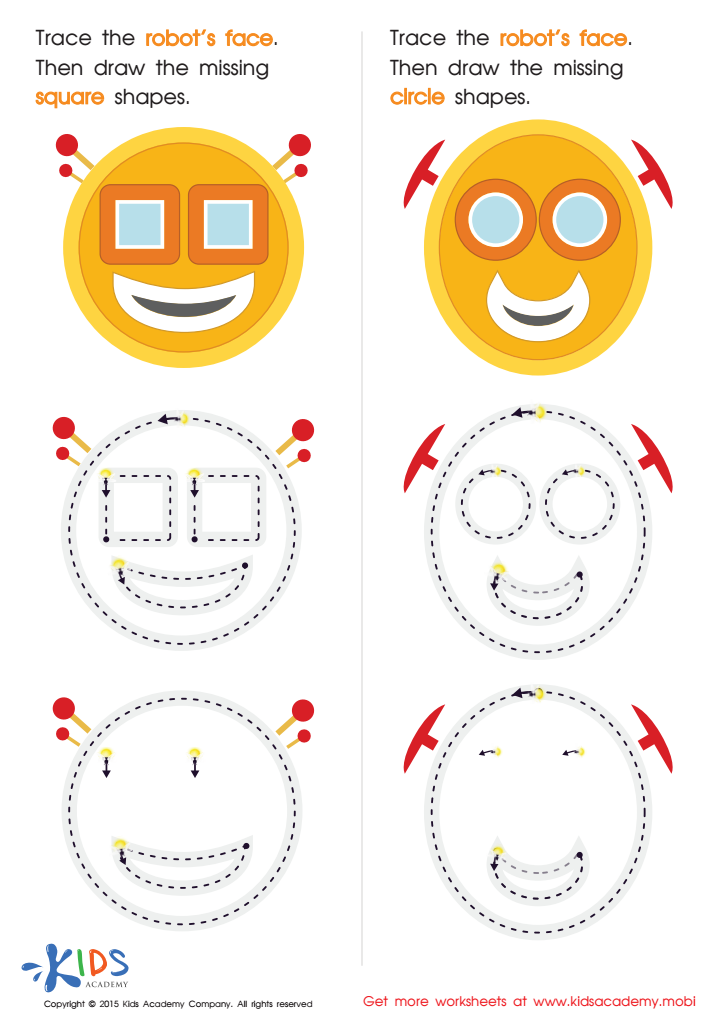
Practicing to Draw Circles And Squares Printable
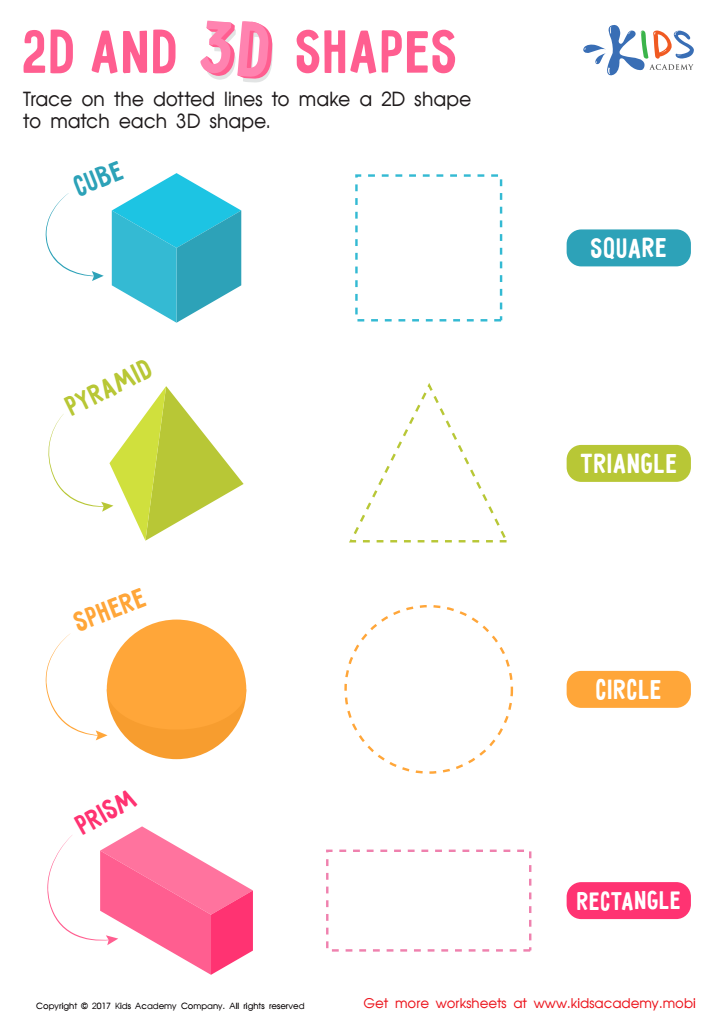
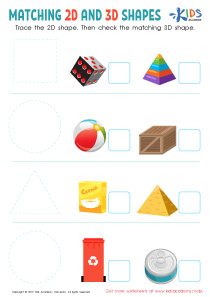
2D and 3D Shapes Worksheet
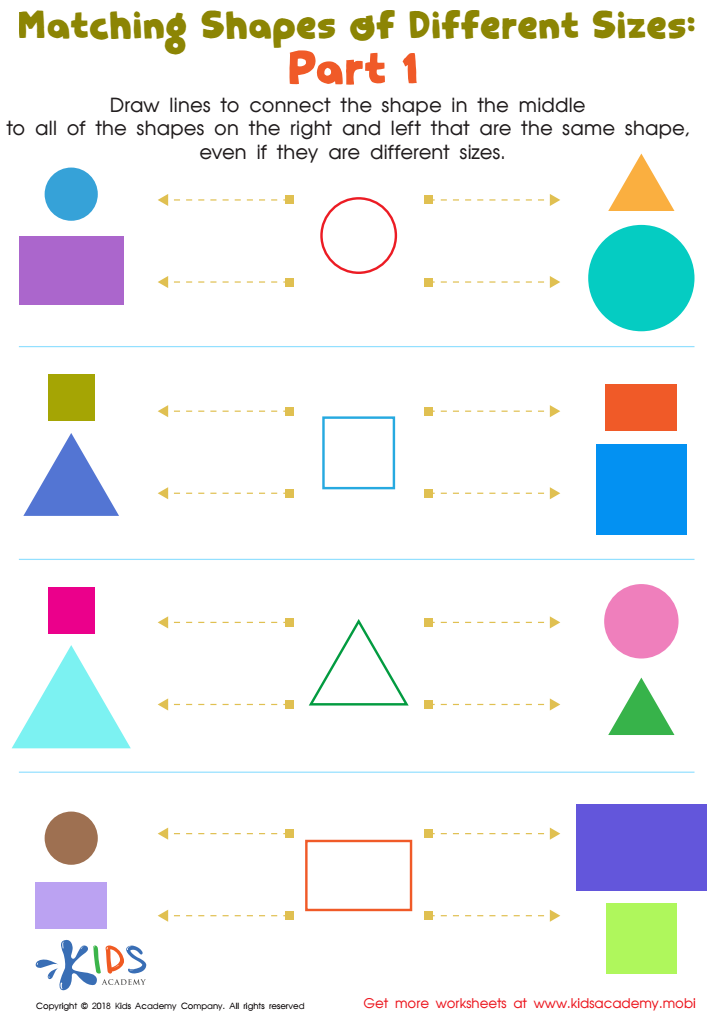
Geometry: part 1 Worksheet
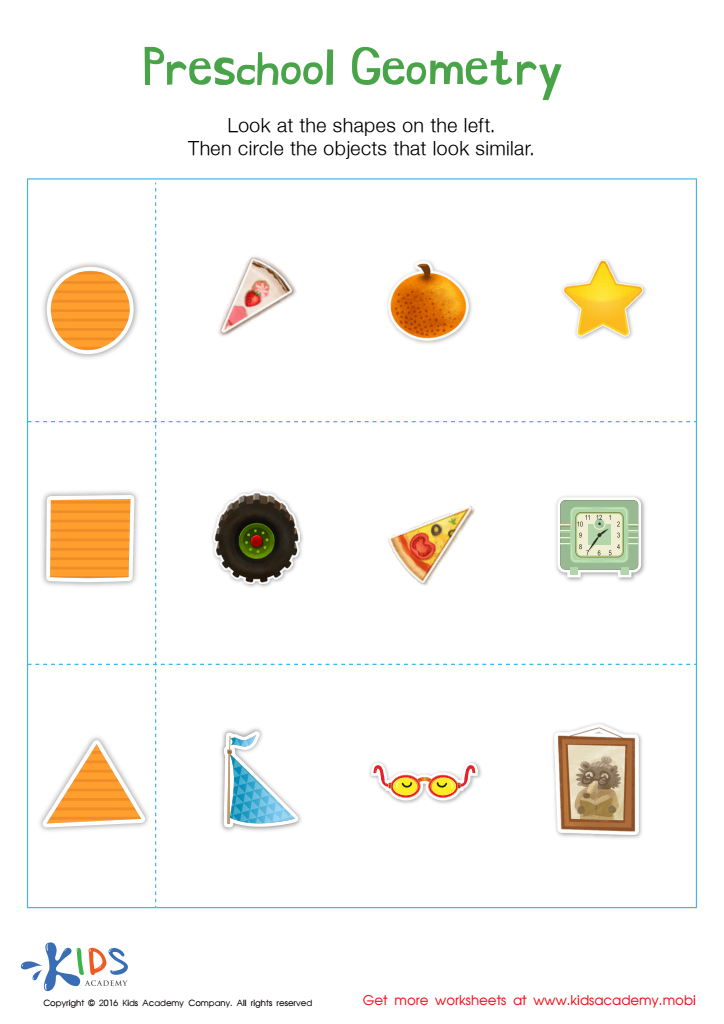
Preschool Geometry Match Up Worksheet
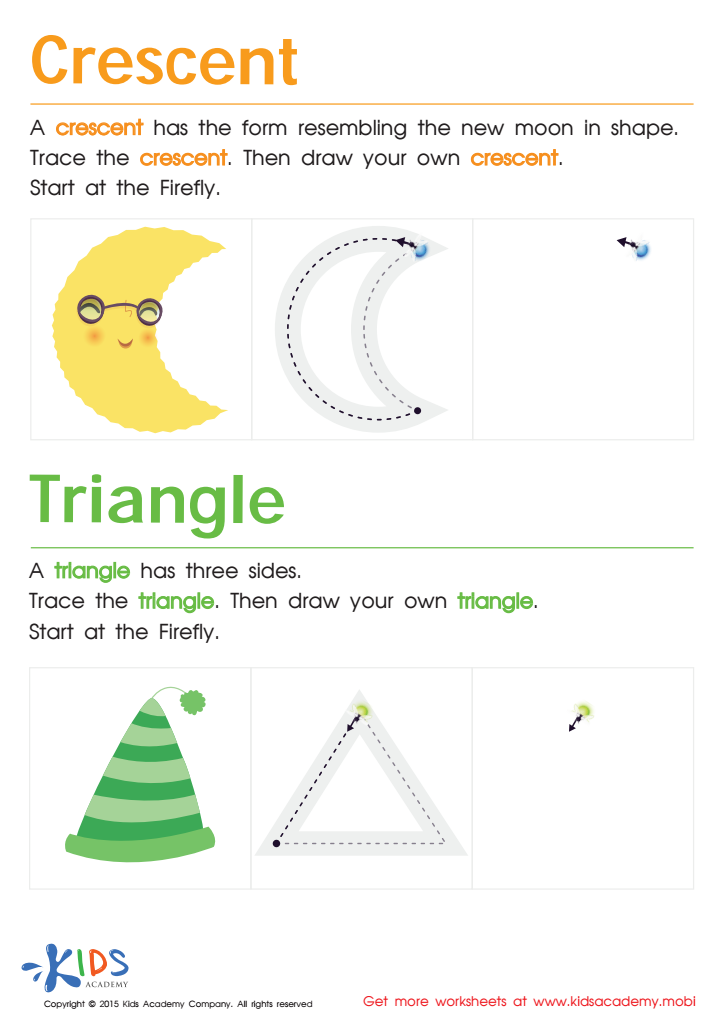
Learning to Draw Crescents And Triangles Worksheet
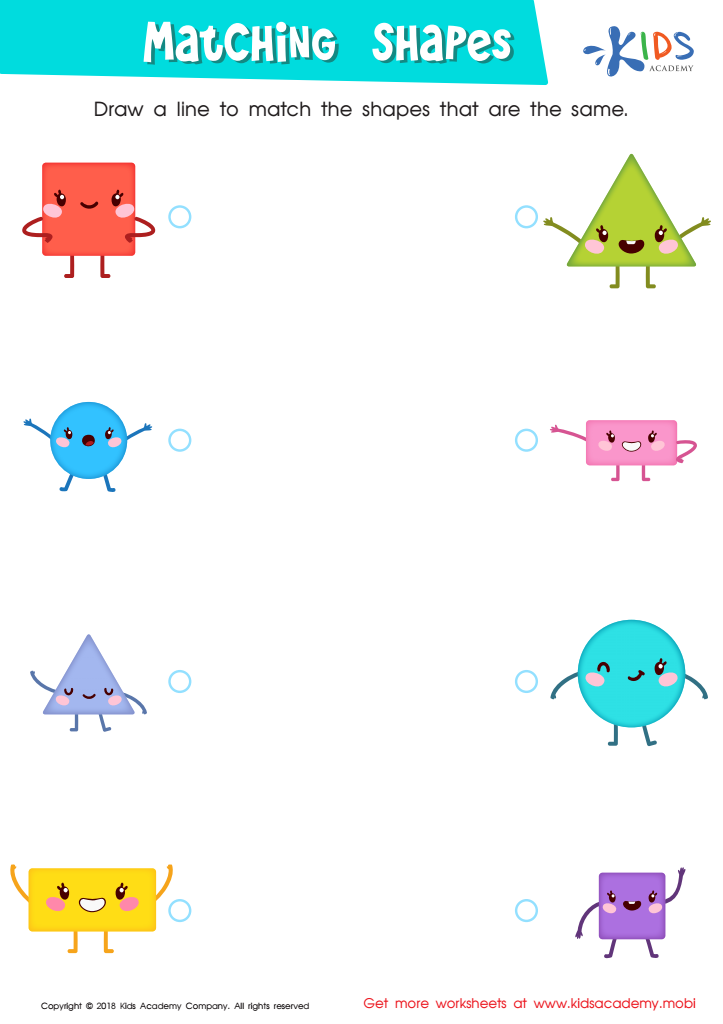
Matching Shapes Worksheet
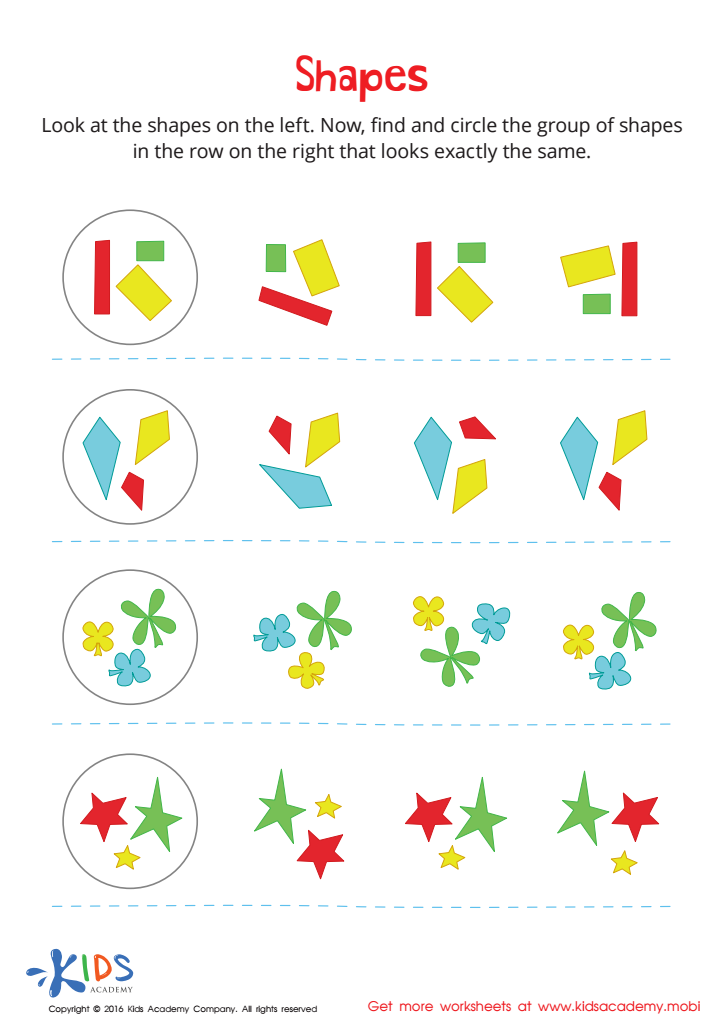
Shapes Worksheet








Cognitive development, particularly regarding 2D shapes, is pivotal for children ages 4-6 as it lays the groundwork for essential skills in mathematics, spatial reasoning, and critical thinking. At this stage, children begin to manipulate and understand their environment, which is crucial for their overall cognitive growth. Learning about 2D shapes introduces kids to basic geometric concepts, helping them recognize patterns, classifications, and relationships. This knowledge is not just academic; it fosters problem-solving skills and boosts creativity as children start to visualize and represent ideas graphically.
Moreover, familiarity with 2D shapes enhances children's ability to communicate their thoughts and understand the world around them. It lays the foundation for more complex mathematical concepts in later years, making it an integral component of early education. Engaging with shapes enhances fine motor skills through activities like tracing or constructing, while also incorporating collaborative play, which supports social and emotional development.
Moreover, understanding shapes contributes to everyday activities, such as recognizing signs, understanding architecture, or even organizing their environment. Therefore, parents and teachers should prioritize activities that promote shape recognition and understanding, as these foundational skills contribute significantly to a child’s overall cognitive development and future academic success.