Shape Recognition Comparison Worksheets for Ages 4-6
3 filtered results
-
From - To
Discover our fun and educational Shape Recognition Comparison Worksheets, designed specifically for ages 4-6! These engaging worksheets help young learners identify, compare, and differentiate between various shapes while enhancing their critical thinking and observation skills. Perfect for preschool and kindergarten children, each printable worksheet provides hands-on activities that make learning shapes enjoyable and interactive. With vibrant visuals and simple instructions, our worksheets will keep kids interested and motivated as they develop essential early math skills. Ideal for both classroom and home use, these exercises lay a strong foundation for future geometry success. Explore today!
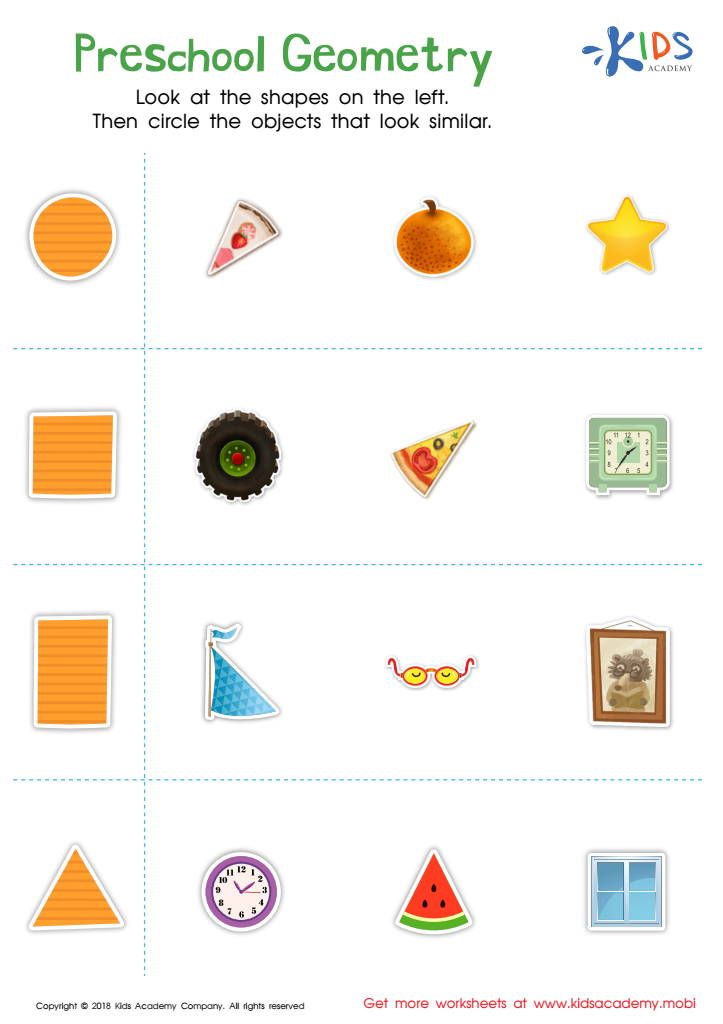
Preschool Geometry Worksheet
 Assign to My Students
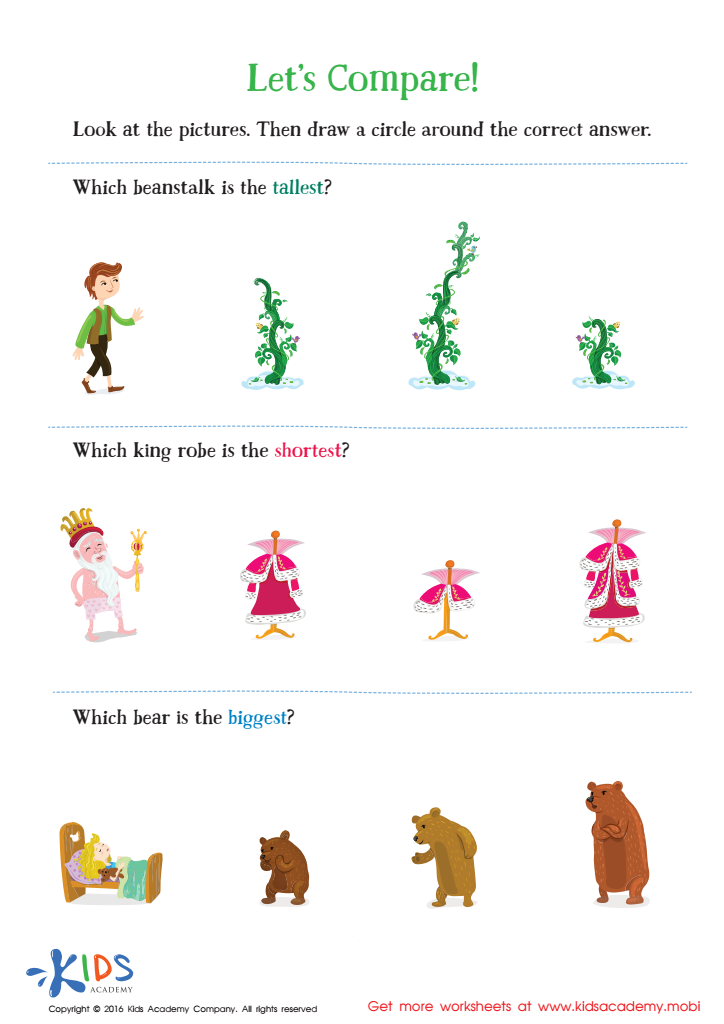
Fairy Tale Worksheet: Let's Compare
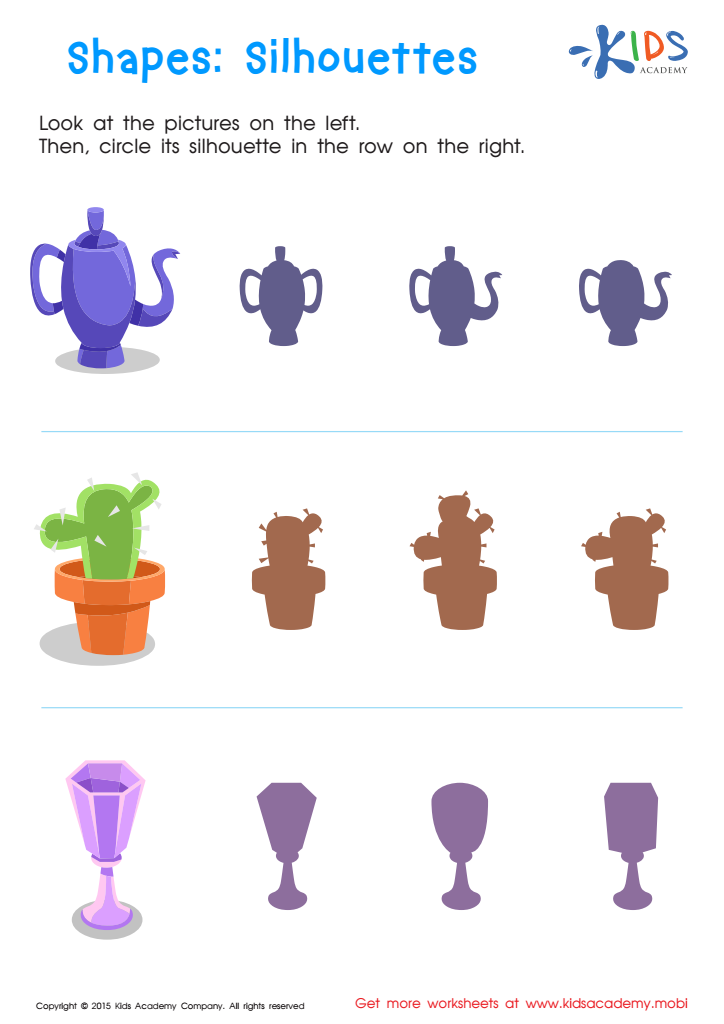
Silhouettes – Shapes Worksheet






Shape recognition comparison is more than just a visual exercise; it lays the groundwork for essential cognitive and academic skills in children aged 4-6. At its core, this activity enhances visual discrimination, enabling children to notice subtle differences and similarities between different shapes. This foundational skill is a precursor to reading, where distinguishing between similar-looking letters is crucial.
Moreover, recognizing and comparing shapes bolster a child's mathematical thinking. Shapes are essentially geometric figures that serve as the basic building blocks for more complex concepts in math, including geometry, measurement, and pattern recognition. When children understand shapes, they gain a better grasp of spatial relationships, an ability crucial for problem-solving in both math and everyday life.
Shape recognition also supports the development of fine motor skills. Tasks like tracing, drawing, or cutting out shapes require precise movements and hand-eye coordination. These activities pave the way for writing proficiency and other detailed activities requiring dexterity.
Socially and emotionally, engaging in shape-related activities, whether independently or in group settings, builds confidence and fosters cooperative learning. Kids experiment, communicate, and share ideas, reinforcing language skills and teamwork.
In essence, shape recognition comparison bridges important developmental milestones. By nurturing it, parents and teachers set the stage for a lifetime of learning and functional skills.








