Understanding tens Numbers Worksheets for Ages 4-6
4 filtered results
-
From - To
Enhance your child’s foundational math skills with "Understanding Tens Numbers Worksheets for Ages 4-6". These engaging, printable worksheets by Kids Academy make learning fun and interactive. Designed for young learners, they provide colorful exercises that introduce the concept of tens in an easy-to-understand approach. Children will learn to count, identify, and group objects in tens, building a strong number sense and preparing them for more advanced math concepts. Perfect for parents and teachers, these resources support early math mastery, making learning enjoyable and effective. Download today and watch your child’s confidence soar!
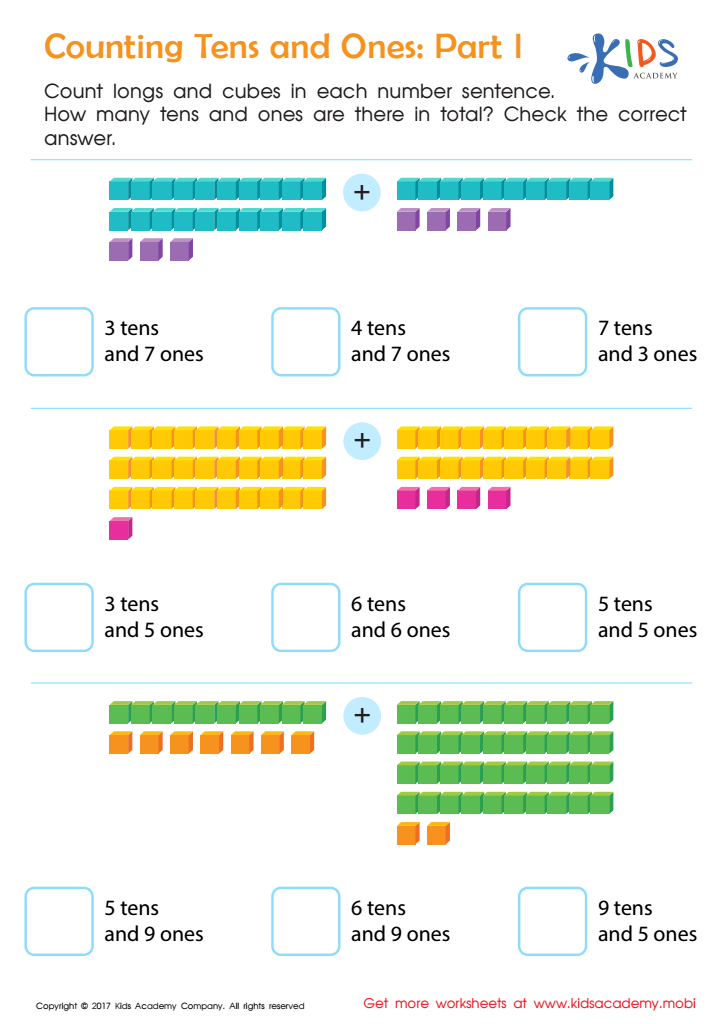
Counting Tens and Ones: Part 1 Worksheet
 Assign to My Students
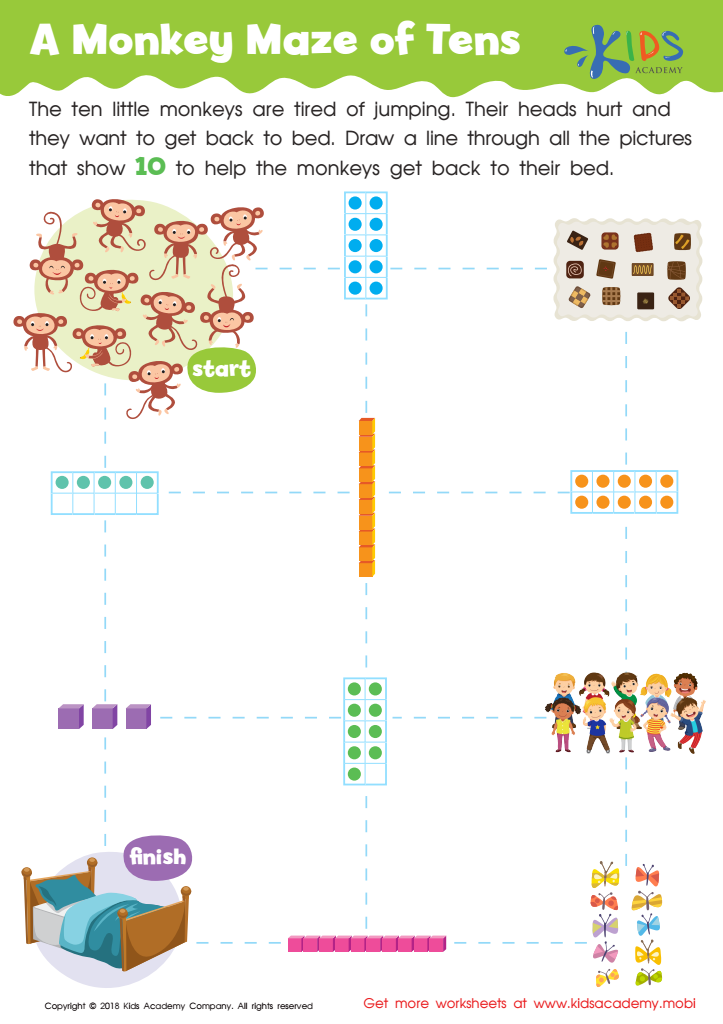
A Monkey Maze of Tens Worksheet
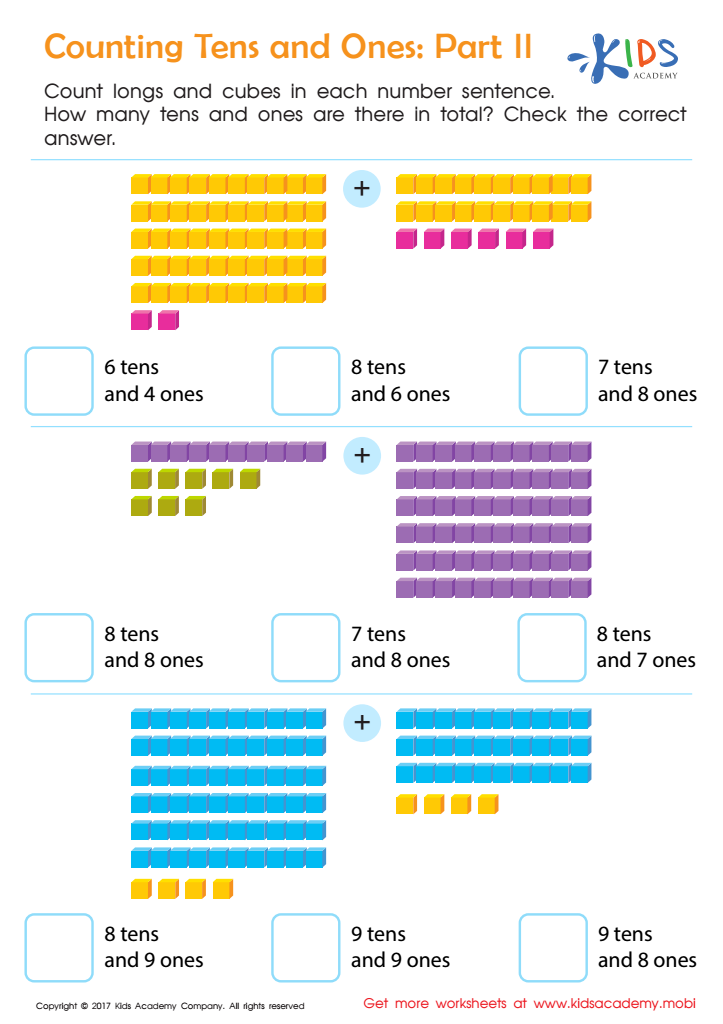
Counting Tens and Ones: Part 2 Worksheet
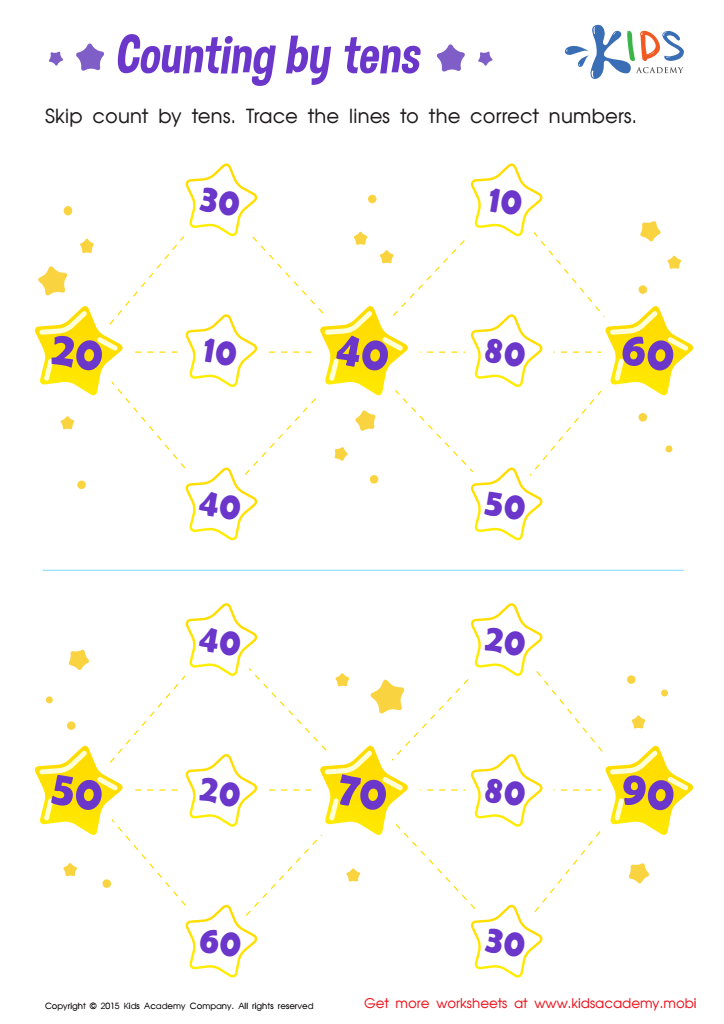
Learn Dozens: Counting by Tens Printable








Understanding tens numbers, or the concept of grouping numbers into sets of ten, forms a critical foundation for young children, ages 4-6, as it paves the way for future mathematical learning. For parents and teachers, ensuring children grasp this concept can greatly influence their numeric fluency and overall confidence in handling math.
Early comprehension of tens provides a framework for more complex operations such as addition, subtraction, and understanding the decimal system. It fosters place value awareness, crucial for interpreting larger numbers accurately. For example, recognizing that the number 12 is composed of one ten and two units helps kids comprehend the structure of numbers beyond single digits.
Moreover, mastering tens encourages efficient counting. Instead of counting from one to 50 by individual units, children can count by groups of ten, thus enhancing mental math agility and saving time.
Educational activities focused on tens, such as using visual aids like ten frames or base-ten blocks, introduce children to mathematical concepts in a tangible manner, promoting engagement and a deeper understanding.
Ultimately, laying down a solid number sense foundation by comprehending tens enriches a child's analytical and problem-solving skills, setting them up for success in math and logical reasoning as they progress through their education. Parents and teachers, by emphasizing this early on, cultivate a supportive learning environment for enduring mathematical proficiency.








