
Following instructions Math Worksheets for Ages 4-6
27 filtered results
Difficulty Level
Grade
Age
-
From - To
Subject
Activity
Standards
Help your child develop essential math and listening skills with our "Following Instructions Math Worksheets for Ages 4-6". These engaging, printable resources guide young learners through a series of fun and educational activities that strengthen their ability to follow directions while practicing counting, addition, shapes, and patterns. Designed by educational experts, these worksheets foster active learning and critical thinking, making math exciting and accessible for preschoolers and kindergarteners. Perfect for use at home or in the classroom, our worksheets ensure your child builds a solid foundation in math through clear instructions and engaging tasks. Start their math journey today!
Favorites
With answer key
Interactive
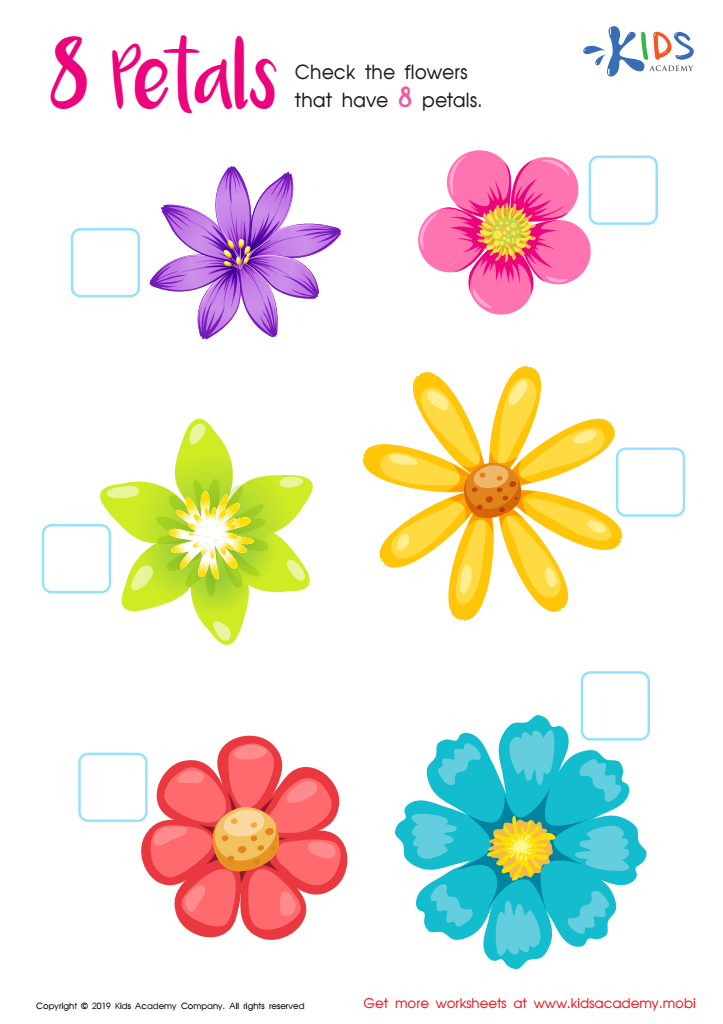
8 Petals Worksheet
Help your children master counting with this fun worksheet. It's filled with colorful flowers and they must count the petals and check the flowers with 8 petals. It's a great way to practice their counting skills and have some fun too!
8 Petals Worksheet
Worksheet
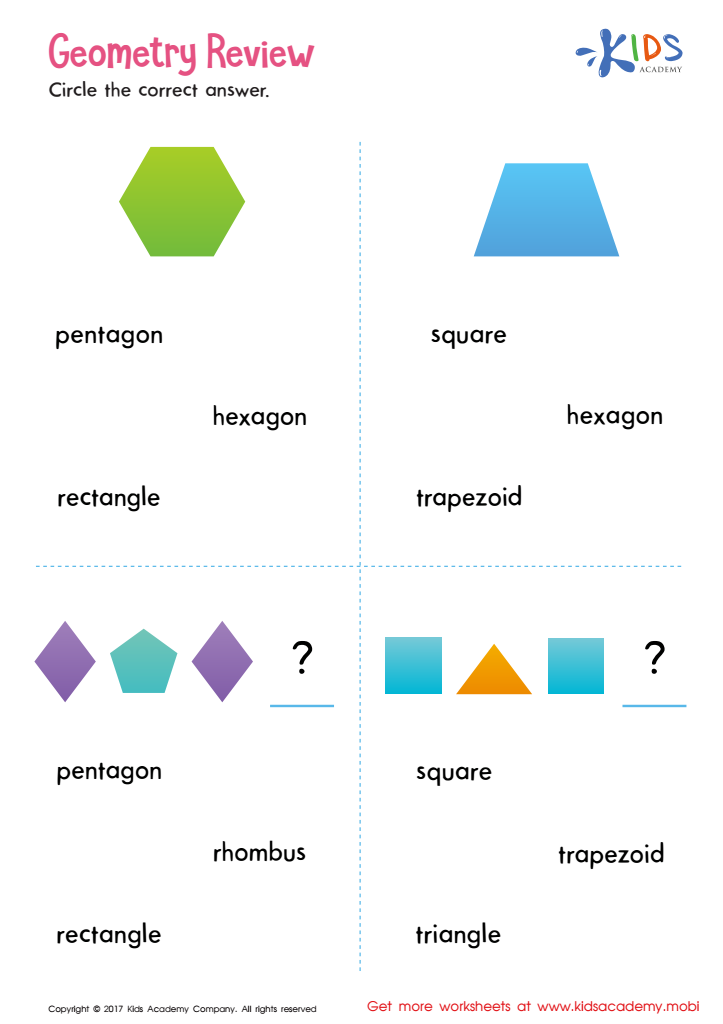
Geometry Review Printable
Repetition is key to success; give your child the practice they need with this geometry worksheet.
Geometry Review Printable
Worksheet
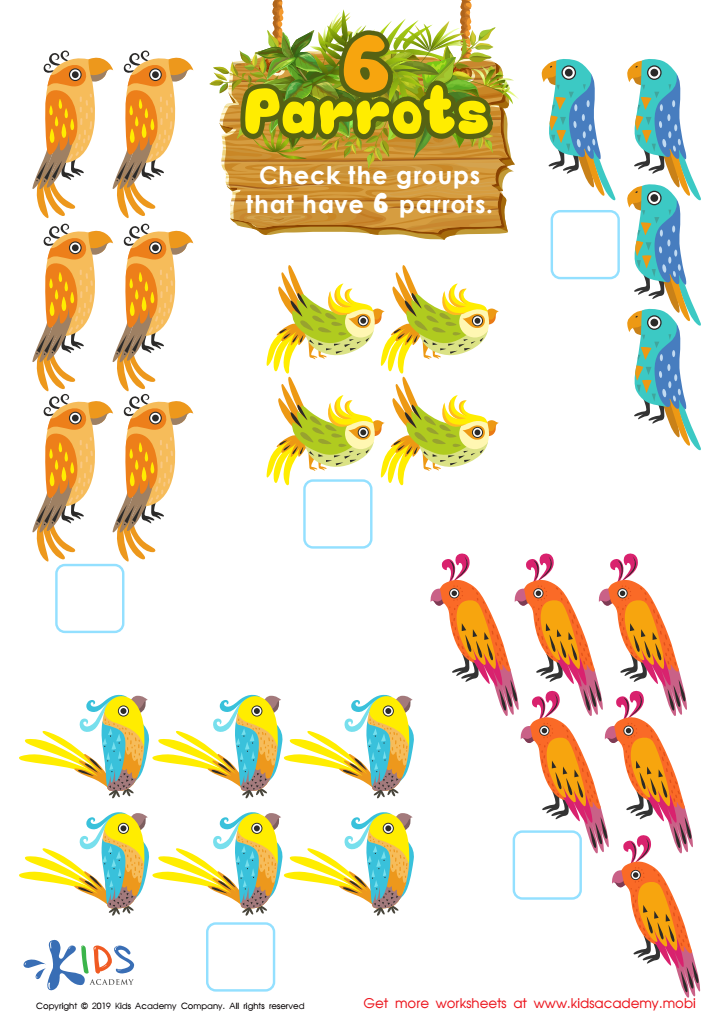
6 Parrots Worksheet
Love parrots? Here's a free worksheet to help your children practice counting to six with colorful parrot representations! Kids will adore counting the parrots and checking off groups of six - and it won't even feel like math! Just a fun way to make some new and exciting friends.
6 Parrots Worksheet
Worksheet
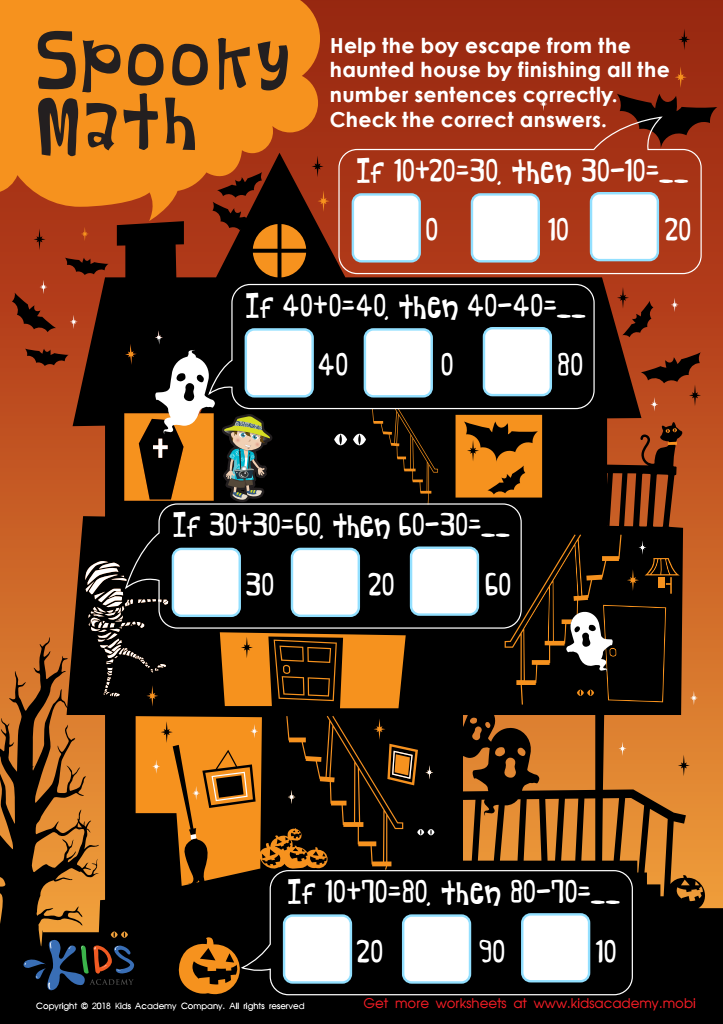
Subtract Tens: Spooky Math Worksheet
No need to fear solving math equations! Your mathematician will be a hero and help the boy escape the haunted house. Number families, if/then statements, fun graphics and increased understanding are all part of the equation. They'll have so much fun, they won't even realize it's math!
Subtract Tens: Spooky Math Worksheet
Worksheet
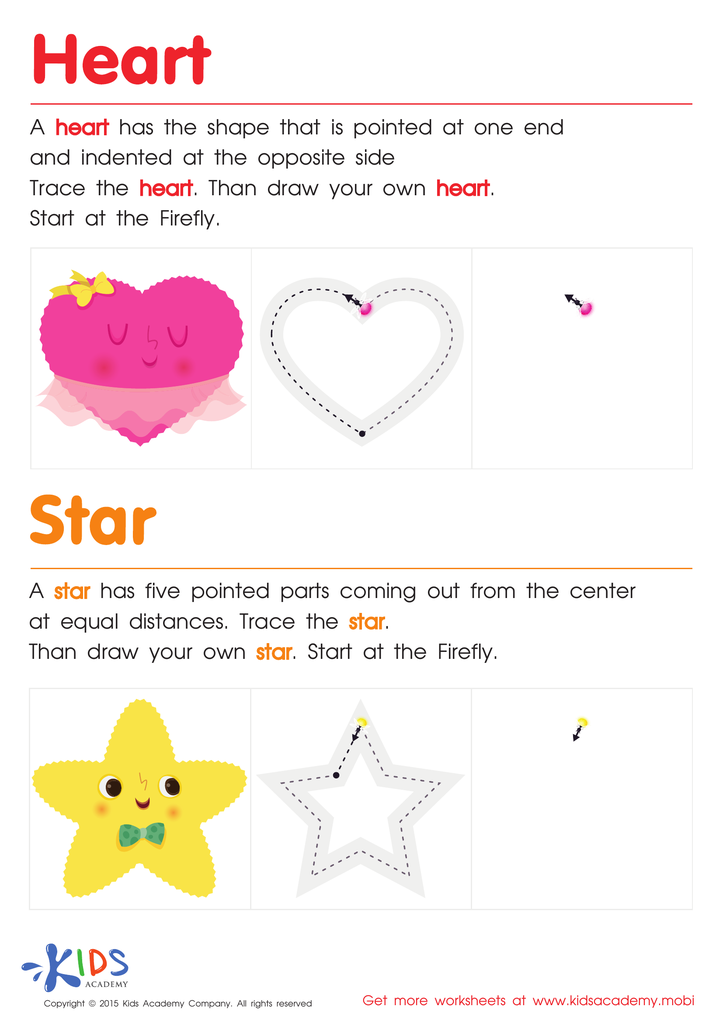
Let's Learn to Draw Hearts And Stars Printable
Trace and draw hearts and stars, learn their names and use them in your drawings. Start with the firefly and be creative!
Let's Learn to Draw Hearts And Stars Printable
Worksheet
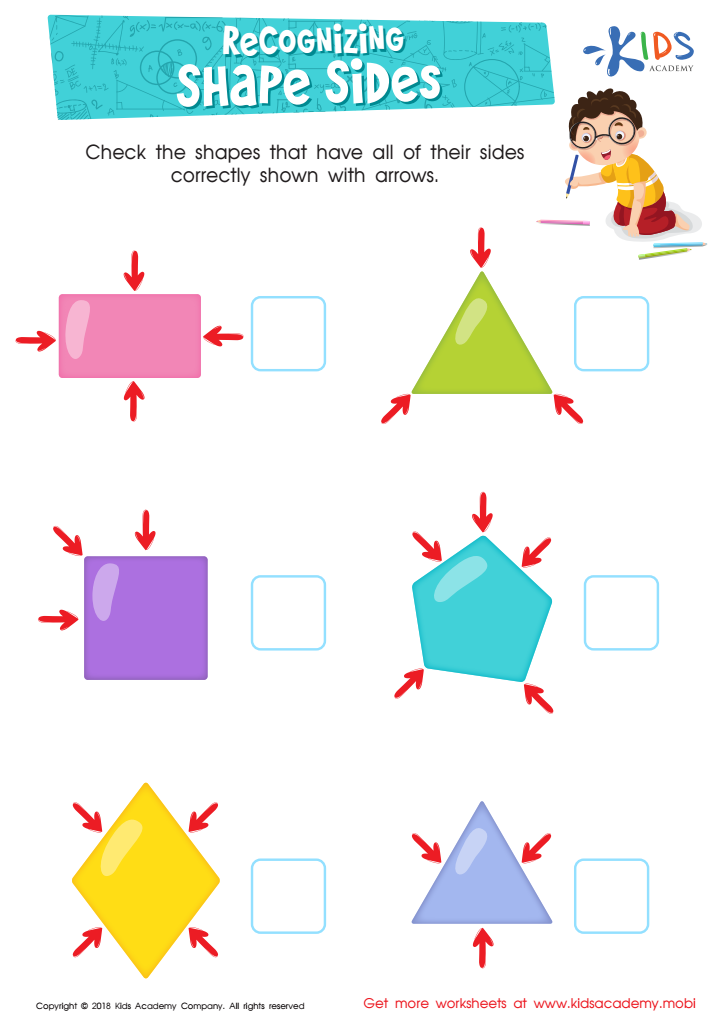
Recognizing Shape Sides Worksheet
This exercise will help your child recognize shape sides. Go over the difference between sides and angles first, then have them check the shapes with arrows to show the sides. They'll quickly get the hang of it and find it much easier after completing the colorful worksheet.
Recognizing Shape Sides Worksheet
Worksheet
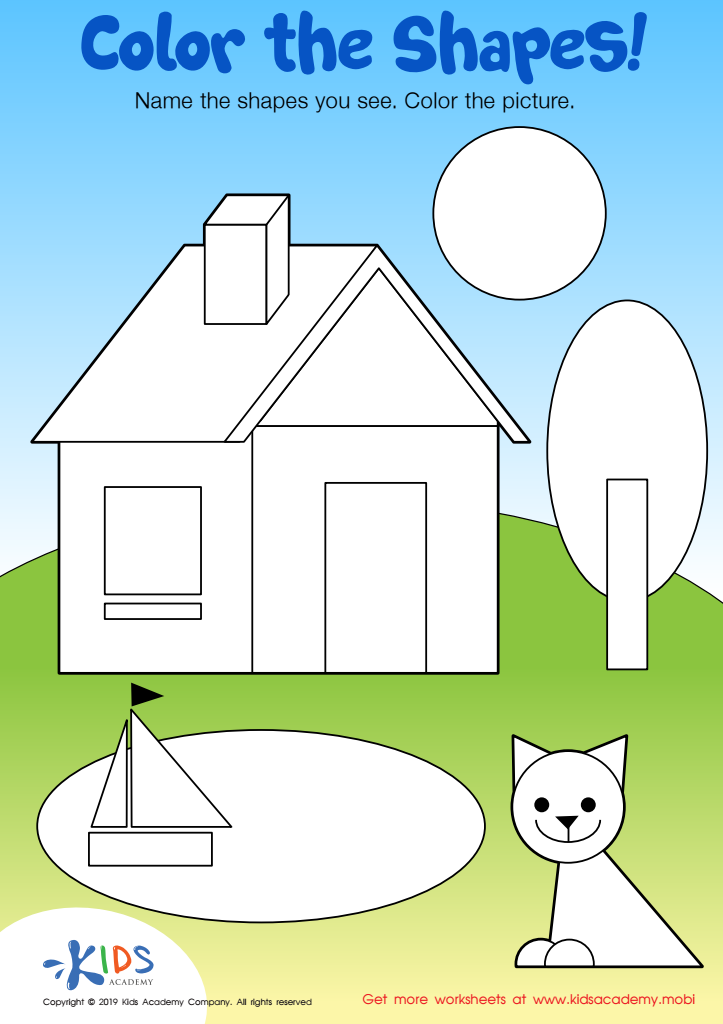
Color the Shapes Worksheet
Help your student master shape identification with this fun worksheet. Ask them to name the shapes in the picture, then color it! Ask questions like "How many squares do you see?" and "How many triangles?" to extend the learning. Identify squares, circles, triangles and rectangles with this enjoyable coloring page.
Download (PDF)
 Assign to My Students
Assign to My Students
Color the Shapes Worksheet
Worksheet
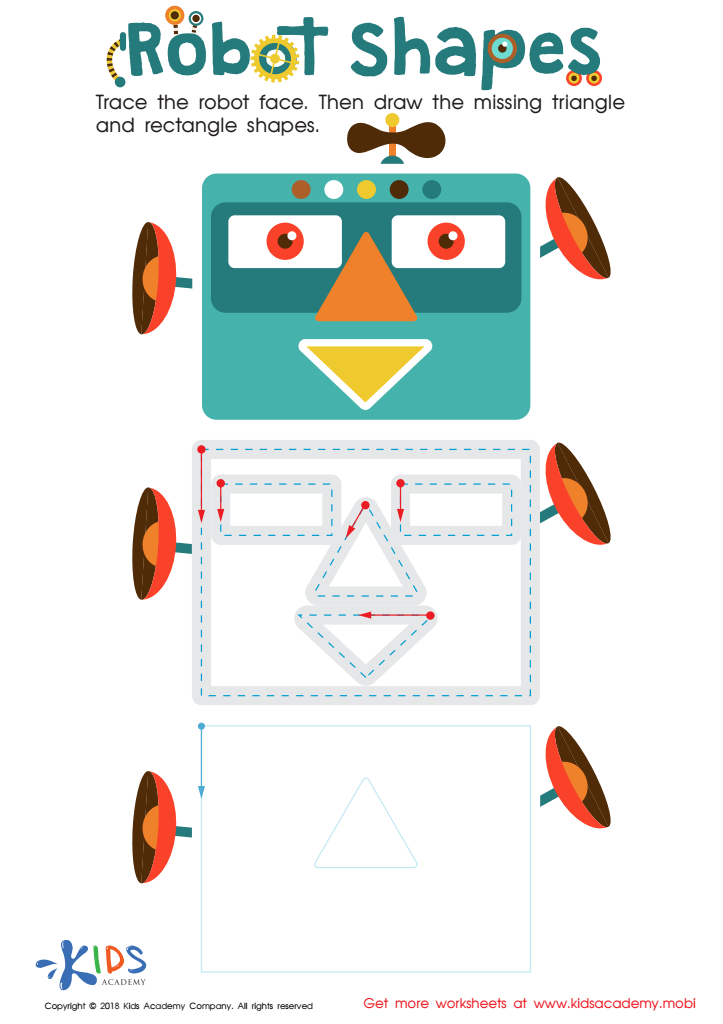
Robot Shapes Worksheet
Help your preschooler get started with math skills while having fun with this shape tracing worksheet featuring a cute robot! Ask them to study the first image, trace the dotted lines to draw the shapes in the second, and color the third. With this activity, they'll learn shapes while enjoying the funny robot pictures!
Robot Shapes Worksheet
Worksheet
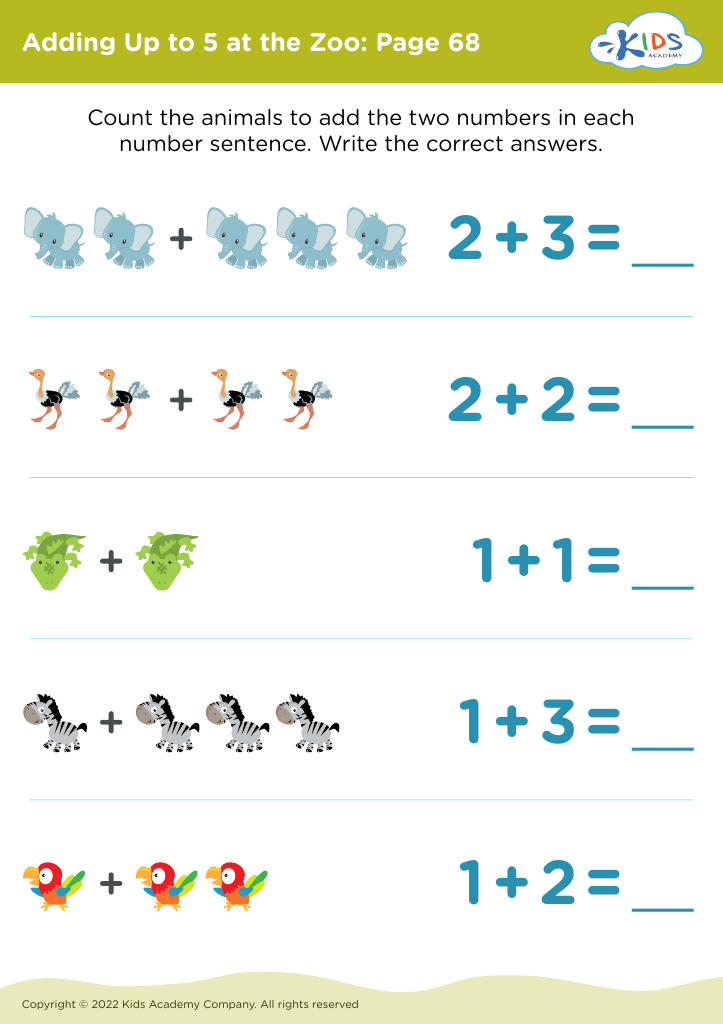
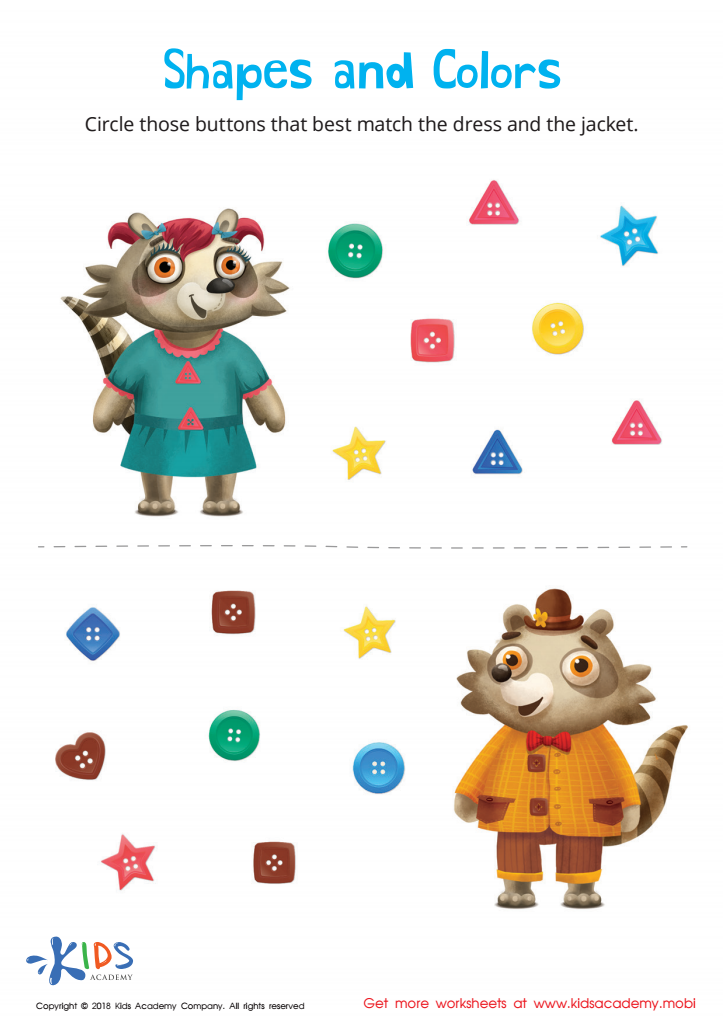
Shapes and Colors Worksheet
This worksheet is a fun way to teach toddlers shapes and colors! It has them match buttons on adorable racoon characters. Encourage your child to note the shape and color of the buttons then sort through and circle the matches. This helps build important attention to detail skills!
Shapes and Colors Worksheet
Worksheet
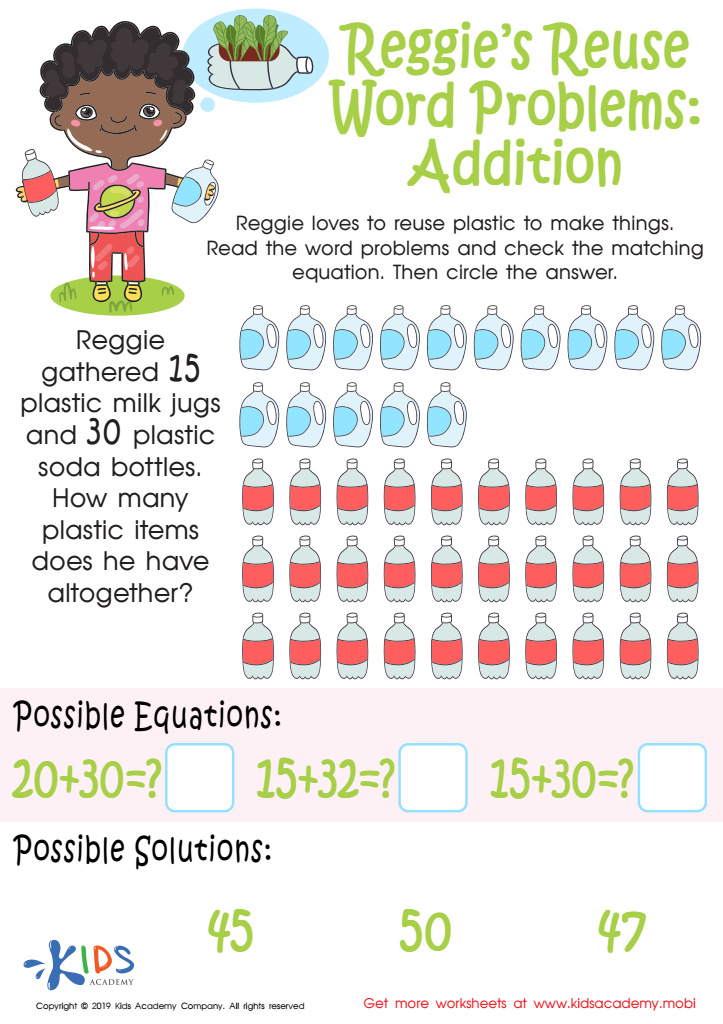
Reggie's Reuse Word Problems: Addition Worksheet
Help Reggie and your child save the planet by using this free worksheet! It reinforces addition word problems using one-to-one picture representation, and helps them pick out the correct number sentence and possible solutions. It's an easy way to help the planet and practice math!
Reggie's Reuse Word Problems: Addition Worksheet
Worksheet
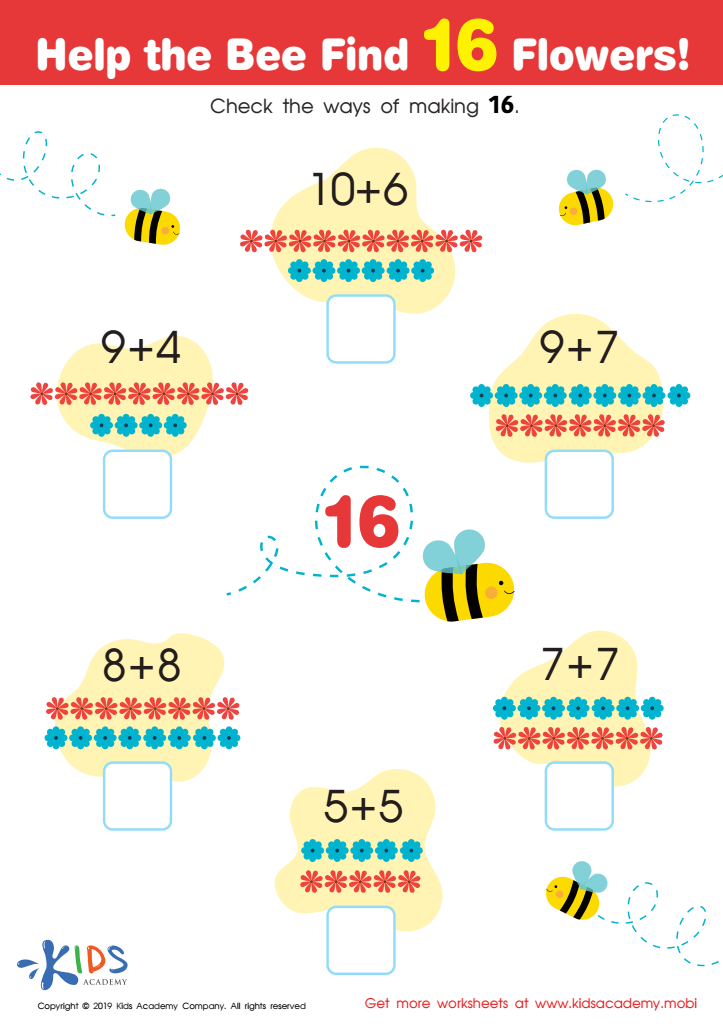
Help the Bee Find 16 Flowers Worksheet
Ask your students to count as high as they can. Show them that different numbers can equal the same figure with examples like 2+2=4 and 3+1=4. Ask for more examples, then help the bees find 16 flowers by checking the ways of making 16.
Help the Bee Find 16 Flowers Worksheet
Worksheet
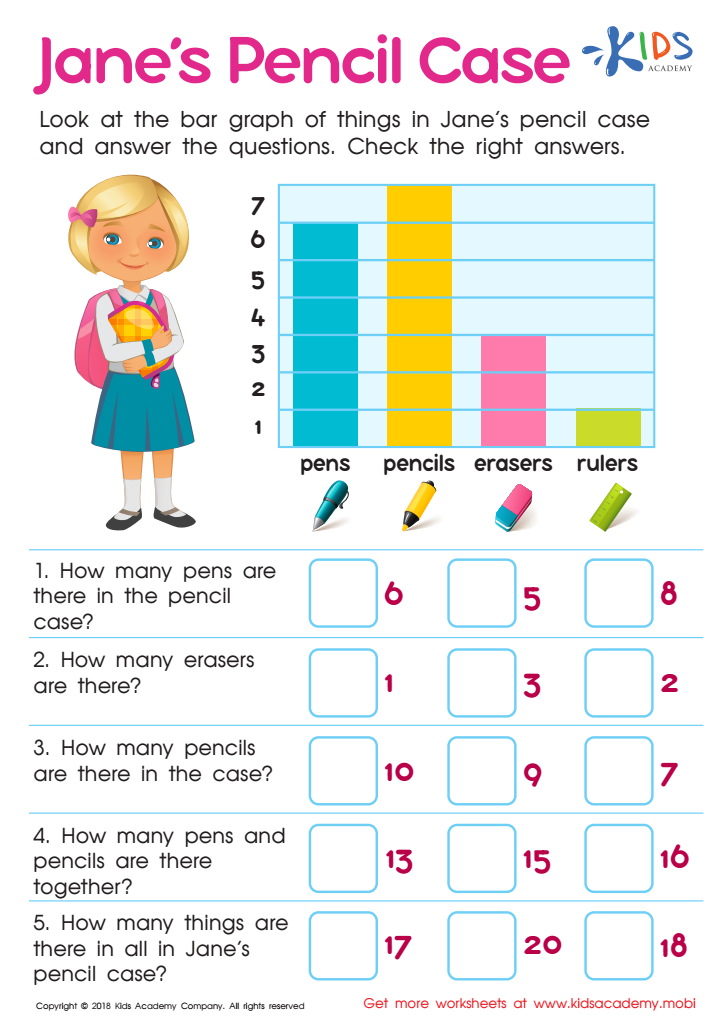
Jane's Pencil Case Worksheet
Help Jane organize her pencil case! Have your child look and the bar graph on the worksheet and interpret the data. Ask them to read each problem, then check the box next to the correct number. It's a fun way to practice reading graphs and reporting data.
Jane's Pencil Case Worksheet
Worksheet
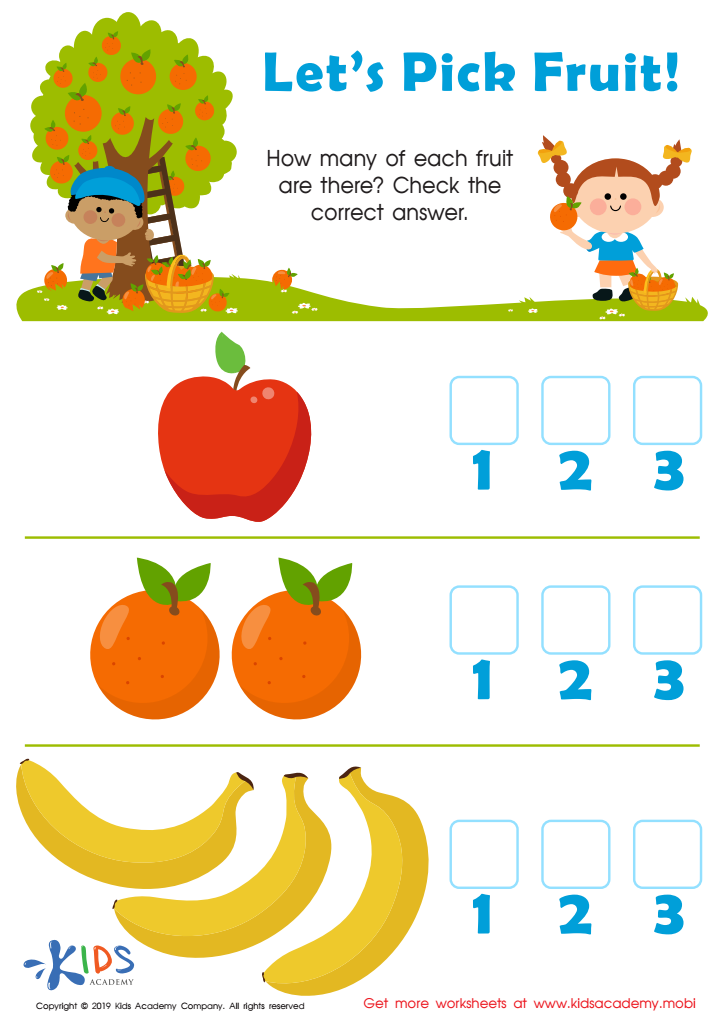
Let's Pick Fruit Worksheet
Picking fruit is fun - and counting it is even better! This free worksheet is perfect for young math learners. They'll use picture representation to count the fruit in each problem and then select the correct answer from the multiple-choice boxes. It's a great way to teach number sense in an easy, fun way!
Let's Pick Fruit Worksheet
Worksheet
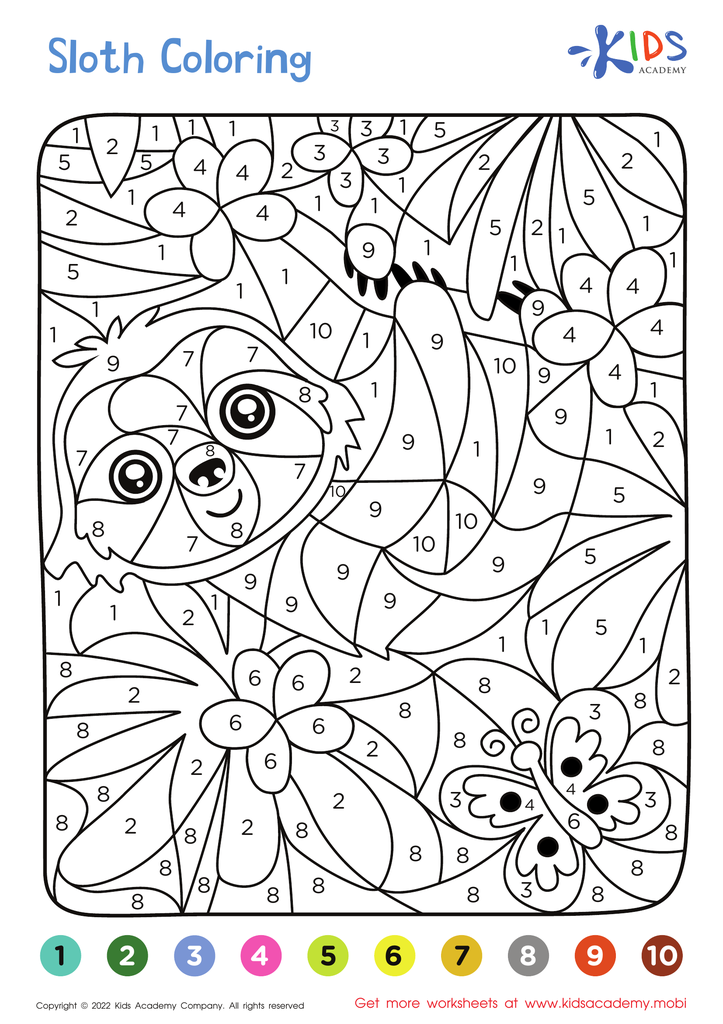
Sloth – Coloring by Numbers
Download our free coloring by numbers PDF page featuring a sloth! This fun activity is for all ages; just match the numbers to the colors and create a masterpiece. Get the entire family involved and see who can create the best sloth.
Sloth – Coloring by Numbers
Worksheet
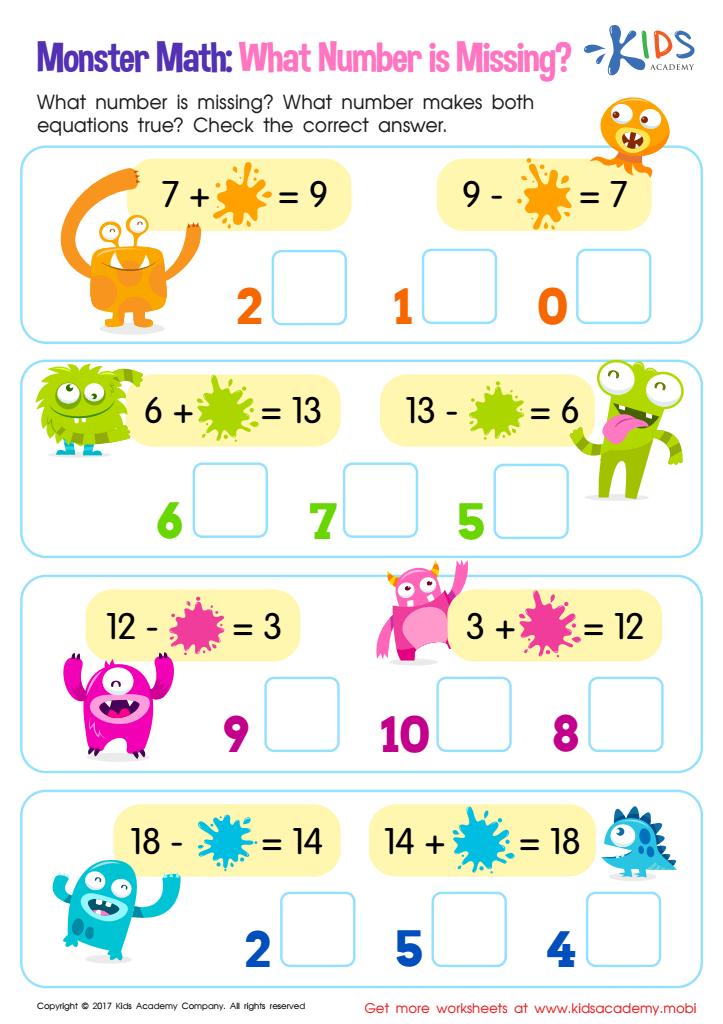
Missing Number: Monster Math Worksheet
Engage your child in monster math fun with a worksheet! They'll need to use their counting, addition and subtraction skills to solve equations on both sides. On the left side, they must complete an addition problem and on the right, the equation is in subtraction form. Assist them in selecting the right number out of the given options to make both equations true.
Missing Number: Monster Math Worksheet
Worksheet
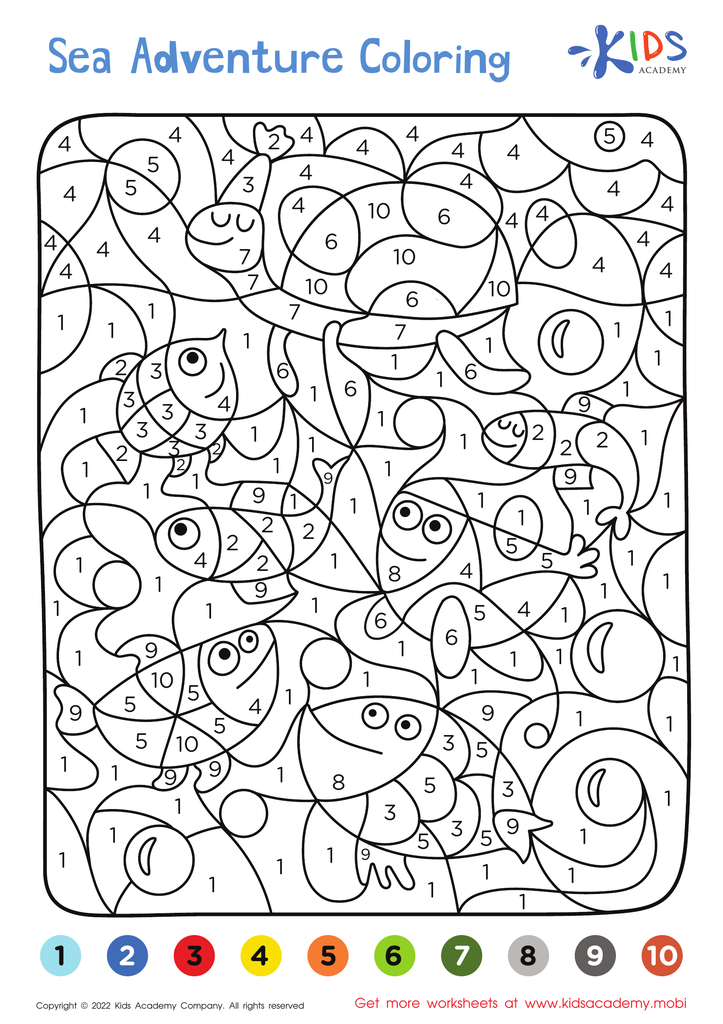
Sea Adventure – Coloring by Numbers
Unlock a sea adventure with a free coloring by numbers PDF page! Download now to get creative and fill the page with vibrant colors.
Sea Adventure – Coloring by Numbers
Worksheet
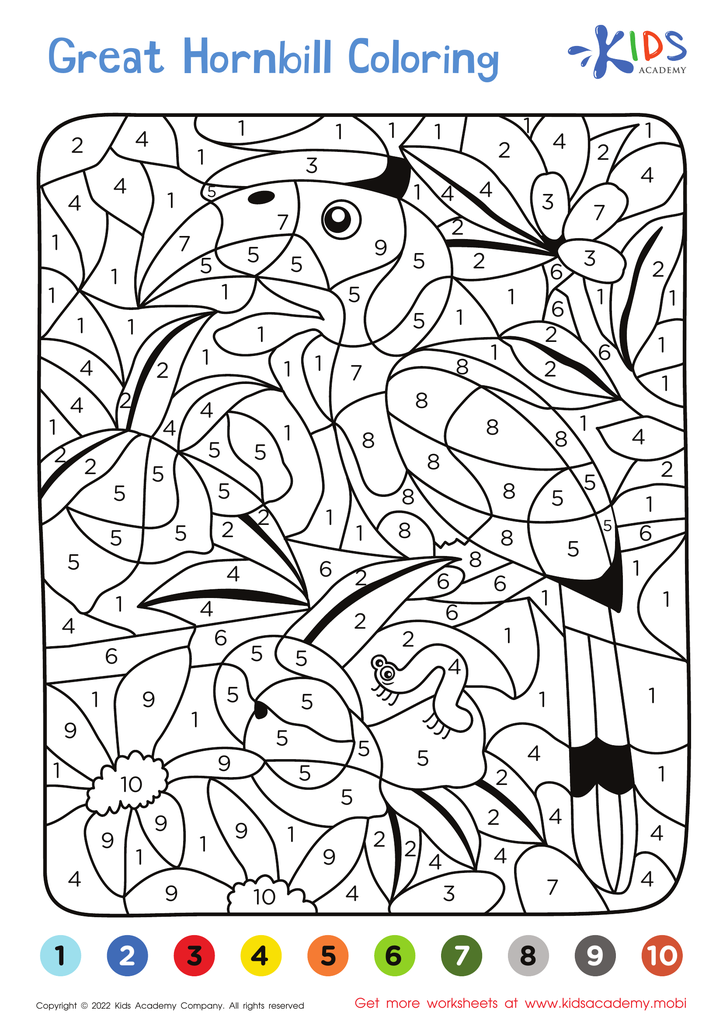
Great Hornbill – Coloring by Numbers
Download our free PDF page, featuring a hornbill for you to color in! Numbers are provided so you can follow along, making the picture come to life. Fun for all ages!
Download our free PDF page and have fun coloring a hornbill according to the numbers! You'll bring the picture to life with every stroke of your creativity. Perfect for all ages!
Great Hornbill – Coloring by Numbers
Worksheet
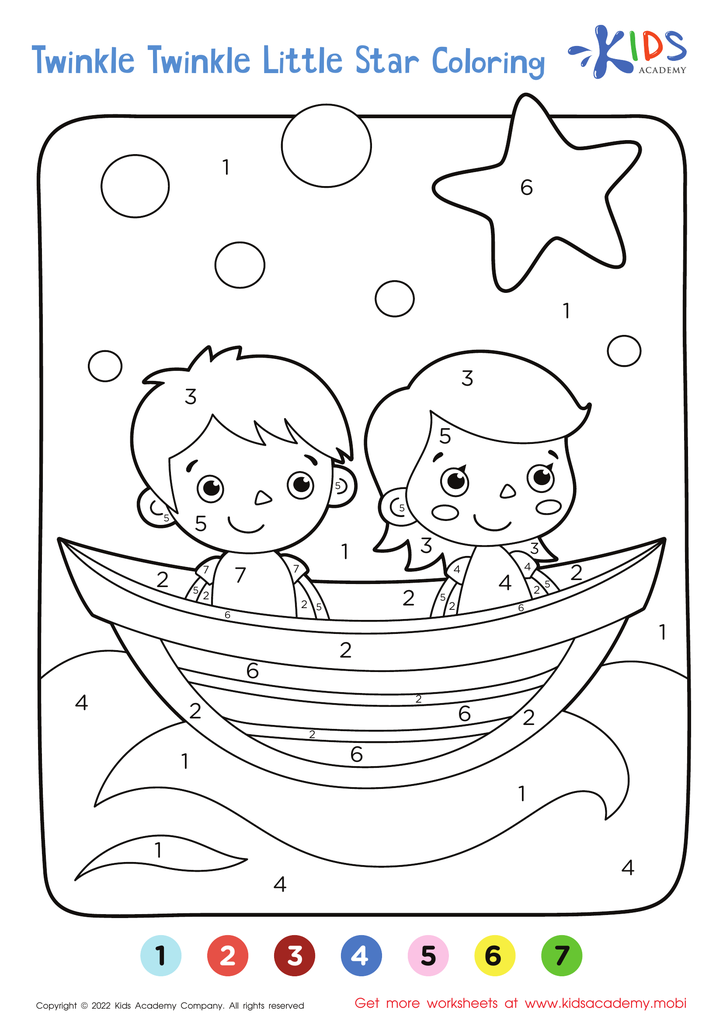
Twinkle, Twinkle, Little Star – Coloring by Numbers
Color a scene from Twinkle Twinkle Little Star with our free coloring page. Download the PDF and use the numbers to bring the nursery rhyme to life. Have fun! (80 words)
Twinkle, Twinkle, Little Star – Coloring by Numbers
Worksheet
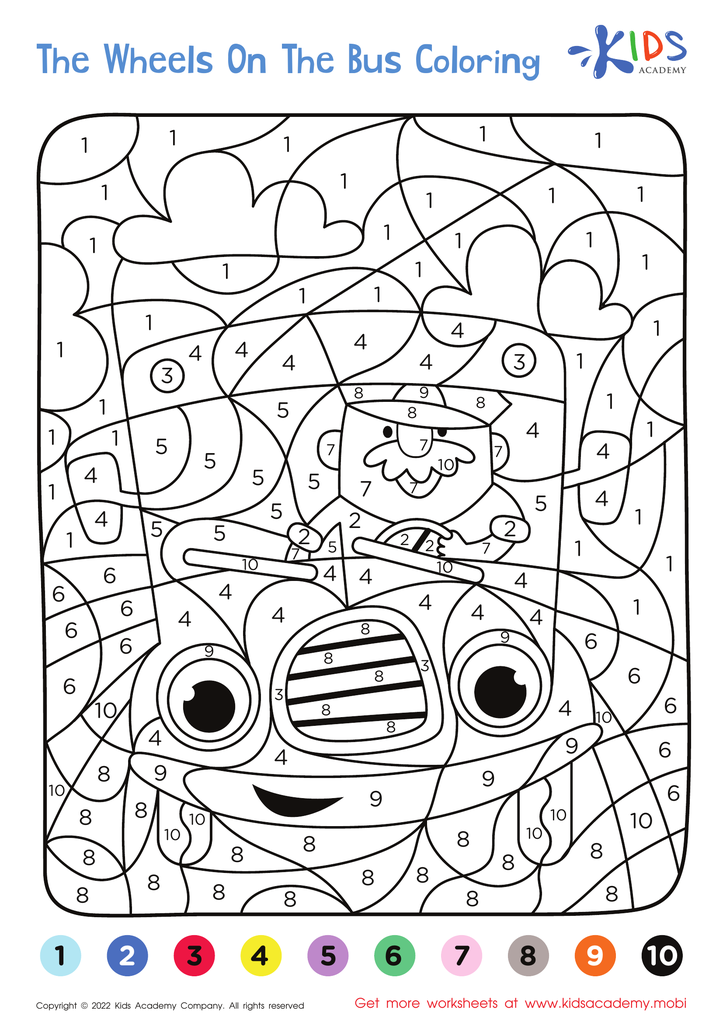
Wheels on the Bus – Coloring by Numbers
Download our free PDF page to color in the bus driver! Simply print, find the right colors, and start creating some fun! Have a great time and don't forget to share your masterpiece with us!
Wheels on the Bus – Coloring by Numbers
Worksheet
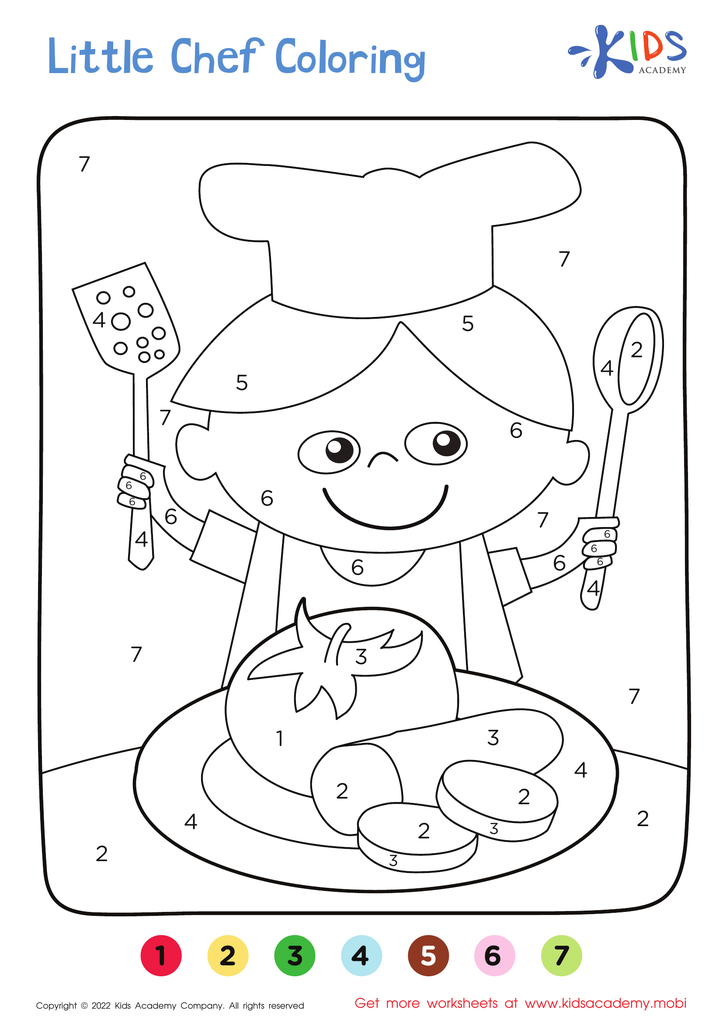
Little Chef – Coloring by Numbers
This PDF page lets you color in a cute little chef! Download it for free and explore your artistic side by using numbers to color in the picture. Let your creativity flow and have some fun!
Little Chef – Coloring by Numbers
Worksheet
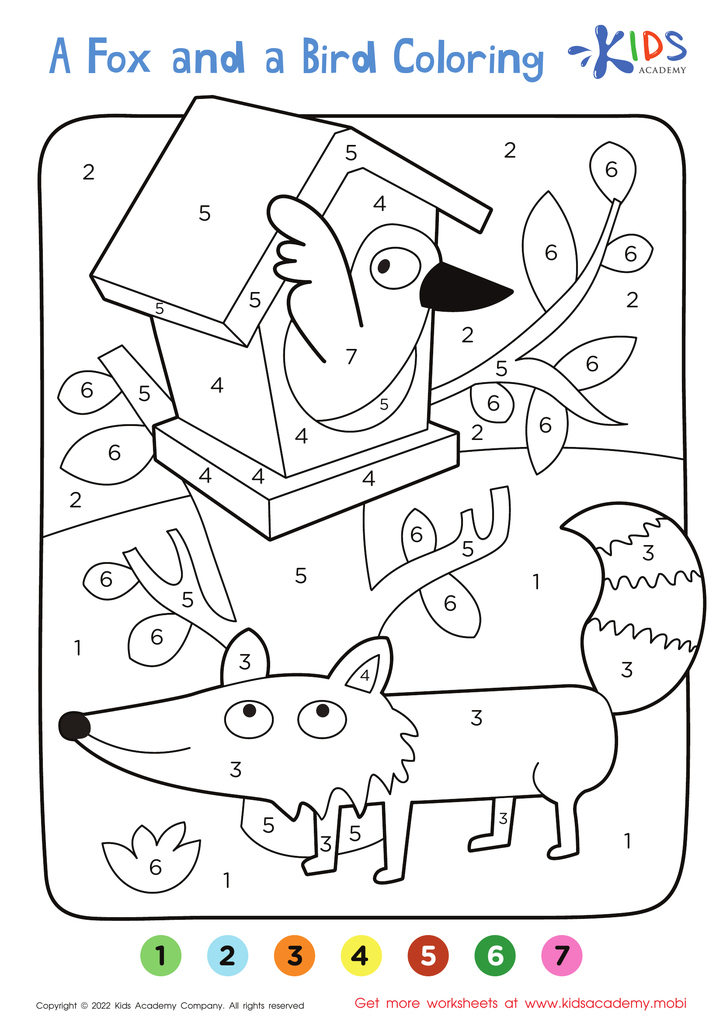
A Fox and a Bird – Coloring by Numbers
Download this free PDF page and color the fox and bird using numbers. Fun and easy way to be creative with the whole family! Spend quality time together and create something unique.
A Fox and a Bird – Coloring by Numbers
Worksheet
Join Kids Academy for Free
Who is primarily going to use this learning content?








Following instructions in math for ages 4-6 is crucial because it lays the foundation for essential skills that young children will use throughout their academic and everyday lives. At this developmental stage, children are building their ability to focus, listen, and understand sequences, all of which are critical components of successful learning.
When children practice following instructions in math, they learn how to approach tasks methodically. This skill helps them to break down problems into manageable steps, an important aspect of problem-solving not just in math, but in all subjects. Properly following instructions ensures that young learners understand the value of sequential actions, fostering their logical thinking and reasoning abilities.
Moreover, following instructions helps in developing fine motor skills through activities like counting objects, drawing shapes, or arranging items in a particular order. This skill is also integral to understanding and carrying out daily routines which enhance their self-discipline and independence.
For teachers and parents, encouraging children to follow instructions attentively demonstrates the importance of detail-oriented tasks and compliance within an educational context. Consistently practicing this can improve a child’s academic performance, motivation, and confidence while strengthening the student-teacher and parent-child relationships by fostering a supportive learning environment.








