Cognitive Development Tracing Shapes Worksheets for Ages 4-6
4 filtered results
-
From - To
Boost your child's cognitive development with our engaging Tracing Shapes Worksheets for ages 4-6! Specially designed to enhance fine motor skills and shape recognition, these fun activities help young learners build essential pre-writing and math foundations. Each worksheet encourages children to trace and identify various shapes, promoting hand-eye coordination, focus, and critical thinking. Perfect for at-home practice or classroom use, our Cognitive Development Tracing Shapes Worksheets make learning an enjoyable adventure. Set your child on the path to academic success with these expertly crafted resources from Kids Academy. Download, print, and start tracing today!
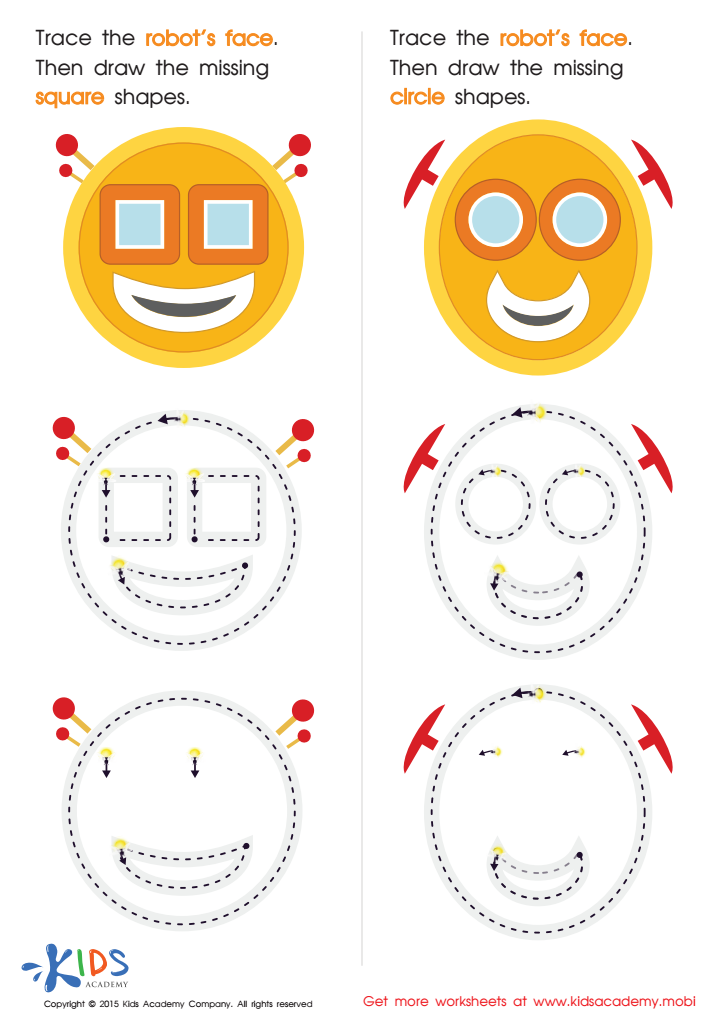
Practicing to Draw Circles And Squares Printable
 Assign to My Students
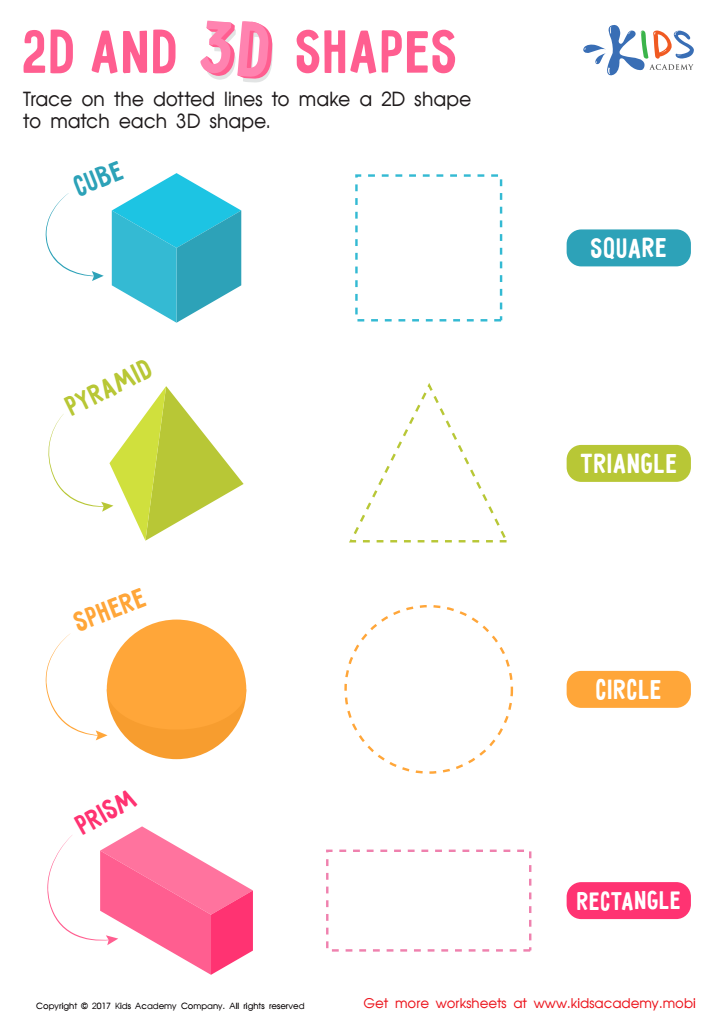
2D and 3D Shapes Worksheet
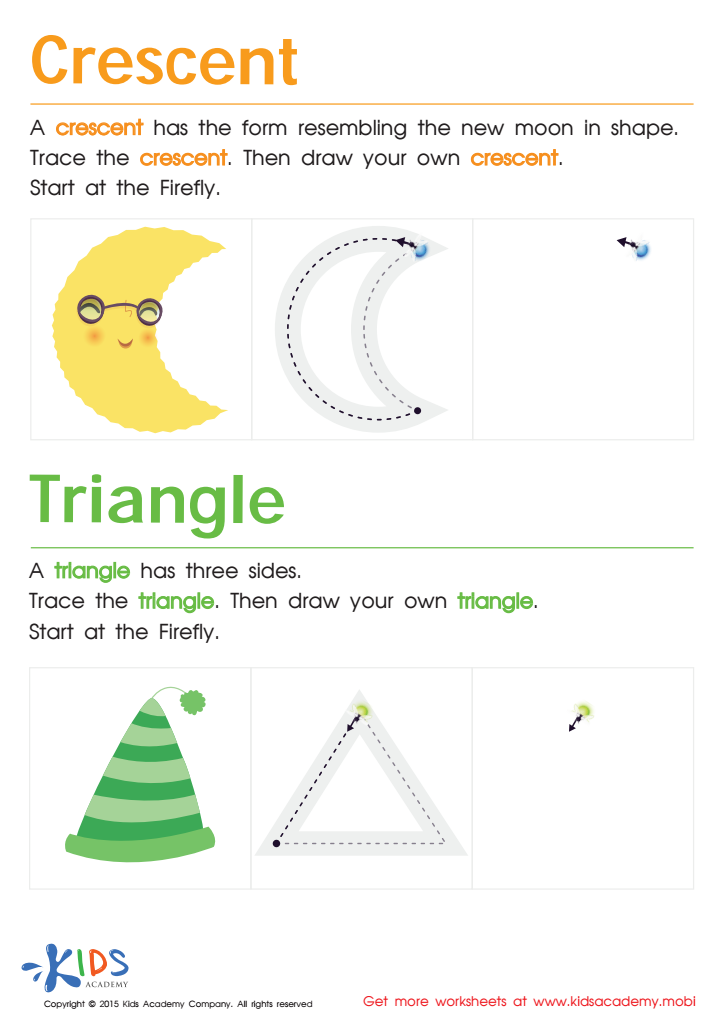
Learning to Draw Crescents And Triangles Worksheet
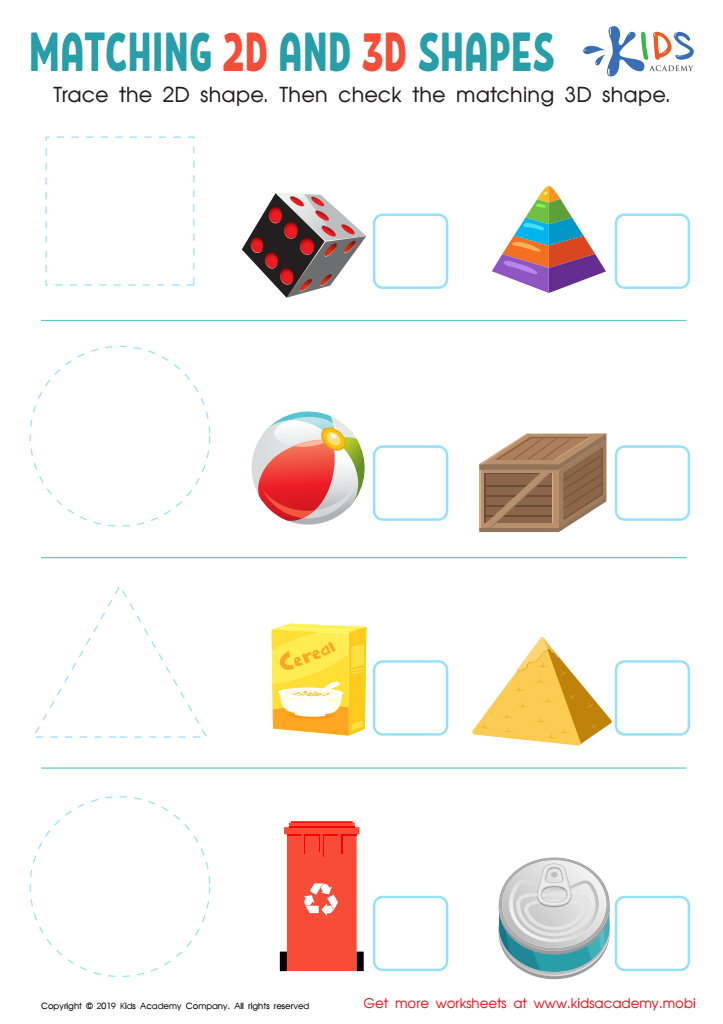
Matching 2D and 3D Shapes Worksheet








Parents and teachers should place a high emphasis on the practice of tracing shapes for children aged 4 to 6 because it significantly contributes to cognitive development and lays a strong foundation for future learning. At this developmental stage, children are honing their fine motor skills, which are crucial for writing and other everyday tasks. Tracing shapes requires precise hand-eye coordination, control, and dexterity, all of which are developed as they practice steering their pencil along a defined path.
Moreover, cognitive development is deeply intertwined with physical activities. As children trace shapes, they develop their spatial awareness and problem-solving skills. Recognizing and replicating shapes also help with memory retention and categorization, key aspects of cognitive processing. Furthermore, engagement in tracing activities enhances attention span and concentration, both critical for academic success.
Beyond cognitive and motor benefits, tracing shapes is an excellent way for young children to learn the foundational concepts of geometry. Understanding shapes is a fundamental step in math readiness, preparing children for more complex mathematical thinking as they grow.
Overall, activities like tracing shapes equip children with essential skills that support not only current learning but also academic achievement and competencies they will rely on throughout their education. Hence, parents and teachers should make it a priority to include such activities in early childhood development programs.