
Basic Math Skills Science Worksheets for Ages 4-6
5 filtered results
Difficulty Level
Grade
Age
-
From - To
Subject
Activity
Standards
Enhance your child's learning with our Basic Math Skills Science Worksheets for Ages 4-6. Developed by early education experts, these engaging worksheets combine basic math concepts with exciting science themes to make learning fun and effective. Perfect for young learners, the activities include counting, comparing numbers, shaping recognition, and simple addition and subtraction. Colorful visuals and hands-on tasks aim to build foundational math skills while igniting a passion for science. Download today to support your child's academic journey and boost their confidence in math and science! Ideal for both classroom settings and at-home learning.
Favorites
With answer key
Interactive
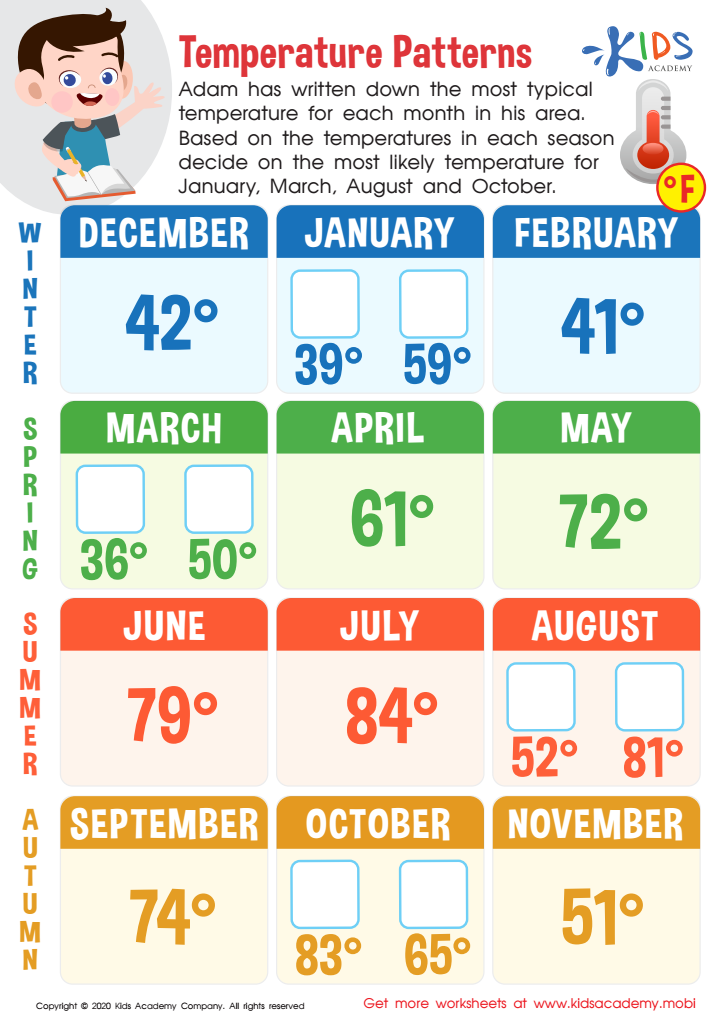
Temperature Patterns Worksheet
Adam has recorded temperatures in his area. Help your child use the data to predict temperatures for one month in each season. Check the box next to the correct temperature for each row in this worksheet. In America, temperatures vary by climate and season - colder in winter, hotter in summer.
 Assign to My Students
Temperature Patterns Worksheet
Worksheet
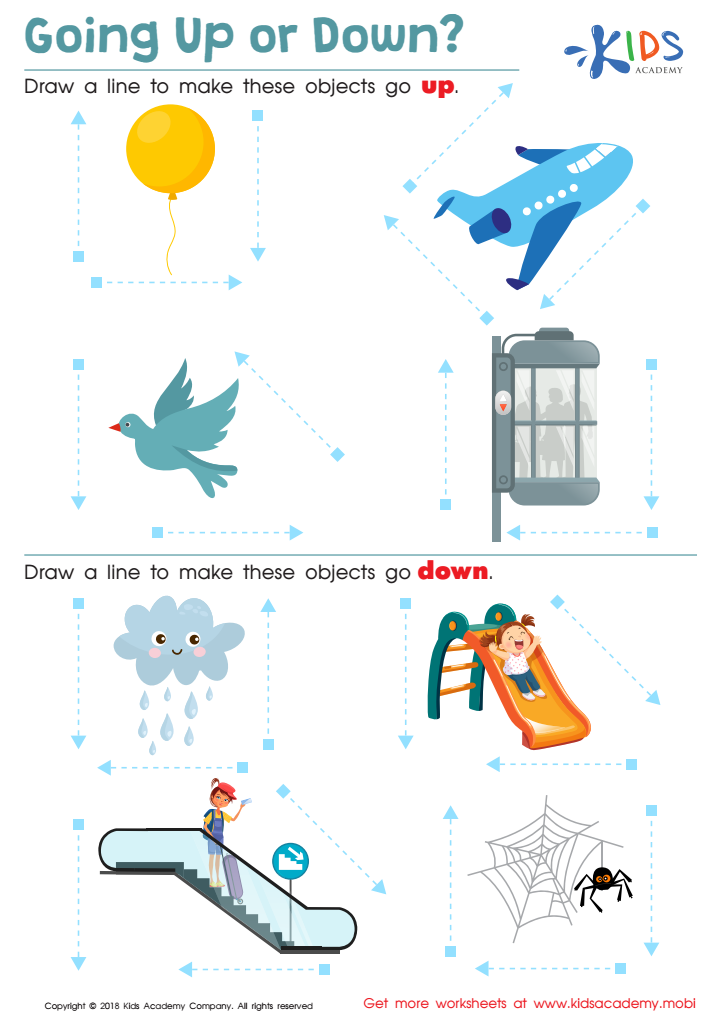
Going up or Down? Worksheet
Young students learn the concept of up and down with this geometry worksheet. They trace lines to identify relative positioning as an object travels. Kids can use position words to describe an object's movement, enhancing their spatial relationship skills - an important geometry foundation.
Going up or Down? Worksheet
Worksheet
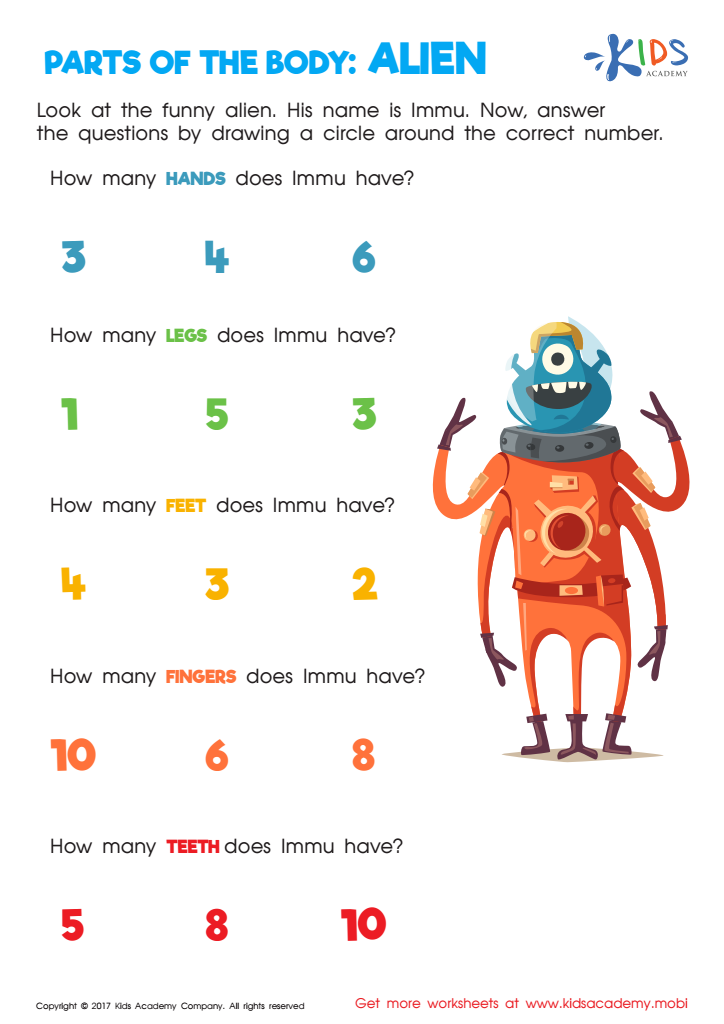
Alien Worksheet
Take your child on an out-of-this-world learning adventure with Immu, our friendly alien! This worksheet helps your child practice counting, recognize body parts and sharpen problem solving skills. Get started with this fun, educational activity today and watch as they learn and grow. Print it now and blast off to outer space!
Alien Worksheet
Worksheet
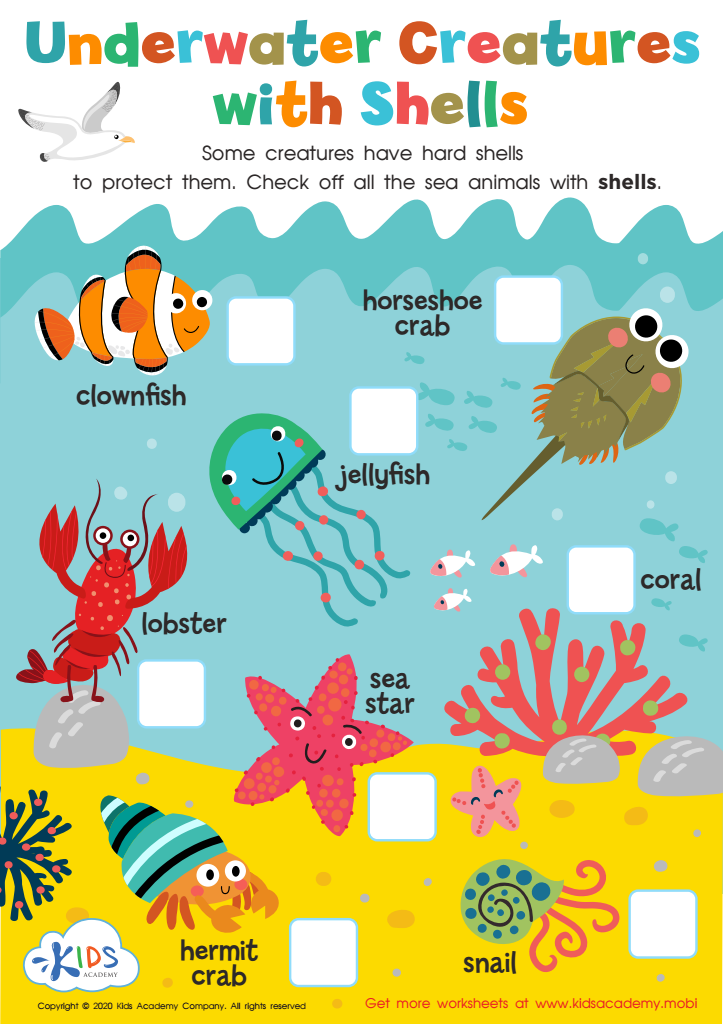
Underwater Creatures with Shells Worksheet
Teach your child about sea creatures with this vibrant PDF science worksheet! Comb through the colorful image to identify animals with shells; compare them to others and check them off. Let them know shells don't just wash up on beach, they serve as protection for sea creatures!
Underwater Creatures with Shells Worksheet
Worksheet
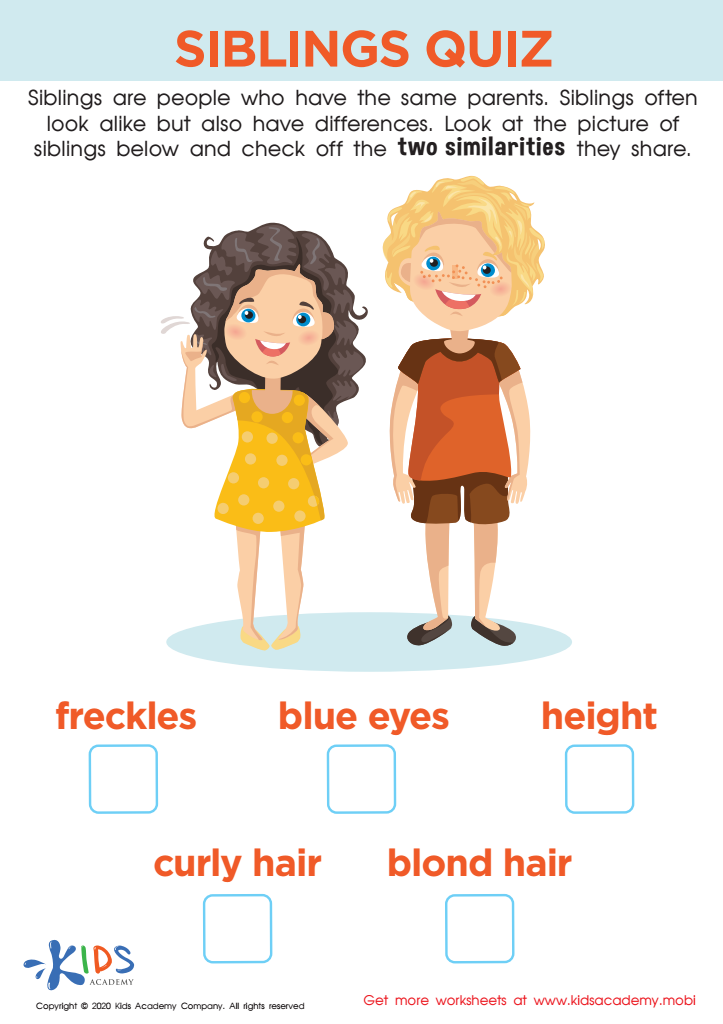
Siblings Quiz Worksheet
Your children may know a sibling is a sister or brother, but not realize what it means to be one. Siblings share the same parents, which means they share many genes. They are alike in many ways, but also have their own unique traits. Help your future scientist understand this early biology concept with this fun worksheet. They'll be tasked with finding similarities between two siblings on the page.
Siblings Quiz Worksheet
Worksheet
Join Kids Academy for Free
Who is primarily going to use this learning content?


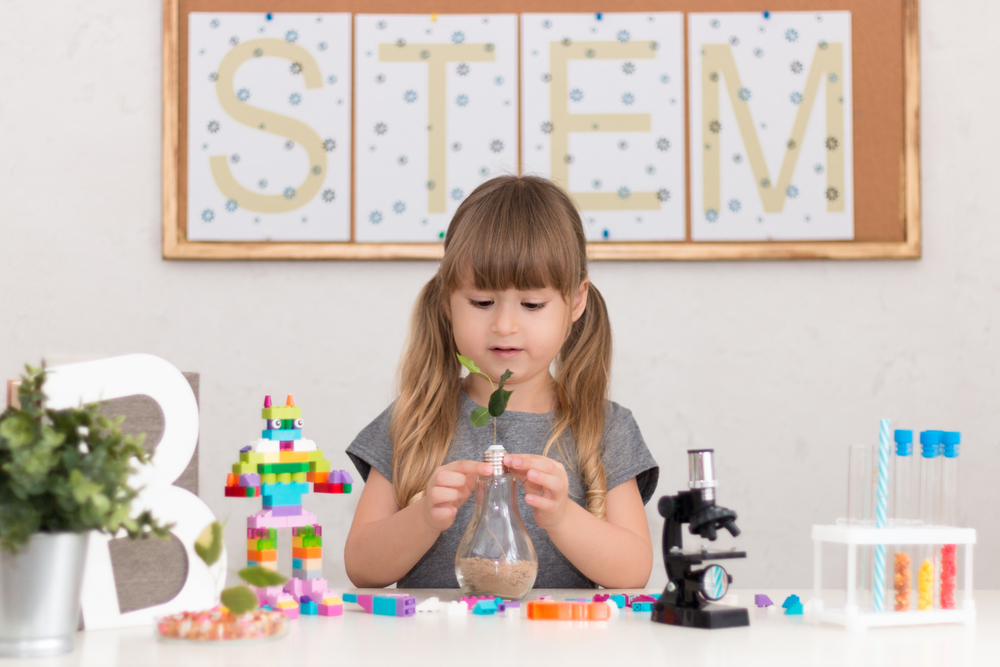

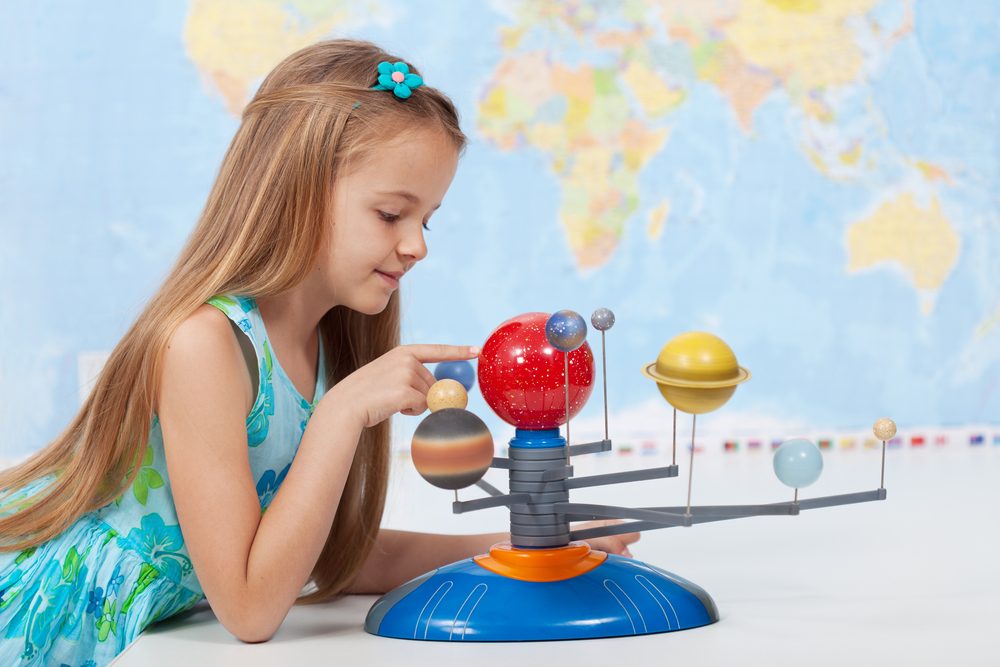
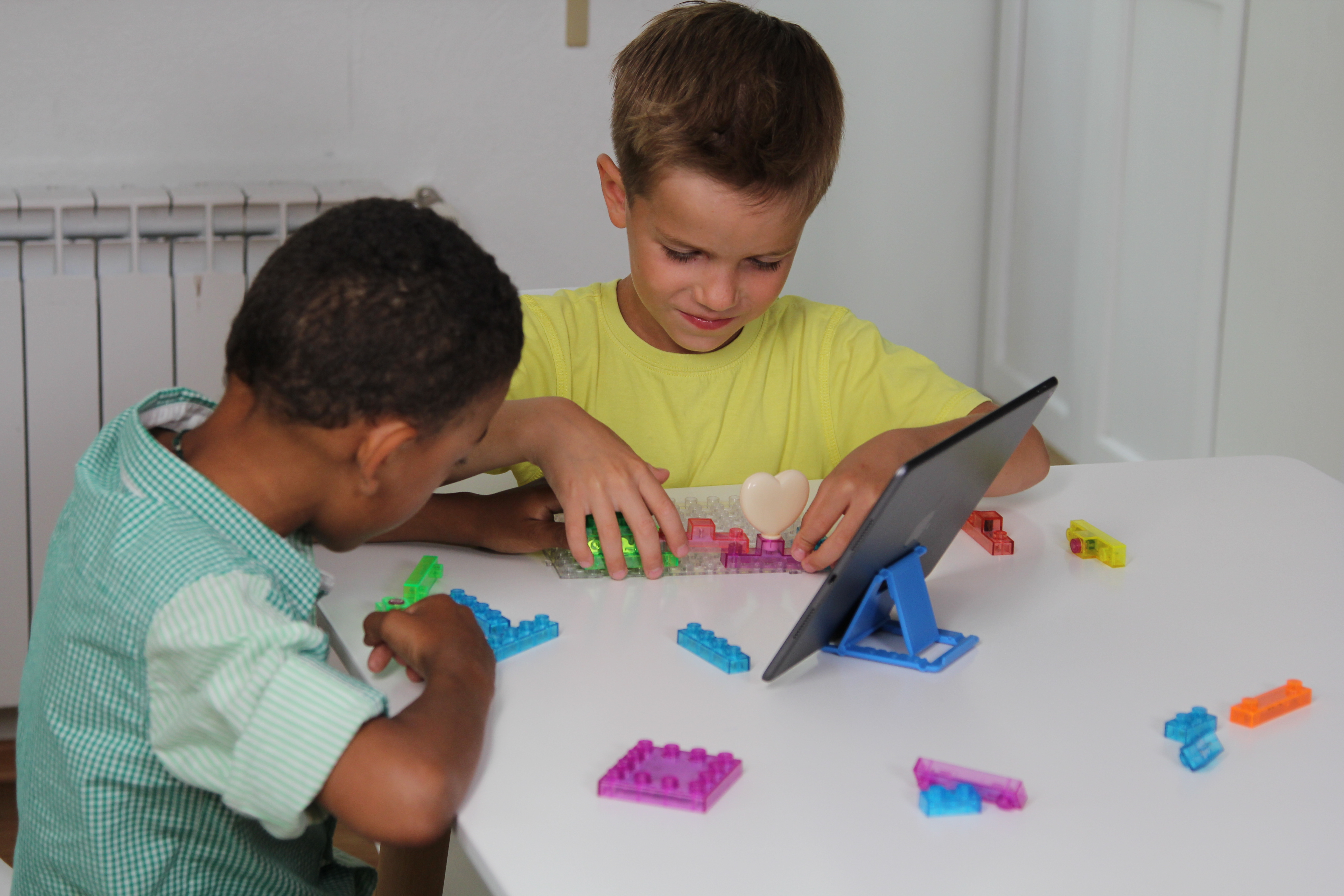

Parents and teachers should care about basic math skills science for ages 4-6 because these formative years are critical for cognitive development and set the foundation for future learning. Engaging young children in basic math fosters essential skills such as problem-solving, pattern recognition, and logical thinking. It nurtures a positive attitude towards learning and builds confidence in their abilities. Introducing concepts like counting, number recognition, and simple addition and subtraction in a fun and interactive way ensures that children grasp fundamental principles early.
Moreover, basic math skills science promotes both fine motor skills and spatial awareness through activities like sorting, matching, and using manipulatives. This holistic development supports other areas of learning, such as literacy, by improving focus and comprehension skills. For instance, understanding patterns in math can help with phonics and reading patterns in language.
Another reason to prioritize early math education is the connection to long-term academic success. Studies show that children who enter kindergarten with strong math skills are more likely to excel in later grades, across all subjects. Therefore, incorporating basic math skills science into the daily routine of young learners equips them with essential tools to navigate their academic trajectory smoothly and successfully.







