Critical thinking skills Science Worksheets for Ages 4-6
6 filtered results
-
From - To
Unlock your child's potential with our engaging Critical Thinking Skills Science Worksheets designed for ages 4-6! These carefully crafted activities encourage young learners to develop essential problem-solving and analytical skills through fun, age-appropriate science challenges. Our worksheets combine vibrant illustrations with thought-provoking questions, promoting curiosity and fostering a love for learning. Ideal for both classroom and at-home use, these resources support early cognitive development and prepare children for future academic success. Spark critical thinking and boost your child's confidence in science with our expertly designed worksheets. Explore the excitement of discovery today!
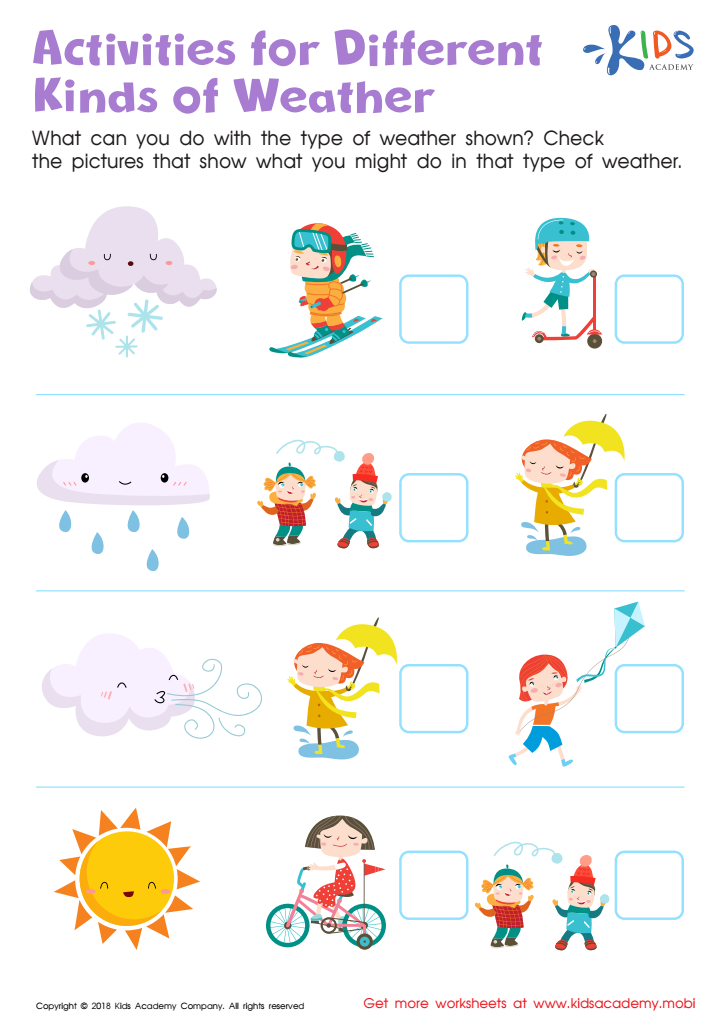
Activities for Different Kinds of Weather Worksheet
 Assign to My Students
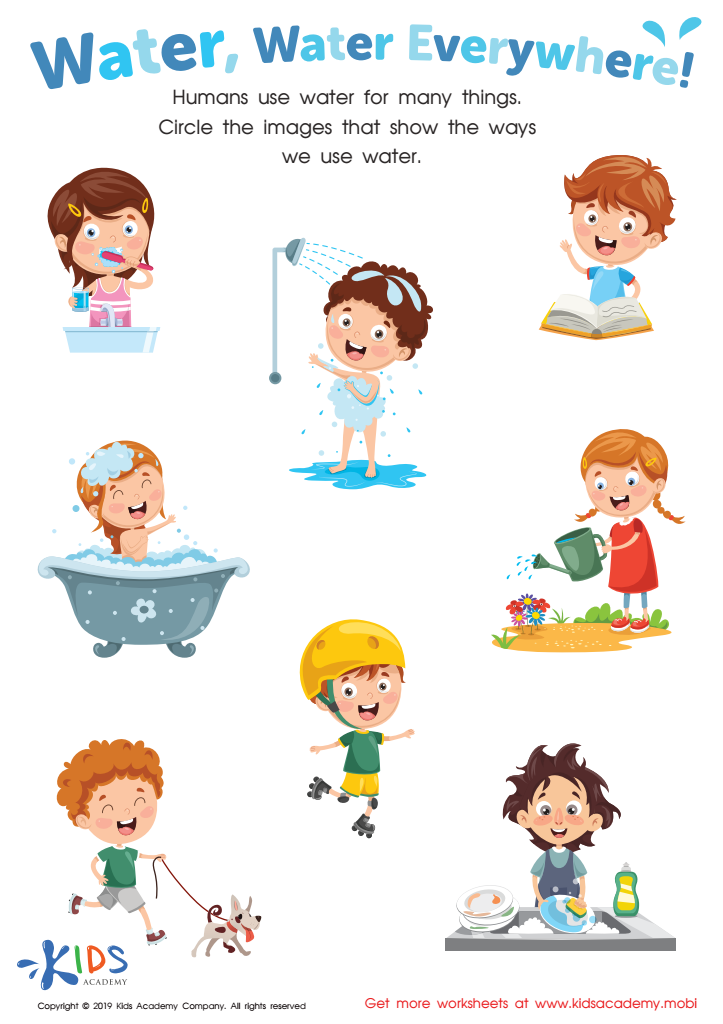
Water, Water Everywhere! Worksheet
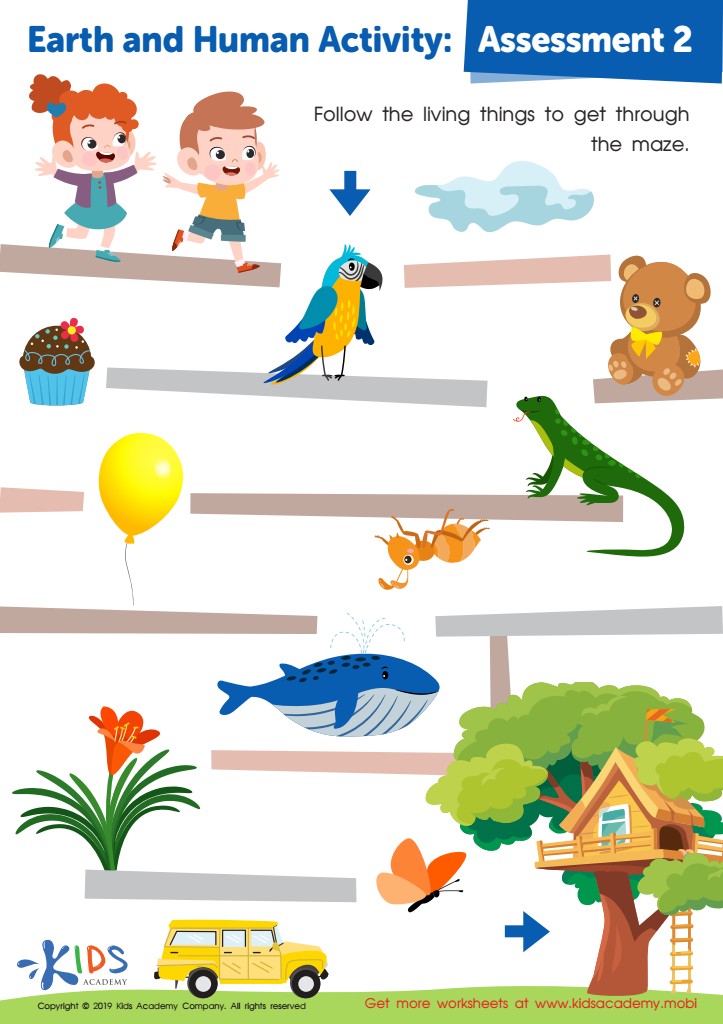
Earth and Human Activity: Assessment 2 Worksheet
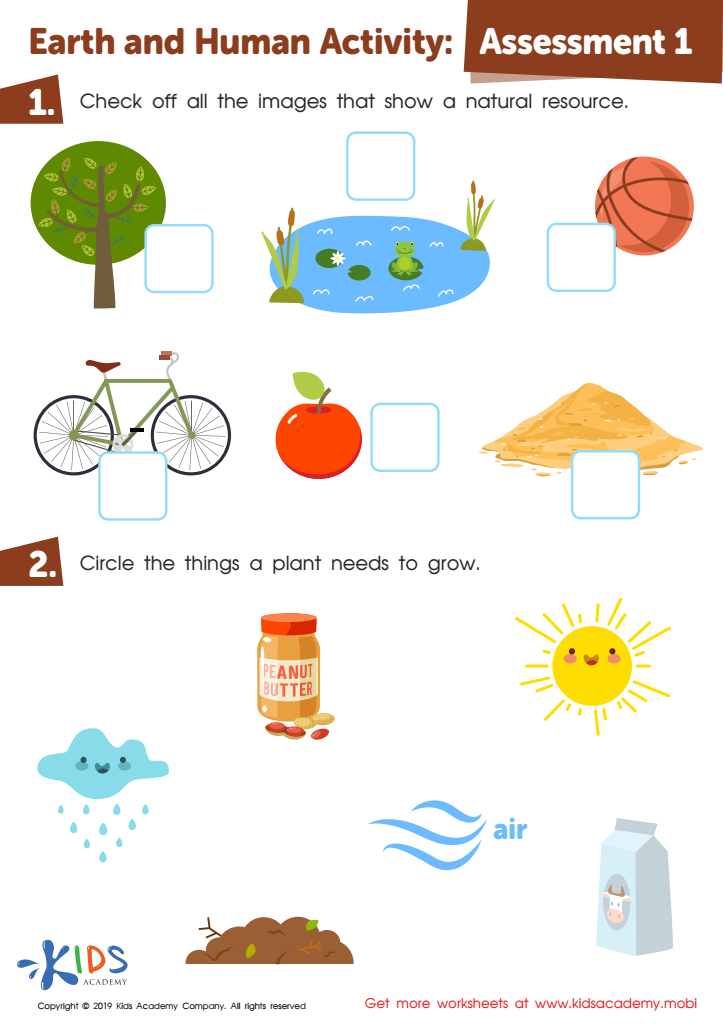
Earth and Human Activity: Assessment 1 Worksheet
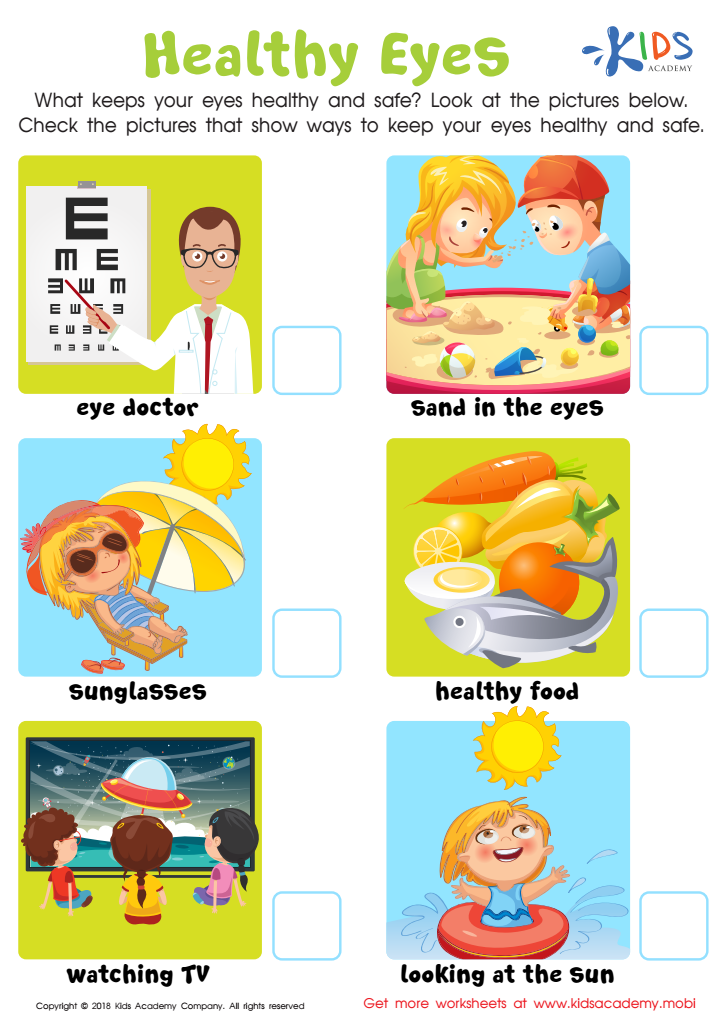
Healthy Eyes Worksheet
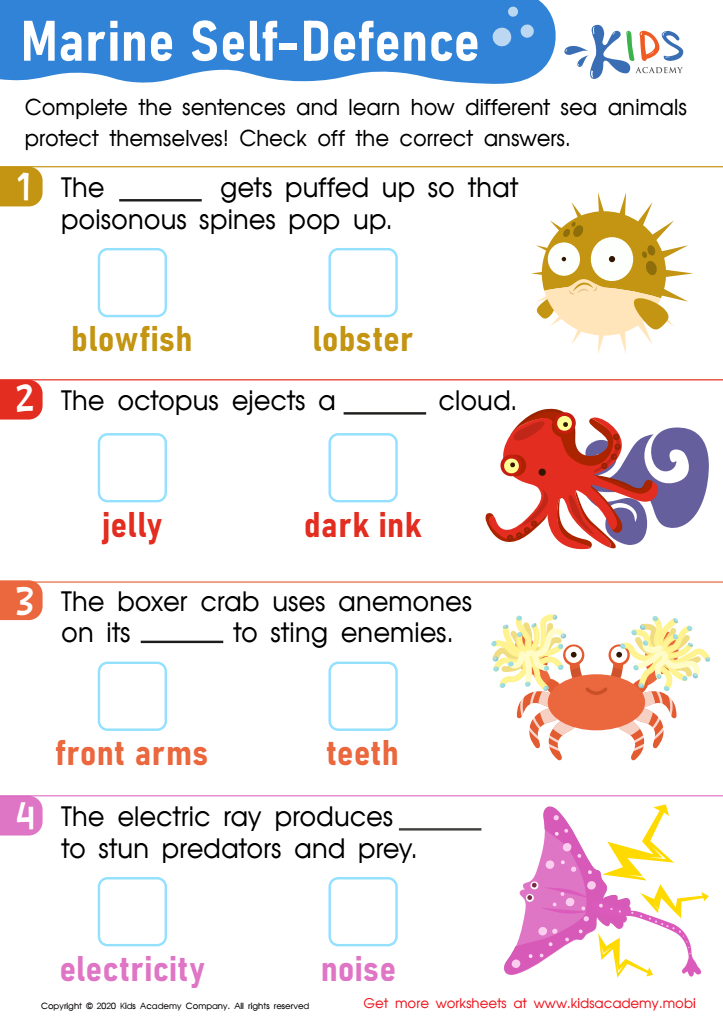
Marine Self-Defence Worksheet








Engaging children ages 4-6 in critical thinking skills through science is crucial for their early development. At this pivotal stage, their brains are rapidly growing, making it an ideal time to introduce habits of questioning, exploring, and problem-solving. These skills lay a foundation for lifelong learning and curiosity.
When parents and teachers emphasize critical thinking in science, they encourage children to ask questions, such as "why" and "how," fostering a mindset that goes beyond rote learning. This curiosity-driven approach helps young learners understand the world around them and builds a robust "scaffold" for future knowledge.
Moreover, hands-on science activities enhance sensory behavior and motor skills, contributing to overall cognitive development. Simple experiments, like observing plant growth or mixing colors, teach cause-and-effect relationships and promote observational skills.
Socially, collaborative science activities enhance communication abilities. Children learn to express their thoughts clearly and understand differing perspectives. Such interactions improve empathy and cooperative skills, key elements for their emotional and social development.
Lastly, early exposure to critical thinking in science can debunk the myth that science is difficult or inaccessible. This positive early experience cultivates a lasting interest in STEM subjects, opening up academic and career opportunities in the future.
In summary, fostering critical thinking through science in young children supports intellectual, social, and emotional growth, providing essential tools for personal and academic success.







