
Critical Thinking Plants and Animals Worksheets for Ages 4-6
5 filtered results
Difficulty Level
Grade
Age
-
From - To
Subject
Activity
Standards
Nurture your child's curiosity with our "Critical Thinking Plants and Animals Worksheets for Ages 4-6." Designed to cultivate young minds, these engaging activities blend fundamental science concepts with critical thinking exercises. Perfect for children in preschool and early elementary, the worksheets introduce fascinating facts about plants and animals through fun, interactive tasks. These printable resources boost observation skills, enhance problem-solving abilities, and foster a love for nature and discovery. Ideal for both classroom and home settings, our worksheets promise an educational adventure that your little one will eagerly look forward to!
Favorites
With answer key
Interactive
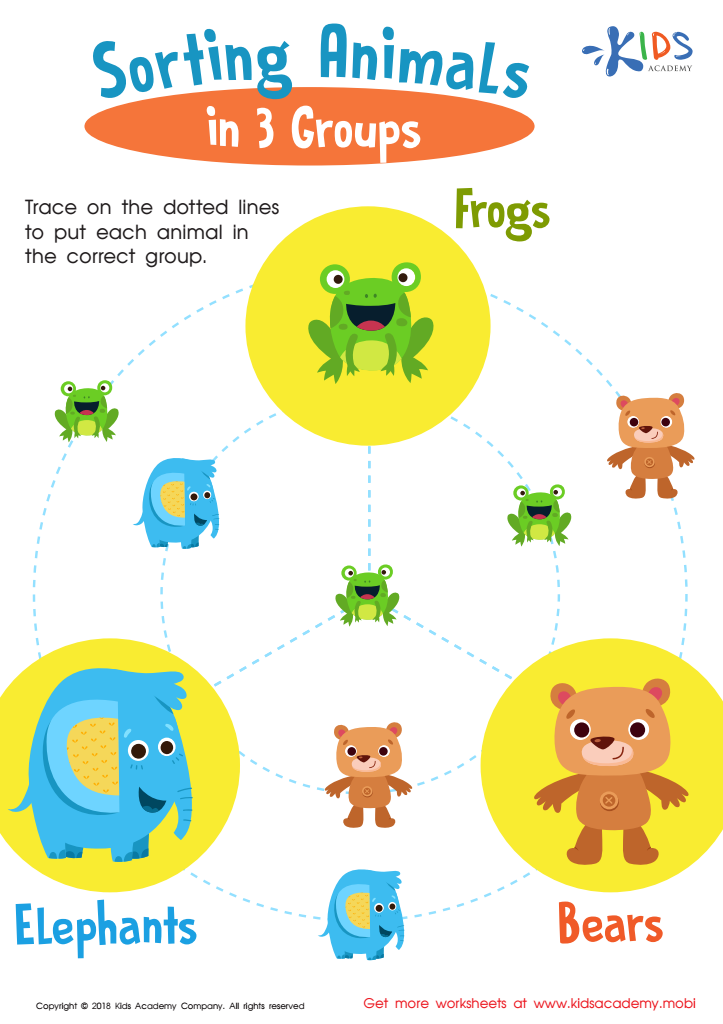
Sorting Animals in 3 Groups Worksheet
Let your kids practice and build skills for future Venn Diagrams with this PDF worksheet. They'll trace lines to match and group animals, and learn the differences and similarities of animals by categorizing with pictures and words. Plus, it's a great way to develop fine motor skills.
 Assign to My Students
Sorting Animals in 3 Groups Worksheet
Worksheet











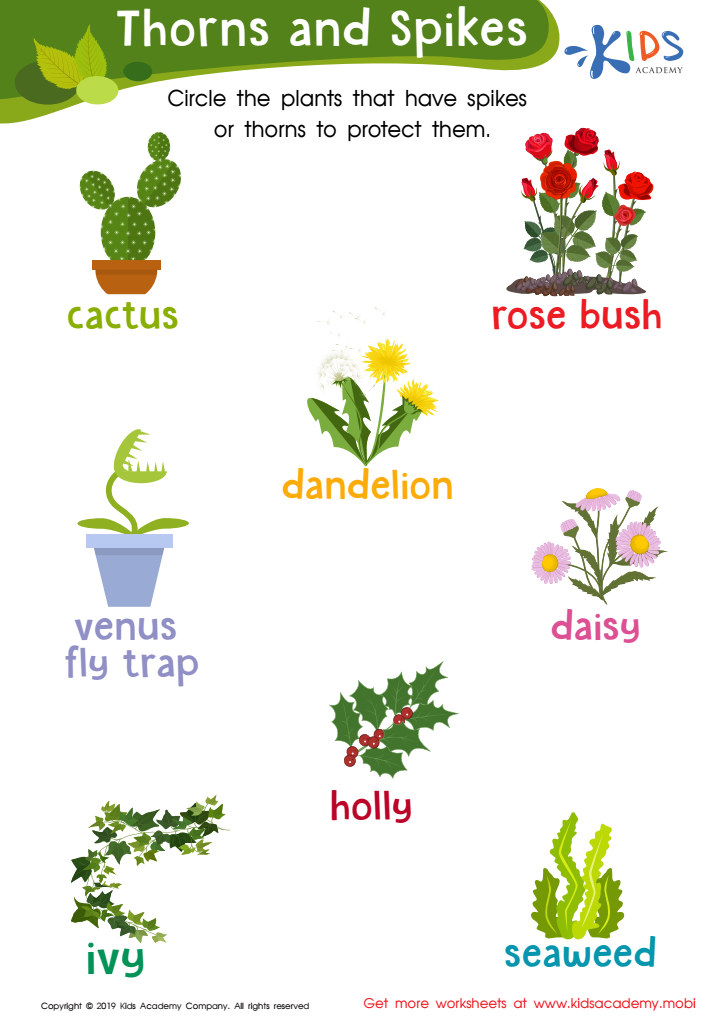
Thorns and Spikes Worksheet
Can your students name and identify the plants and flowers in this worksheet? Ask them to read out the names and circle the ones with spikes or thorns. Help them appreciate nature's beauty and understand how plants protect themselves.
Thorns and Spikes Worksheet
Worksheet
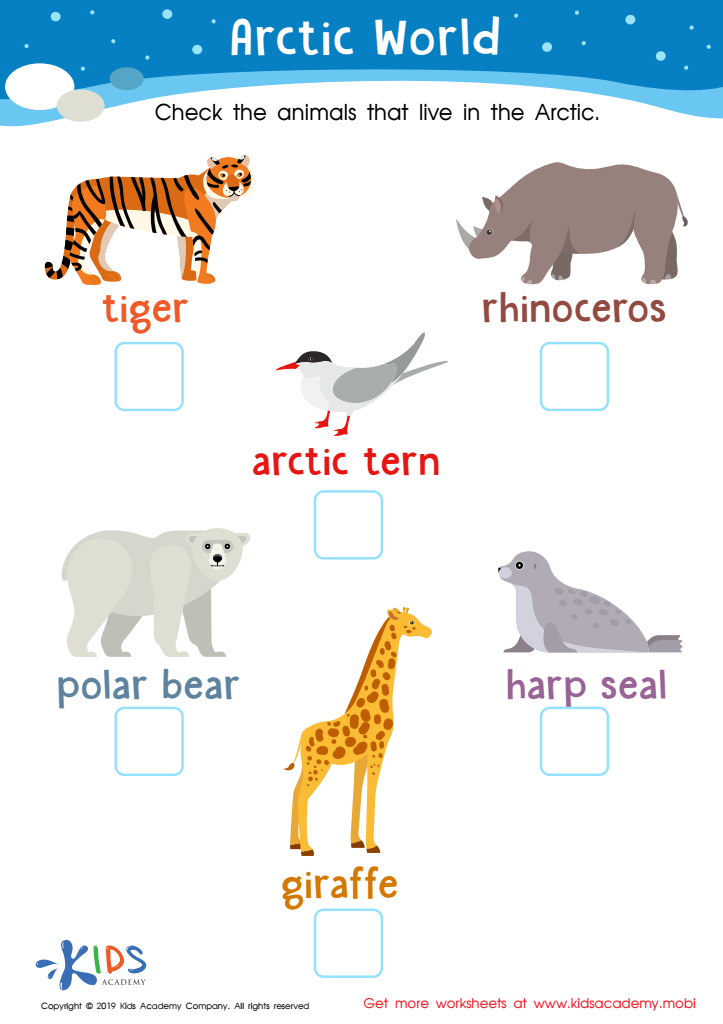
Arctic World Worksheet
Ask your students if they know where the Arctic is located and what lives there. If not, use a world atlas to show them. The Arctic is very cold and snow-covered; native animals have adapted to survive the harsh conditions. Look at the animals in the worksheet and help your students decide which ones live in the Arctic.
Arctic World Worksheet
Worksheet
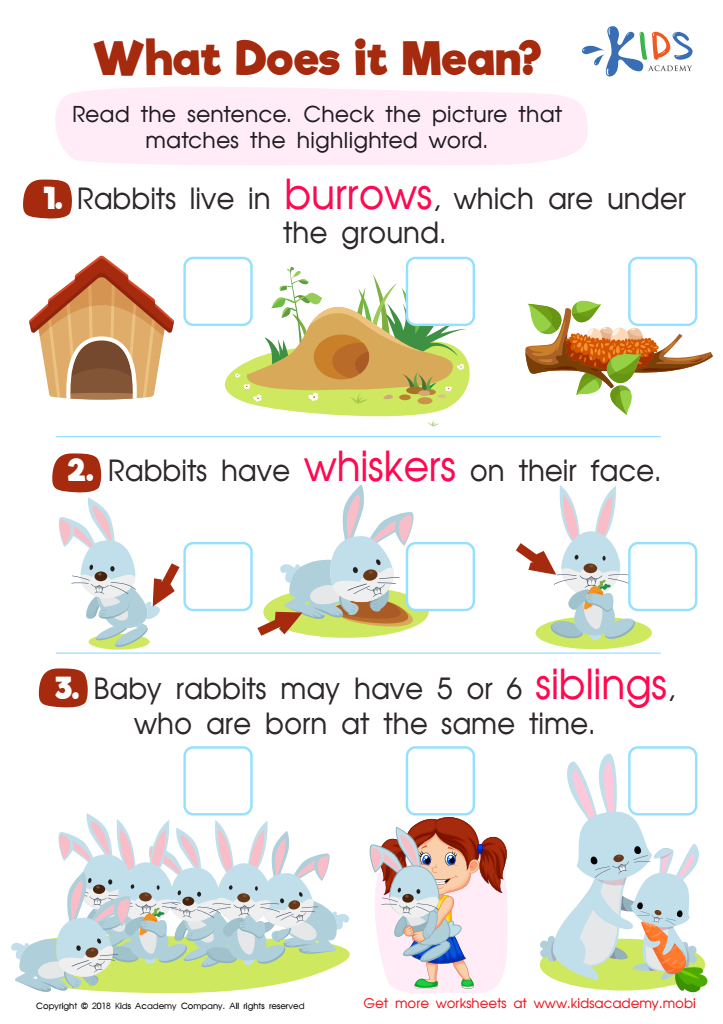
What Does It Mean? Worksheet
Teach your child to use context clues with this engaging Kids Academy worksheet. Read the sentences and find the pink-highlighted word. Use the other words in the sentence to figure out the meaning, then check the box next to the picture that represents it.
What Does It Mean? Worksheet
Worksheet
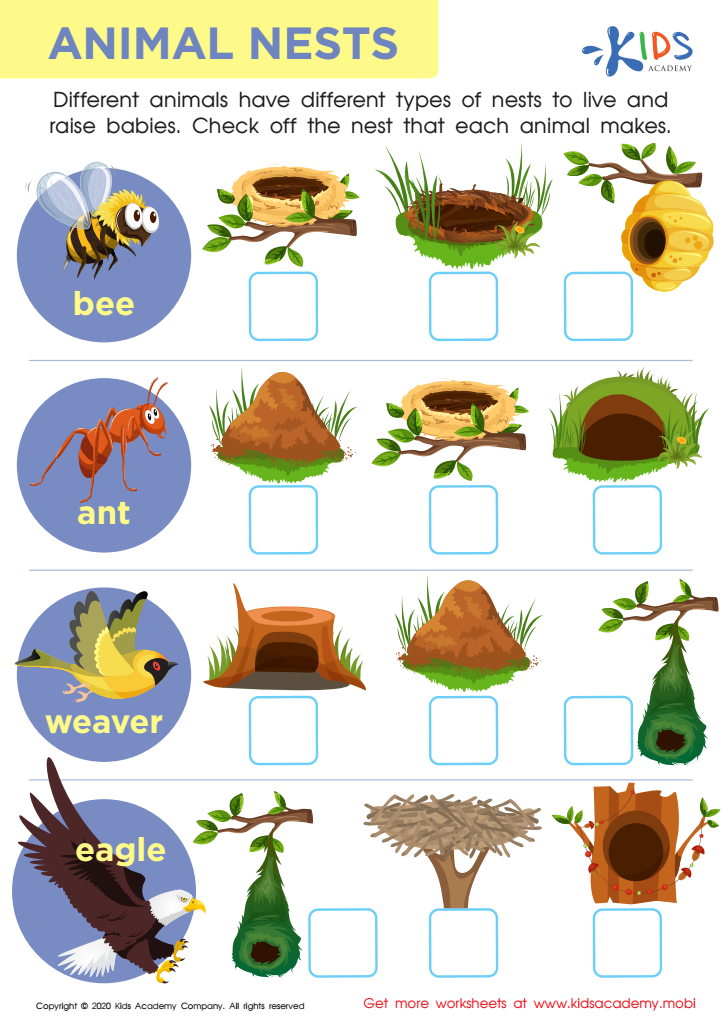
Animal Nests Worksheet
Animals need homes to sleep and stay safe. Look at the animal on the left and examine the nests and hives to the right. Check off the correct one for each animal to complete the worksheet! From birds to bees, it's a great way to show different types of homes animals make!
Animal Nests Worksheet
Worksheet
Join Kids Academy for Free
Who is primarily going to use this learning content?








Parents and teachers should prioritize Critical Thinking about Plants and Animals for young children (ages 4-6) to foster a profound, early understanding of the natural world, triggering lifelong curiosity and learning. At this developmental stage, children are naturally inquisitive and impressionable. Engaging them with topics about plants and animals nurtures a sense of wonder, facilitating a hands-on, observational approach to learning.
Critical thinking involves analyzing facts, observing carefully, and making connections—all skills pivotal not just in academics but in everyday life. For instance, when children learn about the life cycle of a butterfly or how plants grow from seeds, they start to comprehend vitality and changes in living organisms. This understanding helps inculcate patience, attentive observation, and a scientific mindset, laying the groundwork for more complex concepts later on.
Moreover, exploring these topics promotes empathy and environmental awareness, essential traits for responsible citizenship. Kids learn that their actions impact ecosystems and climates, fostering a respect for nature. Discussions about habits of animals or plant needs enhance vocabulary, comprehension, and verbal expression, contributing to language development.
Overall, an early focus on plants and animals builds critical thinking, resourcefulness, and a foundational love for science, setting the stage for lifelong learning and environmental stewardship.








