Vowel Diphthongs Worksheets for Ages 4-7 - Page 2
26 filtered results
-
From - To
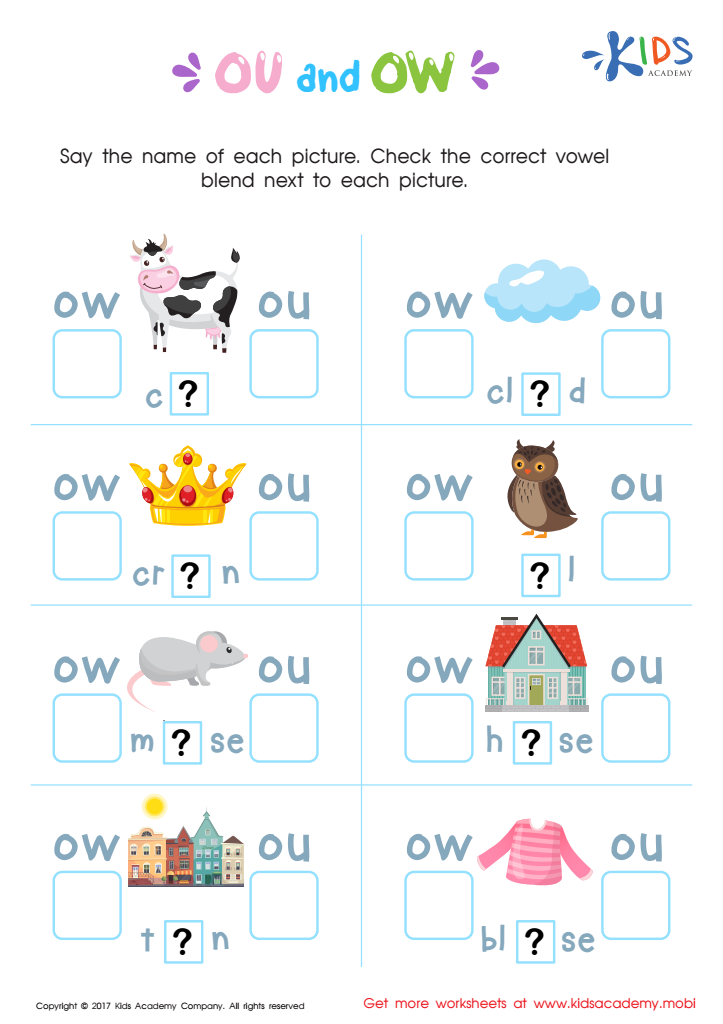
OU and OW Words Worksheet
 Assign to My Students
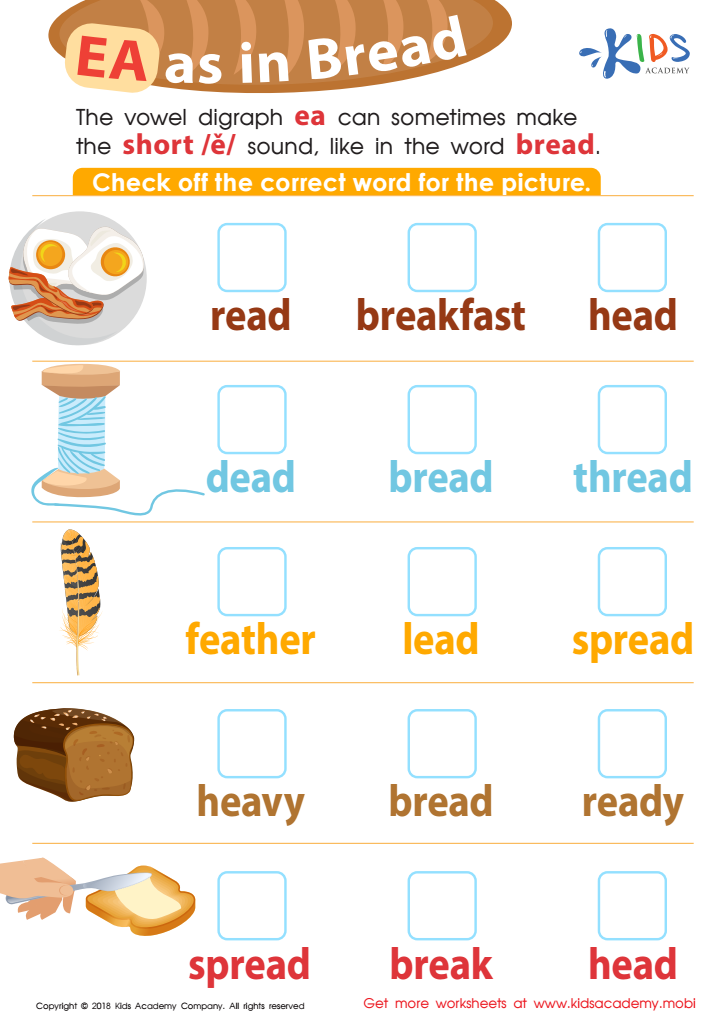
Reading: EA as in Bread Worksheet


Vowel diphthongs are crucial for children ages 4-7 because they form the foundation for effective reading and communication skills. A vowel diphthong occurs when two vowel sounds combine within the same syllable, producing a unique sound (e.g., "oi" in "boil" or "ou" in "house"). Understanding these sound combinations helps children decode words more accurately and fluently, fostering both reading comprehension and enjoyment.
For parents and teachers, focusing on vowel diphthongs supports phonemic awareness—one of the most essential predictors of early reading success. Engaging young learners with activities that emphasize these sounds can make the learning process fun and interactive, keeping children motivated. When children grasp vowel diphthongs, they are better equipped to tackle new vocabulary, enhancing both their speaking and listening skills.
Moreover, mastering vowel diphthongs aids in spelling and writing. Children learn to recognize patterns and apply them, making educated guesses when they encounter unfamiliar words. Early intervention in teaching these sounds can prevent future literacy challenges, setting up a strong academic foundation.
In essence, caring about vowel diphthongs means investing in a child's overall language development, which is a critical component of their educational journey and lifelong learning.